
World
Israel hits Gaza hospital, killing at least 20 people, including five journalists
Photographer Hatem Khaled, also a Reuters contractor, was wounded.


Israel struck Nasser hospital in the south of the Gaza Strip on Monday, killing at least 20 people, including five journalists who worked for Reuters, the Associated Press, Al Jazeera and others.
Cameraman Hussam al-Masri, a Reuters contractor, was killed near a live broadcasting position operated by Reuters on an upper floor just below the roof of the hospital in Khan Younis in an initial strike, Palestinian health officials said.
Officials at the hospital and witnesses said Israel then struck the site a second time, killing other journalists as well as rescue workers and medics who had rushed to the scene to help.
The journalists killed included Mariam Abu Dagga, who freelanced for the Associated Press and other outlets, Mohammed Salama, who worked for Qatar-based broadcaster Al Jazeera, Moaz Abu Taha, a freelance journalist who worked with several news organisations including occasionally contributing to Reuters, and Ahmed Abu Aziz.
Photographer Hatem Khaled, also a Reuters contractor, was wounded.
Prime Minister Benjamin Netanyahu’s office said Israel deeply regretted what he called a “tragic mishap”. Israel valued the work of journalists and medical staff, he said, adding that Israel’s war was with Hamas.
Israel’s military, the Israel Defense Forces, acknowledged striking the area of Nasser hospital and said the chief of the general staff had ordered an inquiry.
The IDF “regrets any harm to uninvolved individuals and does not target journalists as such. The IDF acts to mitigate harm to uninvolved individuals as much as possible while maintaining the safety of IDF troops,” it said.
A Reuters spokesperson said in a statement: “We are devastated to learn that cameraman Hussam al-Masri, a contractor for Reuters, was killed this morning in Israeli strikes on Nasser hospital in Khan Younis in Gaza. Moaz Abu Taha, a freelance journalist whose work had been occasionally published by Reuters, was also killed, and photographer Hatem Khaled, a Reuters contractor, was wounded.”
“We are urgently seeking more information and have asked authorities in Gaza and Israel to help us get urgent medical assistance for Hatem,” the spokesperson added.
U.S. President Donald Trump expressed his displeasure when asked for a reaction.
“When did this happen?” he asked a reporter in the White House. “I didn’t know that. Well, I’m not happy about it. I don’t want to see it. At the same time, we have to end that whole nightmare.”
The AP said it was “shocked and saddened” to learn of the deaths of Abu Dagga and other journalists, adding that Abu Dagga had often based herself at the hospital for coverage, which recently included stories on starving and malnourished children.
In the Israeli-occupied West Bank, the Palestinian presidency urged the international community, particularly the U.N. Security Council and the United Nations, to provide protection for journalists and hold Israel accountable.
The Palestinian Journalists Syndicate condemned Israel for the strikes, saying it represented “an open war against free media, with the aim of terrorising journalists and preventing them from fulfilling their professional duty of exposing its crimes to the world”.
The syndicate said more than 240 Palestinian journalists had been killed by Israeli fire in Gaza since the war started on October 7, 2023.
The Committee to Protect Journalists, which put the number of journalists and media workers killed since the war began at 197 including 189 Palestinians in Gaza, called for “the international community to hold Israel accountable for its continued unlawful attacks on the press”.
Israeli military spokesperson Brigadier General Effie Defrin said in a statement late on Monday that the military, in line with international law, was obligated to investigate.
“As always, we will present our findings as transparently as possible,” he said.
“Reporting from an active war zone carries immense risk, especially in a war with a terrorist organization such as Hamas, who cynically hides behind the civilian population,” he said.
In a separate incident on Monday, Nasser Hospital doctors said Israeli gunfire at a tent encampment in the Mawasi area of Khan Younis had killed local journalist Hassan Dohan and had wounded other people.
Two weeks ago, Israel killed prominent Al Jazeera correspondent Anas Al-Sharif and four other journalists in a strike. In that attack, Israel acknowledged targeting Sharif and said he worked for the Hamas militant group, which the broadcaster denied.
On Monday the Reuters live video feed from the hospital, which Masri had been operating, suddenly shut down at the moment of the initial strike.
Reuters and other news providers often deliver live video feeds to media outlets worldwide during major news events to show the scene from the ground in real time. Reuters has frequently broadcast a feed from Nasser hospital during the Gaza conflict, and for the past several weeks has been delivering daily feeds from the Nasser hospital position that was hit.
Israel has barred all foreign journalists from entering the Gaza Strip since the start of the war in 2023. Reporting from the territory throughout the war has been done by Palestinian journalists, many of whom have worked for many years for international media organisations, including wire services such as Reuters and the Associated Press.
Israel has also separately said it is investigating the death of Issam Abdallah, a Reuters journalist killed in southern Lebanon by Israeli tank fire in October 2023 after the Gaza conflict erupted. Israel has not announced any findings.

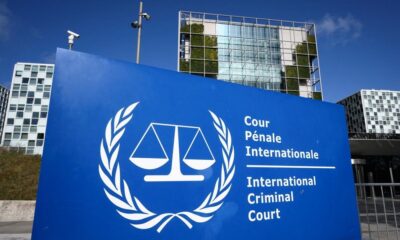

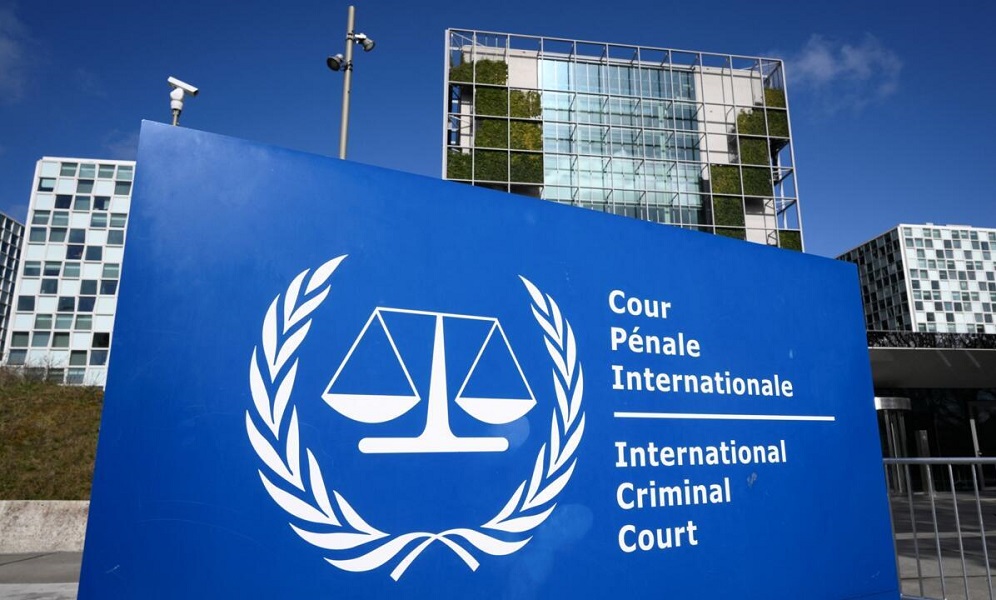
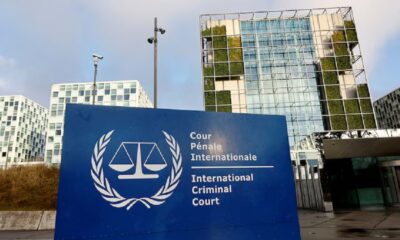
The administration of US President Donald Trump imposed sanctions on the International Criminal Court (ICC) on Friday, escalating tensions with the international judicial body and potentially straining relations with European allies.
US Secretary of State Marco Rubio said the measures aim to prevent the ICC from prosecuting American citizens and restrict the court’s resources and operations.
Washington has criticised the ICC over arrest warrants issued for Israeli Prime Minister Benjamin Netanyahu and other Israeli officials, as well as its past investigation into alleged crimes by US personnel in Afghanistan.
The ICC condemned the sanctions as an “assault on the rule of law” and vowed to continue its investigations and prosecutions. It also urged its 125 member states to defend the court’s independence.
The announcement came hours after former ICC judge Navi Pillay was awarded the Nobel Peace Prize, with the Nobel committee highlighting the importance of international justice amid political pressure on legal institutions.
The sanctions threaten to deepen the dispute between Washington and the ICC, raising concerns about international judicial cooperation and the court’s ability to carry out its work.
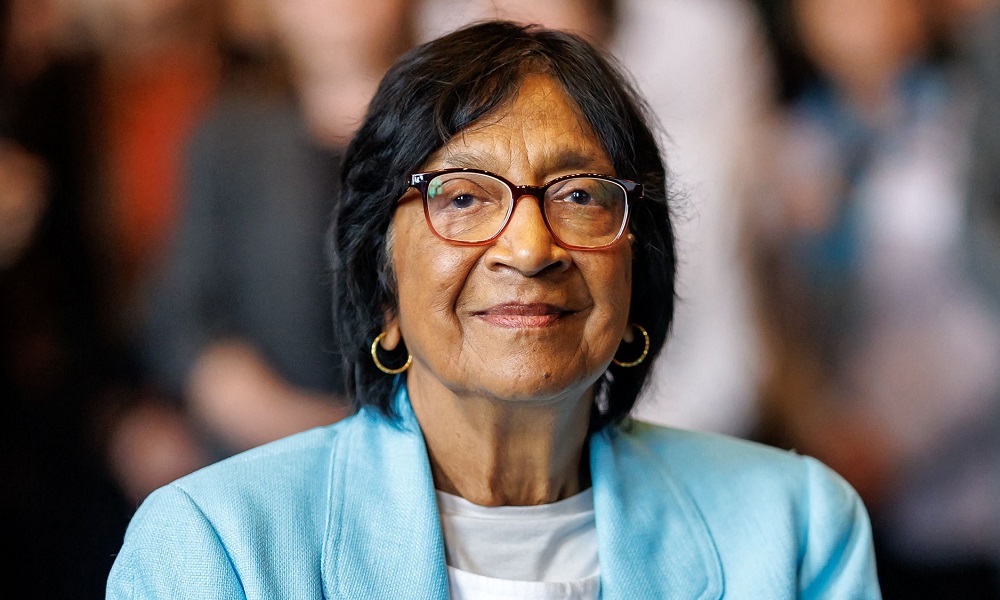
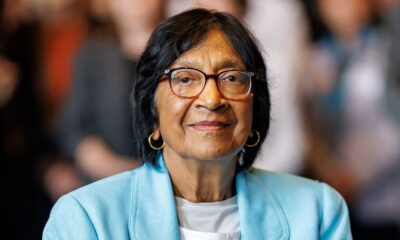
South African jurist Navi Pillay, a former judge at the International Criminal Court (ICC), won the 2026 Nobel Peace Prize on Friday for her efforts to promote peace and international law, as international justice institutions face growing political pressure.
The Nobel Committee announced the award hours before the United States imposed sanctions on the ICC, saying the recognition highlighted the importance of preserving an international order based on law and justice.
Pillay, 85, has served as a judge on several international courts, including the ICC and the International Criminal Tribunal for Rwanda. She also chaired a United Nations Commission of Inquiry on the Occupied Palestinian Territory, which concluded last year that Israel had committed genocide in Gaza. Israel rejected the report as “scandalous.”
The Nobel Committee warned that international law and its institutions were under significant pressure, cautioning that a shift towards power politics at the expense of legal frameworks threatened stability and peaceful coexistence.
The award comes amid escalating tensions between Washington and the ICC. US President Donald Trump has repeatedly criticised the court, particularly over its arrest warrants for Israeli Prime Minister Benjamin Netanyahu and his former defence minister.
Netanyahu’s office condemned the Nobel decision, accusing the committee of awarding its highest honour to someone it said had promoted allegations against Israel.
The award and the US sanctions have renewed international debate over the role of legal institutions in addressing alleged war crimes and protecting accountability under international law.
World
Witkoff, Kushner to meet Ukrainians for talks on the war, says US source
President Donald Trump this week said he planned to talk to Russian President Vladimir Putin by phone soon.
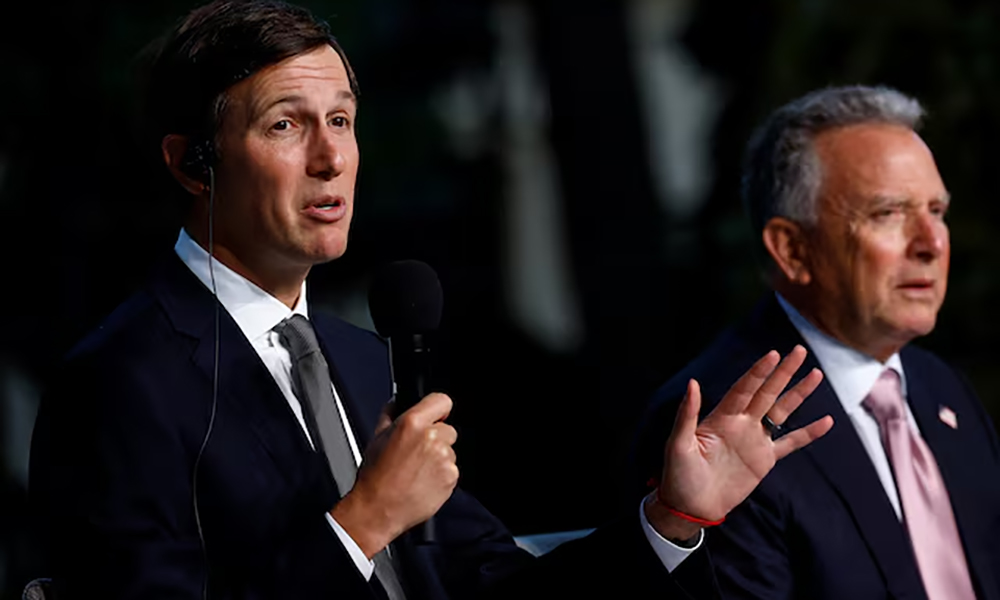
US envoys Steve Witkoff and Jared Kushner will meet Ukrainian representatives on Friday in Miami to discuss new ideas and try to produce a unified proposal for resolving the war in Ukraine, an American source familiar with the plan said on Thursday.
Earlier on Thursday, US Secretary of State Marco Rubio said the conflict was at a dangerous stalemate. President Donald Trump this week said he planned to talk to Russian President Vladimir Putin by phone soon, Reuters reported.
Trump, whose efforts to resolve the conflict have so far not succeeded, has been trying to arrange trilateral talks between Russia, the US and Ukraine.
The source said Witkoff and Kushner would hold a working session with the Ukrainians to discuss “new ideas and proposals that American negotiators began developing with the Russians and Ukrainians during their recent visit to the region”.
The meeting will include representatives from the White House National Security Council and US Treasury Department, the source said. Ukraine’s chief of staff Kyrylo Budanov, intelligence chief Rustem Umerov, and top negotiator David Arakhamia will represent Kyiv.
The American negotiators also invited national security advisors from the United Kingdom, France, and Germany, as well as officials from NATO and the European Union, read the report.
They are expected to discuss proposals for security guarantees for Ukraine, a post-war prosperity plan, and other aspects of the conflict, the source said.
The source said the Europeans had told the United States of their frustration with high energy costs and other major financial impacts of the conflict.
“It will be a tough winter if the war does not stop. So, the United States is trying to mediate with the sides with the goal of creating a unified proposal,” the source said.


US imposes sanctions on ICC amid dispute over international prosecutions

Former ICC judge Navi Pillay wins 2026 Nobel Peace Prize

Bangladesh reach 317/8 on Day One against Afghanistan in Test match

Kyrgyz President calls for continued regional support for Afghanistan

Afghanistan, Iran seek to expand trade and transit through western border crossings

EU and FAO launch €5m programme to strengthen Afghanistan’s agrifood sector

Omar Zawak, Toofan Herat secure victories in Afghanistan Champions League

Houthi advance in Yemen puts U.S. in a new bind

Cricket Bonanza: Afghanistan set for packed international schedule

Afghanistan Champions League Season 6 kicks off today: Abu Muslim Farah face Sarsabz Yashlar

Tahawol: CSTO meeting on Afghanistan reviewed

Saar: Guterres’s talks with Pakistani officials on Afghanistan discussed

Tahawol: Consequences of US war in Afghanistan reviewed

Saar: Expulsion of Afghan refugees from Pakistan discussed

Tahawol: Discussion on outcome of Moscow Format meeting
-
 Sport5 days ago
Cricket Bonanza: Afghanistan set for packed international schedule
-

 Sport5 days ago
Afghanistan U19 to face Bangladesh, Oman in Youth ODIs
-
 Regional5 days ago
Yemeni government launches offensive to seize all areas from Iran-backed Houthis
-

 Latest News4 days ago
Ariana Afghan Airlines ends 15-year control of ticketing and operational systems by Pakistani firm
-
 World4 days ago
▶️Saudi Arabia, Turkey, Pakistan activate Mecca defense pact
-

 Sport4 days ago
ACL: Abu Muslim Farah maintain momentum with 2-0 win over Arman FC
-
 World5 days ago
Trump picks John Coale as special presidential envoy for hostage affairs
-
 Latest News4 days ago
IEA rejects ICC arrest warrants, says Afghanistan does not recognize court