
Latest News
Jamiat-e-Islami calls for interim government

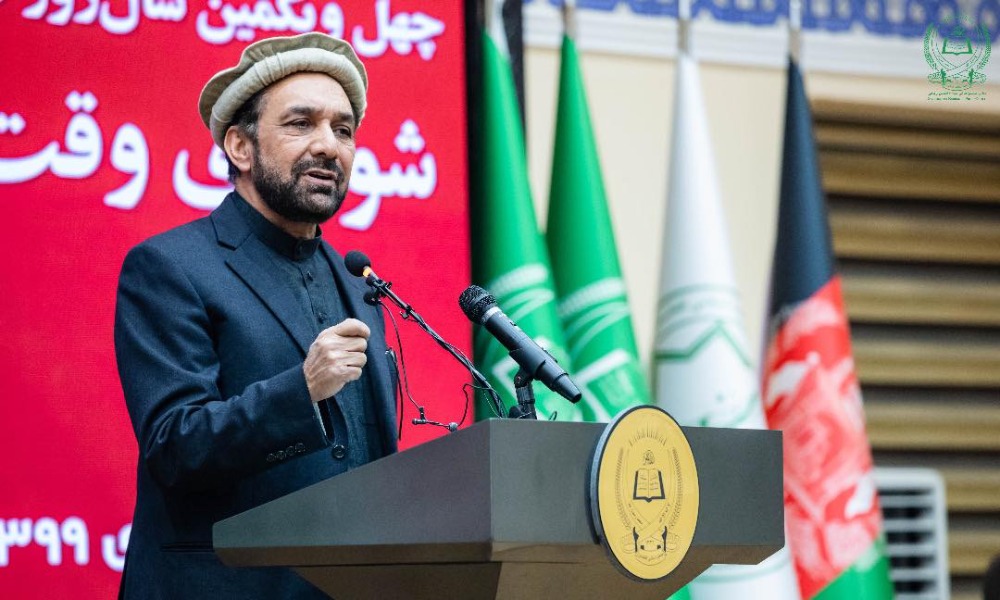
The Jamiat-e-Islami party on Saturday called for an interim government to be established in order for a peace agreement to be reached with the Taliban.
Addressing a gathering on the occasion of the 41st anniversary of the Soviet Union invasion in Afghanistan, the party’s deputy leader Ahmadzia Massoud stated that after the formation of the interim government a Loya Jirga should be called in order to make a decision over the structure of the government.
“Let talk about the mechanism of peace talks, from where to start and where to end up; first we want a ceasefire, second an interim government should be formed,” Massoud said.
The Afghan government, however, rejected the proposal but the Jamiat party believes that the government cannot control the current situation.
“Let the security forces and the Defense Ministry transfer the power to the Defense Ministry and security forces to enforce an emergency situation in the country; a counter-terrorism [operation] should start and in the meantime we pursue a peace program to reach a result,” Massoud noted.
The intra-Afghan talks are expected to resume on January 5 and will focus on a joint agenda for the talks.
On December 24, 1979, the Soviet Union invaded Afghanistan, under the pretext of upholding the Soviet-Afghan Friendship Treaty of 1978.
The Soviets carried out a massive military airlift into Kabul in the early hours of December 24, involving an estimated 280 transport aircraft and three divisions of almost 8,500 soldiers each.
Within a few days, the Soviets had secured Kabul, deploying a special assault unit against the palace. Elements of the Afghan army loyal to Hafizullah Amin put up a fierce, but brief resistance.
On December 27, Babrak Karmal, exiled leader of the Parcham faction of the Marxist People’s Democratic Party of Afghanistan (PDPA), was installed as Afghanistan’s new head of government. And Soviet ground forces entered Afghanistan from the north.
The Soviets, however, were met with fierce resistance when they ventured out of their strongholds into the countryside.
Resistance fighters, called mujahidin, saw the Soviets controlling Afghanistan as a defilement of Islam as well as of their traditional culture and proclaimed a Jihad against them.
The fighters used whatever weapons they could grab from the Soviets or were given by the United States but things changed in 1987 with the introduction of US shoulder-launched anti-aircraft missiles. The Stingers allowed the mujahidin to shoot down Soviet planes and helicopters on a regular basis.
By then Mikhail Gorbachev was in power and decided it was time to leave and demoralized and with no victory in sight, Soviet forces started withdrawing in 1988. The last soldier left in February 1989.






International Sports
Kohli shines as RCB open IPL title defence with dominant win
Playing his first match since January, Kohli anchored the chase with a composed 69 not out off 38 balls, guiding Bengaluru to 203-4 in just 15.4 overs in pursuit of a daunting 202-run target.
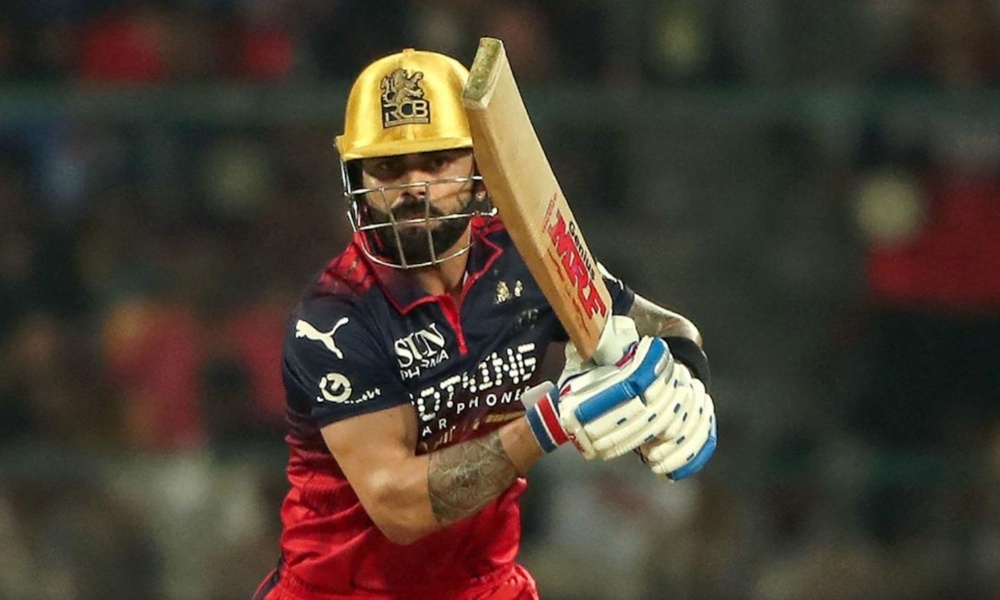
Virat Kohli struck an unbeaten half-century as Royal Challengers Bengaluru kicked off their Indian Premier League title defence with an emphatic six-wicket victory over Sunrisers Hyderabad on Saturday at the M. Chinnaswamy Stadium in Bengaluru.
Playing his first match since January, Kohli anchored the chase with a composed 69 not out off 38 balls, guiding Bengaluru to 203-4 in just 15.4 overs in pursuit of a daunting 202-run target.
He was well supported by Devdutt Padikkal, who blasted 61 from 26 deliveries, and captain Rajat Patidar, who added a quickfire 31 off 12 balls. England’s Phil Salt contributed just eight runs but made a significant impact in the field with a stunning one-handed diving catch.
Earlier, Sunrisers Hyderabad posted a competitive 201-9, powered by Ishan Kishan’s explosive 80 off 38 balls. However, his dismissal in the 16th over—courtesy of Salt’s brilliance on the boundary—halted their momentum on a batting-friendly surface.
New Zealand pacer Jacob Duffy impressed on debut for Bengaluru, returning figures of 3-22, while England left-armer David Payne claimed 2-35 in his first IPL outing for Hyderabad.
Bengaluru’s chase set a new benchmark as the fastest successful pursuit of a 200-plus total in IPL history. Kohli also extended his record for the most 50-plus scores in successful run chases in the tournament.
In other IPL developments, several England players are featuring in this year’s competition. Jos Buttler returns to Gujarat Titans alongside Tom Banton and Luke Wood, while Jofra Archer is back with Rajasthan Royals. Will Jacks joins Mumbai Indians, and Liam Livingstone and Brydon Carse are part of the Sunrisers squad.
The IPL continues today, Sunday March 29, with a blockbuster clash as Mumbai Indians take on Kolkata Knight Riders in what promises to be an early-season test for both sides.
Five-time champions Mumbai will look to assert dominance at home, with key players like Rohit Sharma and Jasprit Bumrah expected to lead the charge, while Kolkata will rely on their explosive lineup featuring Andre Russell to make a strong statement.
With both teams aiming to build early momentum in IPL 2026, fans can expect a high-intensity contest packed with big hitting and crucial breakthroughs.
Fans in Afghanistan can catch all the IPL 2026 action live, as Ariana Radio and Television Network holds exclusive broadcast rights across the country.
Viewers can tune in daily to Ariana Television for live coverage, and follow Ariana Television and Ariana News across social media platforms for the latest updates and highlights.
International Sports
Injury concerns mount ahead of FIFA World Cup 2026 as stars sidelined
With several key players facing uncertain recoveries, the growing injury crisis is emerging as a major concern for teams preparing for the World Cup.

The injury list ahead of the FIFA World Cup 2026 continues to grow, with fresh setbacks for Raphinha and Phil Foden adding to mounting concerns for national teams.
England midfielder Foden picked up an injury during a recent friendly against Uruguay following a heavy challenge from Ronald Araujo. The Manchester City star was visibly in pain and had to be substituted, with Cole Palmer coming on in his place. The setback comes at a crucial stage for Foden, who had been looking to regain top form for both club and country.
Meanwhile, Brazil winger Raphinha has been ruled out with a hamstring injury sustained during his side’s 2-1 defeat to France. Medical scans confirmed the extent of the issue, with the FC Barcelona forward expected to be sidelined until May. His absence means he will miss key fixtures, including Barcelona’s UEFA Champions League quarterfinal clash against Atletico Madrid.
Their injuries add to an already extensive list of high-profile players struggling with fitness ahead of the global showpiece. Among those dealing with concerns are Cristiano Ronaldo, Rodrygo, Bruno Guimaraes, Eder Militao, Matthijs de Ligt, Nico Williams, Mikel Merino, Fabian Ruiz, James Maddison, Jack Grealish, Josko Gvardiol, Mateo Kovacic, and Alphonso Davies.
With several key players facing uncertain recoveries, the growing injury crisis is emerging as a major concern for teams preparing for the World Cup, potentially impacting squad selections and tournament dynamics.
The FIFA World Cup 2026 will be the largest edition of the tournament to date, expanding to 48 teams from the previous 32.
It will be jointly hosted by three countries—United States, Canada, and Mexico—marking the first time the World Cup is shared by three nations.
The expanded format will see teams divided into 12 groups, increasing the total number of matches and giving more nations the opportunity to compete on football’s biggest stage.
The tournament is scheduled to kick off on June 11, 2026, with the final set to be played on July 19, 2026.
Matches will be held across multiple cities in the three host nations, showcasing some of the world’s most iconic stadiums. As the premier competition organised by FIFA, the World Cup brings together the top national teams from around the globe, drawing billions of viewers and remaining one of the most anticipated sporting events worldwide.
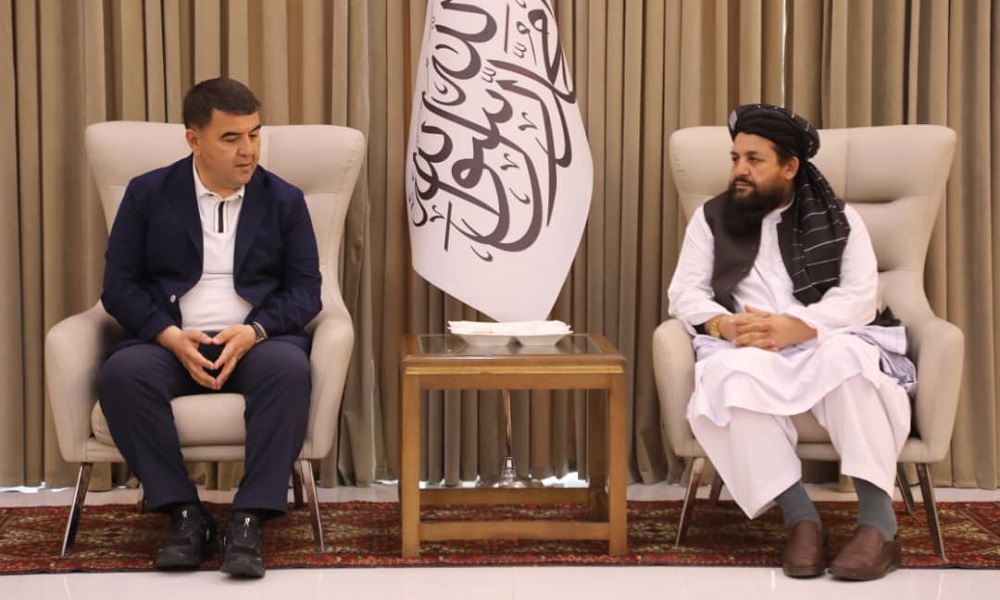
A high-level government–private sector delegation from Uzbekistan, led by Shukhrat Abdullazakov, Governor of Namangan province, arrived in Kabul to enhance trade between the two countries and promote investment in Afghanistan.
According to a press release from the Ministry of Industry, the delegation, which includes deputy governors and more than 30 of Uzbekistan’s top businesspeople and investors, will meet with officials of the Islamic Emirate of Afghanistan and participate in conferences and trade meetings.
The delegation will also travel to Balkh, meet with local officials, and hold business meetings with members of the private sector.
Additionally, the delegation will inaugurate an exhibition of Uzbek products and goods in Mazar-i-Sharif.
This visit follows the trip of Erkinjon Turdimov, Governor of Uzbekistan’s Syrdarya Province, and his accompanying delegation, and is based on meetings between Nuruddin Azizi, Minister of Industry and Trade of the Islamic Emirate, and senior Uzbek officials.
Other governors from Uzbekistan are also expected to visit Afghanistan to further expand bilateral trade and economic relations.


Kohli shines as RCB open IPL title defence with dominant win

Pakistan to host talks with Saudi Arabia, Turkey, Egypt amid Iran war diplomacy

Injury concerns mount ahead of FIFA World Cup 2026 as stars sidelined

Tahawol: Concerns over spread of Middle East crisis discussed

Saar: Weakening relations between Kabul and Washington discussed

Pakistani military jet downed in Afghanistan’s Jalalabad, pilot captured alive

Afghan Air Force conducts airstrikes in Islamabad, other cities

Prominent Muslim scholar issues fatwa calling for Afghanistan-Pakistan ceasefire

Afghan air force strikes key Pakistani military installations in retaliatory operation

IEA: Special circle in Pakistan has launched mission to destabilize region
Tahawol: Concerns over spread of Middle East crisis discussed
Saar: Weakening relations between Kabul and Washington discussed

Exclusive interview with Indrika Ratwatte, Deputy UN Special Representative for Afghanistan

Tawsia: Efforts to boost Afghanistan’s domestic production and economic diplomacy

Tahawol: Discussion on day 27 of Iran–US war
-
 Latest News3 days ago
Tajikistan shifts stance on Afghanistan amid rising border tensions
-
 Latest News5 days ago
Around 2.3 million tourists visited Afghanistan’s recreational areas during Eid: Ghufran
-
 Latest News5 days ago
Islamic Emirate releases American prisoner Dennis Coyle
-
 Latest News2 days ago
Russia deems US military presence in Afghanistan unacceptable
-
 Latest News4 days ago
Two civilians killed, eight injured in fresh shelling by Pakistan in Kunar
-
 Latest News2 days ago
IEA says Iranian drivers no longer need visas to enter Afghanistan
-
 Regional5 days ago
US allies in Middle East ‘edging closer’ to joining conflict
-
 Regional5 days ago
Tehran rejects Trump’s claims of talks, accuses US of spreading ‘fake news’