
Business
Kabul working with UAE to digitize customs ports

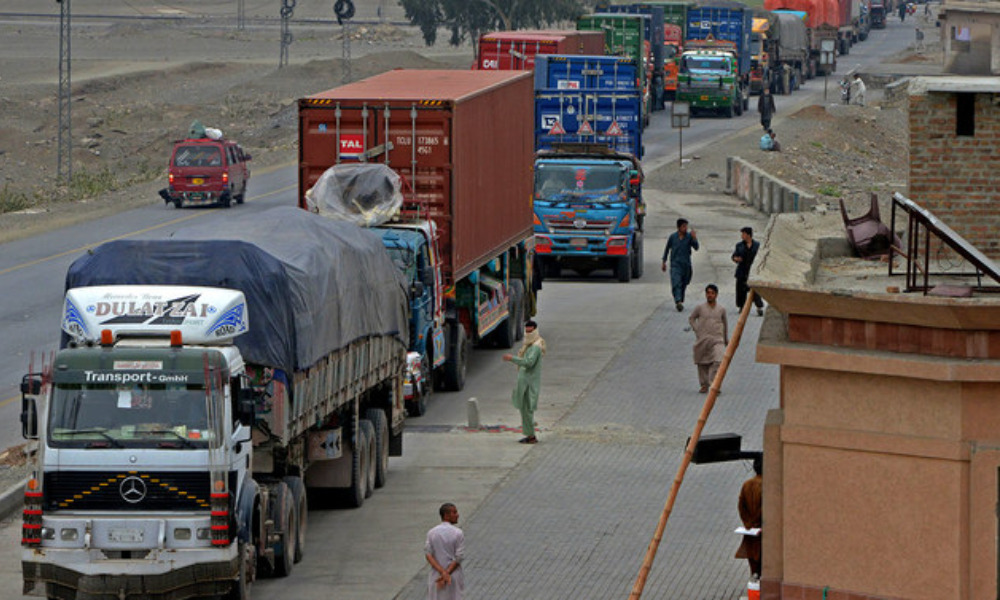
Afghanistan has sought the UAE’s help to digitize its logistics infrastructure in order to facilitate regional trade in its push to become a bridge between South and Central Asia and the Gulf.
According to Emirates News Agency (WAM), Afghan Ambassador to the UAE Javid Ahmad said in an interview Afghanistan has a “planned large-scale programme on digitalisation with the UAE, which would involve digitalisation of our trade and logistics infrastructure.”
He said Afghanistan is in talks with a UAE firm to look into the schematics of the country’s dry ports and customs ports to see how they can mainstream the customs revenue collection, WAM reported.
“That’s very important for us, because an estimated 46 percent of our government revenues come from customs but the current system allows some loopholes for leakages, waste and misallocations,” Ahmad said.
“We believe that if we want Afghanistan to be the land bridge between South and Central Asia, regional connectivity is important, especially as part of our own plan for economic growth,” he said.
Afghanistan wants to extend its connectivity beyond South and Central Asia towards Arabian Gulf, particularly the UAE, through Port Qasim in Karachi, Pakistan and Chabahar Port in south-eastern Iran, he explained.
“We need to get logistics revamped and we are engaged with the UAE firm to see whether they could come and study to completely reform and restructure it, which would also include technology transfer,” Ahmad told WAM.
He said Afghanistan realises the future is digital and said government was also working with the UAE to create a unified communication infrastructure network, especially for key government institutions. “That includes important technological support, for example, on data integration systems. We are engaging with the UAE on this and it is a flagship project,” he said.
Ahmad also revealed that efforts are underway to establish a joint UAE-Afghanistan Business Council.
He said other priority sectors included the bilateral economic agenda, agriculture and aviation sectors.
The aviation sector is important “especially because the UAE’s three-company consortium is already managing four of our international airports. So now we’re looking to see how in the aviation sector UAE’s engagement could deepen to include, for example, building a passenger terminal, building a cargo terminal, as well as establishing a logistical and food processing zone,” the envoy explained.









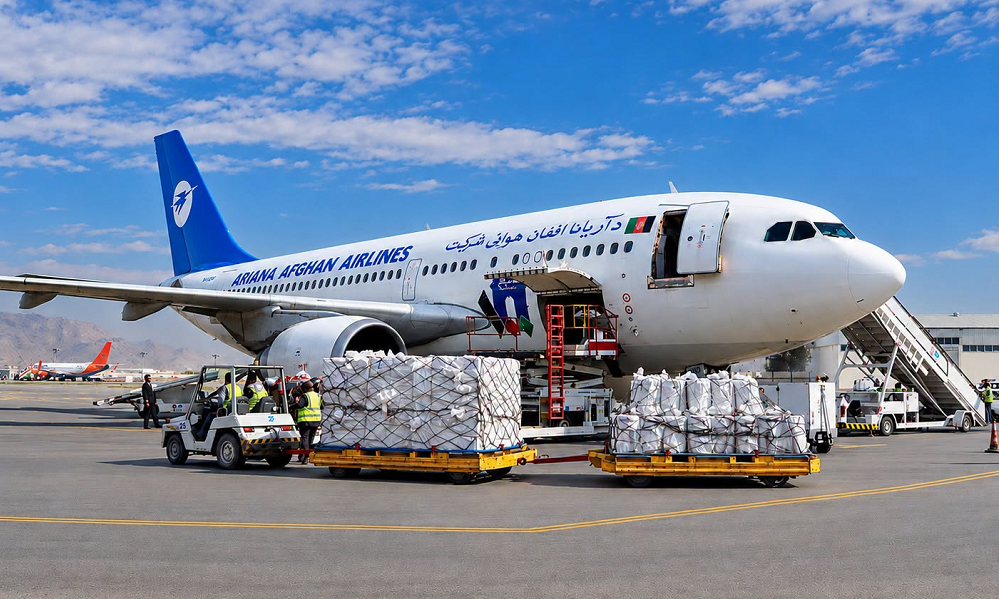
Ariana Afghan Airlines has increased cargo flights between Kabul and Delhi to facilitate the transportation of commercial goods and support Afghan traders.
In a statement issued Saturday, the airline said it will now operate two scheduled cargo flights daily on the Kabul-Delhi route, up from one flight per day previously.
The airline said Afghan traders and commercial companies can use the daily cargo services to transport their goods quickly, safely and reliably between Afghanistan and India.
Ariana Afghan Airlines said it is working to further expand and improve its air cargo services to support trade, meet the needs of Afghan traders and facilitate Afghanistan’s exports and imports.
Business
Afghanistan, Turkmenistan agree to establish joint road transport commission
The sides also agreed to establish a joint commission to address road transport issues and improve coordination.
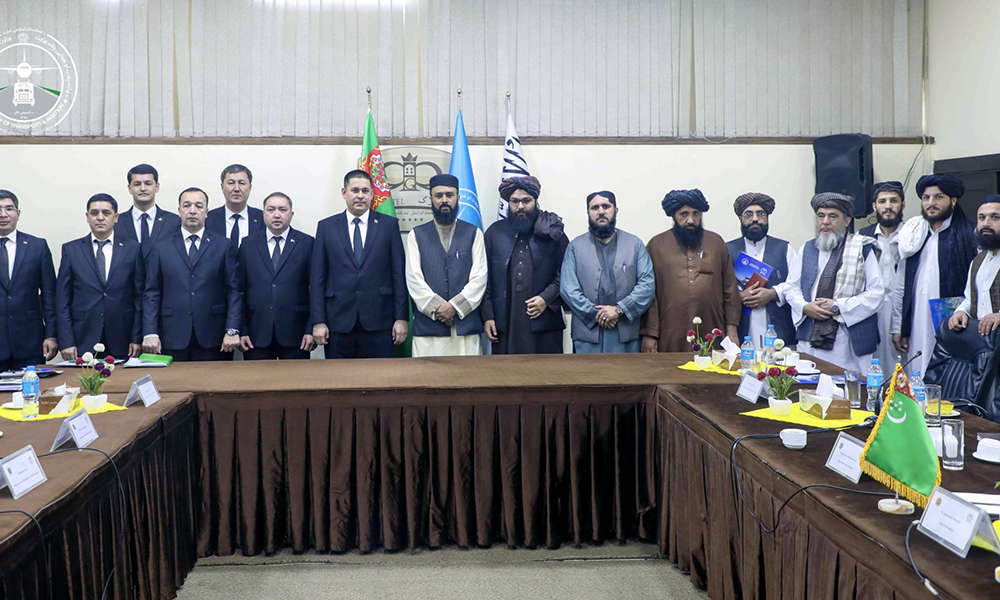
Afghanistan and Turkmenistan have agreed to establish a joint commission on road transport and facilitate transit between the two countries following two days of talks in Herat.
Afghanistan’s Ministry of Transport and Civil Aviation said the meeting brought together technical delegations from both countries to strengthen bilateral transport and transit cooperation.
The talks focused on easing visa procedures for Afghan and Turkmen drivers and traders, operationalising the Lapis Lazuli transit corridor and increasing the movement of transit vehicles between the two countries.
The sides also agreed to establish a joint commission to address road transport issues and improve coordination.
Representatives from Afghanistan’s ministries of foreign affairs, industry and commerce and the railway authority attended the talks, alongside the Ministry of Transport and Civil Aviation. Railway links, bilateral trade and wider transit cooperation were also discussed, with private-sector representatives expected to participate in future discussions.
The agreement comes as Turkmenistan works to strengthen its role as a regional transport and logistics hub, using its road, rail and Caspian Sea infrastructure to connect Central Asia with markets to the west and south.
A key part of that network is the International Seaport of Turkmenbashi, which links Turkmenistan with Azerbaijan and onward routes towards the South Caucasus and Europe.
Turkmenistan’s transport infrastructure also forms part of the wider Middle Corridor, or Trans-Caspian International Transport Route, connecting China and Central Asia with Azerbaijan, Georgia and Türkiye before reaching European markets.
For Afghanistan, the Lapis Lazuli Corridor is particularly important. It connects Afghanistan through Turkmenistan and across the Caspian Sea to Azerbaijan, Georgia and Türkiye, providing a potential route towards European markets.
Rail links such as the Herat-Torghundi line could further connect Afghanistan’s markets with Turkmenistan’s wider transport network.
The latest agreement puts road transport and transit facilitation at the centre of efforts by the two neighbours to expand trade and strengthen regional connectivity.
Business
TAPI gas deliveries to Afghanistan and Pakistan expected to begin in 2027
Turkmenistan regards TAPI as a key project for diversifying its gas exports and strengthening regional economic cooperation.
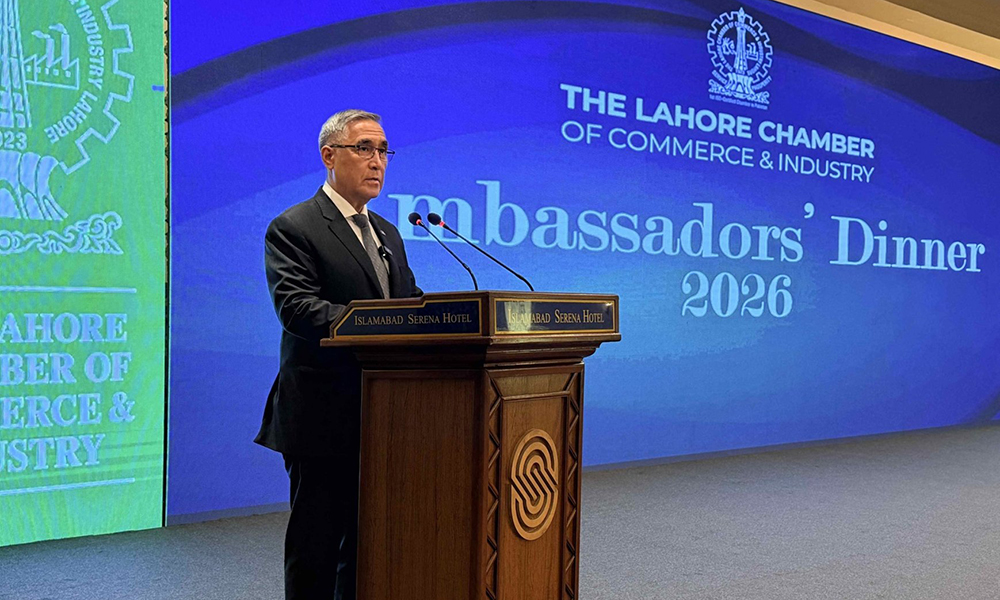
Turkmenistan expects natural gas supplies to Afghanistan and Pakistan through the Turkmenistan-Afghanistan-Pakistan-India (TAPI) pipeline to begin in 2027, according to the Turkmen Embassy in Islamabad.
Turkmen Ambassador Atajan Movlamov said construction of the strategically important Serhetabat-Herat section of the pipeline is expected to be completed by the end of this year.
Movlamov made the remarks during an Ambassadors’ Dinner hosted by the Lahore Chamber of Commerce and Industry in Islamabad.
He said the implementation of TAPI and other regional energy projects could strengthen Pakistan’s energy security while creating new opportunities for industrial development and economic growth.
The planned 1,800-kilometre pipeline is designed to transport up to 33 billion cubic metres of natural gas annually from Turkmenistan’s giant Galkynysh gas field through Afghanistan to Pakistan and India.
Turkmenistan regards TAPI as a key project for diversifying its gas exports and strengthening regional economic cooperation.
The Galkynysh field, which is the main resource base for TAPI, is among the world’s largest gas fields, with estimated reserves of more than 27 trillion cubic metres.
The project has faced years of delays, but recent construction and developments in the regional energy sector have renewed attention to TAPI as a potential link between Central Asian gas resources and South Asian energy markets.


Trump rejects Iranian proposal to open Hormuz and end fighting

Abu Muslim Farah defeat Khurasan Faryab 2-0 in ACL season six

Saar: Concerns over Pakistan’s political crisis discussed

Afghanistan Champions League: Omar Zawak Herat beat Toofan Herat 1-0

Blast in Pakistan’s Dera Ismail Khan kills 11, injures 30

Saudi energy group signs major Afghanistan deals covering gas exploration and pipeline plans

Trump floats idea of renaming Atlantic or Pacific Ocean

US hits Egyptian bank branches with Iran sanctions as war marks six months

Nepal flood rescue mission enters critical phase as thousands remain missing

Iranian clubs to face Gulf opponents at neutral venues in Asian Champions League Elite
Saar: Concerns over Pakistan’s political crisis discussed

Exclusive interview with Abdul Latif Mansoor, Minister of MRRD

Tawsia: Overview of Afghanistan’s iron mines

Tahawol: Discussion on fresh Pakistani airstrikes on Afghanistan

Saar: Calls for international support for Afghanistan discussed
-

 Latest News4 days ago
Ariana Afghan Airlines ranks seventh among 45 Central Asian airlines
-

 Latest News5 days ago
UN reiterates call for respect for international law after Kunar airstrikes
-

 Regional4 days ago
US and Iran hold first talks since June after Trump’s ‘annihilation’ threat
-

 Latest News4 days ago
Silk Road highway in Wakhan corridor now reaches the China border
-

 Regional3 days ago
Iran airlines cancel flights as US sanctions hit
-

 Latest News5 days ago
Afghan Official: Pakistan’s airstrikes will not go unanswered
-

 Sport5 days ago
Afghan boxing referee heads to China for international festival
-
 Latest News5 days ago
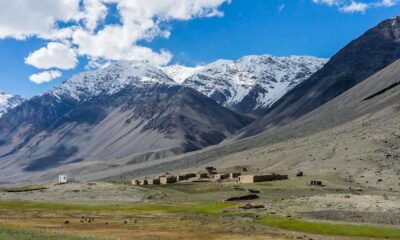
22 Russian tourists arrive in Badakhshan’s Wakhan