
Latest News
Khalilzad urges diplomacy to stave off ‘economic and state collapse’

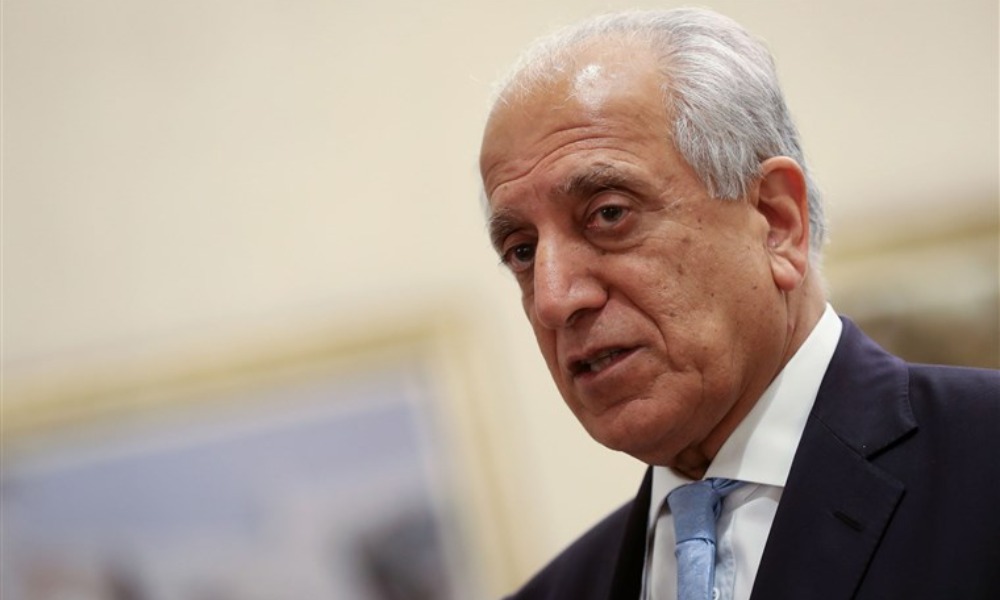
Former special envoy for Afghanistan Zalmay Khalilzad has warned the situation in Afghanistan is so bad that if the economy collapses, the state will collapse.
In an interview with TRT World, broadcast this week, Khalilzad said should this happen, the Afghan people would face huge suffering and “millions might leave”.
Speaking to TRT World, on the sidelines of last week’s Middle East Peace and Security Forum (MEPS) in Duhok, in the Kurdistan Region of Iraq,
Khalilzad said that in his opinion the current situation in Afghanistan might not be completely “desirable” but it’s also not a return to the situation in the 1990’s under the previous Islamic Emirate of Afghanistan (IEA) government.
He also said that following the takeover by the IEA, “things could have been a lot worse” and that there could have been gunfights in the streets and mass killings.
He said while there have been “specific instances that are negative, it isn’t a return to the 90s,” adding that the IEA does however have a long way to go to meet standards to “be accepted as a member of the international community”.
On a question about reported factionalism within the IEA, Khalilzad said that during the Doha talks, in the lead up to the signing of the agreement in February last year, the US had been concerned about this issue.
However, the US “tested them” and came to the conclusion that the talks delegation did in fact represent the core IEA, he said. He also pointed out that while there is factionalism within the IEA, the US had to deal with this same issue during the former Ashraf Ghani government.
“Factionalism is a part of life; it’s a reality but when you negotiate with the Talibs (IEA) you negotiate it in writing; it’s in detail; they’re a very deliberative organization and they discuss things among themselves
for a long time before they finalize an agreement.”
Khalilzad said moving forward a road map needs to be worked out as both the international community and the IEA have concerns.
He said the IEA wants political normalcy, they want frozen assets released, names removed from the blacklist and help with development projects.
“We need to put all those things on the table and get a road map agreed
to that and if they take this step the international community will take that step.”
“I think the situation is so bad that if the economy collapses the state collapses; there will be such huge suffering on the part of the Afghan people; millions might have to leave; there could be more ungoverned spaces; back to conflict.
“None of that is in the interest of Afghanistan or the international community,” he said.
Khalilzad stated that the US and the international community cannot turn their backs on Afghanistan and that now is the time for diplomacy to shape the way forward so both sides can reach an agreement in order to remove sanctions.
He said without such a plan, it would not be in the US’ interest to have the state of Afghanistan collapse.
“Finances, monies have to be made available so that the state doesn’t collapse because the alternative … is not in our interest in my view and it doesn’t serve our values. But our job is not done there yet; we need to keep working it rather than turning our back because we’re angry that the Talibs (IEA) came to power.”
He said it was in the US’ interest to help shape, influence, and engage so as to help get Afghanistan on a better trajectory.
Khalilzad also pointed out that before the US troops’ withdrawal and the IEA take over, Afghanistan was “not in a good shape” – having suffered over 18 years of war.
He said however that it would be unfair to say the IEA has not changed, noting that the new government wants to be accepted by the international community and wants assistance in rebuilding the country.
On the issue of the Islamic State’s Afghanistan affiliate (ISIS-K/Daesh), which has conducted a number of deadly attacks in Kabul in recent months, Khalizad said the IEA has the “willingness” to tackle the militant group. He said the question is whether the IEA has the capability to eradicate the group.
“There is no question or doubt that they are fighting Daesh,” he said.












Kazakhstan’s Foreign Minister Mukhtar Tileuberdi has called for pragmatic and coordinated international engagement with Afghanistan, saying the country’s long-term stability is closely linked to the security and sustainable development of Central Asia.
Speaking during the general debate of the 81st session of the United Nations General Assembly in New York on Friday, Tileuberdi said humanitarian assistance to Afghanistan remains essential but alone cannot break the cycle of poverty, displacement and dependency.
He said Kazakhstan supports a “pragmatic, coordinated and step-by-step” approach to international engagement with Afghanistan, with the United Nations playing a central role.
Tileuberdi also said Kazakhstan is working with the UN to operationalize the United Nations Regional Centre for the Sustainable Development Goals for Central Asia and Afghanistan in Almaty.
He said the success of the centre should be measured by the results and assistance it delivers to the region.


Abu Muslim Farah defeat Khurasan Faryab 2-0 in ACL season six

Saar: Concerns over Pakistan’s political crisis discussed

Afghanistan Champions League: Omar Zawak Herat beat Toofan Herat 1-0

Blast in Pakistan’s Dera Ismail Khan kills 11, injures 30

Ariana Afghan Airlines increases Kabul-Delhi cargo flights

Saudi energy group signs major Afghanistan deals covering gas exploration and pipeline plans

Trump floats idea of renaming Atlantic or Pacific Ocean

US hits Egyptian bank branches with Iran sanctions as war marks six months

Nepal flood rescue mission enters critical phase as thousands remain missing

Iranian clubs to face Gulf opponents at neutral venues in Asian Champions League Elite
Saar: Concerns over Pakistan’s political crisis discussed

Exclusive interview with Abdul Latif Mansoor, Minister of MRRD

Tawsia: Overview of Afghanistan’s iron mines

Tahawol: Discussion on fresh Pakistani airstrikes on Afghanistan

Saar: Calls for international support for Afghanistan discussed
-

 World5 days ago
CNN, MS NOW and Politico sue Trump, challenging White House ban
-

 Latest News3 days ago
Ariana Afghan Airlines ranks seventh among 45 Central Asian airlines
-

 Latest News5 days ago
UN reiterates call for respect for international law after Kunar airstrikes
-

 Regional4 days ago
US and Iran hold first talks since June after Trump’s ‘annihilation’ threat
-

 Latest News3 days ago
Silk Road highway in Wakhan corridor now reaches the China border
-

 Latest News5 days ago
Afghan Official: Pakistan’s airstrikes will not go unanswered
-

 Sport5 days ago
Afghan boxing referee heads to China for international festival
-

 Regional3 days ago
Iran airlines cancel flights as US sanctions hit