
Latest News
Muttaqi urges Pakistan to stop making decisions that harm ordinary people

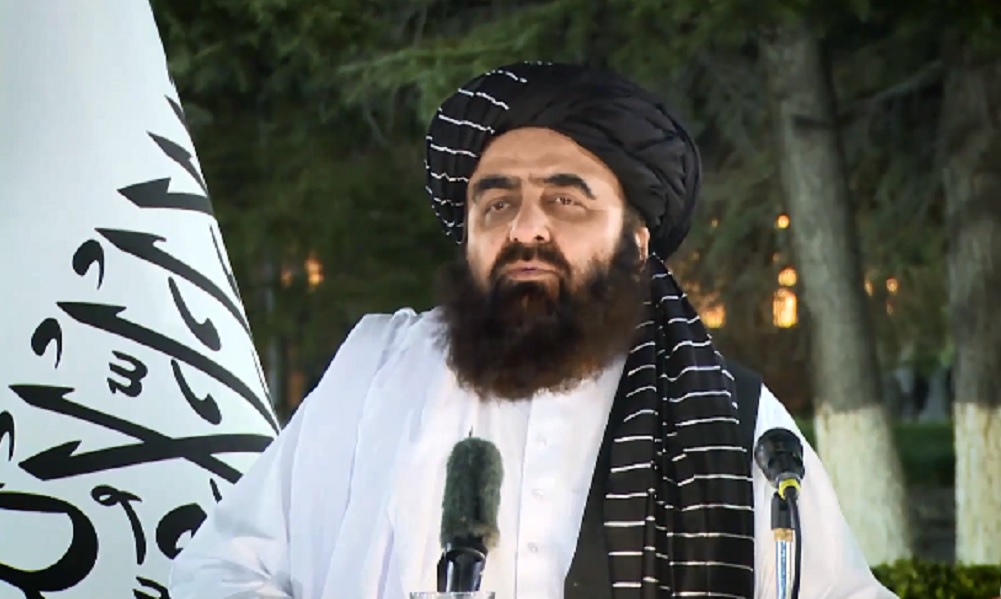
Acting Minister of Foreign Affairs Amir Khan Muttaqi has called on Pakistan to stop making decisions that harm ordinary people.
This comes after Pakistan closed Torkham border crossing last month. The key border was closed to trade and people for 25 days and only partially reopened on Wednesday. Goods trucks were allowed to cross the border from Wednesday but the border will only reopen for people on Friday.
The closure of this busy trade route cost local business owners millions of dollars in losses, especially those trading in perishable goods.
Hosting an iftar reception for foreign ambassadors and diplomats in Kabul, Muttaqi said that Torkham crossing reopened following talks between the two countries.
He said that Afghanistan has no problems with neighboring countries and if any problems arise, they will be resolved through talks.
“We hope that issues with our neighboring country Pakistan will be resolved the same way and problems will end,” he said.
Muttaqi also said that the repatriation of Afghan refugees from Pakistan should happen in a gradual and dignified manner.
This comes after Human Rights Watch (HRW) on Wednesday called on Pakistan to immediately stop forcing Afghan refugees to return home.
In their latest report, HRW slammed Pakistan for having stepped up pressure on Afghan refugees and using “intensified abusive tactics” to get them to leave the country.
On January 31, 2025, Pakistan’s Ministry of Interior announced that Afghans without official residence documents, along with holders of Afghan Citizen Cards, must leave the cities of Islamabad and Rawalpindi or face deportation. Afghans holding Proof of Registration (PoR) cards must leave by June 30.
A previous wave of deportations and expulsions, from September 2023 through January 2024, drove over 800,000 Afghans – many born in Pakistan or living there for decades – to Afghanistan.
Since November 2024, Pakistani authorities have renewed pressure to expel Afghans. More than 70 percent of those returning have been women and children, including girls of secondary school age and women who will no longer have access to education.
HRW stated that Pakistani police have raided houses, beat and arbitrarily detained people, and confiscated refugee documents, including residence permits.
They have demanded bribes to allow Afghans to remain in Pakistan. The United Nations reported that most Afghans who have returned to Afghanistan have cited fear of detention by Pakistani authorities as the reason they left.
Returning refugees have generally had to abandon property and savings in Pakistan, and have few livelihood opportunities or little land in Afghanistan.












Kazakhstan’s Foreign Minister Mukhtar Tileuberdi has called for pragmatic and coordinated international engagement with Afghanistan, saying the country’s long-term stability is closely linked to the security and sustainable development of Central Asia.
Speaking during the general debate of the 81st session of the United Nations General Assembly in New York on Friday, Tileuberdi said humanitarian assistance to Afghanistan remains essential but alone cannot break the cycle of poverty, displacement and dependency.
He said Kazakhstan supports a “pragmatic, coordinated and step-by-step” approach to international engagement with Afghanistan, with the United Nations playing a central role.
Tileuberdi also said Kazakhstan is working with the UN to operationalize the United Nations Regional Centre for the Sustainable Development Goals for Central Asia and Afghanistan in Almaty.
He said the success of the centre should be measured by the results and assistance it delivers to the region.


Abu Muslim Farah defeat Khurasan Faryab 2-0 in ACL season six

Saar: Concerns over Pakistan’s political crisis discussed

Afghanistan Champions League: Omar Zawak Herat beat Toofan Herat 1-0

Blast in Pakistan’s Dera Ismail Khan kills 11, injures 30

Ariana Afghan Airlines increases Kabul-Delhi cargo flights

Saudi energy group signs major Afghanistan deals covering gas exploration and pipeline plans

Trump floats idea of renaming Atlantic or Pacific Ocean

US hits Egyptian bank branches with Iran sanctions as war marks six months

Nepal flood rescue mission enters critical phase as thousands remain missing

Iranian clubs to face Gulf opponents at neutral venues in Asian Champions League Elite
Saar: Concerns over Pakistan’s political crisis discussed

Exclusive interview with Abdul Latif Mansoor, Minister of MRRD

Tawsia: Overview of Afghanistan’s iron mines

Tahawol: Discussion on fresh Pakistani airstrikes on Afghanistan

Saar: Calls for international support for Afghanistan discussed
-

 World5 days ago
CNN, MS NOW and Politico sue Trump, challenging White House ban
-

 Latest News3 days ago
Ariana Afghan Airlines ranks seventh among 45 Central Asian airlines
-

 Latest News5 days ago
UN reiterates call for respect for international law after Kunar airstrikes
-

 Regional4 days ago
US and Iran hold first talks since June after Trump’s ‘annihilation’ threat
-

 Latest News4 days ago
Silk Road highway in Wakhan corridor now reaches the China border
-

 Regional3 days ago
Iran airlines cancel flights as US sanctions hit
-

 Latest News5 days ago
Afghan Official: Pakistan’s airstrikes will not go unanswered
-

 Sport5 days ago
Afghan boxing referee heads to China for international festival