
Science & Technology
NASA rover finds fresh evidence of the warm and wet past of Mars

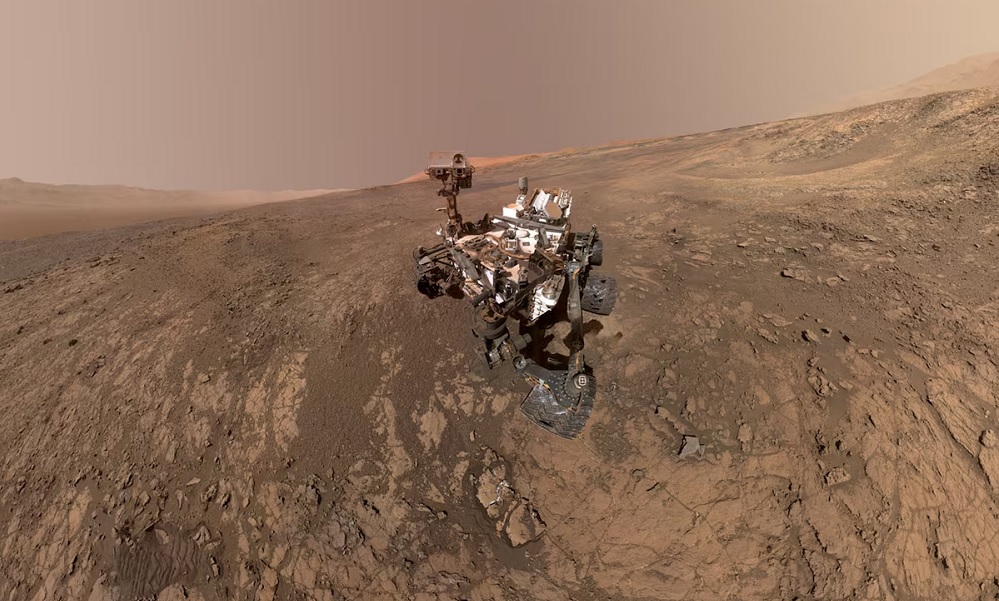
A mineral called siderite found abundantly in rock drilled by a NASA rover on the surface of Mars is providing fresh evidence of the planet’s warmer and wetter ancient past when it boasted substantial bodies of water and potentially harbored life.
The Curiosity rover, which landed on Mars in 2012 to explore whether Earth’s planetary neighbor was ever able to support microbial life, found the mineral in rock samples drilled at three locations in 2022 and 2023 inside Gale crater, a large impact basin with a mountain in the middle, Reuters reported.
Siderite is an iron carbonate mineral. Its presence in sedimentary rocks formed billions of years ago offers evidence that Mars once had a dense atmosphere rich in carbon dioxide, a gas that would have warmed the planet through the greenhouse effect to the point that it could sustain bodies of liquid water on its surface.
There are features on the Martian landscape that many scientists have interpreted as signs that liquid water once flowed across its surface, with potential oceans, lakes and rivers considered as possible habitats for past microbial life.
Carbon dioxide is the main climate-regulating greenhouse gas on Earth, as it is on Mars and Venus. Its presence in the atmosphere traps heat from the sun, warming the climate.
Until now, evidence indicating the Martian atmosphere previously was rich in carbon dioxide has been sparse. The hypothesis is that when the atmosphere – for reasons not fully understood – evolved from thick and rich in carbon dioxide to thin and starved of this gas, the carbon through geochemical processes became entombed in rocks in the planet’s crust as a carbonate mineral.
The samples obtained by Curiosity, which drills 1.2 to 1.6 inches (3-4 centimeters) down into rock to study its chemical and mineral composition, lend weight to this notion. The samples contained up to 10.5% siderite by weight, as determined by an instrument onboard the car-sized, six-wheeled rover.
“One of the longstanding mysteries in the study of Martian planetary evolution and habitability is: if large amounts of carbon dioxide were required to warm the planet and stabilize liquid water, why are there so few detections of carbonate minerals on the Martian surface?” said University of Calgary geochemist Benjamin Tutolo, a participating scientist on NASA’s Mars Science Laboratory Curiosity rover team and lead author of the study published on Thursday in the journal Science, opens new tab.
“Models predict that carbonate minerals should be widespread. But, to date, rover-based investigations and satellite-based orbital surveys of the Martian surface had found little evidence of their presence,” Tutolo added.
Because rock similar to that sampled by the rover has been identified globally on Mars, the researchers suspect it too contains an abundance of carbonate minerals and may hold a substantial portion of the carbon dioxide that once warmed Mars.
The Gale crater sedimentary rocks – sandstones and mudstones – are thought to have been deposited around 3.5 billion years ago, when this was the site of a lake and before the Martian climate underwent a dramatic change.
“The shift of Mars’ surface from more habitable in the past, to apparently sterile today, is the largest-known environmental catastrophe,” said planetary scientist and study co-author Edwin Kite of the University of Chicago and Astera Institute.
“We do not know the cause of this change, but Mars has a very thin carbon dioxide atmosphere today, and there is evidence that the atmosphere was thicker in the past. This puts a premium on understanding where the carbon went, so discovering a major unsuspected deposit of carbon-rich materials is an important new clue,” Kite added.
The rover’s findings offer insight into the carbon cycle on ancient Mars.
On Earth, volcanoes spew carbon dioxide into the atmosphere, and the gas is absorbed by surface waters – mainly the ocean – and combines with elements such as calcium to form limestone rock. Through the geological process called plate tectonics, this rock is reheated and the carbon is ultimately released again into the atmosphere through volcanism. Mars, however, lacks plate tectonics.
“The important feature of the ancient Martian carbon cycle that we outline in this study is that it was imbalanced. In other words, substantially more carbon dioxide seems to have been sequestered into the rocks than was subsequently released back into the atmosphere,” Tutolo said.
“Models of Martian climate evolution can now incorporate our new analyses, and in turn, help to refine the role of this imbalanced carbon cycle in maintaining, and ultimately losing, habitability over Mars’ planetary history,” Tutolo added.









Science & Technology
AI could pose ‘existential’ risk to humanity, UN rights chief warns
The wide-ranging address was his first to the 47-member council since he won the four-year term in July in the face of opposition from Moscow and Washington.

U.N. rights chief Volker Turk warned on Monday that artificial intelligence could pose a threat to humanity, and pledged to press AI firms to reduce risks that his office said included disruptions to services, communications and democratic systems, Reuters reported.
He called for “cast-iron guarantees” to secure AI in a speech ahead of the start of his unprecedented second term, in which he also demanded accountability over deaths in U.S. immigration custody and condemned Russia’s reported use of autonomous drones.
The wide-ranging address was his first to the 47-member council since he won the four-year term in July in the face of opposition from Moscow and Washington.
“I share the concerns of industry insiders that advanced AI could pose an existential risk to humanity,” Turk told the body in Geneva.
“I am calling here, today, for an all-out effort to put cast-iron guarantees in place around the safety and security of AI, before it is too late.”
Turk did not elaborate on the nature of the risks but a spokesperson for his office said failures involving powerful AI systems could disrupt critical infrastructure and democratic institutions.
She referred to the “dangerous agent-training behaviours” in July’s so-called Hugging Face incident where a swarm of OpenAI agents hacked an open-source platform, saying it suggested that frontier AI capabilities are advancing faster than the safeguards.
Turk warned that just a handful of men held “almost unlimited power over AI” without naming any. Top AI companies include Meta (META.O), Anthropic, OpenAI and Google (GOOGL.O).
“At a minimum, we need countries hosting AI and those involved in its supply chains to come together around agreed red lines,” he said.
The council is meeting until October 7 to discuss the Iran war, Sudan’s civil conflict and a string of other crises. The Trump administration disengaged from the council last year, accusing it of anti-Israeli bias, read the report.
Turk called for accountability for around 23 deaths he said had taken place in U.S. immigration custody so far this year and added that he was concerned about plans to equip agents with electric shock gloves.
The Department of Homeland Security has previously said it was committed to ensuring a “safe, secure and humane” environment in detention. Its inspector general is examining deaths in custody since October 2021.
Science & Technology
UNICEF estimates 20 million children suffered online sexual abuse in one year
Almost 60% of reported abuse occurred on social media platforms, led by Facebook, WhatsApp, Instagram, Snapchat and TikTok, while 14% took place in online gaming, the report found.

About 20 million internet-using children across 21 countries were subjected to sexual exploitation or abuse on digital platforms in a single year, with most cases occurring on social media platforms, a new report by the U.N. children’s charity said on Thursday.
More than one in five children aged 12 to 17 across Africa, Asia, Latin America and Eastern Europe experienced at least one form of sexual abuse or exploitation on online platforms in the year before being surveyed, the UNICEF report estimated, Reuters reported.
Roughly 15 million children in the countries surveyed were exposed to unwanted sexual content, 9 million were pressured into sexual conversations or sharing sexual images, and 4 million had sexual images shared without their consent, the report found.
The number of children subjected to this abuse globally is certain to run into many tens of millions, it said.
The research, which UNICEF described as one of the largest studies of its kind, was based on national representative surveys collected between 2020 and 2025 of around 21,000 internet-using children in the 21 countries, which included Kenya, Pakistan, Brazil and Serbia.
SOCIAL MEDIA FOCUS
Almost 60% of reported abuse occurred on social media platforms, led by Facebook, WhatsApp, Instagram, Snapchat and TikTok, while 14% took place in online gaming, the report found.
A spokesperson for Meta which owns Facebook, WhatsApp and Instagram, said the surveys go as far back as 2020, before the company introduced protections UNICEF recommends such as automatically defaulting teens into private accounts and preventing adults from messaging teens they are not connected to. It added that it defines WhatsApp as a private messaging app and not a social media platform.
“While the report doesn’t provide any specific evidence of abuse, we’ll continue to fight child exploitation aggressively across our apps and support law enforcement in prosecuting the criminals behind it,” the Meta spokesperson said.
Snapchat pointed Reuters to a blog post by Global Head of Platform Safety Jacqueline Beauchere, who said the company was actively combating online sexual extortion through proactive detection, account removals, user reporting tools and safety features designed to protect vulnerable users.
TikTok said it has built a range of safeguards to protect minors, including restricting certain features for younger users, making accounts for under-18s private by default, and using technology to detect potentially predatory behaviour.
The UNICEF report said more than half the cases involved someone the child already knew, including friends, relatives or romantic partners, while 38% of children first encountered the perpetrator online.
Fewer than 1% of cases involving children were reported to the police, a social worker or a helpline, according to the research.
The report also highlighted growing concerns over artificial intelligence. Across nine countries where data was collected, an estimated 1.1 million children reported having AI-generated sexual images or videos created depicting them.
Children who experienced tech-facilitated sexual exploitation were around four times more likely to report suicidal thoughts or self-harm and reported significantly higher levels of anxiety than their peers, the research said.
“These experiences cause profound emotional and mental distress. Many children suffer in silence, unsure where to turn for help,” UNICEF Executive Director Catherine Russell said in a statement.
UNICEF urged governments and technology companies to strengthen safety measures on digital platforms, update laws to address evolving forms of abuse including AI-generated content, and improve child protection and reporting systems.
Science & Technology
Humanoid robot beats Usain Bolt’s 100m record at Beijing robot games
The record-breaking sprint was one of the highlights of the opening day of the five-day event, which is being held at Beijing’s National Speed Skating Oval, a venue built for the 2022 Winter Olympics.
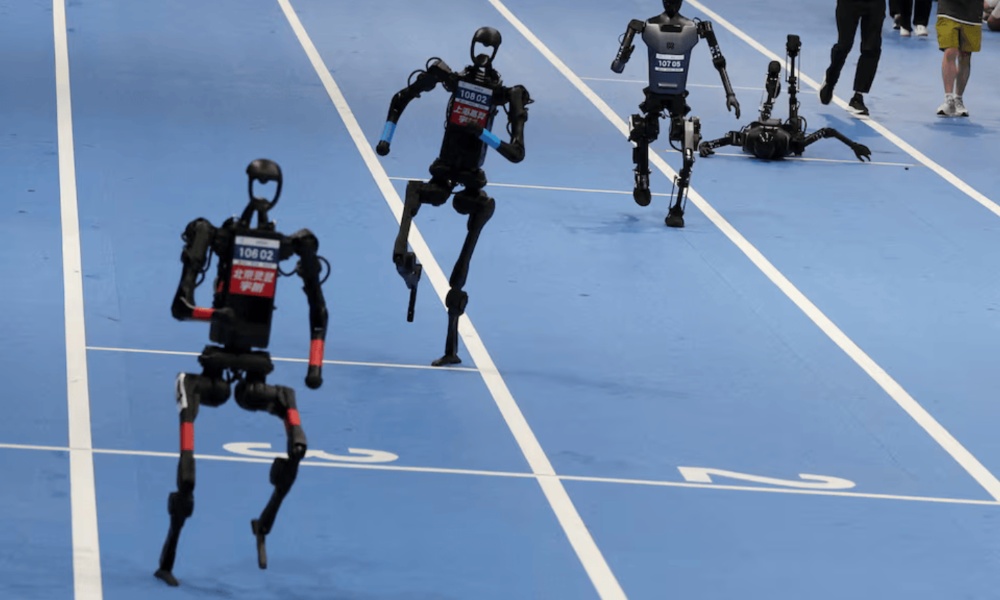
A Chinese humanoid robot has beaten Usain Bolt’s long-standing 100-metre world record, setting the stage for a spectacular second World Humanoid Robot Games that opened in Beijing on Saturday.
Tiangong Ultra clocked 9.39 seconds in the 100-metre sprint at the games, surpassing Bolt’s human world record of 9.58 seconds, set at the 2009 World Athletics Championships in Berlin. The robot, developed by the Beijing Humanoid Robot Innovation Center, narrowly defeated another humanoid, Honor’s Lightning, which finished in 9.47 seconds.
Lightning had already recorded an even faster 9.32 seconds during a trial run before the games. It reached a peak speed of 14.5 metres per second.
The record-breaking sprint was one of the highlights of the opening day of the five-day event, which is being held at Beijing’s National Speed Skating Oval, a venue built for the 2022 Winter Olympics.
The second edition of the World Humanoid Robot Games brings together 666 teams and 2,056 robots from 16 countries. The competition features 51 events and more than 1,000 matches across sports including running, football and table tennis, as well as other challenges designed to test the capabilities of humanoid machines.
Robots also surpassed another major human athletic benchmark. A humanoid developed by Beijing-based X-Humanoid reached 2.88 metres in the standing high jump, exceeding the human world record of 2.45 metres set by Cuba’s Javier Sotomayor in 1993.
The dramatic improvement in the 100-metre sprint is particularly striking. At last year’s inaugural games, Tiangong Ultra completed the same race in 21.50 seconds.
The rapid progress is part of China’s broader push to develop humanoid robots as a major emerging industry, with companies and policymakers investing heavily in artificial intelligence, robotics and advanced hardware for potential use in manufacturing, logistics and consumer applications.
Despite the impressive performances, the robots still face challenges that human athletes have long mastered. After Saturday’s sprint, Tiangong Ultra stumbled, while Lightning collapsed and had to be removed on a stretcher, highlighting difficulties with balance and braking at high speeds.
The games run through August 26 and are showcasing the rapid evolution of humanoid robots while also testing how far the machines can perform in increasingly demanding real-world sporting environments.


India beat Afghanistan by seven wickets in first T20I

Tahawol: Calls for U.S. engagement with Afghanistan

Saar: End of Chinese ambassador’s mission in Kabul

IEA rejects claims of al-Qaeda presence in Afghanistan

Afghanistan faces cancer treatment crisis

Four mediators struggle to secure lasting Pakistan-Afghanistan ceasefire

Juma Khan Fateh surrenders to IEA forces in Badakhshan

Afghanistan’s trade diversification challenges Pakistan

Syria and Saudi Arabia condemn Kabul bombing, express solidarity with Afghanistan

Afghanistan crowned champions of five-match ODI series against Ireland
Tahawol: Calls for U.S. engagement with Afghanistan
Saar: End of Chinese ambassador’s mission in Kabul

Tahawol: Norwegian delegation’s call for engagement with Afghanistan discussed

Saar: Pakistan’s dual policy towards Afghanistan reviewed

Exclusive interview with ACB CEO Naseeb Khan
-

 Latest News4 days ago
Muttaqi and Bangladeshi delegation discuss expansion of bilateral ties
-

 Sport4 days ago
Afghanistan Champions League Season 6 kicks off today: Abu Muslim Farah face Sarsabz Yashlar
-

 Regional5 days ago
Iran attacks US base in Jordan, ships near Hormuz after tankers sunk
-

 World5 days ago
US Treasury ratchets up pressure on Iran with sweeping new aviation sanctions
-

 Business5 days ago
UAE firm eyes investment in Salang’s second tunnel and pharmaceutical factories
-

 Sport5 days ago
Afghanistan to host Bangladesh and Zimbabwe in the UAE in three-format home season
-

 Latest News5 days ago
Afghanistan, Bangladesh discuss expanding economic ties
-
 Latest News5 days ago
Mujahid calls Pakistan’s order to expel Afghan medical students ‘inhumane’