
Latest News
Neighbors at China meeting call for inclusive political structure in Afghanistan

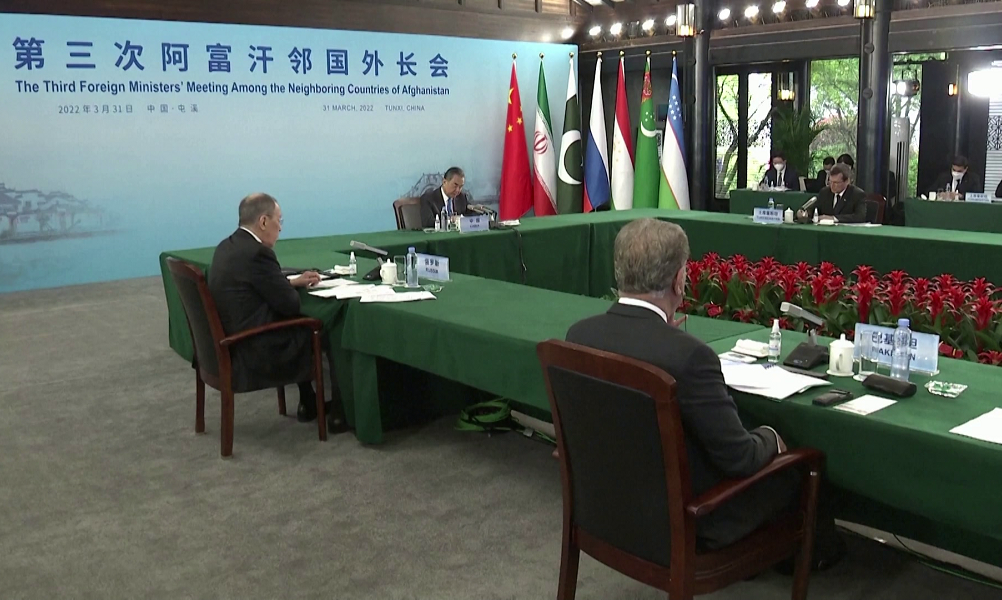
Neighboring countries noted the importance to achieve national reconciliation in Afghanistan through dialogue and negotiation and to establish a broad-based and inclusive political structure during their meeting in China on Thursday.
The third Foreign Ministers’ Meeting among the Neighboring Countries of Afghanistan was held in Tunxi, Anhui province in China. Foreign ministers or senior representatives of seven countries, namely China, Iran, Pakistan, Russia, Tajikistan, Turkmenistan and Uzbekistan, attended the meeting.
They noted the importance of taking necessary continuing steps in Afghanistan on ensuring women’s rights and children’s education, among others, and called for further actions to be taken to improve people’s livelihoods, and safeguard the fundamental rights of all Afghans, including ethnic groups, women and children, according to a joint statement.
Participants also reaffirmed opposition to attempts at politicizing humanitarian assistance, and reiterated respect and support for the central role of Afghanistan in distributing and using humanitarian assistance to be rendered by the international community and international organizations to the people of Afghanistan.
On the same day, China also hosted a separate meeting focused on supporting Afghanistan’s economic reconstruction and practical cooperation, called the Tunxi Initiative.
“The Tunxi Initiative is rich in content and will play an important role in promoting Afghanistan’s peace, reconstruction, stability and development in the future,” Chinese Foreign Minister Wang Yi said at a press conference.
“The initiative embodies five features: First, not playing geopolitical games, but focusing on practical cooperation. Second, not imposing one’s will on others, but advocating equality and voluntariness. Third, not making high-profile empty promises, but pursuing tangible results. Fourth, not acting without coordination, but striving for regional connectivity. Fifth, not seeking isolation and antagonism, but advocating openness and inclusiveness,” Wang said.
All parties at the meeting decided to provide further humanitarian assistance to Afghanistan, and called on the international community to give more support to Afghanistan, to help it restore cash liquidity and avoid humanitarian disaster.



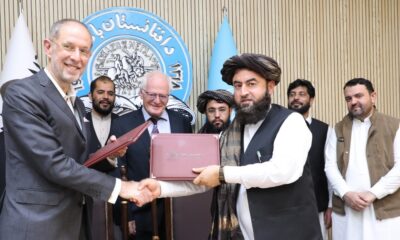

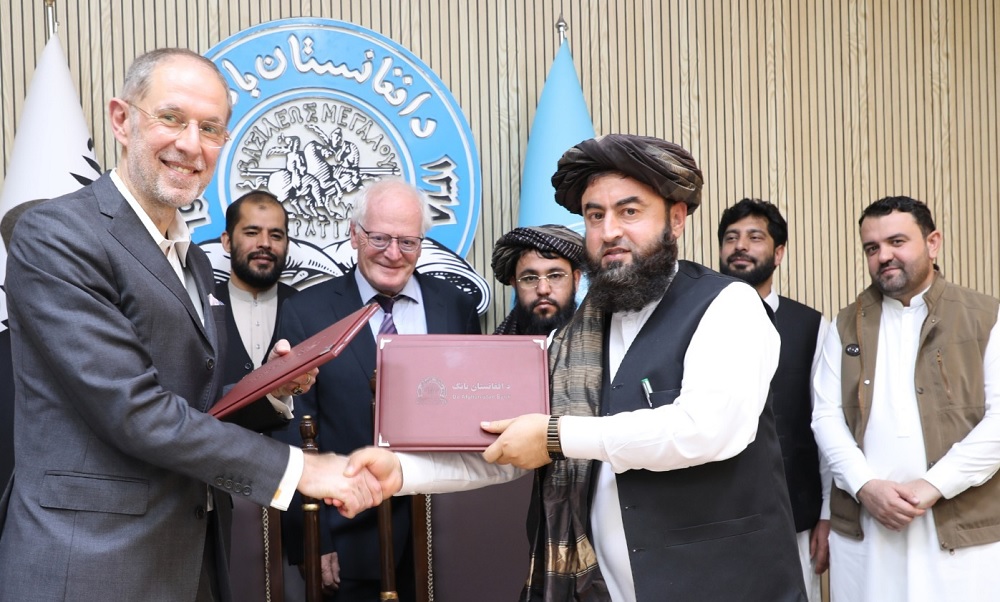
Da Afghanistan Bank (DAB) and the Afghan Credit Guarantee Foundation (ACGF) have signed a cooperationmemorandum of understanding (MoU) aimed at strengthening the financial sector and expanding access to financial resources for small, medium and large businesses.
The agreement was signed during a ceremony at the DAB Supreme Council Hall, where DAB First Deputy Governor Sediqullah Khalid said such agreements create opportunities to provide suitable and diverse Islamic financial services to citizens and expand access to financing for small and medium-sized enterprises.
Khalid said that under the agreement, banks and financial institutions will initially receive technical and professional support. He added that five banks and one microfinance institution will receive grants worth around $1 million in the first phase to support financing for small and medium-sized businesses.
He said other banks and financial institutions that meet the required criteria would benefit from the grants and related facilities in later phases.
Khalid also said that attention would be given to facilitating the creation and financing of small businesses for Afghans returning from other countries.
Under the agreement, the two sides will cooperate on strengthening the financial sector, expanding access to financial resources for businesses, promoting Islamic financial services and building the capacity of financial institutions.
Technical and professional assistance, training programs and capacity-building opportunities will also be provided to banking and non-banking financial institutions.
Roger Thomas Piltzer, chairman of the ACGF Board of Trustees, also welcomed the agreement and stressed the importance of continuing and expanding cooperation with Da Afghanistan Bank.
The agreement aims to establish a framework for cooperation between the two sides to strengthen Afghanistan’s financial sector, expand access to Islamic financial services and provide financial resources for small and medium-sized businesses.
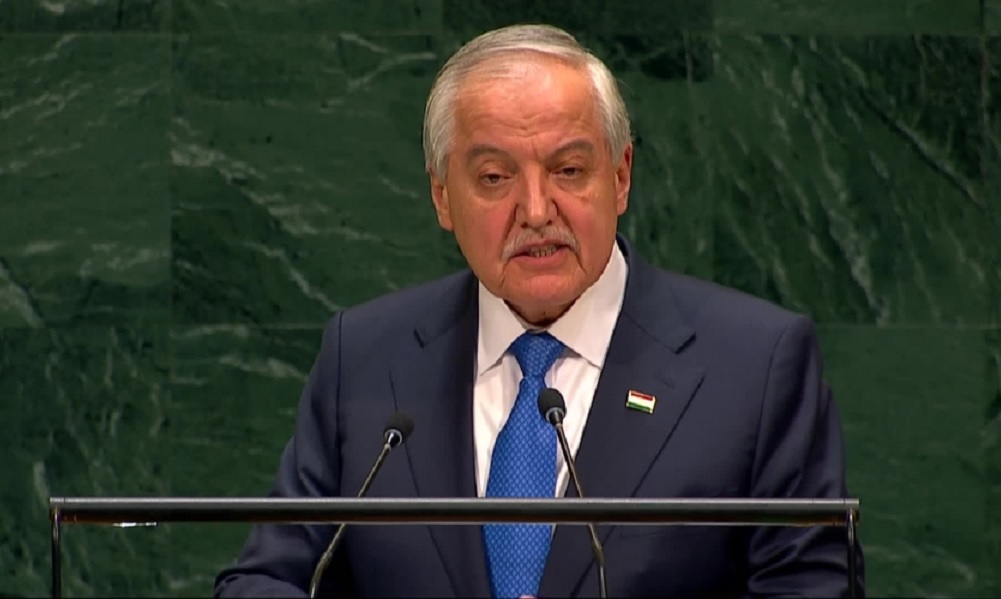
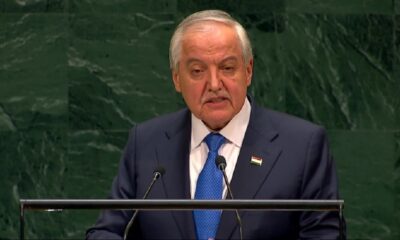
Tajikistan has reaffirmed its support for the Afghan people, stressing that peace, stability and economic opportunities in Afghanistan are closely linked to security and sustainable development in the region.
Speaking at the 81st session of the United Nations General Assembly in New York on Saturday, Tajik Foreign Minister Sirodjiddin Muhriddin said lasting security and sustainable development in the region are closely connected to the situation in Afghanistan.
“Afghanistan needs peace, stability and economic opportunity,” Muhriddin said.
He added that Tajikistan would continue to support the Afghan people and constructive regional cooperation aimed at achieving a peaceful and stable Afghanistan.
“When Tajikistan speaks about peace, we also speak from experience,” Muhriddin said.
Latest News
Germany reports 488 Afghans for possible deportation, 267 have no criminal convictions
The Interior Ministry says around 250 Afghan nationals have been deported to Afghanistan since the current coalition government took office.
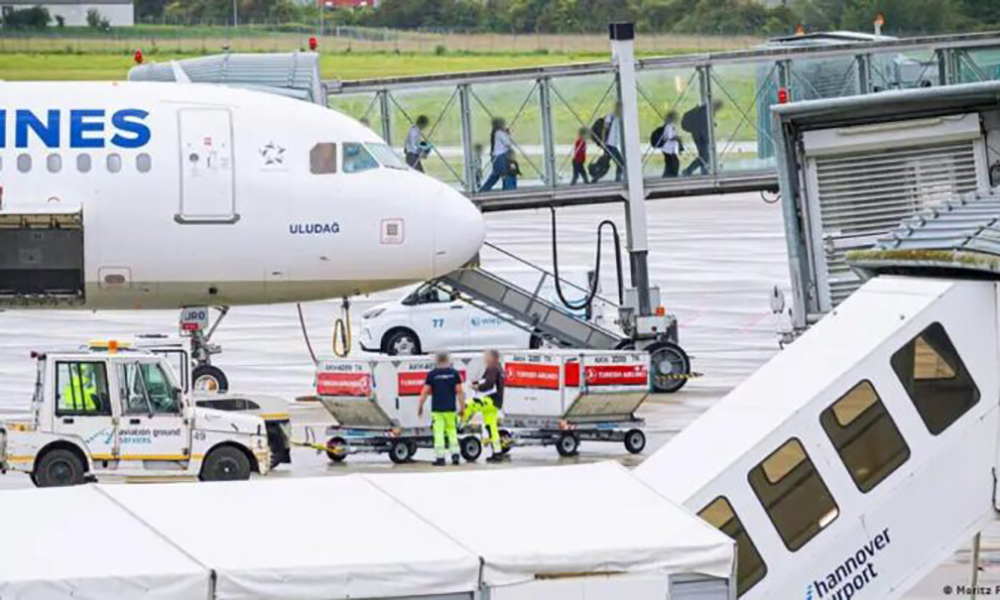
German authorities have identified 488 Afghan nationals for possible deportation to Afghanistan, including 267 who have no criminal convictions, according to figures from the Interior Ministry.
The figures were disclosed in a written response to a parliamentary inquiry by Left Party lawmaker Clara Bünger and reported by German media. They cover cases submitted by Germany’s federal states to the Federal Police between July 8 and September 18. All federal states except Bremen and Mecklenburg-Vorpommern submitted Afghan nationals for possible removal.
Seven Afghan nationals are currently being held in deportation detention at the request of the Federal Police, while another is in custody pending refusal of entry, the ministry said.
The figures come as Germany expands preparations for deportations to Afghanistan. In July, Germany carried out its first deportation of an Afghan national without a criminal conviction since the Islamic Emirate of Afghanistan (IEA) returned to power in 2021.
Germany had suspended deportations to Afghanistan following the IEA takeover in 2021. Flights resumed in 2024, initially focusing on people convicted of serious crimes. The government has since moved to broaden removals to some Afghans who have no criminal convictions.
The German government has said deportations should be carried out against people who are legally required to leave Germany and for whom no individual deportation ban applies. Earlier government statements said the initial focus would be on convicted criminals and people considered security threats.
The policy has drawn criticism from opposition politicians and refugee and human rights groups. Bünger questioned the deportation of Afghans without criminal convictions, citing security, humanitarian and human rights concerns in Afghanistan.
Germany’s Federal Constitutional Court has also ruled that the government cannot cancel certain humanitarian admission commitments to Afghans en masse without examining individual cases, adding to legal scrutiny of its Afghanistan policy.
The Interior Ministry says around 250 Afghan nationals have been deported to Afghanistan since the current coalition government took office.


Afghanistan-Kazakhstan trade reaches $581 million in six months

Trump says men arrested at UK air base used by US planned ‘big damage’

Serbia’s President Vucic resigns ahead of October parliamentary elections

Floods, landslides kill 56 in India and 14 in Nepal

Afghanistan central bank and ACGF sign cooperation agreement

Saudi energy group signs major Afghanistan deals covering gas exploration and pipeline plans

Trump floats idea of renaming Atlantic or Pacific Ocean

Nepal flood rescue mission enters critical phase as thousands remain missing

Iranian clubs to face Gulf opponents at neutral venues in Asian Champions League Elite

Khalilzad: Afghanistan ready to attract major investment

Saar: Afghanistan’s image at UNGA

Saar: Concerns over Pakistan’s political crisis discussed

Exclusive interview with Abdul Latif Mansoor, Minister of MRRD

Tawsia: Overview of Afghanistan’s iron mines

Tahawol: Discussion on fresh Pakistani airstrikes on Afghanistan
-

 Latest News5 days ago
Ariana Afghan Airlines ranks seventh among 45 Central Asian airlines
-

 Regional4 days ago
Iran airlines cancel flights as US sanctions hit
-

 Latest News5 days ago
Silk Road highway in Wakhan corridor now reaches the China border
-

 Sport4 days ago
Afghanistan open Asian Games cricket campaign with win over Japan
-
 World4 days ago
Trump welcomes Chinese President Xi as US-China summit gets underway
-
 Latest News5 days ago
OIC Contact Group reaffirms support for Afghan people
-
 Latest News5 days ago
Refugees minister, UNAMA deputy discuss challenges facing returnees
-
 Latest News4 days ago
Khalilzad warns Pakistan-Afghanistan tensions likely to worsen after fresh airstrikes