
Latest News
Pakistan Warns Taliban to Include Islamabad in Negotiations

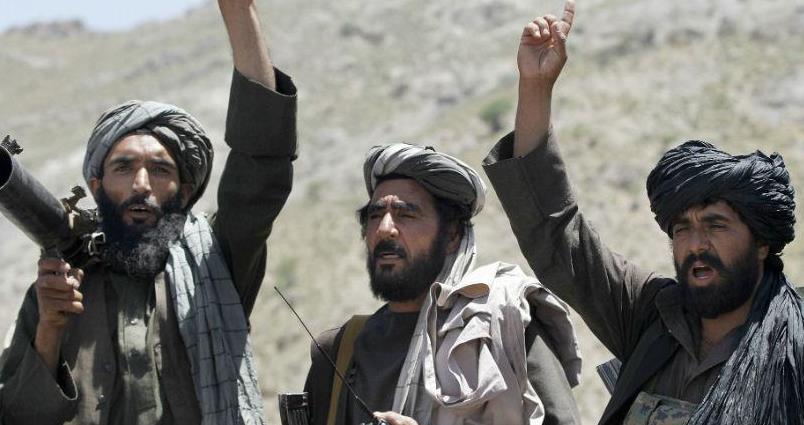
 Two senior Taliban figures said that Pakistan issued a stark warning to the militant group, apparently surprised and angered over being excluded from the insurgents’ secret talks with the Afghan government.
They said the Pakistani government warned the Taliban that unless they consult with Islamabad during the negotiations all top Taliban leaders will be forced to leave Pakistan along with their families.
The Islamabad ultimatum was given last week to a three-person Taliban delegation visiting Pakistan from Qatar, where the militant group’s political office is located, said the two Taliban figures. They spoke to The Associated Press on condition of anonymity because they were not authorized to discuss the talks.
Pakistan’s government declined to comment on Monday. It denies Afghan accusations that Islamabad is providing a safe haven to the Taliban.
“We won’t communicate with the Taliban through the media. I have no comment to make,” said Sartaj Aziz, a government adviser on foreign affairs.
The three members of the Taliban delegation are Mullah Salam Hanifi and Mullah Jan Mohammed, both former ministers in the Taliban government, and Maulvi Shahabuddin Dilawar, a former ambassador to Saudi Arabia and Pakistan . They arrived from Qatar two weeks ago, apparently aiming to smooth Pakistan’s ruffled feathers after it was revealed that the Taliban held secret talks with the Afghan government in September and October.
Under pressure from both Washington and Kabul to get the Taliban to the negotiating table, Islamabad has been frustrated by the refusal of Taliban leaders living in Pakistan to participate in talks.
The three Taliban representatives are now in Quetta, the capital of Pakistan’s southwest Baluchistan province, to brief other leaders of the group about their discussions with Pakistani officials, said the two Taliban figures.
Many of the Taliban leaders living in Pakistan are accompanied by their children, who attend school in the country. Several also own property and businesses in Pakistan. Some of them trace their association with Pakistan back three decades. Although the Taliban have carved out some areas in Afghanistan where they can live in relative safety, it would be difficult for them to move there with their families, especially with children, who would have no access to school.
While Pakistan provides health care to wounded Taliban fighters and shelter to many of its leaders, the relationship between the two is often quarrelsome and tainted with mistrust on both sides.
In one of several official Taliban What’s App groups, an app that the insurgent group uses to chat, as well as for issuing claims of responsibility for attacks and sharing pictures, the militants recently accused Pakistan of helping the United States kill Taliban leader Mullah Akhtar Mansour, who died in May in a U.S.-drone strike in Pakistan’s southwestern Baluchistan province.
Several senior Taliban are in jail in Pakistan, either for refusing Pakistan’s demands to open peace talks or for talking to Afghan government officials without involving Pakistan. During their meetings, the Taliban delegation wanted information on group members currently in jail, the two Taliban officials told The Associated Press.
Among those in jail is Mullah Nanai, a former intelligence chief during Mansour’s rule. Nanai was arrested earlier this month after he reportedly refused to take part in the quadrilateral talks involving the United States, China, Pakistan and Afghanistan, said the Taliban officials.
Pakistan also tried to arrest Amir Khan Muttaqi, who was one of the most senior ministers in the Taliban’s government and opposed talks. He was not home at the time of the raid in Quetta, officials said.
Further complicating efforts to forge ahead with talks aimed at ending the war in Afghanistan are the divisions within the Taliban over whether to participate in negotiations. Many of the militant group’s foot soldiers have balked at talks, particularly given their recent battlefield successes. Nanai and Muttaqi are also flatly opposed to Afghanistan peace negotiations, yet the Taliban’s Doha office has held talks.
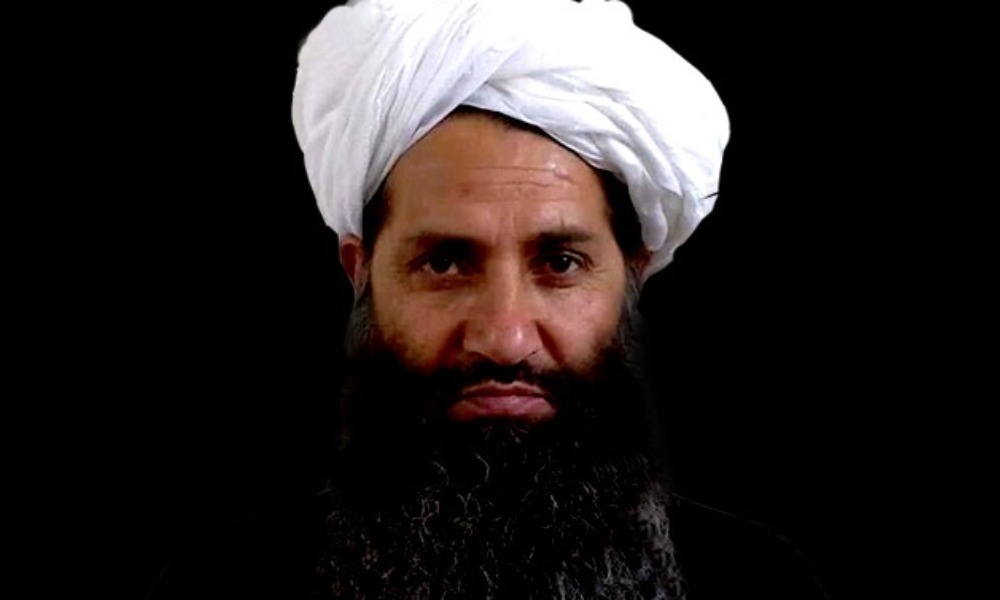
Earlier this month, the former head of the Taliban’s Doha political office, Tayyab Aga, wrote a letter addressed to the Taliban leader Mullah Haibatullah Akhundzada in which he called for Islamabad to be excluded from talks with the Afghan government and urged all Taliban leaders to leave Pakistan. He also urged the Taliban to drop its name, the Islamic Emirate of Afghanistan, a longstanding demand of the Afghan government, and instead refer to themselves as a movement.
Source: Associated Press

International Sports
IPL 2026: Lucknow hold nerve in final over to defeat Sunrisers
The match went down to the wire, with Sunriser’s bowlers applying pressure in the death overs through tight lines and clever variations.
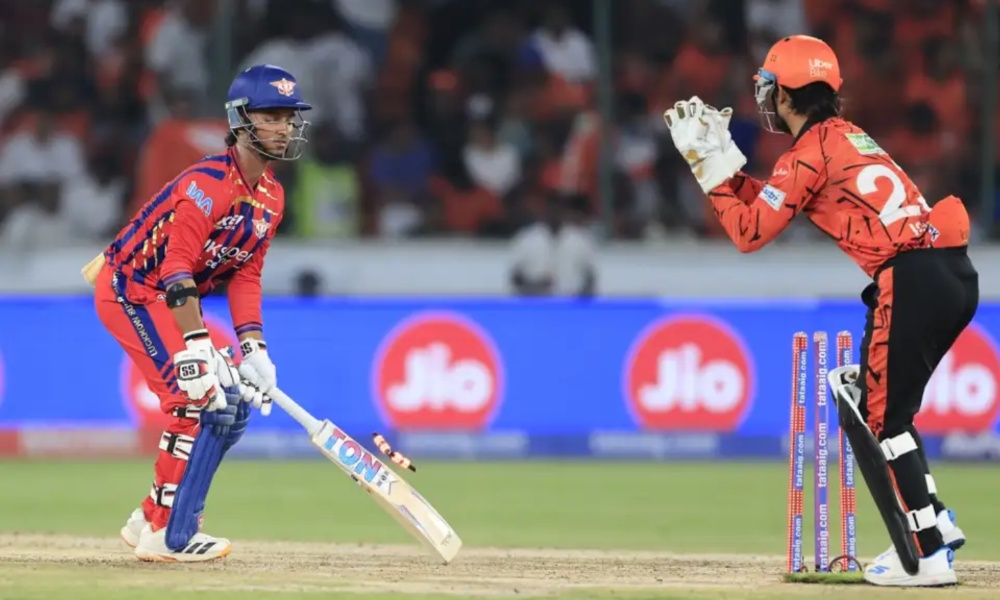
Lucknow Super Giants edged out Sunrisers Hyderabad in a thrilling Indian Premier League (IPL) encounter on Sunday, completing a tense run chase in the final over to register a crucial early-season win.
Batting first, Sunrisers posted a competitive total built around a fluent innings from Heinrich Klaasen, who once again demonstrated his ability to accelerate in the middle overs. He found support from the top order, helping the hosts set what looked like a defendable target on a surface offering some assistance to bowlers.
In response, Lucknow’s chase was steady rather than explosive. Early wickets threatened to derail their innings, but captain Rishabh Pant played a composed and calculated knock, anchoring the innings while rotating strike effectively.
Nicholas Pooran provided a late surge with some aggressive hitting, shifting momentum back in Lucknow’s favour.
The match went down to the wire, with Sunriser’s bowlers applying pressure in the death overs through tight lines and clever variations. However, Lucknow kept their composure, finding the boundaries when needed to cross the line with just one delivery remaining.
The win gives Lucknow Super Giants valuable momentum in the opening phase of the tournament, while Sunrisers Hyderabad will take positives from their batting performance but look to tighten their execution at the death.
Focus now moves to Monday’s fixture which sees Kolkata Knight Riders face Punjab Kings in what is expected to be a high-tempo contest.
Kolkata’s strength lies in their all-round depth, with power hitters and a varied bowling attack capable of adapting to different conditions. Punjab Kings, on the other hand, will be banking on their explosive top order and improved bowling unit to deliver a more complete performance.
Both teams are still shaping their combinations, making this an important match for building rhythm and consistency as the league stage progresses.
Fans across Afghanistan can follow every moment of the IPL live on Ariana Television Network, which holds exclusive broadcast rights for the tournament.
Viewers are also encouraged to stay connected via the social media platforms of Ariana Television and Ariana News for updated match schedules, live coverage details, highlights, and breaking IPL news throughout the season.
Latest News
Afghanistan hosts inaugural Afghanistan–Central Asia Consultative Dialogue to strengthen regional cooperation
On the issue of Pakistan, Muttaqi reiterated Afghanistan’s commitment to resolving bilateral issues through dialogue and diplomacy, while safeguarding its sovereignty.
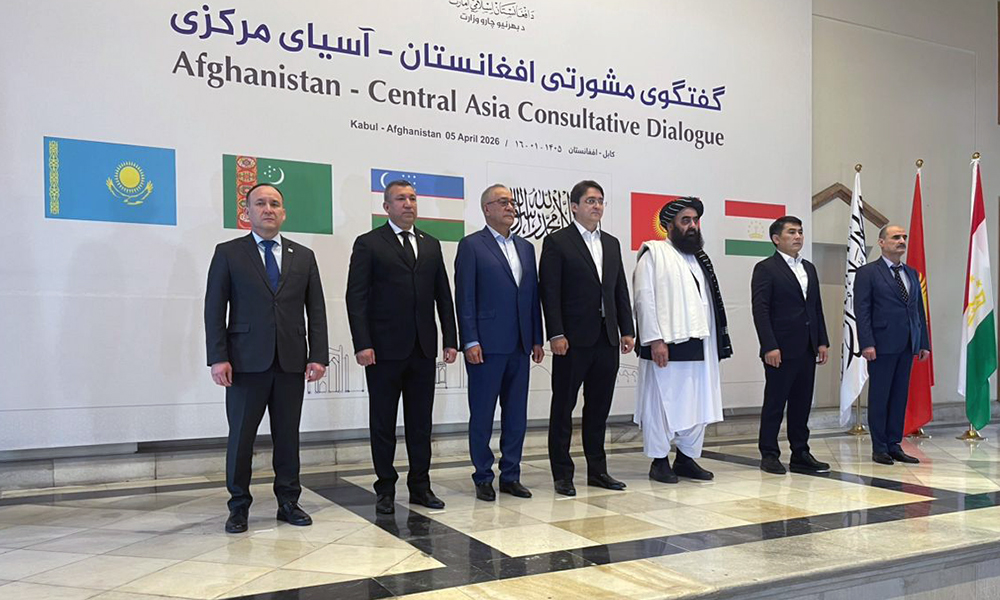
In a significant step towards regional cooperation, Afghanistan hosted the first-ever Afghanistan–Central Asia Consultative Dialogue on Sunday. The high-level event took place in Kabul, bringing together key representatives from five Central Asian nations—Uzbekistan, Kyrgyzstan, Turkmenistan, Tajikistan, and Kazakhstan. The dialogue, initiated by the Ministry of Foreign Affairs of the Islamic Emirate of Afghanistan, aims to establish a multilateral political mechanism to foster diplomatic coordination, enhance economic cooperation, and promote connectivity across the region.
Key Themes of the Dialogue
The meeting, which marked an important milestone in regional diplomacy, was inaugurated by Amir Khan Muttaqi, the Foreign Minister of Afghanistan. In his address, he expressed his satisfaction at hosting such a crucial gathering, emphasizing the platform’s role in advancing mutual trust, stability, and regional collaboration.
“The dialogue aims to enhance political dialogue, promote economic integration, and strengthen diplomatic coordination between Afghanistan and Central Asia,” said Muttaqi. “It will also focus on exploring opportunities for cooperation in key areas such as trade, transit, and regional connectivity.”
Historical Ties and Shared Challenges
Muttaqi took the opportunity to highlight the deep historical, cultural, and geographical bonds between Afghanistan and the Central Asian nations. He referenced the region’s rich intellectual and cultural history, pointing to influential figures such as Imam Abu Hanifa, Imam Bukhari, and other notable scholars and thinkers from the region who have contributed to a shared heritage.
He underscored that the current narrative between Afghanistan and Central Asia is one of opportunity and cooperation, rather than confrontation. “Our collective aim is to address regional challenges in a coordinated manner to achieve prosperity, stability, and development,” he said.
Regional Context and Afghanistan’s Role
The foreign minister also highlighted Afghanistan’s role in a rapidly changing global context, where geopolitical shifts and regional challenges are reshaping the international landscape. He stressed the need for Afghanistan and Central Asia to navigate these challenges together, particularly in relation to the ongoing security dynamics in West Asia.
On the issue of Pakistan, Muttaqi reiterated Afghanistan’s commitment to resolving bilateral issues through dialogue and diplomacy, while safeguarding its sovereignty. “Afghanistan seeks peaceful resolutions based on mutual respect and dialogue, but we also retain the right to protect our territorial integrity,” he added.
Afghanistan’s Foreign Policy and Achievements
Outlining the key principles of Afghanistan’s foreign policy, Muttaqi emphasized the importance of balance, economic cooperation, and good neighborly relations. He noted that Afghanistan’s foreign policy framework has been centered on strengthening ties with its neighbors, particularly Central Asia, to foster regional stability and development.
Among Afghanistan’s notable achievements in recent years, he pointed to the establishment of a stable Islamic governance system, the elimination of widespread corruption, and the near-complete eradication of narcotics cultivation. He also highlighted the country’s economic policy, which aims to attract foreign investment and foster economic growth, particularly through trade with Central Asia.
Economic and Trade Cooperation
The dialogue also served as a platform to discuss economic cooperation, with Muttaqi sharing promising trade figures. In 2025, Afghanistan’s trade with Central Asia reached approximately $2.7 billion, marking a significant growth compared to previous years. The goal, he said, is to expand trade volume to $10 billion within the next 3-4 years.
Afghanistan’s strategic position, linking Central Asia to South and West Asia, positions it as a vital hub for regional trade. Key projects that were discussed included:
TAPI Gas Pipeline: Significant progress on the Herat–Turkmenistan border, with 120 km of pipeline ready for construction.
CASA-1000 Energy Project: Advancing energy transmission between Kyrgyzstan, Tajikistan, Afghanistan, and Pakistan.
Lapis Lazuli Trade Route and Six-Nation Corridor: Prioritizing regional connectivity for enhanced trade.
Security and Border Cooperation
Another critical area of discussion was security and border cooperation. Afghanistan shares over 2,300 kilometers of borders with Central Asian countries, including Tajikistan, Uzbekistan, and Turkmenistan. The dialogue included discussions on joint security efforts, particularly in tackling cross-border threats such as drug trafficking, illegal migration, and extremism. The Afghan security forces’ efforts in maintaining stable borders were also highlighted as a key factor in ensuring regional security.
Proposals for Strengthening Regional Integration
Muttaqi proposed several measures to further strengthen regional cooperation:
1. Institutionalizing the Afghanistan–Central Asia Consultative Dialogue to meet regularly.
2. Organizing expert conferences to develop actionable cooperation roadmaps.
3. Creating a joint security framework to address shared regional challenges.
4. Coordinating efforts to combat climate change and address environmental concerns.
5. Expanding regional participation in initiatives like the Shanghai Cooperation Organization and Green Central Asia.
Conclusion: A New Era of Cooperation
In his closing remarks, Muttaqi expressed his gratitude to all participating nations for their support and commitment to the dialogue. He reaffirmed Afghanistan’s pragmatic and cooperative approach to regional engagement, calling the dialogue a historic step towards building a stable, prosperous, and interconnected region.
This inaugural Afghanistan–Central Asia Consultative Dialogue signals the beginning of a new chapter in regional cooperation, focused on shared economic growth, security, and sustainable development. With continued dialogue and collaboration, the nations of Central Asia and Afghanistan are set to chart a path towards a more integrated and prosperous future.


IPL 2026: Lucknow hold nerve in final over to defeat Sunrisers

US, Iran and mediators make push for 45-day ceasefire, Axios reports

IEA supreme leader orders replacement of foreign terminology in official documents

IPL 2026: Rajasthan Royals, Delhi Capitals go top as double-header delivers thrills

Afghanistan hosts inaugural Afghanistan–Central Asia Consultative Dialogue to strengthen regional cooperation

IEA Supreme Leader issues Eid-ul-Fitr message urging unity and support for Islamic system

14 Pakistani soldiers killed after military post falls along Durand line: MoD

Afghanistan steps in to replace Iran in supplying fruits and vegetables to Russia

Afghan airstrikes target Pakistani military sites in retaliation for air attacks

Turkmenistan, Afghanistan discuss steps to speed up land acquisition for TAPI pipeline

Tahawol: Continuation of Middle East crisis discussed

Saar: Ongoing Kabul-Islamabad talks in China discussed

Tawsia: This week’s key economic developments in Afghanistan discussed

Tahawol: Start of talks between Kabul-Islamabad in China discussed

Saar: Ongoing US and Israeli attacks on Iran discussed
-
 Latest News5 days ago
Baradar approves 17 projects worth over one billion AFN
-
 Business3 days ago
Tripartite agreement to launch new Russia–Turkmenistan–Afghanistan transit corridor
-
 Latest News5 days ago
Afghan delegation heads to China for talks with Pakistan
-
 Latest News3 days ago
China says Afghanistan–Pakistan peace talks show progress
-

 Sport5 days ago
Punjab Kings edge Gujarat Titans in thrilling IPL clash as tournament gathers pace
-

 Sport5 days ago
Iraq seal final spot as FIFA World Cup 2026 line-up confirmed
-
 Latest News5 days ago
US eases asylum freeze for vetted migrants, keeps Afghanistan ban
-
 Latest News4 days ago
Afghanistan–Pakistan talks begin in China amid hopes for easing tensions