
Latest News
President has no right to decide about Parliament: Executive Office

![PARLIMANT_19_6_2015_DARI_SOT.avi_snapshot_00.42_[2015.06.19_18.12.46]](https://ariananews.af/wp-content/uploads/2015/06/PARLIMANT_19_6_2015_DARI_SOT.avi_snapshot_00.42_2015.06.19_18.12.46.jpg)
The Executive office stressed that President Ghani has no right to decide about the continuation of Parliament’s working period.
The office noted that the failure of President Ghani in his commitments for brining electoral reforms caused the parliamentary election not held before the end of Parliament’s working period.
Up to the next three days the legal working period of Wolesi Jirga will end and President Ghani now begin to campaign on the continuation of Parliament’s work.
“Without the need for consensus and surveys until holding the Parliamentary election and brining reforms, Parliament can keep working.
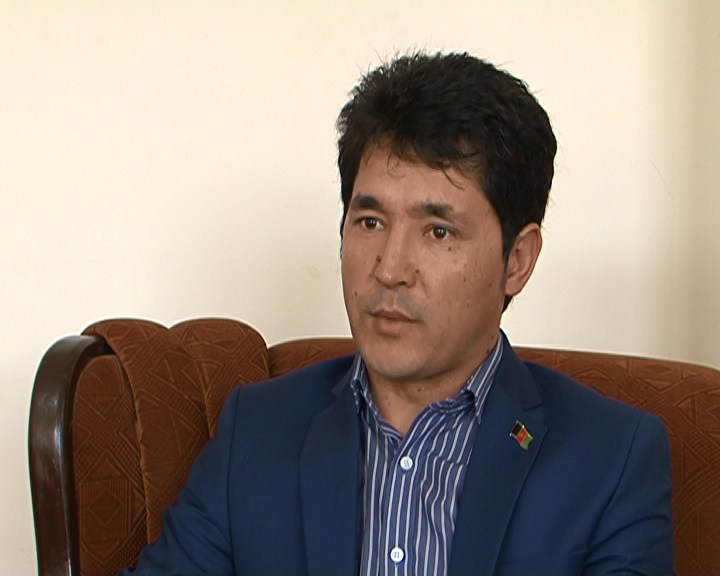
The government and President has no authority to thing and decide about the Parliament,” Asef Ashna, deputy spokesman of executive office said.
The prolonged crisis over Afghanistan’s parliamentary elections has further undermined President’s credibility.
President Ghani and Chief Executive Officer Abdullah, in the September 2014 agreement, agreed to electoral reforms “to ensure that future elections are credible.”
The details of these reforms, when they should take place and who should design them are, however, proving contentious.
Meanwhile, parliament has been working on relevant laws, while commissioners of the Independent Election Commission (IEC) are fighting off calls for them to be replaced while insisting that, at this point, they are the only ones who should be making changes to improve future elections.
Although everyone is talking about ‘reform’, the wrangling really boils down to a struggle for control of the electoral bodies and, ultimately, the outcome of upcoming elections.
In the meantime, a number of Parliament representatives emphasized that they are opposed to the political agreement for the continuation of Parliament’s work and they will keep working without any halts.
According to the National Unity Government document, the president should issue a decree “immediately after the establishment of the government of national unity” to establish a “special commission for the reform of the electoral system.”
The text of the agreement gives no further details, other than that the commission would report to the CEO on its progress and presents its recommendations to the cabinet for review and implementation. The president has so far, however, shown very little urgency in carrying out this pledge.
The upcoming parliamentary elections are important for both camps – as well as for several groups currently ‘outside’ the government, such as former president Hamed Karzai and his circle, the self-proclaimed disgruntled mujahedin and the growing group of irate Abdullah supporters (who feel he has not been enough of a champion). All sides will try to secure a large presence in the new parliament, so they can use its potential for pressure politics (and prevent the parliament’s power from being used against them).
According to the Constitution, the upcoming parliamentary elections should be held between 22 April and 22 May 2015 (article 83).
But to state the obvious: practically, this is no longer possible. Preparations have not been made, funding has not been secured, and there is no longer enough time for candidates to be registered or for campaigns to be held.
It would also violate the electoral timeline, which stipulates that an election date needs to be announced 180 days in advance (Electoral Law, article 43).
Reported by Fawad Naseri

Latest News
Pakistan shelling kills 2 children, injures nearly 30 in eastern Afghanistan
Afghan officials condemned the attacks, saying civilian areas were deliberately targeted, causing significant harm to local communities.
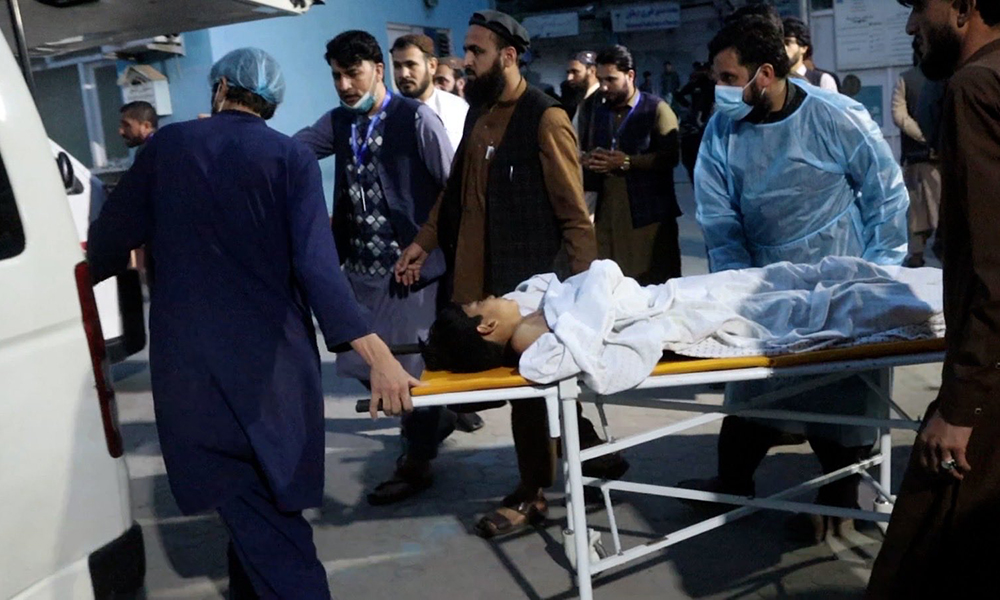
At least two children have been killed and nearly 30 civilians injured following continued shelling and drone strikes by Pakistani forces in eastern Afghanistan, officials said.
Hamdullah Fitrat, deputy spokesman for the Islamic Emirate of Afghanistan, said the attacks began Wednesday, targeting residential areas across Kunar, Paktika and Khost provinces.
“Since yesterday, Pakistani forces have carried out continuous mortar, rocket and drone attacks,” Fitrat said, adding that most of the casualties were civilians, including children.
In Kunar province, more than 150 mortar and long-range artillery shells struck Sarkano and Manogai districts, injuring two children and damaging property. In the Dosaraki area of Sarkano’s Nawapas region, eight children were wounded and two others killed in shelling.
Additional bombardment continued Thursday, with around 185 artillery rounds hitting Sarkano district and wounding at least 10 more civilians, Fitrat said. A further 178 shells reportedly landed in Manogai, Dangam, Nari and Shultan districts, though no casualties were immediately confirmed.
In Paktika province, a drone strike in Shkin district injured three civilians, while in neighboring Khost, two civilians were wounded in a separate drone strike in Zazi Maidan district.
Afghan officials condemned the attacks, saying civilian areas were deliberately targeted, causing significant harm to local communities.
The escalation comes as diplomatic efforts are underway. According to officials, talks between Afghan and Pakistani representatives began Thursday in Urumqi, China.
Abdul Qahar Balkhi, spokesperson for the Ministry of Foreign Affairs, said the Afghan delegation traveled to China at Beijing’s initiative to hold discussions with Pakistani counterparts.
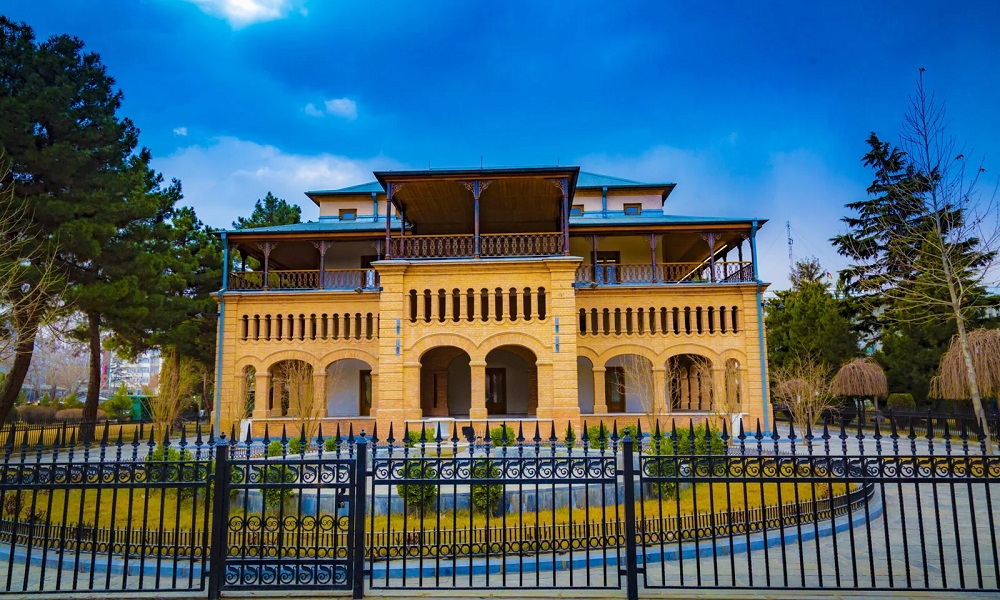
Abdul Qahar Balkhi, spokesperson for the Ministry of Foreign Affairs, said Thursday that at China’s initiative, a mid-level delegation from the Islamic Emirate of Afghanistan has arrived in the country to hold official talks with the Pakistani side in line with its principled position.
Qahar said in a statement that these talks are set to begin in the city of Urumqi with the mediation of the Chinese government.
According to Balkhi, this process is being carried forward at China’s request and on the basis of mutual respect and constructive engagement with that country.
He added that the Islamic Emirate is participating in these meetings based on a balanced and principled approach, and intends to hold comprehensive and responsible discussions with the other side on good neighborly relations, strengthening trade ties, and the effective management of security issues.
He emphasized that the Islamic Emirate believes diplomatic engagement based on mutual respect, non-interference, and constructive understanding can find practical and sustainable solutions to the existing issues between the two countries and help provide a foundation for stability and cooperation in the region.
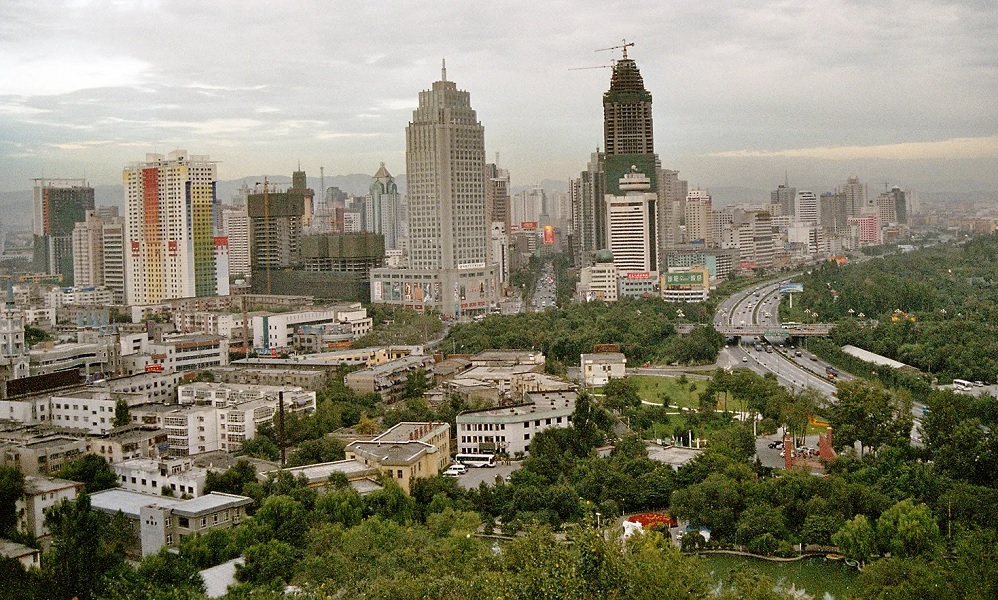
Talks between Afghanistan and Pakistan have officially begun in the Chinese city of Urumqi, sources told Ariana News on Thursday.
Afghanistan’s Minister of Economy, Din Mohammad Hanif, expressed optimism about the negotiations, saying he hopes the discussions will help bring an end to ongoing tensions and conflict between the two neighboring countries.
Meanwhile, Pakistan’s Foreign Ministry spokesperson, Tahir Andarabi, said the talks involve senior officials and rejected claims that they are merely low-level engagements, calling such reports a “false narrative.”
Islamabad confirmed it has dispatched a delegation to Urumqi, reiterating its longstanding position that Afghanistan must address Pakistan’s security concerns, particularly regarding militant groups.
Chinese Foreign Ministry spokesperson Mao Ning emphasized that both Afghanistan and Pakistan are neighbors of China, adding that Beijing supports resolving differences through dialogue and negotiation.
China has also been actively facilitating mediation between Afghanistan and Pakistan and will continue to play a constructive role in easing tensions and improving relations between the two countries, the spokesperson said.


Pakistan shelling kills 2 children, injures nearly 30 in eastern Afghanistan

Kuwait’s Mina al-Ahmadi oil refinery hit by drones, fires break out

Tahawol: Start of talks between Kabul-Islamabad in China discussed

Saar: Ongoing US and Israeli attacks on Iran discussed

IEA confirms sending delegation to China for talks with Pakistan

Prominent Muslim scholar issues fatwa calling for Afghanistan-Pakistan ceasefire

IEA Supreme Leader issues Eid-ul-Fitr message urging unity and support for Islamic system

14 Pakistani soldiers killed after military post falls along Durand line: MoD

Afghanistan steps in to replace Iran in supplying fruits and vegetables to Russia

Afghan airstrikes target Pakistani military sites in retaliation for air attacks
Tahawol: Start of talks between Kabul-Islamabad in China discussed
Saar: Ongoing US and Israeli attacks on Iran discussed

Tahawol: Ongoing US–Israeli war with Iran discussed

Saar: Afghanistan-Pakistan talks in China discussed

Tahawol: Escalation of conflict in Middle East discussed
-
 Latest News4 days ago
TAPI gas pipeline advances 25 km in Afghanistan
-
 Latest News5 days ago
US report flags continued presence of anti-India militant groups in Pakistan
-
 Business4 days ago
Afghanistan opens doors to agribusiness investments amid rising opportunities
-
 Latest News5 days ago
Afghanistan and Uzbekistan hold high-level bilateral meeting to boost trade and economic cooperation
-
 Latest News5 days ago
Seventeen dead, dozens injured in floods across Afghanistan
-
 Latest News4 days ago
Afghan diaspora protests in London and Oslo over Pakistan strikes
-
 Latest News4 days ago
Pakistan shelling in Afghanistan’s Kunar leaves civilian casualties, says IEA
-
 World5 days ago
Pentagon preparing for weeks of ground operations in Iran, Washington Post reports