
Latest News
Progress stalls in Afghan peace talks as sides ‘await Biden’

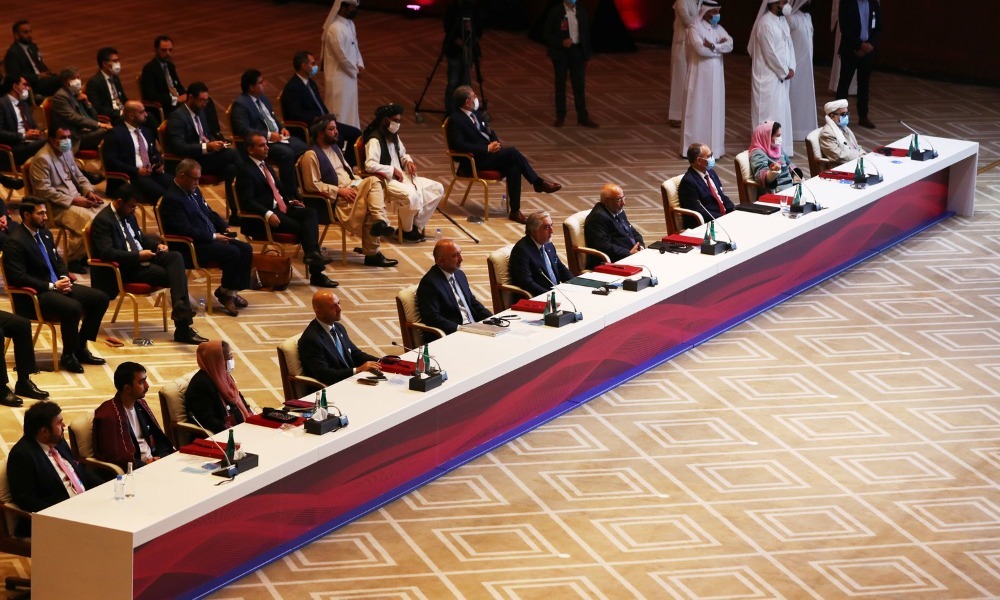
Afghan peace talks that resumed four days ago are effectively on hold, sources from both sides said on Wednesday, as negotiators wait for President-elect Joe Biden to signal whether he will stick to Donald Trump’s aggressive schedule to pull out troops, Reuters reported.
This comes after a month-long break, which saw most, but not all, negotiators return to Doha last week for the resumption of talks.
A diplomatic source in Kabul told Reuters on Wednesday that expectations were low for progress before Biden takes office on January 20.
The sides “do not want to commit to anything before the 20th. They wanted to have the process going in the meantime because that was one of the requirements of the international community, so they have the process. But it is stagnant,” the diplomatic source said.
In an agreement signed between the US and the Taliban last year, Washington agreed to a full withdrawal by April this year.
The agreement was however conditions based and the Taliban is expected to meet certain security conditions before the last of the troops leave Afghanistan.
The Afghan government says these conditions have not been met while Biden and his advisors have so far given few clues as to their plans.
“We are waiting for the new US administration and their policies towards Afghanistan to see whether they would respect the peace accord,” a Taliban negotiator told Reuters on condition of anonymity as he was not authorised to speak publicly.
“If they don’t honour their commitment of withdrawing their forces as promised…then we would need to make tough decisions by appointing hardliners to key positions on the ground.”
After months of little progress, the sides finally agreed ground rules for talks late last year. The talks then broke up in December, in part to allow negotiators to return home for consultations with their leadership.
The sides announced last week they would re-start talks on Saturday. But so far only limited meetings between smaller teams called ‘contact groups’ have taken place, three diplomatic and Afghan government sources told Reuters.
About four key members of the Taliban negotiating team were not yet in Qatar, the group’s spokesman Zabihullah Mujahid told Reuters.
He said this was due to logistical issues travelling from remote areas where they were visiting family. They would arrive in the next few days and the delay would not affect the talks.
Some Afghan government negotiators were also not yet in Doha. One, who has been receiving treatment for cancer, told Reuters she planned to travel there this week.












Kazakhstan’s Foreign Minister Mukhtar Tileuberdi has called for pragmatic and coordinated international engagement with Afghanistan, saying the country’s long-term stability is closely linked to the security and sustainable development of Central Asia.
Speaking during the general debate of the 81st session of the United Nations General Assembly in New York on Friday, Tileuberdi said humanitarian assistance to Afghanistan remains essential but alone cannot break the cycle of poverty, displacement and dependency.
He said Kazakhstan supports a “pragmatic, coordinated and step-by-step” approach to international engagement with Afghanistan, with the United Nations playing a central role.
Tileuberdi also said Kazakhstan is working with the UN to operationalize the United Nations Regional Centre for the Sustainable Development Goals for Central Asia and Afghanistan in Almaty.
He said the success of the centre should be measured by the results and assistance it delivers to the region.


Abu Muslim Farah defeat Khurasan Faryab 2-0 in ACL season six

Saar: Concerns over Pakistan’s political crisis discussed

Afghanistan Champions League: Omar Zawak Herat beat Toofan Herat 1-0

Blast in Pakistan’s Dera Ismail Khan kills 11, injures 30

Ariana Afghan Airlines increases Kabul-Delhi cargo flights

Saudi energy group signs major Afghanistan deals covering gas exploration and pipeline plans

Trump floats idea of renaming Atlantic or Pacific Ocean

US hits Egyptian bank branches with Iran sanctions as war marks six months

Nepal flood rescue mission enters critical phase as thousands remain missing

Iranian clubs to face Gulf opponents at neutral venues in Asian Champions League Elite
Saar: Concerns over Pakistan’s political crisis discussed

Exclusive interview with Abdul Latif Mansoor, Minister of MRRD

Tawsia: Overview of Afghanistan’s iron mines

Tahawol: Discussion on fresh Pakistani airstrikes on Afghanistan

Saar: Calls for international support for Afghanistan discussed
-

 World5 days ago
CNN, MS NOW and Politico sue Trump, challenging White House ban
-

 Latest News3 days ago
Ariana Afghan Airlines ranks seventh among 45 Central Asian airlines
-

 Latest News5 days ago
UN reiterates call for respect for international law after Kunar airstrikes
-

 Regional4 days ago
US and Iran hold first talks since June after Trump’s ‘annihilation’ threat
-

 Latest News3 days ago
Silk Road highway in Wakhan corridor now reaches the China border
-

 Regional3 days ago
Iran airlines cancel flights as US sanctions hit
-

 Latest News5 days ago
Afghan Official: Pakistan’s airstrikes will not go unanswered
-

 Sport5 days ago
Afghan boxing referee heads to China for international festival