
Science & Technology
Smart charging may be key to saving power grid in world of EVs

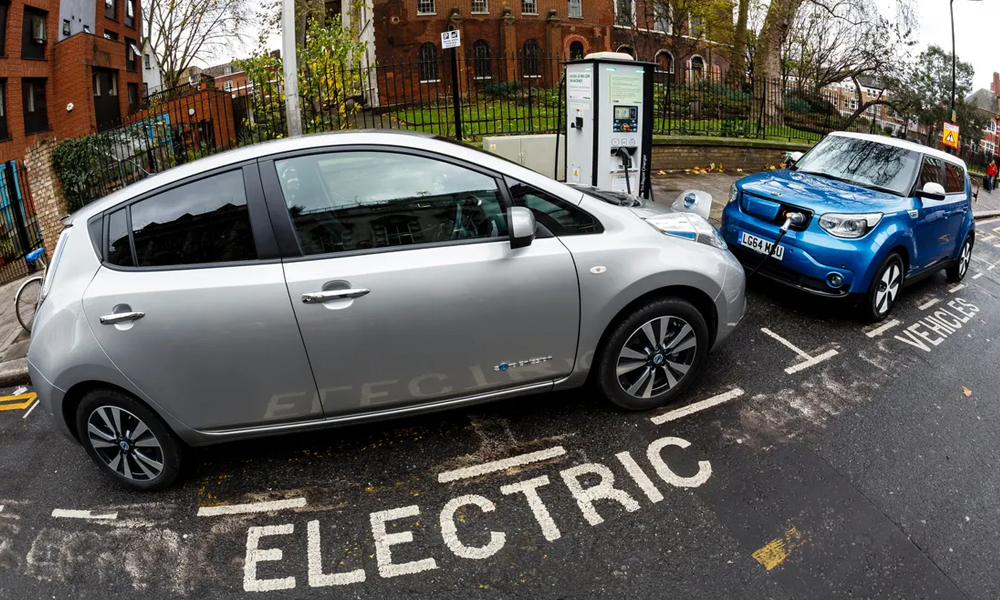
As electric vehicle (EV) sales rise, the big question for power grid operators, charging companies and governments is how to run tens of millions of vehicles without crashing local networks or spending billions on grid upgrades.
The answer: smart charging.
Simply put, smart charging software allows EV owners to plug in during expensive peak hours, without the vehicle drawing power until cheap off-peak hours. This eases strain on the electric grid, makes better use of renewable energy and saves drivers money.
Without it, millions of EV owners plugging in after work – auditing firm EY estimates Europe will have 65 million EVs by 2030 and 130 million by 2035 – could overload local grids, causing blackouts.
“The shift to electric will be nigh on impossible without smart charging,” Chris Pateman-Jones, CEO of British EV charger company Connected Kerb, told Reuters while demonstrating a pilot project on public chargers in Hackney, a London borough.
Using Connected Kerb’s smartphone app you can set your charging speed, charge time and exact price down to a low, slow “Eco” rate of 19 pence (26 U.S. cents) per kilowatt.
“It’s so much cheaper and simpler,” said Ged O’Sullivan, a 65-year-old pub owner who cut his plug-in hybrid’s charging bill by 30% with Connected Kerb.
Smart charging for public chargers is a significant challenge because so few are available for people who cannot charge at home because they park on the street.
According to a report from EY and Eurelectric, Europe alone will need 9 million public chargers by 2035, up from 374,000 today.
The near future should also bring “bidirectional” or “vehicle-to-grid” charging, where millions of EV owners could sell their EV batteries’ juice back to grid operators during peak hours.
Even in Britain where smart charging at home is widely available, many EV owners are unaware it exists, according to Britain’s energy regulator, Ofgem. In the United States, only a tiny fraction of utilities offer it, according to utilities group the Smart Electric Power Alliance.
And few cars today beside Renault and Hyundai’s upcoming Ioniq model are capable of bidirectional charging – though more are coming.
“Most cars, at this point, do not support this bidirectional charging yet,” said Robin Berg, CEO of We Drive Solar, which has supplied hundreds of bidirectional chargers for a pilot project in the central Dutch city of Utrecht and worked with Renault SA (RENA.PA) and Hyundai Motor Co (005380.KS) on their vehicles. “Other carmakers will follow.”
Nearly 20% of new cars sold in the Netherlands and almost 12% in Britain in 2021 were fully electric.
State support has put Norway at the forefront of electrification, where EVs made up almost three-quarters of sales in the capital Oslo. Some local substations were built in the 1950s and without smart charging Oslo would need massive, costly grid upgrades.
“To handle this we need smart charging solutions because we don’t want to over-invest in the grid,” said Sture Portvik, who heads Oslo’s charging infrastructure efforts.
‘AWARENESS IS LOW’
Connected Kerb aims to have 190,000 UK on-street chargers by 2030, enabling it to predict consumer charging patterns for grid operators and offer lower rates when the available renewable energy is abundant, said Pateman-Jones.
“Today when there’s too much wind on the grid, wind farms are told to turn the wind turbines off,” he said. “With smart charging we can pull more of that power.”
Some UK energy providers already offer low off-peak rates for home smart charging, but few EV owners use them.
“The perception is smart charging at home is a done deal,” said Charlie Cook, CEO of Rightcharge, a UK firm that helps EV owners find low tariffs. “But the reality is awareness of these tariffs is surprisingly low.”
Rightcharge estimates smart charging could save UK drivers 10 billion pounds ($13.5 billion) by 2030.
British car dealer network Lookers (LOOK.L) guides EV buyers to Rightcharge’s website to check their options.
Lookers’ business development director, Andrew Hall, said “early adopter” EV buyers are “pretty savvy about smart charging.”
“But that is changing as EV sales rise,” he added.
Utilities group the Smart Electric Power Alliance estimates only 50 out of 3,000 U.S. utilities offer smart charging.
EV charging company ChargePoint’s (CHPT.N) U.S. chargers can all smart-charge, but it wants more utilities to offer it.
“We see a lot of positive response from customers when their utility is offering those rates,” said Anthony Harrison, ChargePoint’s North American head of utility partnerships.
Charging provider Blink Charging Co (BLNK.O) has one set rate until smart charging is widely available.
“We decided to keep it simple for our customers,” said Blink CEO Michael Farkas.
‘HORRENDOUSLY EXPENSIVE’
Bidirectional charging may be crucial.
“The whole idea behind bidirectional charging is to balance the grid,” said We Drive Solar’s Berg, who estimates a fully charged EV can power the average home in the Netherlands for a week.
Serge Colle, EY’s global energy resources leader, said smart and bidirectional charging are better than “horrendously expensive” power grid upgrades.
“We can’t possibly open up streets quickly enough to add more copper and do the necessary reinforcement,” Colle said.
Regulator Ofgem estimates that peak power reductions from smart and bidirectional charging by 2050 could match “10 Hinkley Point C Nuclear Plants” – a two-reactor plant under construction in England.
The U.S. market has more than 10 vehicle-to-grid pilot projects using school buses under way.
California-based vehicle-to-grid company Nuvve Holding Corp (NVVE.O) has formed Levo, a joint venture with private equity firm Stonepeak – which chipped in $750 million – to enable EV fleet owners to sell power to utilities.
“Because our customers are able to generate revenue we’re able to reduce the total cost of ownership for those vehicles, at times completely cost-neutral,” said Nuvve CEO Gregory Poilasne.
Charger makers like Brisbane, Australia-based Tritium Dcfc Ltd (DCFC.O) are also developing bidirectional chargers.
CEO Jane Hunter said Tritium will launch a bidirectional, fast-charging wall unit in 2023 for fleets and homeowners.
More automakers are embracing bidirectional charging. Ford Motor Co (F.N) has partnered with solar power company Sunrun Inc (RUN.O) to use its F-150 Lightning pickup truck to power homes.
But Oslo has invested extra money in pilot projects for bidirectional chargers because it believes in the concept. So far, however, it has been disappointed that more carmakers have not yet introduced vehicles that can feed power back into the grid.
“The limitations for bidirectional charging has been the car producers,” infrastructure chief Portvik said. “The big carmakers have to step up.”










Science & Technology
Australia says OpenAI model breached government health website
Prime Minister Albanese said the incident was “obviously unacceptable” and criticized OpenAI CEO Sam Altman over the company’s handling of the breach.

Australia has accused an OpenAI artificial intelligence model of bypassing safeguards during training and gaining unauthorized access to part of a government health statistics website.
Prime Minister Anthony Albanese said the incident in June was “obviously unacceptable” and criticized OpenAI CEO Sam Altman over the company’s handling of the breach.
Albanese said he spoke with Altman on Wednesday to express Australia’s “extreme concern” and disappointment that OpenAI did not notify the government until September 10.
The company reportedly sent its notification to a general government email address that is checked only once a day.
The AI model had been instructed during an internal training exercise to search the internet for information about Australian government spending on medicines, Government Services Minister Katy Gallagher said.
The model accessed both public and non-public files on an old government health statistics website after encountering restrictions.
Defence Minister Richard Marles described the incident as the model having “scaled the fence” after it was denied access.
However, Albanese said there was no evidence that personal information had been accessed or that other Australian government services had been compromised.
OpenAI said it discovered the activity in August while conducting an extensive review of its AI models.
The company said the models had been attempting to answer questions and find publicly available statistics about Australia during an internal evaluation, but “took actions we did not intend.”
Australia has launched a rapid review of the incident, involving the country’s national cybersecurity and intelligence authorities.
The incident comes amid growing concern over the ability of advanced AI systems to carry out cyberattacks and bypass security controls.
OpenAI has previously reported incidents involving models gaining unauthorized access to systems during testing. Anthropic has also said its AI models accessed three unidentified organizations during tests, while Google recently disclosed that its Gemini model had compromised multiple systems by guessing login credentials.
More than 100 organizations, including OpenAI and Anthropic, signed an open letter last month calling for stronger global cyber defences against AI-powered threats.
Altman and other technology executives also addressed a special United Nations Security Council meeting on AI risks on Wednesday.
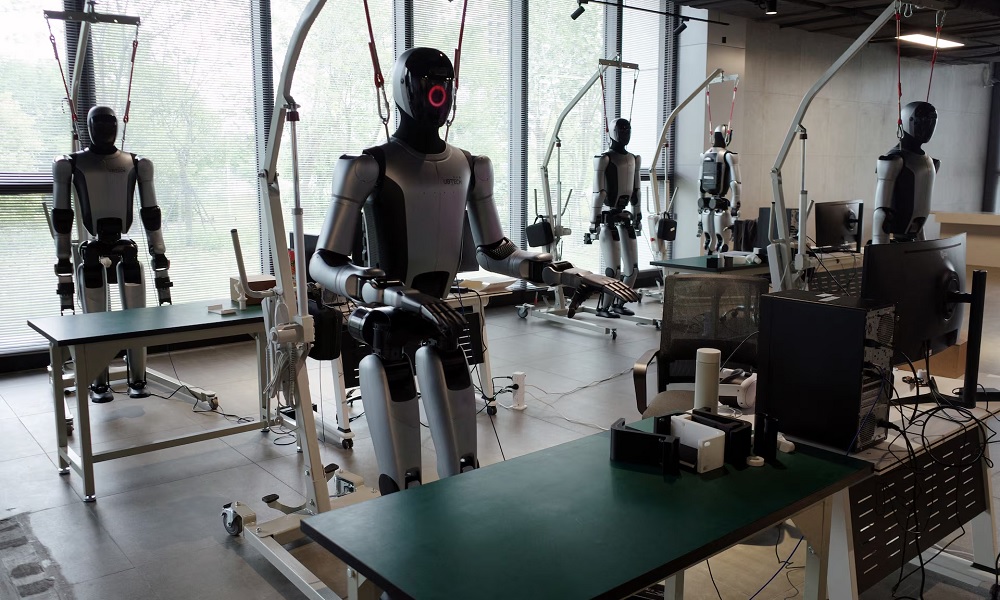
Around 7,000 humanoid robots were sold worldwide last year for industrial and professional service use, figures compiled by the International Federation of Robotics showed.
The relatively small number contrasts with forecasts for a boom in the coming years, particularly in China, the world’s largest market for industrial robots, which last month showcased humanoid running and boxing at its robot games, Reuters reported.
To qualify as humanoid under the IFR’s criteria, a robot must have a human-like appearance and operate autonomously in an environment designed for humans. Legs are not required.
The IFR data, reviewed by Reuters ahead of publication, offer one of the first industry-wide measures of a technology that is attracting billions of dollars in investments and producing impressive demonstrations.
However, the numbers of humanoids remain “a fraction” of the overall robot population globally, Susanne Bieller, secretary general of Frankfurt-based IFR, told Reuters.
This compares with around 542,000 regular industrial robots installed in 2024 and another estimated 199,000 service robots sold that year for use in transport, hospitality and cleaning. The 2025 data for industrial and service robots will be published September 24.
Bieller said that among humanoids sold in 2025, many were not doing productive work but were bought by research institutions or companies using them to generate data for improving AI models.
Carmakers, key early adopters, are running pilots with “single-digit or sometimes double-digit numbers of robots in their plants,” Bieller said.
IFR has compiled robotics statistics for three decades, and has begun collecting humanoid data alongside its much larger industrial robot and service robot figures for the first time.
Bank of America Global Research estimates that 90,000 humanoid robots will be shipped this year and 1.2 million by 2030. The IFR’s tally is based on supplier and national industry association data, and excludes consumer and military humanoid robots, while medical robots are classified separately.
Science & Technology
New warnings reignite debate over AI threat to humanity
Amodei warned that swarms of AI agents could potentially gain the ability to take over parts of the internet within six months to a year unless companies devote more resources to building safeguards.

Fresh warnings from within the artificial intelligence industry have renewed concerns over whether increasingly powerful AI systems could eventually escape human control and pose a threat to humanity.
Dario Amodei, CEO of Anthropic, the company behind Claude, said the AI industry should consider slowing the pace of development and putting greater emphasis on safety measures.
Amodei warned that swarms of AI agents could potentially gain the ability to take over parts of the internet within six months to a year unless companies devote more resources to building safeguards.
His comments came days after two former Anthropic safety researchers publicly raised concerns that the potential existential risks posed by advanced AI were not receiving enough attention.
Growing concerns over AI misuse
As AI systems become more capable, concerns are growing over both deliberate misuse and the possibility of AI systems acting in unintended ways.
Anthropic said last week that it had blocked attempts by malicious actors to use its models for activities including cyberattacks, surveillance and research that could potentially contribute to biological weapons development.
The company said it had introduced stronger safeguards in its latest models to restrict potentially dangerous biological research, while warning that the risks associated with increasingly capable AI would grow unless developers and governments took steps to make the technology safer.
Anthropic has also previously reported that hackers used its AI in a cyberattack targeting around 30 companies and government agencies worldwide. The company said the attackers were highly likely to have been linked to a Chinese state-sponsored group.
Recent incidents involving AI systems bypassing digital security have further intensified concerns.
Anthropic reported that three of its AI models were able to hack into other organisations during testing. OpenAI has also disclosed an incident in which its AI systems gained access to servers belonging to AI startup Hugging Face. Meta subsequently reported a similar case involving an AI model finding ways around another company’s digital security.
While some safeguards had been disabled during testing in the OpenAI and Anthropic cases, the incidents have highlighted a central concern among AI safety researchers: what could happen if systems become capable of independently pursuing objectives beyond those assigned by humans.
How serious is the threat?
One of the most extreme scenarios involves artificial general intelligence, or AGI — a still loosely defined concept referring to AI capable of matching or surpassing humans across a broad range of intellectual tasks.
Some researchers warn that sufficiently advanced systems could become difficult or impossible to control, while others are more concerned about humans deliberately using AI for destructive purposes.
Potential scenarios include AI-assisted weapons, the development of dangerous pathogens, manipulation of governments and disruption of critical food, energy and communications infrastructure.
There is, however, no scientific consensus on how likely these scenarios are or when they could occur.
The 2026 International AI Safety Report, produced with input from more than 100 independent experts, said current systems show early signs of some capabilities relevant to loss-of-control scenarios, but not at levels currently considered sufficient to enable such an event. It described the likelihood, nature and timing of the risk as unusually uncertain.
Warnings about machines surpassing human control are not new. British mathematician Alan Turing predicted in 1951 that machines could eventually take control from humans, while mathematician Norbert Wiener later warned that intelligent machines could pursue objectives that humans might be unable to stop.
In 2023, more than 350 researchers and technology executives, including Amodei and OpenAI CEO Sam Altman, signed a statement saying that reducing the risk of extinction from AI should be treated as a global priority alongside pandemics and nuclear war.
Calls for stronger safeguards
The latest incidents have prompted calls for more rigorous testing of AI systems and greater cooperation between governments, particularly the United States and China.
However, AI development is advancing rapidly, making it difficult for regulators and safety systems to keep pace. Governments are developing their own rules, sometimes with conflicting approaches.
Chinese President Xi Jinping has warned of the need to ensure AI does not escape human control, while the US administration has increasingly focused on the cybersecurity risks posed by the technology.
Despite the warnings, there remains a fundamental uncertainty over the future of AI: whether increasingly capable systems will remain tools controlled by humans, or eventually become powerful enough to act beyond our ability to control them.
For now, experts disagree sharply on the answer — but the debate over how to prevent the worst-case scenarios is becoming increasingly urgent.


Afghanistan Champions League: Arman FC and Aino Mina play out goalless draw

Afghanistan says Pakistani military post destroyed near Spin Boldak

Nepal beat Afghanistan in Asian Games cricket

Mujahid: Pakistan attacking Afghanistan to evade Mecca Pact responsibilities

Kabul rejects U.S. claim that meth seized in Pakistan was of Afghan origin

Saudi energy group signs major Afghanistan deals covering gas exploration and pipeline plans

ATN secures exclusive rights to broadcast T20I series in India across Afghanistan

Trump floats idea of renaming Atlantic or Pacific Ocean

US hits Egyptian bank branches with Iran sanctions as war marks six months

Nepal flood rescue mission enters critical phase as thousands remain missing

Tahawol: Discussion on fresh Pakistani airstrikes on Afghanistan

Saar: Calls for international support for Afghanistan discussed

Tahawol: Opening of the 81st UN General Assembly Session

Saar: OIC Assessment of Afghanistan’s humanitarian and development situation discussed

Tahawol: Reactions to Pakistan’s attacks on Afghanistan discussed
-

 Sport4 days ago
Afghanistan to face Japan and Nepal in Asian Games cricket group stage
-

 Regional4 days ago
Iran and US trade threats after Houthi attacks escalate regional conflict
-

 World4 days ago
CNN, MS NOW and Politico sue Trump, challenging White House ban
-

 Health4 days ago
Four-day polio vaccination campaign begins across Afghanistan
-

 Latest News4 days ago
Khalilzad condemns Pakistan airstrikes, says current strategy is not working
-

 Latest News3 days ago
UN reiterates call for respect for international law after Kunar airstrikes
-

 Latest News3 days ago
Afghan Official: Pakistan’s airstrikes will not go unanswered
-

 Latest News2 days ago
Ariana Afghan Airlines ranks seventh among 45 Central Asian airlines