
Latest News
Trump ‘dissuaded’ from launching missile attack on Iran’s nuclear site

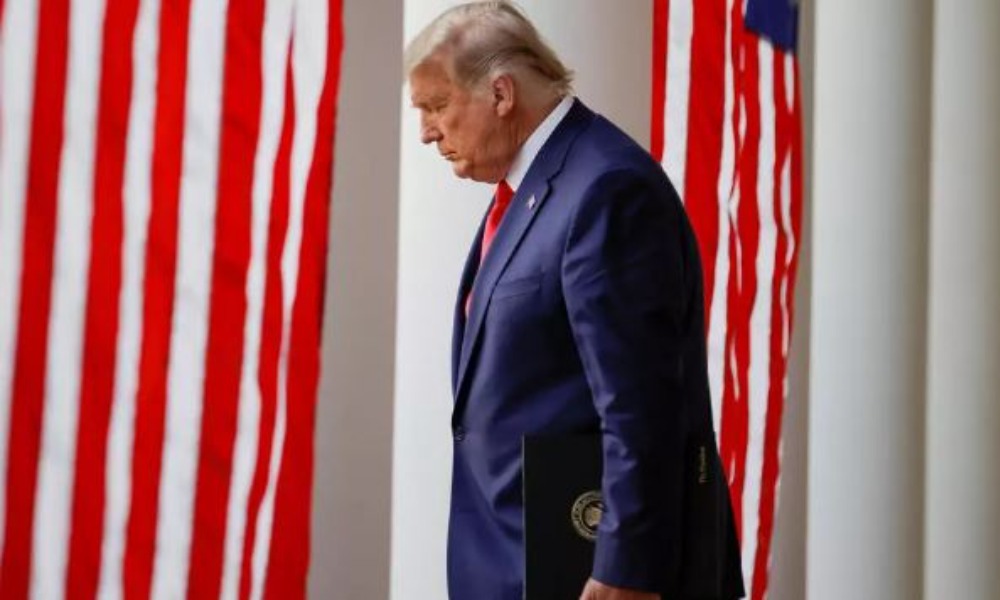
US President Donald Trump was reportedly talked out of launching a missile strike on Iran’s main nuclear site last week by advisers who warned it could trigger a war, the New York Times reported.
According to the article Trump is however still “mulling options to punish Tehran” for increasing its stockpile of nuclear weapons.
A meeting between Trump and his senior advisers took place last week and among those present were Vice President Mike Pence and Secretary of State Mike Pompeo.
Current and former US officials told the New York Times the meeting took place a day after international inspectors informed UN members that Iran had significantly increased its stockpile of nuclear material.
A separate source confirmed the New York Times’ account of the meeting to Reuters, saying: “[Trump] asked for options. They gave him the scenarios and he ultimately decided not to go forward.”
The International Atomic Energy Agency, a watchdog for the UN, reported in a confidential document last Wednesday that Iran’s uranium stockpile is now 12 times larger than the limit set under the nuclear accord Trump pulled out of in 2018.
The agency said that as of November 2 Iran had a stockpile of 2,442.9 kilograms (5,385.7 pounds) of low-enriched uranium, up from 2,105.4 kilograms (4,641.6 pounds) reported on August 25.
The nuclear deal signed in 2015 with the US, Germany, France, Britain, China and Russia, known as the Joint Comprehensive Plan of Action (JCPOA), allows Iran only to keep a stockpile of 202.8 kilograms (447 pounds).
The IAEA reported that Iran has also been continuing to enrich uranium to a purity of up to 4.5 percent, higher than the 3.67 percent allowed under the deal.
Natanz, also called the Pilot Fuel Enrichment Plant, is located about 200 miles south of Tehran and most of the complex is underground. It is subject to monitoring by IAEA under the nuclear accord.
In its latest report the IAEA also said that Iran had barred its inspectors from accessing another site where there was evidence of past nuclear activity.
The officials who spoke to the New York Times said Trump reacted to the IAEA report by asking his aides about what options he had to respond to Iran’s nuclear expansion.
They said Pompeo and Milley outlined the risks of military escalation, and that officials left the meeting with the impression that Trump had been dissuaded from launching a missile attack.
But, they said Trump may still be looking into ways to strike Iranian assets and allies, including militias in Iraq, the New York Times reported.

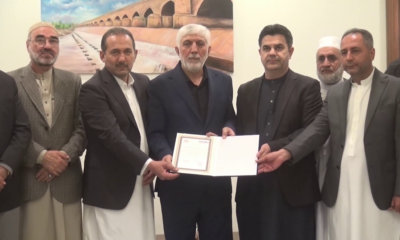






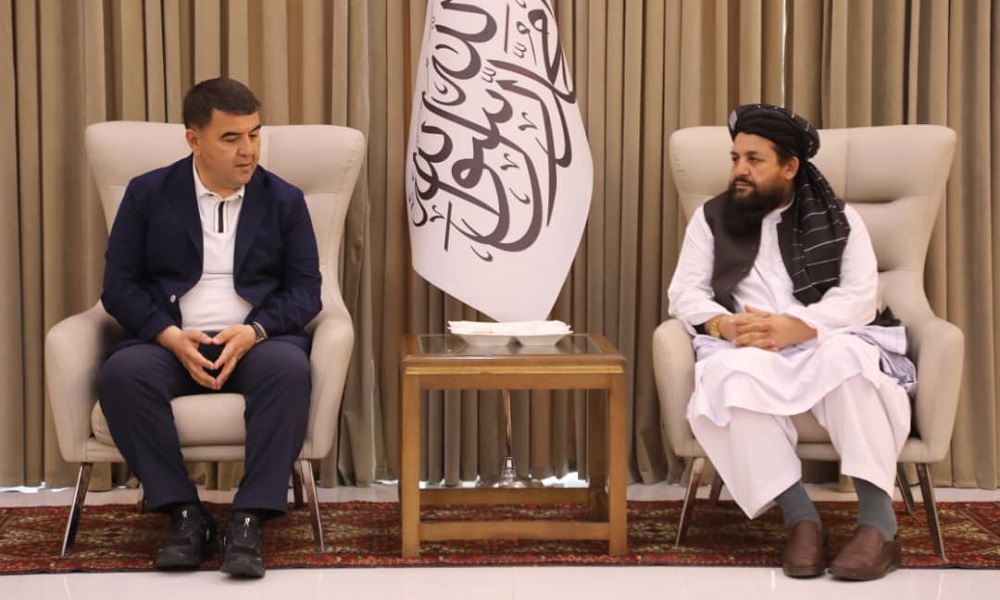
A high-level government–private sector delegation from Uzbekistan, led by Shukhrat Abdullazakov, Governor of Namangan province, arrived in Kabul to enhance trade between the two countries and promote investment in Afghanistan.
According to a press release from the Ministry of Industry, the delegation, which includes deputy governors and more than 30 of Uzbekistan’s top businesspeople and investors, will meet with officials of the Islamic Emirate of Afghanistan and participate in conferences and trade meetings.
The delegation will also travel to Balkh, meet with local officials, and hold business meetings with members of the private sector.
Additionally, the delegation will inaugurate an exhibition of Uzbek products and goods in Mazar-i-Sharif.
This visit follows the trip of Erkinjon Turdimov, Governor of Uzbekistan’s Syrdarya Province, and his accompanying delegation, and is based on meetings between Nuruddin Azizi, Minister of Industry and Trade of the Islamic Emirate, and senior Uzbek officials.
Other governors from Uzbekistan are also expected to visit Afghanistan to further expand bilateral trade and economic relations.
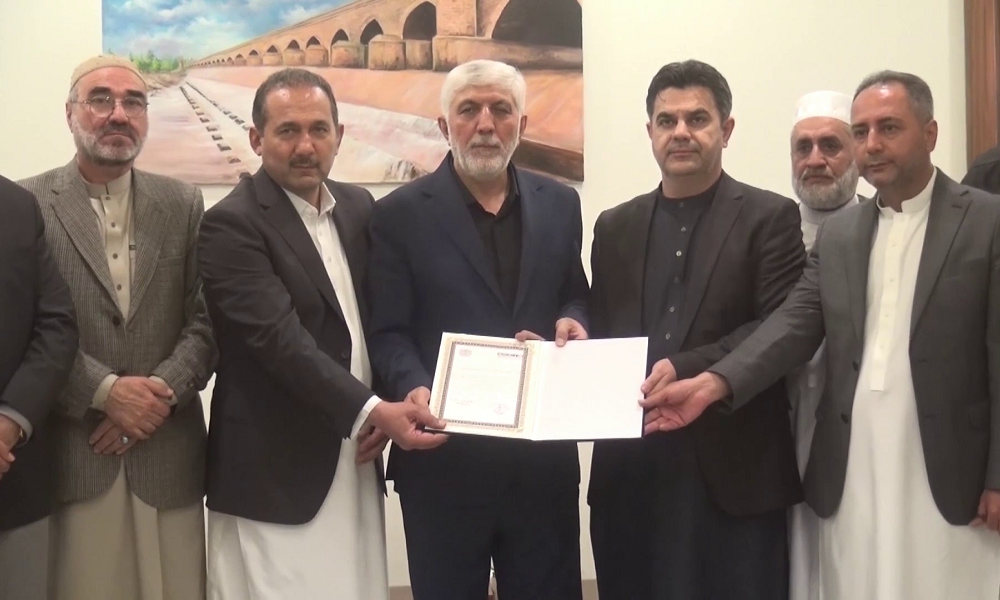
The Herat Chamber of Commerce and Investment announced on Saturday that national traders, jointly through the chamber, have provided approximately 15 million AFN in aid to the people of Iran.
The chamber stated that this aid package was delivered to the Iranian Consulate in Herat. It added that the assistance was intended to express solidarity with families affected by the war.
Mohammad Younes Qazizadeh, head of the Herat Chamber of Commerce and Investment, said: “Today we have presented 15 million AFN to the dear people of Iran through the Herat provincial authorities and the Iranian Consulate, and this aid will continue.”
Meanwhile, officials at the Iranian Consulate in Herat emphasized that Afghanistan and Iran always stand together and fully understand each other’s difficulties.
The Herat Chamber of Commerce and Investment also highlighted that the people of Iran have consistently supported the people of Afghanistan during various crises, and their cooperation in different sectors has reached families affected in the country.
Officials of the Herat Chamber of Commerce and Investment stressed that the process of private-sector humanitarian aid to the affected people of Iran will continue.
Following attacks by the United States and Israel on Iran, many people in the country have been affected and harmed.
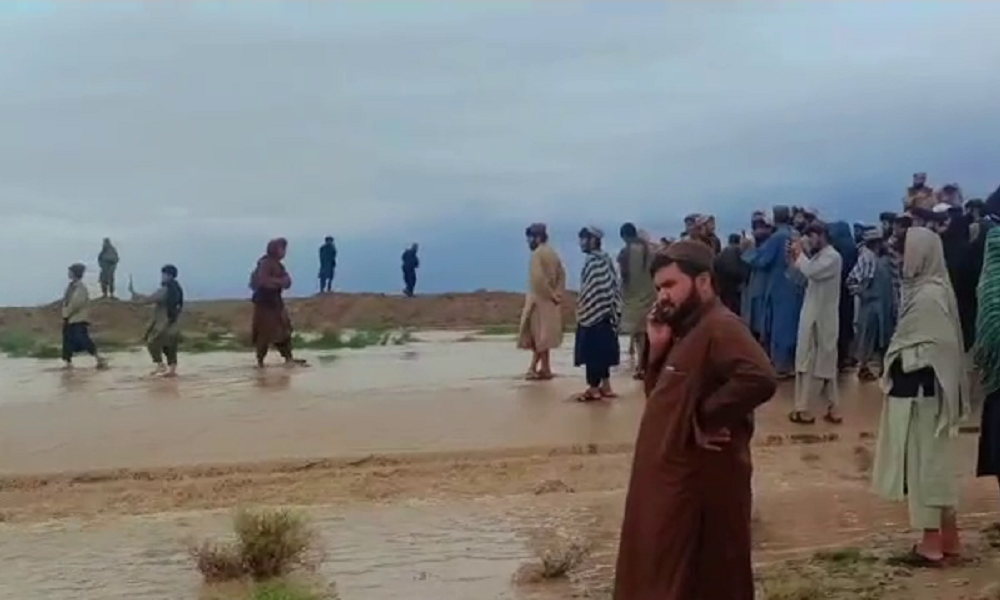
Local officials in Badghis have reported that heavy rainfall from midnight until Saturday morning claimed the lives of five people in the province.
According to officials, three people died in Qadis district, while two others, including a three-year-old child, lost their lives in Dara-e-Bum district.
The Badghis Department for Disaster Management stated that the floods not only caused fatalities but also inflicted significant financial losses on local residents and destroyed agricultural land.
However, complete information on the extent of damage and casualties is not yet available. Staff from various government departments have been dispatched to affected areas to conduct preliminary surveys.
Meanwhile, heavy rains and floods in western Afghanistan temporarily blocked the Herat–Kandahar Highway.
According to Mohammad Israil Sayar, head of the Disaster Management Department in Farah province, recent rainfall has caused the Farah River to swell significantly. He added that the situation has now returned to normal, and traffic along the highway has resumed.


Tahawol: Concerns over spread of Middle East crisis discussed

Saar: Weakening relations between Kabul and Washington discussed

High-level Uzbek delegation arrives in Kabul to boost bilateral trade

Herat Chamber of Commerce donates 15 million AFN to the people of Iran

Severe floods in Badghis leave five dead

Pakistani military jet downed in Afghanistan’s Jalalabad, pilot captured alive

Afghan Air Force conducts airstrikes in Islamabad, other cities

Prominent Muslim scholar issues fatwa calling for Afghanistan-Pakistan ceasefire

Afghan air force strikes key Pakistani military installations in retaliatory operation

IEA: Special circle in Pakistan has launched mission to destabilize region
Tahawol: Concerns over spread of Middle East crisis discussed
Saar: Weakening relations between Kabul and Washington discussed

Exclusive interview with Indrika Ratwatte, Deputy UN Special Representative for Afghanistan

Tawsia: Efforts to boost Afghanistan’s domestic production and economic diplomacy

Tahawol: Discussion on day 27 of Iran–US war
-
 Latest News3 days ago
Tajikistan shifts stance on Afghanistan amid rising border tensions
-
 Latest News5 days ago
Around 2.3 million tourists visited Afghanistan’s recreational areas during Eid: Ghufran
-

 Sport5 days ago
Afghanistan squad hit by withdrawals ahead of AFC Asian Cup Qualifiers
-
 Latest News5 days ago
Islamic Emirate releases American prisoner Dennis Coyle
-
 Latest News4 days ago
Two civilians killed, eight injured in fresh shelling by Pakistan in Kunar
-
 Regional5 days ago
US allies in Middle East ‘edging closer’ to joining conflict
-
 Latest News2 days ago
Russia deems US military presence in Afghanistan unacceptable
-
 Latest News2 days ago
IEA says Iranian drivers no longer need visas to enter Afghanistan