
Latest News
UN and partners seek $1.3 billion to help 16 million Afghans

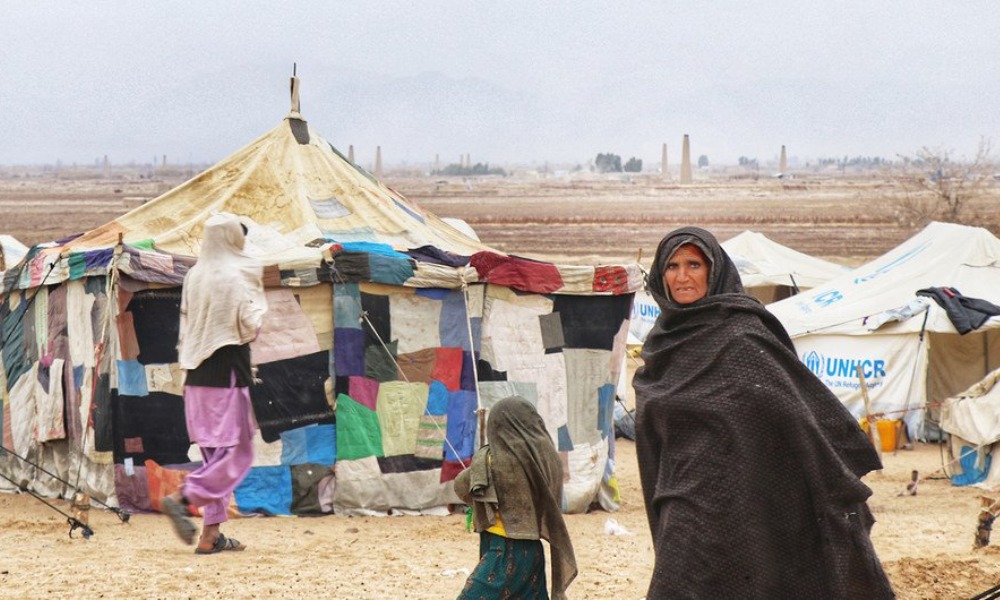
The UN and humanitarian partners in Afghanistan need $1.3 billion to assist almost 16 million people in need of life-saving assistance as a result of decades of conflict, recurrent natural disasters, and the added impact of the continuing COVID-19 pandemic.
In a statement issued by the UN on Tuesday night, the organization said the number of people targeted for assistance is over a six-fold increase compared to four years ago, when 2.3 million people were targeted for assistance.
According to Stéphane Dujarric, spokesperson for the UN Secretary-General, the situation of children is particularly worrying.
“It is projected that nearly one in two children under the age of five will face acute malnutrition this year,” Dujarric said.
Hunger is “soaring” as people have lost their livelihoods, he added, noting that in 2021, nearly half of Afghanistan’s population will need humanitarian assistance to survive.
According to the UN Office for Coordination of Humanitarian Affairs (OCHA), across Afghanistan, about 18.4 million people are in need of assistance, a number that rose sharply last year with the outbreak of the coronavirus pandemic.
“While enduringly resilient, people are increasingly desperate, resorting to debt and other more dangerous coping mechanisms to survive including marrying off their young daughters and sending their children to work,” said Parvathy Ramaswami, Humanitarian Coordinator for Afghanistan.
The survival of the 15.7 million most vulnerable depends on humanitarians operating there receiving sufficient financial resources to deliver a response, she noted, adding that “the consequences of late or inadequate funding are very real.”
The outlook for 2021 has worsened further due to significant unmet needs last year due to funding shortfalls and the acute focus on COVID-19, as well as the slow rollout of complementary development assistance, a response plan noted.
Ramaswami went on to note that in spite of the bleak situation, there is “still cause for hope” with the start of the intra-Afghan negotiations.
“After enduring decades of war, people are mentally exhausted and hungry for peace, yearning for an end to civilian deaths and suffering.”
She also highlighted the need for a permanent ceasefire or a persistent reduction in violence, to allow humanitarians to assess the situation, especially in the hard to reach areas.
“Until this much hoped for peace becomes a reality, the humanitarian community stands beside the people of Afghanistan during what surely must be one of the country’s difficult periods,” the UN official added, stressing “we all must do more, stretch higher, and do better to deliver life-saving assistance to those who need it most.”












Kazakhstan’s Foreign Minister Mukhtar Tileuberdi has called for pragmatic and coordinated international engagement with Afghanistan, saying the country’s long-term stability is closely linked to the security and sustainable development of Central Asia.
Speaking during the general debate of the 81st session of the United Nations General Assembly in New York on Friday, Tileuberdi said humanitarian assistance to Afghanistan remains essential but alone cannot break the cycle of poverty, displacement and dependency.
He said Kazakhstan supports a “pragmatic, coordinated and step-by-step” approach to international engagement with Afghanistan, with the United Nations playing a central role.
Tileuberdi also said Kazakhstan is working with the UN to operationalize the United Nations Regional Centre for the Sustainable Development Goals for Central Asia and Afghanistan in Almaty.
He said the success of the centre should be measured by the results and assistance it delivers to the region.


Abu Muslim Farah defeat Khurasan Faryab 2-0 in ACL season six

Saar: Concerns over Pakistan’s political crisis discussed

Afghanistan Champions League: Omar Zawak Herat beat Toofan Herat 1-0

Blast in Pakistan’s Dera Ismail Khan kills 11, injures 30

Ariana Afghan Airlines increases Kabul-Delhi cargo flights

Saudi energy group signs major Afghanistan deals covering gas exploration and pipeline plans

Trump floats idea of renaming Atlantic or Pacific Ocean

US hits Egyptian bank branches with Iran sanctions as war marks six months

Nepal flood rescue mission enters critical phase as thousands remain missing

Iranian clubs to face Gulf opponents at neutral venues in Asian Champions League Elite
Saar: Concerns over Pakistan’s political crisis discussed

Exclusive interview with Abdul Latif Mansoor, Minister of MRRD

Tawsia: Overview of Afghanistan’s iron mines

Tahawol: Discussion on fresh Pakistani airstrikes on Afghanistan

Saar: Calls for international support for Afghanistan discussed
-

 World5 days ago
CNN, MS NOW and Politico sue Trump, challenging White House ban
-

 Latest News3 days ago
Ariana Afghan Airlines ranks seventh among 45 Central Asian airlines
-

 Latest News5 days ago
UN reiterates call for respect for international law after Kunar airstrikes
-

 Regional4 days ago
US and Iran hold first talks since June after Trump’s ‘annihilation’ threat
-

 Latest News4 days ago
Silk Road highway in Wakhan corridor now reaches the China border
-

 Regional3 days ago
Iran airlines cancel flights as US sanctions hit
-

 Latest News5 days ago
Afghan Official: Pakistan’s airstrikes will not go unanswered
-

 Sport5 days ago
Afghan boxing referee heads to China for international festival