
Latest News
UNFPA: The world should not lose focus on Afghanistan

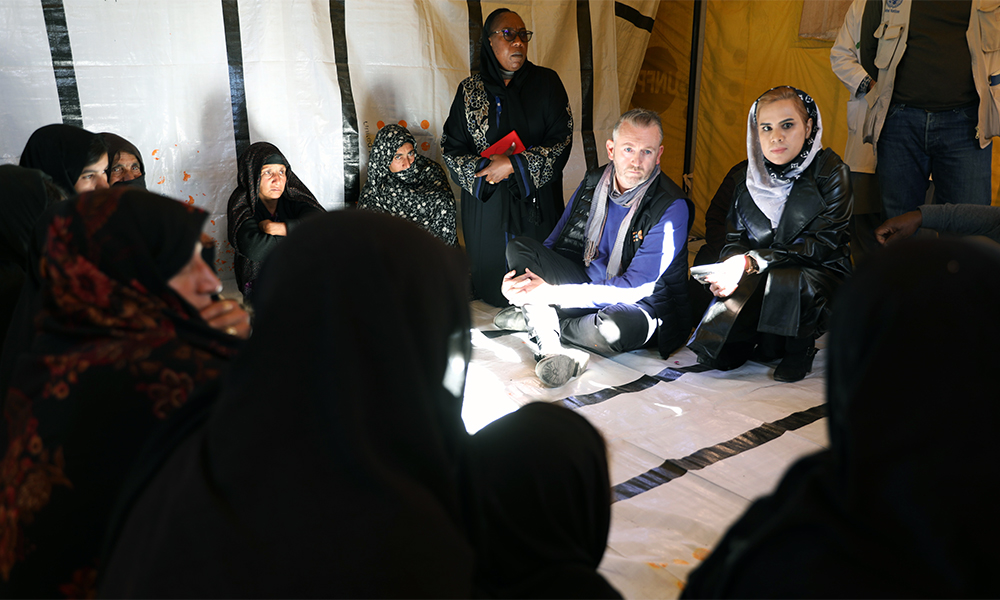
Pio Smith, the regional director for Asia and the Pacific for the United Nations Population Fund (UNFPA) wrapped up a five-day visit to the country this week and urged the international community not to lose focus on Afghanistan.
Smith said: “UNFPA is supporting more than 700 health facilities across Afghanistan that are reaching around 700,000 people every month.
“While that is undeniably saving thousands of lives, it is nowhere near what is needed to ensure that every Afghan woman and girl receives essential reproductive health services, including psychosocial support to help them cope and rebuild their lives,” he said.
UNFPA is actively assisting in a number of areas across the country. Along with partners, the agency has set up a mobile health clinic at Torkham reception center in Nangarhar to help care for Afghan migrants returning from Pakistan.
In addition to this, UNFPA is assisting victims of the October earthquakes in Herat province.
Immediately after the first earthquake, UNFPA set up medical tents to provide immediate maternal health and psychosocial support on the ground. Today, these tents have been replaced with a fully equipped emergency maternity unit providing normal and Caesarean-section delivery services, as well as counselling and mental health support for women and girls.
“Many of those affected, including pregnant women, have physical injuries from the earthquakes. Beyond the physical scars, there are a lot of mental wounds. Many, sadly, are feeling desperate and suicidal. These women and girls are suffering – they are suffering because they have lost their families, they have lost their homes, they have lost their livelihoods – and they are in dire need of psychosocial support to help them cope and to help them rebuild,” said Smith.
In response the Islamic Emirate says the concerns about the violation of rights of women and girls are unfounded and emphasizes that the rights of women and girls in Afghanistan have been secured more than ever before.
However, in a new report, the Office of the United Nations Assistance Mission in Afghanistan is concerned about the situation of women in the country and said that during a survey conducted from August to October of this year, the restrictions imposed on girls and women, immigration and climate change has had a negative impact on women’s health and personal and social life.
UNAMA has asked the international community to facilitate direct dialogue between Afghan women and the authorities of the Islamic Emirate.












Kazakhstan’s Foreign Minister Mukhtar Tileuberdi has called for pragmatic and coordinated international engagement with Afghanistan, saying the country’s long-term stability is closely linked to the security and sustainable development of Central Asia.
Speaking during the general debate of the 81st session of the United Nations General Assembly in New York on Friday, Tileuberdi said humanitarian assistance to Afghanistan remains essential but alone cannot break the cycle of poverty, displacement and dependency.
He said Kazakhstan supports a “pragmatic, coordinated and step-by-step” approach to international engagement with Afghanistan, with the United Nations playing a central role.
Tileuberdi also said Kazakhstan is working with the UN to operationalize the United Nations Regional Centre for the Sustainable Development Goals for Central Asia and Afghanistan in Almaty.
He said the success of the centre should be measured by the results and assistance it delivers to the region.


Abu Muslim Farah defeat Khurasan Faryab 2-0 in ACL season six

Saar: Concerns over Pakistan’s political crisis discussed

Afghanistan Champions League: Omar Zawak Herat beat Toofan Herat 1-0

Blast in Pakistan’s Dera Ismail Khan kills 11, injures 30

Ariana Afghan Airlines increases Kabul-Delhi cargo flights

Saudi energy group signs major Afghanistan deals covering gas exploration and pipeline plans

Trump floats idea of renaming Atlantic or Pacific Ocean

US hits Egyptian bank branches with Iran sanctions as war marks six months

Nepal flood rescue mission enters critical phase as thousands remain missing

Iranian clubs to face Gulf opponents at neutral venues in Asian Champions League Elite
Saar: Concerns over Pakistan’s political crisis discussed

Exclusive interview with Abdul Latif Mansoor, Minister of MRRD

Tawsia: Overview of Afghanistan’s iron mines

Tahawol: Discussion on fresh Pakistani airstrikes on Afghanistan

Saar: Calls for international support for Afghanistan discussed
-

 World5 days ago
CNN, MS NOW and Politico sue Trump, challenging White House ban
-

 Latest News3 days ago
Ariana Afghan Airlines ranks seventh among 45 Central Asian airlines
-

 Latest News5 days ago
UN reiterates call for respect for international law after Kunar airstrikes
-

 Regional4 days ago
US and Iran hold first talks since June after Trump’s ‘annihilation’ threat
-

 Latest News4 days ago
Silk Road highway in Wakhan corridor now reaches the China border
-

 Regional3 days ago
Iran airlines cancel flights as US sanctions hit
-

 Latest News5 days ago
Afghan Official: Pakistan’s airstrikes will not go unanswered
-

 Sport5 days ago
Afghan boxing referee heads to China for international festival