
Latest News
UNHCR warns of extreme hardship for forcibly displaced families this winter

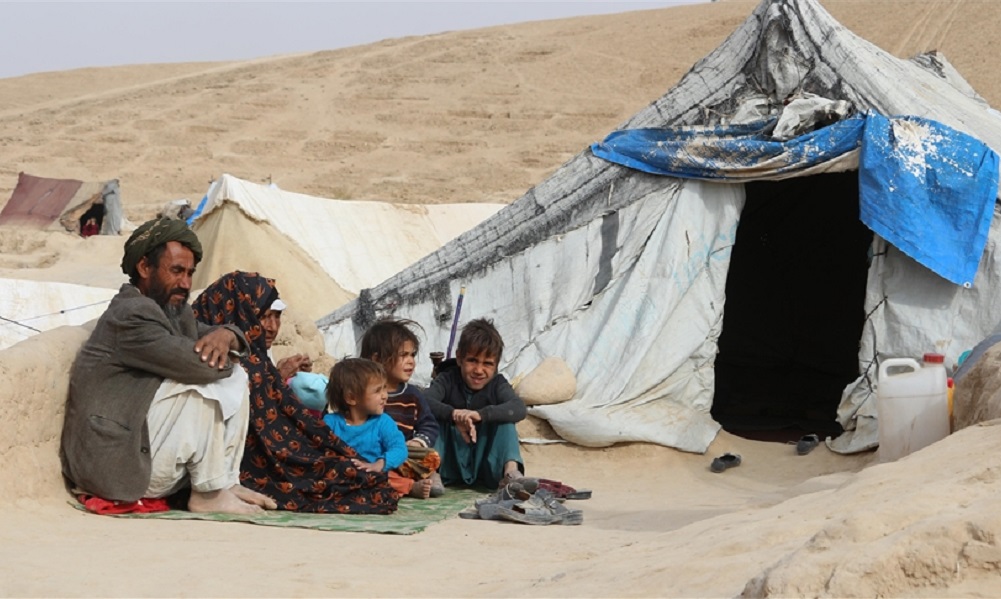
Millions of people from Ukraine, Afghanistan and across the Middle East displaced by conflict or persecution could face a perilous winter as freezing temperatures add to the misery already induced by spiraling prices, the lingering impact of the COVID-19 pandemic and extreme weather linked to the climate crisis, UNHCR, the UN Refugee Agency, warned Friday.
UNHCR spokesperson Olga Sarrado, said at a press briefing in Geneva that for many of the world’s forcibly displaced, this coming winter will be far more challenging than in recent years. Many displaced families will have no option but to choose between food and warmth as they struggle to heat their shelters, source warm clothing, and cook hot meals.
Across the Middle East, many displaced Syrians and Iraqis will have to contend with extreme cold and snowstorms once again while millions of Ukrainians uprooted from their homes by the current war are facing winter in displacement or are living in damaged homes or in buildings ill-suited to protect them from the biting cold.
Sarrado said that in Afghanistan, where winter temperatures can easily plunge to -25 degrees Celsius across parts of the country, many displaced and conflict-affected families will be left exposed to the elements.
This comes amid a steep economic decline, and only months after June’s earthquake in south-eastern Paktika and Khost provinces, in which thousands of people experienced devastating loss and damage to their homes.
She said amid an ongoing effort to contain a humanitarian catastrophe, flash flooding and drought also continue to wreak havoc on lives, property and livelihoods, while some regions of Afghanistan continue to report new displacement.
Despite worsening humanitarian needs, the funding outlook for life-saving aid programmes and assistance remains bleak, Sarrado said adding that owing to funding shortfalls, UNHCR has recently been forced to scale back essential programmes in several countries.
UNHCR has launched a global winter fundraising campaign to help forcibly displaced families in the above-mentioned operations meet their most urgent needs during the coldest months of the year, she said.
Funding will help provide those uprooted with warm winter clothing, thermal blankets, home repairs, solar panels and lamps, gas cylinders and cash assistance to cover other essential winter needs, including heating.





Latest News
Over 2.13 million Afghan refugees repatriated from Pakistan
Officials say over 150,000 individuals were returned from Punjab alone, where enforcement efforts are being led by the Punjab Home Department’s Foreign National Security Cell.

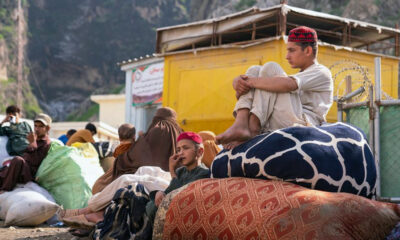
More than 2.13 million Afghan nationals have been repatriated from Pakistan to Afghanistan as part of an ongoing campaign targeting undocumented foreign residents, according to Pakistani authorities cited by local media.
Officials say over 150,000 individuals were returned from Punjab alone, where enforcement efforts are being led by the Punjab Home Department’s Foreign National Security Cell. The campaign includes inspections of thousands of residential areas and hundreds of markets, resulting in numerous detentions and legal cases against Afghan nationals found without valid documentation.
The repatriation process comes amid heightened tensions along key border crossings between the two countries. Hundreds of migrants have recently been sent back via the Chaman crossing, particularly during disruptions at other transit points.
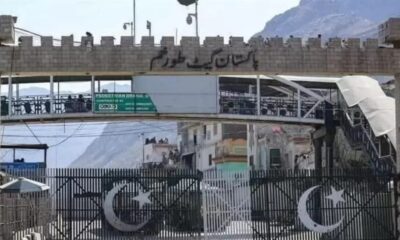
The Torkham crossing—a major gateway for cross-border movement—has faced repeated closures. Although it briefly reopened, local officials in Nangarhar Province report that it was shut again after only a few hours. Authorities in Pakistan have not provided a clear explanation for the latest closure.
According to Sediqullah Quraishi, head of Nangarhar’s Information Department, the crossing was opened temporarily on Thursday before being closed again without official clarification.
Meanwhile, hundreds of Afghan migrants remain in temporary holding centers across Punjab, where they are undergoing registration and processing ahead of their return to Afghanistan. The large-scale repatriation effort continues to raise humanitarian and logistical concerns, particularly as border access remains unpredictable.
Latest News
Human Rights Watch calls Pakistani airstrike on Kabul rehab center ‘unlawful’
Patricia Gossman, senior associate Asia director at Human Rights Watch, said available evidence suggests the strike hit a well-known civilian medical facility.
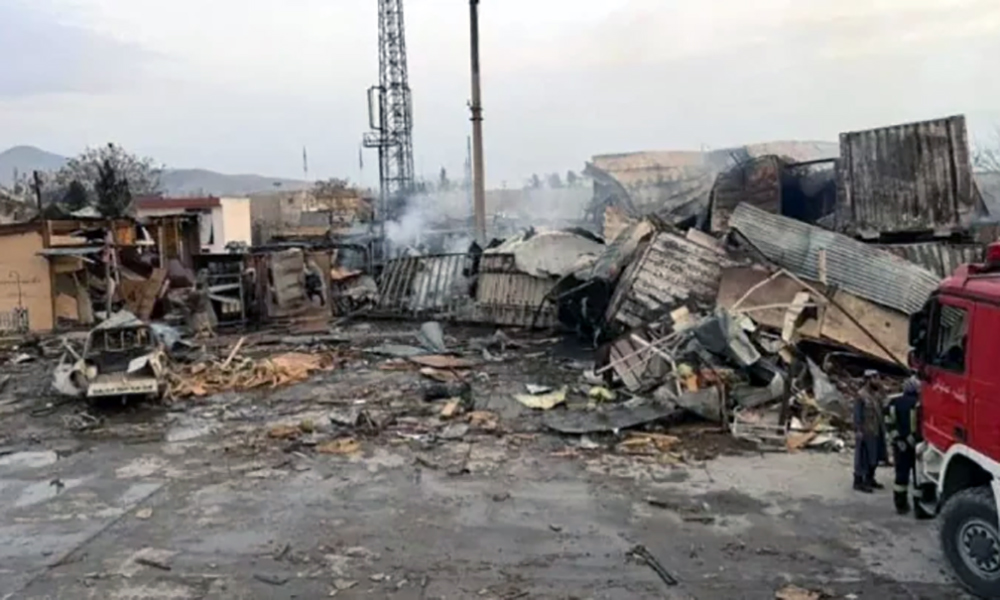
Human Rights Watch has condemned a recent Pakistani airstrike on a rehabilitation facility in Kabul, calling it “unlawful” and warning it could amount to a war crime.
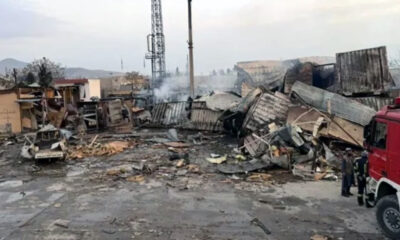
The strike, which reportedly took place on March 16, targeted the Omid Drug Rehabilitation Center, located within the former Camp Phoenix complex in eastern Kabul. According to international agencies, at least 143 people were killed and more than 250 others injured, most of them patients undergoing treatment.
Patricia Gossman, senior associate Asia director at Human Rights Watch, said available evidence suggests the strike hit a well-known civilian medical facility.
“The available evidence indicates that the Pakistani airstrike against a well-known Kabul medical facility killing dozens of patients was unlawful,” she said, adding that authorities must determine why the site was targeted and who should be held accountable.
An employee of the center told the organization that three buildings were struck, including a dining hall, a residential building housing hundreds of patients, and a guard post. At the time of the attack, more than 1,000 patients were reportedly at the facility, many gathered to break their fast during Ramadan.
Human Rights Watch said satellite imagery and visual evidence show extensive destruction across the compound, with multiple structures either destroyed or severely damaged. The organization added that it found no indication the facility was being used for military purposes.
Under international humanitarian law, medical facilities are afforded special protection. The group stressed that attacks failing to distinguish between civilian and military targets, or those causing disproportionate civilian harm, may constitute serious violations of the laws of war.
Human Rights Watch has called on Pakistan to carry out a prompt, impartial investigation and ensure accountability if violations are confirmed.
Latest News
Torkham crossing closes again hours after brief reopening
Officials say the reason for the sudden closure has not been clearly communicated by authorities in Pakistan.
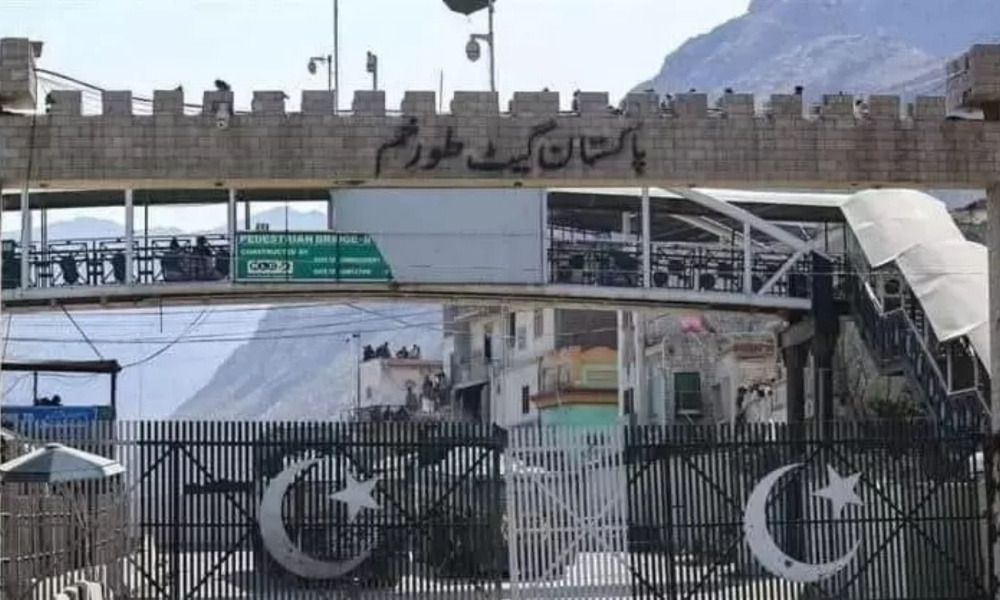
The key border crossing at Torkham crossing has once again been shut down, just hours after it was temporarily reopened, according to local officials in Nangarhar province.
Sediqullah Quraishi, head of information at the provincial Department of Information and Culture, said that on Thursday the Pakistani side allowed the crossing to open briefly to Afghan migrants. However, the crossing was closed again shortly afterward, leaving many travelers stranded.
Officials say the reason for the sudden closure has not been clearly communicated by authorities in Pakistan.
The Torkham crossing serves as one of the most important transit points between Afghanistan and Pakistan. Its repeated closures have caused significant disruption, particularly for migrants, traders, and families who rely on cross-border movement.


Over 2.13 million Afghan refugees repatriated from Pakistan

Human Rights Watch calls Pakistani airstrike on Kabul rehab center ‘unlawful’

Torkham crossing closes again hours after brief reopening

Trump signature to appear on US currency, ending 165-year tradition

Tahawol: Discussion on day 27 of Iran–US war

Pakistani military jet downed in Afghanistan’s Jalalabad, pilot captured alive

Afghan Air Force conducts airstrikes in Islamabad, other cities

Prominent Muslim scholar issues fatwa calling for Afghanistan-Pakistan ceasefire

Afghan air force strikes key Pakistani military installations in retaliatory operation

IEA: Special circle in Pakistan has launched mission to destabilize region
Tahawol: Discussion on day 27 of Iran–US war

Saar: Islamic Emirate confident of Durand Line control

Tahawol: Efforts to release Mohammad Rahim from Guantanamo Bay Detention Camp

Saar: End of ceasefire between Afghanistan-Pakistan reviewed

Tahawol: Escalating threats between Iran-US discussed
-
 Latest News5 days ago
Deadly violence likely without dialogue between Afghanistan and Pakistan: ICG
-

 Latest News4 days ago
Pakistan seeks Russian mediation to resolve Afghanistan tensions
-
 Business5 days ago
Afghani strengthens nearly 10% against US dollar amid banking sector reforms
-
 Latest News4 days ago
World must re-engage to prevent all-out Afghanistan-Pakistan war: Financial Times
-

 Sport3 days ago
Afghanistan squad hit by withdrawals ahead of AFC Asian Cup Qualifiers
-
 Latest News3 days ago
Around 2.3 million tourists visited Afghanistan’s recreational areas during Eid: Ghufran
-
 Latest News3 days ago
Islamic Emirate releases American prisoner Dennis Coyle
-
 Latest News4 days ago
Airstrike on Kabul drug rehabilitation centre sparks legal concerns