
Latest News
UNICEF says over 90% of Herat earthquake victims are women and children

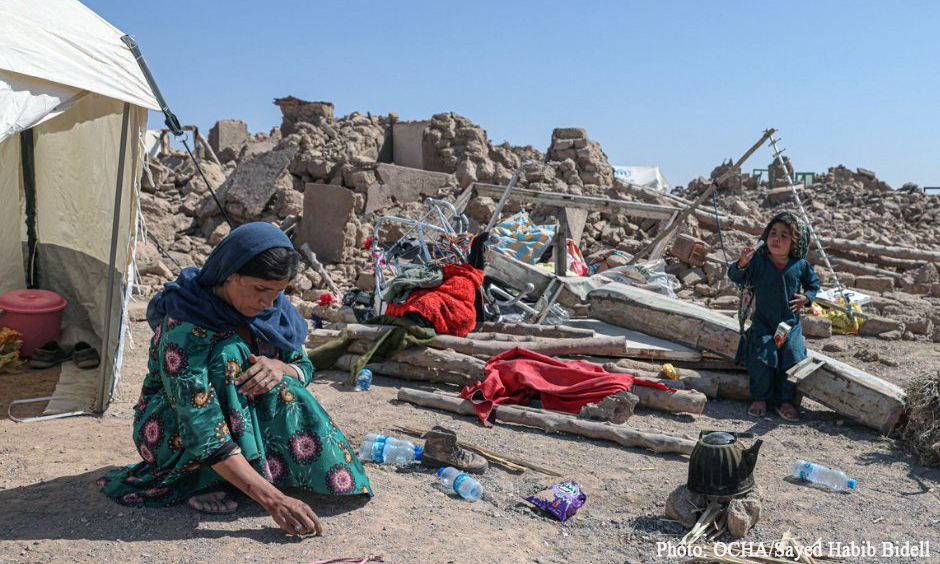
The United Nations Children’s Fund (UNICEF) says that more than 90 percent of the victims of this week’s earthquakes in Herat province are women and children.
Aid organizations have said the high casualty toll of women and girls was because of the timing of the first major quake, which happened at 11:11 am on Saturday morning. At that time of the day most village men are out of the house, while women and girls are at home.
In a post on X, on Wednesday, UNICEF also appealed for immediate funding of $20 million to help survivors.
This comes after two 6.3 magnitude quakes on Saturday, followed by a string of strong aftershocks and another 6.3 earthquake Wednesday that was epicentered in Herat but also felt in Farah and Badghis provinces.
Relief operations in Herat continue, while rescue workers continue to look for bodies. On Wednesday, aid organizations said there were over 400 people still missing after Saturday’s disaster.
The United Nations says aid has arrived in the worst-hit areas but that it is not enough.
Stéphane Dujarric, spokesman for the UN Secretary General, said: “I can say that some aid has been distributed, but it is not enough. If you are affected anywhere, no aid can arrive quickly and the current situation of aid delivery is challenging. We have international staff and “they are currently evaluating what they can get from other countries. We currently do not have enough funds and we need help.”
Pope Francis, the leader of the Catholic church, has also appealed to the foreign community to help the earthquake victims.
He said: “I invite all people of good will to help the people of Afghanistan who have suffered after the devastating earthquake.”
The UN has meanwhile said that Wednesday’s earthquake also caused major damage to more than 110 villages. Gulran and Injil districts were impacted. In total, an estimated 17,000 people have been impacted by the earthquakes, leaving thousands of people homeless.



Latest News
Afghan FM says issues with Pakistan can be resolved through dialogue and diplomacy
Muttaqi further said the Islamic Emirate would continue to formulate its foreign policy independently and would not abandon its core policies under external pressure.
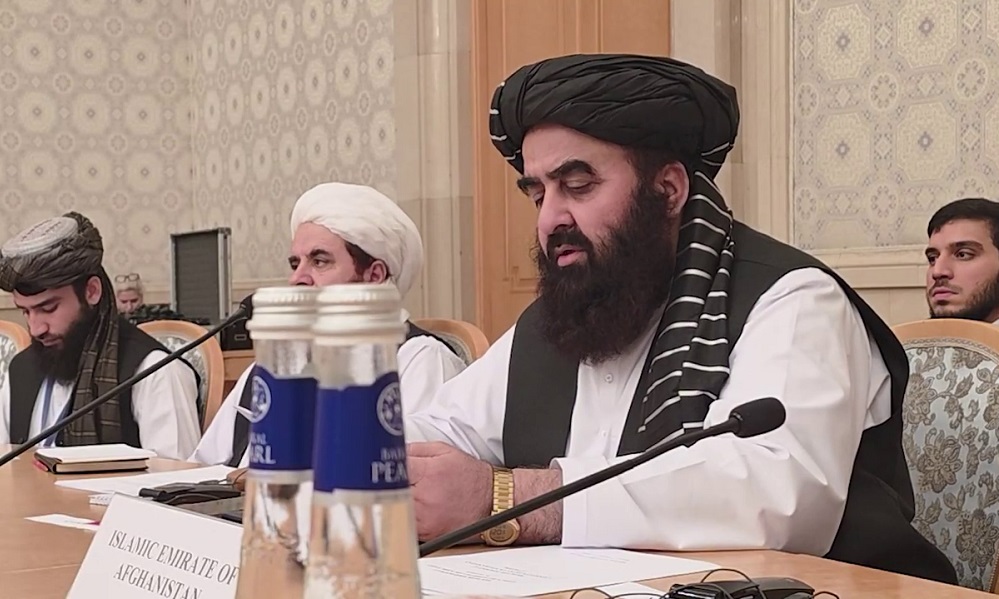
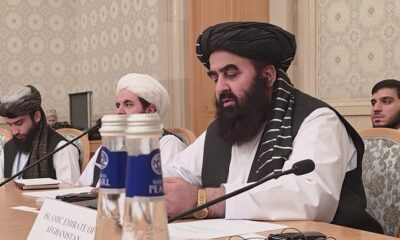
Afghanistan’s Foreign Minister Amir Khan Muttaqi has said all security, political and economic disputes between Afghanistan and Pakistan can be resolved through dialogue and diplomacy.
Speaking at the Moscow Format meeting on Monday, Muttaqi said Kabul does not want its relations with Islamabad to descend into mutual accusations and propaganda, stressing that Afghanistan’s objective is to resolve existing problems rather than prolong them.
“Our fundamental position is that the existing problems between Afghanistan and Pakistan, whether security, political or economic, can be resolved through dialogue and diplomacy,” he said.
Muttaqi criticized the Pakistani government for what he described as its approach of using “military language” instead of political engagement in dealing with Afghanistan.
He accused Pakistan of violating Afghanistan’s sovereignty through military actions in recent years and said civilians were killed in recent attacks in Kunar, Helmand and Paktika provinces.
The Afghan foreign minister also called for greater regional cooperation on security, countering Daesh, combating narcotics and preventing smuggling. He said Afghanistan was ready to work with neighboring and regional countries to strengthen border security and jointly combat organized crime.
Muttaqi further said the Islamic Emirate would continue to formulate its foreign policy independently and would not abandon its core policies under external pressure.
“Afghanistan considers self-defense against any aggression its inalienable right,” he said.
Turning to economic issues, Muttaqi urged regional countries to expand trade and investment ties with Afghanistan. He said Kabul wants Afghanistan to become a hub for regional cooperation and connectivity
Latest News
Lavrov calls for technical, logistical support for Kabul to combat terrorism
Lavrov also praised what he described as the Islamic Emirate’s control over Afghanistan, saying the authorities had brought the country’s territory under control and were “governing it quite successfully.”
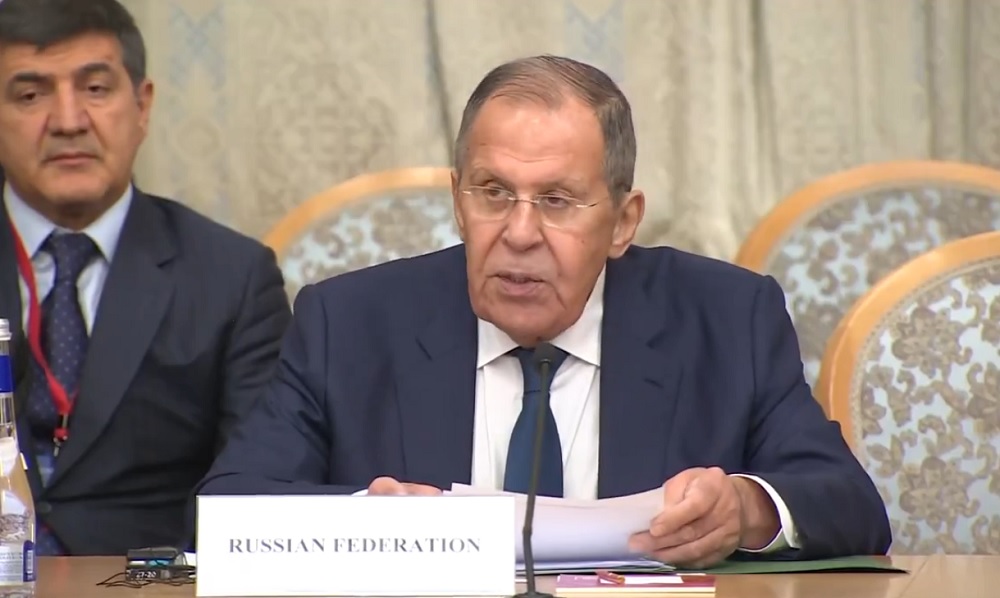
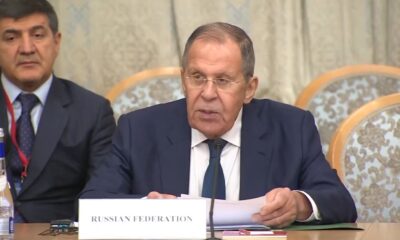
Russian Foreign Minister Sergey Lavrov has called for greater technical and logistical support for Kabul to strengthen Afghanistan’s capacity to combat terrorism.
Speaking at the Moscow Format meeting on Afghanistan on Monday, Lavrov said it was in the mutual interest of participating countries to help enhance Afghanistan’s counterterrorism capabilities.
“It is in our mutual interest to help strengthen Kabul’s counter-terrorism capabilities by providing logistical and technical assistance, as well as expert support,” Lavrov said.
Lavrov also praised what he described as the Islamic Emirate’s control over Afghanistan, saying the authorities had brought the country’s territory under control and were “governing it quite successfully.”
He said Afghan security forces were engaged in an “uncompromising struggle” against Islamic State and other militant groups, claiming that hundreds of militants had been killed and several high-profile attacks, including those targeting foreign nationals and diplomatic missions, had been thwarted.
The Russian foreign minister called for continued cooperation between intelligence and law-enforcement agencies, saying closer coordination could further strengthen Kabul’s ability to combat terrorism.
Lavrov also pointed to what he described as progress in Afghanistan’s fight against drug trafficking, citing UN assessments that opium production has fallen by 90 percent since 2022.
He said Russia would continue providing humanitarian assistance to Afghanistan, adding that another shipment was expected to arrive in the country within the next one or two months.
Lavrov also reiterated Moscow’s opposition to any NATO military presence in Afghanistan or neighboring countries, describing the deployment of NATO military infrastructure in the region as “categorically unacceptable.”
He warned that such a presence could contribute to further instability and conflict, citing what he described as the experience of recent decades.
The Moscow Format consultations on Afghanistan were launched in 2016 and bring together countries involved in Afghanistan and regional affairs.
The latest meeting was attended by special representatives and senior officials from Afghanistan, India, Iran, Kazakhstan, China, Kyrgyzstan, Pakistan, Russia, Tajikistan and Uzbekistan. Belarus and Egypt participated as invited guests.
Latest News
Iranian envoy says Afghanistan and Iran face common opportunities and threats
He said Iran and Afghanistan should closely examine their common challenges and take practical steps to safeguard the interests of both countries and the wider Muslim community.
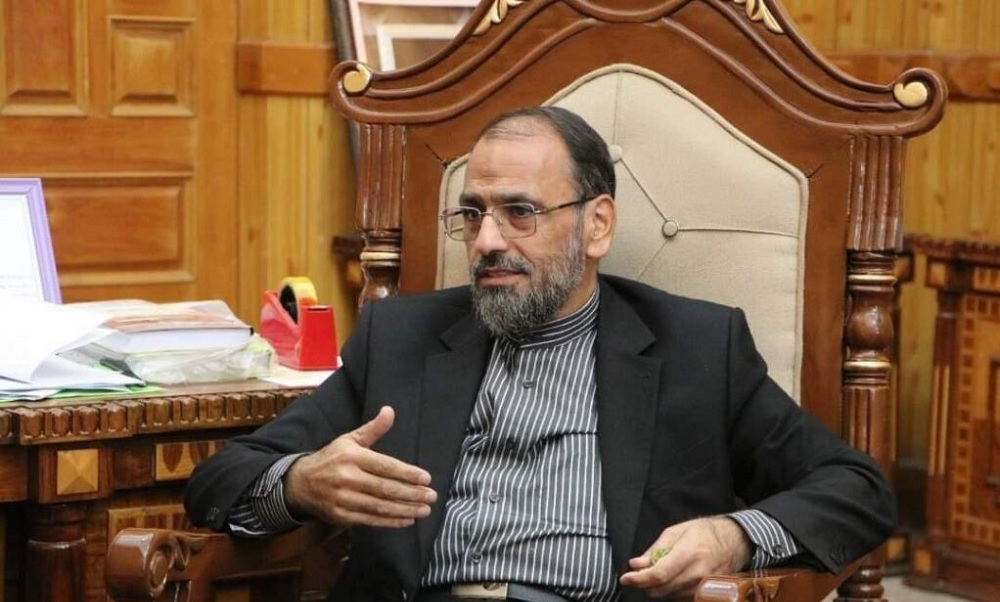
Seyed Hassan Mortazavi, Iran’s deputy ambassador in Kabul, says Iran and Afghanistan are facing common opportunities and threats amid current regional and global developments, making close cooperation between the two countries essential to address these issues.
Speaking to Radio Dari, Mortazavi said his recent visits to Kandahar and Balkh provinces and meetings with local officials were aimed at following up on shared issues more closely and strengthening relations between the two countries.
He said Iran and Afghanistan should closely examine their common challenges and take practical steps to safeguard the interests of both countries and the wider Muslim community.
Mortazavi described Kandahar as particularly important due to the presence of the Islamic Emirate’s leadership, saying Iran, like other regional countries, follows key issues not only in Kabul but also in Kandahar.
He added that during his several-hour meeting with Kandahar Governor Mullah Shirin, the two sides discussed bilateral and regional issues, including security, economic matters and border cooperation.
Mortazavi also said he met with Islamic Emirate spokesman Zabihullah Mujahid in Kandahar, where they discussed bilateral cooperation in the media sector.
Regarding his visit to Balkh and meeting with the province’s governor, Yusuf Wafa, Mortazavi said the talks covered not only issues of mutual interest in Mazar-e-Sharif but also broader matters concerning relations between Iran and Afghanistan.
He added that the two sides stressed ensuring mutual security, opposing destabilizing and security-threatening actions, and strengthening joint efforts to combat terrorism and security threats.
Economic issues and regional economic cooperation were also discussed during the meeting with the Balkh governor, he said.


Afghan FM says issues with Pakistan can be resolved through dialogue and diplomacy

Lavrov calls for technical, logistical support for Kabul to combat terrorism

Cricket Bonanza: Afghanistan set for packed international schedule

Trump picks John Coale as special presidential envoy for hostage affairs

Iranian envoy says Afghanistan and Iran face common opportunities and threats

Saudi energy group signs major Afghanistan deals covering gas exploration and pipeline plans

Khalilzad: Afghanistan ready to attract major investment

Messi returns to Inter Miami after Argentina retirement

Imam Abu Hanifa exhibition to draw exhibitors from more than 20 countries

Maryam Nawaz says Punjab faces greater security threats from neighbouring provinces

Tahawol: Doha process seeks new cooperation opportunities

Saar: Moscow forum 8th consultative meeting on Afghanistan

Tahawol: Escalation of internal political crisis in Pakistan discussed

Saar: Continuation of crisis in the Middle East discussed

Tawsia: Review of three key economic developments in Afghanistan
-
 Latest News4 days ago
Four members of one family killed in Helmand in Pakistan airstrike
-
 Sport3 days ago
ACB announces Afghanistan squads for Bangladesh, Zimbabwe series
-
 Latest News4 days ago
Moscow to host 8th meeting of Afghanistan consultations on October 5
-
 Latest News3 days ago
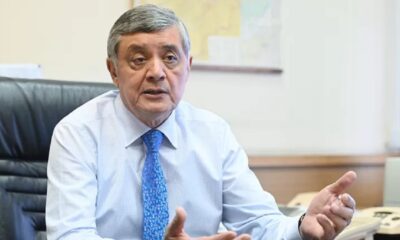
Russia expects to ease Afghanistan-Pakistan tensions at Moscow Format meeting
-

 Sport4 days ago
Rashid Khan, Azmatullah Omarzai maintain top spots in ICC ODI rankings
-
 International Sports3 days ago
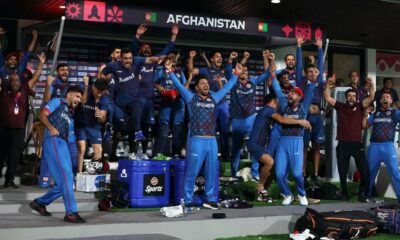
Afghanistan to face Pakistan, India and Australia at 2027 Cricket World Cup
-
 Regional3 days ago
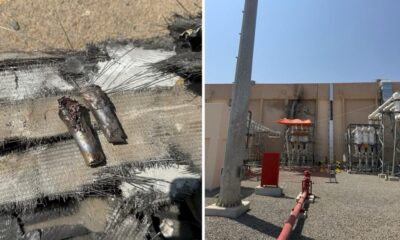
Saudi-led coalition says Houthis attacked power station for Prophet’s Mosque in Medina
-
 Latest News4 days ago
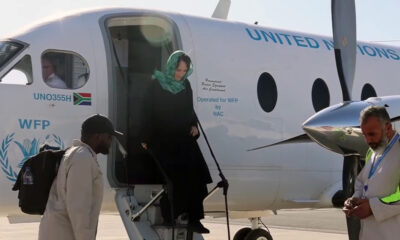
UNAMA acting chief visits Islam Qala border to assess support for returnees