
Latest News
US destroys unwanted gear and sells it as scrap


Angry scrapyard owners in Afghanistan have spoken out about the US military destroying equipment as they pack up ahead of the final withdrawal.
Inside one scrapyard, owned by Baba Mir, close to Bagram Air Base, lies the twisted remains of several all-terrain vehicles, The Associated Press (AP) reported.
Alongside these lie smashed shards that were once generators, tank tracks and mountains of tents that have been reduced to sliced up fabric.
Anything they are not shipping home or giving to the Afghans, the Americans are destroying.
Officials have said in the past that they are destroying the equipment so it does not fall into militant hands.
But, according to AP, Mir and other scrap sellers around Bagram have said it is an infuriating waste.
“What they are doing is a betrayal of Afghans. They should leave,” said Mir. “Like they have destroyed this vehicle, they have destroyed us.”
AP reports that as the last few thousand US and NATO troops withdraw, they leave behind many Afghans who are frustrated and angry.
They feel abandoned to a legacy they blame at least in part on the Americans — a deeply corrupt US-backed government and growing instability that could burst into a brutal new phase of civil war.
AP reported that the scrapyard owners are angry in part because they could have profited more from selling intact equipment.
According to AP, US officials are being secretive about what stays and what goes. Most of what is being shipped home is sensitive equipment never intended to stay behind, say US Defense and Western officials who spoke on condition of anonymity.
Other equipment including helicopters, military vehicles, weapons and ammunition will be handed over to Afghanistan’s National Defense and Security Forces and some bases will be given to them as well.
One of those most recently handed over was the New Antonik base in Helmand province, where Taliban are said to control roughly 80% of the rural area.
AP reports that destined for the scrap heap are equipment and vehicles that can neither be repaired nor transferred to Afghanistan’s security forces because of poor condition.
This is not however the first time this has happened. The same was done in 2014, when thousands of troops withdrew as the US and NATO handed Afghanistan’s security over to Afghans.
More than 176 million kilograms of scrap from destroyed equipment and vehicles was sold to Afghans for $46.5 million, a spokeswoman for the military’s Defense Logistics Agency in Virginia said at the time.
The Associated Press reported that last month, around the time President Joe Biden announced that America was ending it’s “forever war,” Mir paid nearly $40,000 for a container packed with 70 tons of trashed equipment.
He’ll make money, he told AP, but it will be a fraction of what he could have made selling the vehicles if they’d been left intact, even if they weren’t in running condition.
The parts would have been sold to the legions of auto repair shops across Afghanistan, he said. That can’t happen now. They’ve been reduced to mangled pieces of metal that Mir sells for a few thousand Afghanis.
Sadat, another scrap dealer in Bagram, says similar scrap yards around the country are crammed with ruined US equipment.
“They left us nothing,” he said. “They don’t trust us. They have destroyed our country. They are giving us only destruction.”



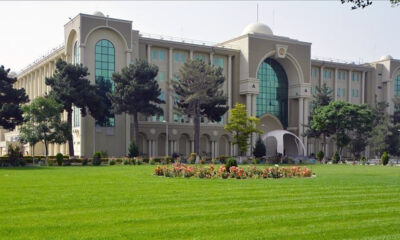





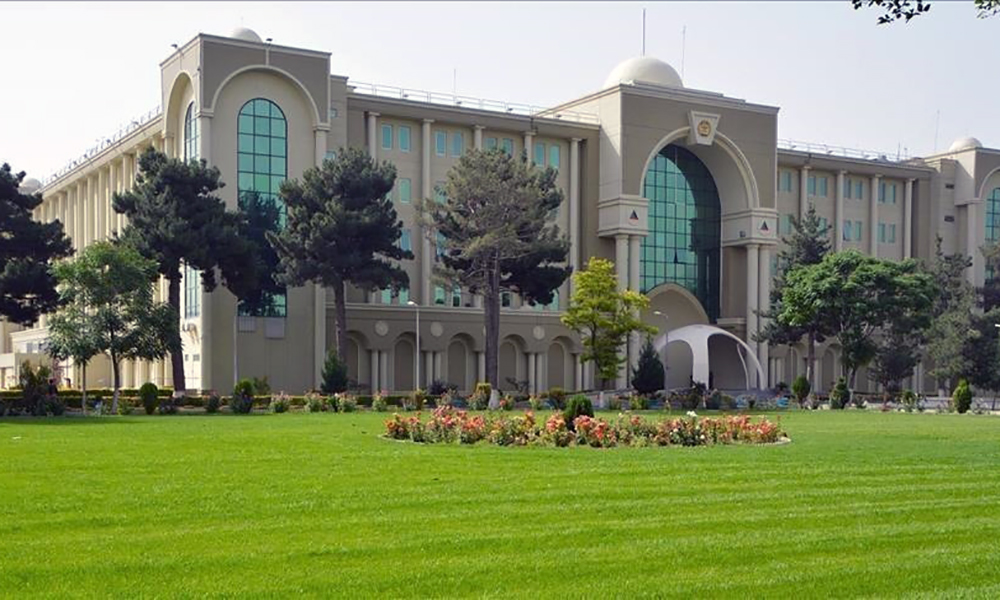
Afghanistan’s Ministry of Defense says a Pakistani military post near Spin Boldak was targeted and destroyed after Pakistani forces opened fire toward Afghanistan.
Ministry spokesperson Enayatullah Khwarazmi said in a post on X that Afghan forces suffered no casualties or damage in the clash.
Khwarazmi also rejected claims made by the Pakistani side about the incident, describing them as “propaganda.”
Latest News
Mujahid: Pakistan attacking Afghanistan to evade Mecca Pact responsibilities
He warned that the Islamic Emirate would give an “appropriate response” to what he called the Pakistani military regime’s “bullying.”
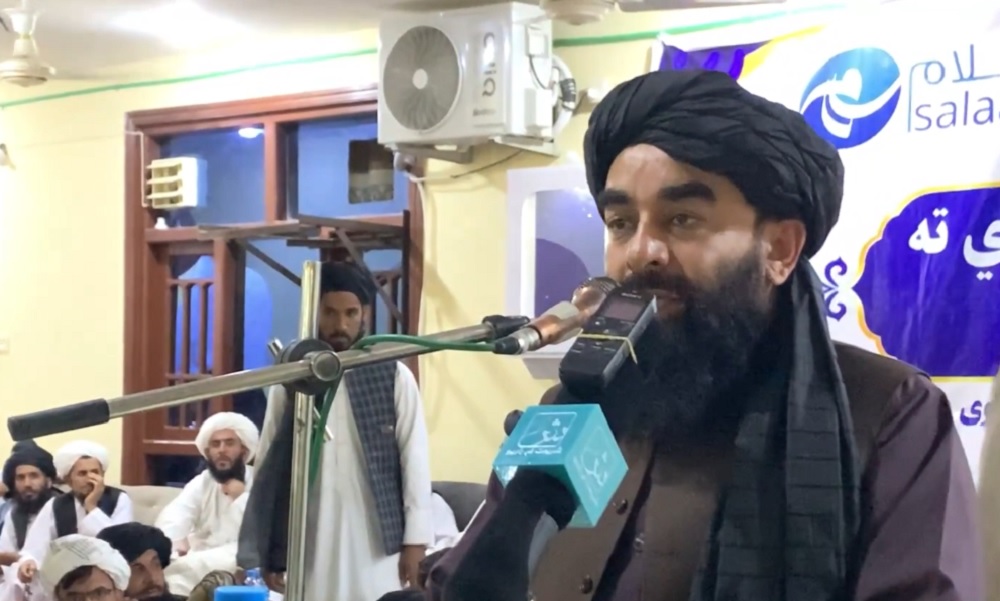
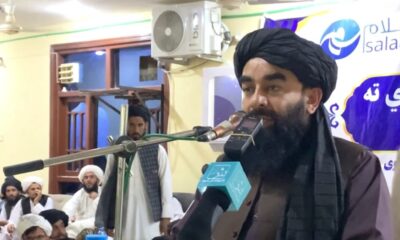
Islamic Emirate spokesperson Zabihullah Mujahid has accused Pakistan of carrying out attacks on Afghanistan to divert attention from its domestic problems and to evade responsibilities under the “Mecca Pact.”
Speaking at a religious seminary in Kandahar, Mujahid said Pakistan was facing political and economic challenges at home and was using attacks on Afghanistan to shift public attention away from protests and its internal problems.
“Pakistan, by violating the territory of its neighboring Islamic country, wants to divert attention from its failures,” he said.
Mujahid also criticized Pakistan’s political situation, claiming that political space had been restricted and that freedoms guaranteed under the country’s laws were not being allowed.
He said Pakistan’s economic problems had also increased significantly and accused the country of seeking to distract the public from those problems by engaging in conflict with Afghanistan.
Mujahid further accused Pakistan’s military leadership of putting the Pakistani people at risk through what he described as its “false position.”
He warned that the Islamic Emirate would give an “appropriate response” to what he called the Pakistani military regime’s “bullying.”
His remarks followed Pakistani airstrikes on Kandahar, Paktia and Khost provinces on Thursday, which Afghan authorities said killed four civilians.
The strikes came three days after attacks on Kunar and Paktika provinces, in which Afghan authorities said three civilians were killed.
Latest News
Kabul rejects U.S. claim that meth seized in Pakistan was of Afghan origin
Balkhi said the Islamic Emirate of Afghanistan (IEA) has imposed an absolute ban on the production, trafficking and use of all types of narcotics in Afghanistan.
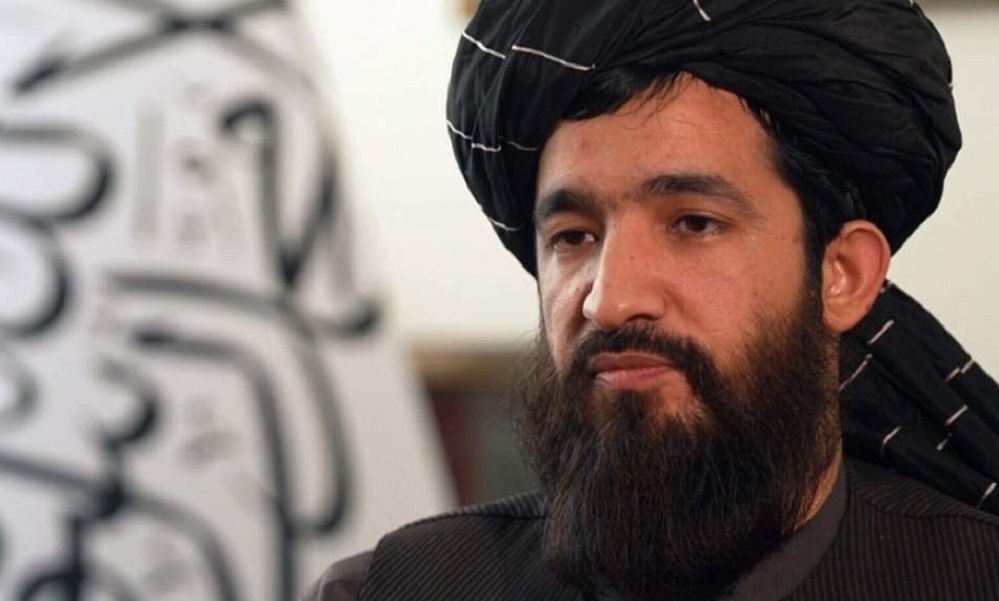
Afghanistan’s Foreign Ministry spokesperson Abdul Qahar Balkhi has rejected a U.S. claim that 463 kilograms of synthetic drugs seized in Pakistan were of Afghan origin, calling the attribution “unfounded and politically motivated.”
Balkhi said the U.S. Embassy in Islamabad should investigate the origin of the seized drugs in Pakistan rather than attributing them to Afghanistan.
“The attribution by the U.S. Embassy in Islamabad of the synthetic drugs bound for Sri Lanka and intercepted in Pakistan through joint U.S.-Pakistani efforts as ‘Afghan-origin’ is an unfounded and politically motivated allegation,” Balkhi said.
He said the Islamic Emirate of Afghanistan (IEA) has imposed an absolute ban on the production, trafficking and use of all types of narcotics in Afghanistan.
Balkhi also claimed that following the ban in Afghanistan, the cultivation, production and trafficking of narcotics have increased “on the other side of the Durand Line.”
He further argued that Afghanistan does not have the capacity to produce synthetic drugs and said crossing points along the Durand Line have been completely closed to all movement for nearly a year.
His remarks came after the U.S. Embassy in Islamabad said U.S. and Pakistani anti-narcotics authorities had seized 463 kilograms of crystal methamphetamine worth an estimated $21 million and bound for Sri Lanka.
The embassy said the operation led to multiple arrests and highlighted ongoing U.S. cooperation and training with Pakistani authorities to disrupt international drug-trafficking networks.


Exclusive interview with Abdul Latif Mansoor, Minister of MRRD

Sorkh Poshan Khafi rout Istiqlal Kabul 6-0 in ACL season six

Tawsia: Overview of Afghanistan’s iron mines

Afghanistan Champions League: Arman FC and Aino Mina play out goalless draw

Afghanistan says Pakistani military post destroyed near Spin Boldak

Saudi energy group signs major Afghanistan deals covering gas exploration and pipeline plans

ATN secures exclusive rights to broadcast T20I series in India across Afghanistan

Trump floats idea of renaming Atlantic or Pacific Ocean

US hits Egyptian bank branches with Iran sanctions as war marks six months

Nepal flood rescue mission enters critical phase as thousands remain missing
Exclusive interview with Abdul Latif Mansoor, Minister of MRRD
Tawsia: Overview of Afghanistan’s iron mines

Tahawol: Discussion on fresh Pakistani airstrikes on Afghanistan

Saar: Calls for international support for Afghanistan discussed

Tahawol: Opening of the 81st UN General Assembly Session
-

 Sport5 days ago
Afghanistan to face Japan and Nepal in Asian Games cricket group stage
-
 Regional5 days ago
Iran and US trade threats after Houthi attacks escalate regional conflict
-

 World4 days ago
CNN, MS NOW and Politico sue Trump, challenging White House ban
-
 Health5 days ago
Four-day polio vaccination campaign begins across Afghanistan
-

 Latest News4 days ago
UN reiterates call for respect for international law after Kunar airstrikes
-
 Latest News4 days ago
Khalilzad condemns Pakistan airstrikes, says current strategy is not working
-

 Latest News2 days ago
Ariana Afghan Airlines ranks seventh among 45 Central Asian airlines
-

 Latest News4 days ago
Afghan Official: Pakistan’s airstrikes will not go unanswered