
Latest News
US looks into having 3 Central Asian states take in at-risk Afghans

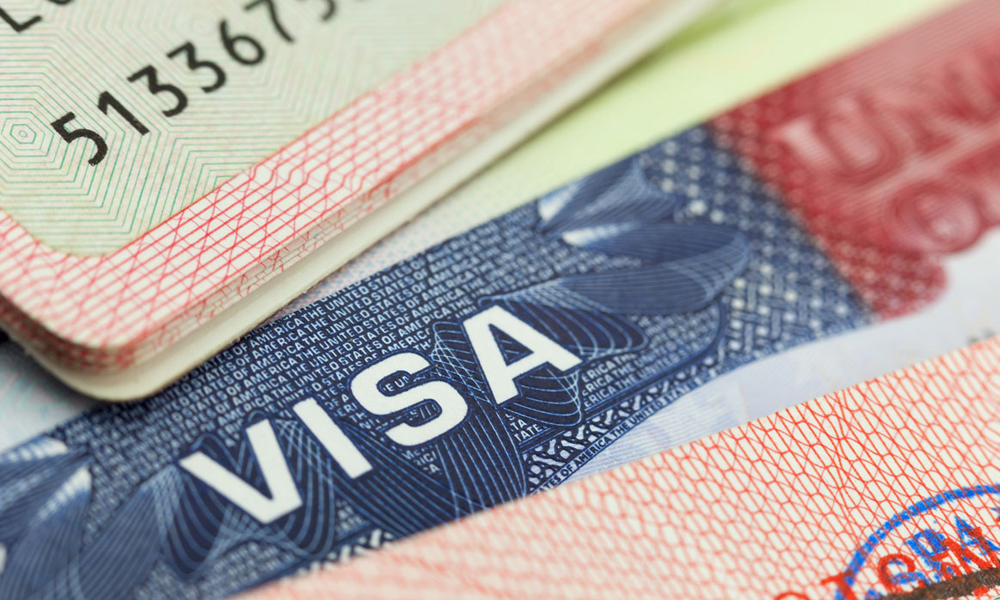
The Biden administration is exploring having three Central Asian countries temporarily take in thousands of Afghans who worked with U.S. forces and face threats from the Taliban now that American troops are withdrawing after 20 years, three sources familiar with the matter told Reuters on Friday.
They said Washington is in talks with Kazakhstan, Tajikistan and Uzbekistan about letting in the at-risk Afghan citizens. Two of the sources were U.S. officials and all requested anonymity.
The three sources said an agreement did not appear imminent with any of the countries.
The decision to move at-risk Afghans risks inflaming a sense of crisis in Afghanistan, as fighting between U.S.-backed Afghan forces and the Taliban has surged in recent weeks, with the militants gaining control of large amounts of territory, Reuters reported.
Thousands of Afghan translators and interpreters face threats from the Taliban after working for two decades alongside the U.S. military.
The United States announced plans last week to seek refuge for thousands of vulnerable Afghans in countries outside Afghanistan so their U.S. visa applications could be processed from safety, but Washington did not specify where they would go.
White House spokeswoman Jen Psaki provided no further details on Friday, Reuters reported.
“One of the reasons that I’m not going to get into security details about what third country they might go to, and how many, is exactly for that reason, but certainly our timeline is to relocate these individuals to a location outside of Afghanistan before we complete our military drawdown,” Psaki said.
President Joe Biden has said those who helped the United States will not be left behind, and on Thursday a senior Republican lawmaker said plans to evacuate at-risk Afghans will include their family members for a total of as many as 50,000 people.
“We are identifying a group of Special Immigrant Visa (SIV) applicants who have served as interpreters and translators, as well as other at-risk categories who have assisted us. They will be relocated to a location outside of Afghanistan before we complete our military drawdown by September, in order to complete the visa application process,” a senior administration official said.
On Thursday, U.S. Secretary of State Antony Blinken met his Tajik and Uzbek counterparts. The State Department said in readouts of the meetings that Afghanistan was discussed but provided no further details.
Washington agreed to withdraw in a deal negotiated last year under Biden’s predecessor, Donald Trump. Biden rejected advice from military leaders to hang on until an agreement could be reached between the insurgents and Afghanistan President Ashraf Ghani’s U.S.-backed government.
Biden told Ghani in Washington last week the Afghans must decide their own future. Ghani said his job was now to “manage the consequences” of the U.S. withdrawal.







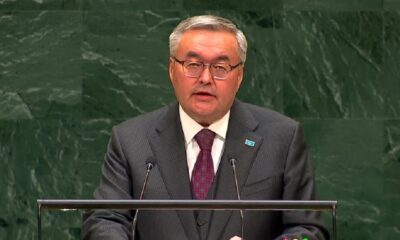




Kazakhstan’s Foreign Minister Mukhtar Tileuberdi has called for pragmatic and coordinated international engagement with Afghanistan, saying the country’s long-term stability is closely linked to the security and sustainable development of Central Asia.
Speaking during the general debate of the 81st session of the United Nations General Assembly in New York on Friday, Tileuberdi said humanitarian assistance to Afghanistan remains essential but alone cannot break the cycle of poverty, displacement and dependency.
He said Kazakhstan supports a “pragmatic, coordinated and step-by-step” approach to international engagement with Afghanistan, with the United Nations playing a central role.
Tileuberdi also said Kazakhstan is working with the UN to operationalize the United Nations Regional Centre for the Sustainable Development Goals for Central Asia and Afghanistan in Almaty.
He said the success of the centre should be measured by the results and assistance it delivers to the region.


Saar: Concerns over Pakistan’s political crisis discussed

Afghanistan Champions League: Omar Zawak Herat beat Toofan Herat 1-0

Blast in Pakistan’s Dera Ismail Khan kills 11, injures 30

Ariana Afghan Airlines increases Kabul-Delhi cargo flights

Khalilzad questions Pakistan’s commitment to Afghan welfare

Saudi energy group signs major Afghanistan deals covering gas exploration and pipeline plans

Trump floats idea of renaming Atlantic or Pacific Ocean

US hits Egyptian bank branches with Iran sanctions as war marks six months

Nepal flood rescue mission enters critical phase as thousands remain missing

Iranian clubs to face Gulf opponents at neutral venues in Asian Champions League Elite
Saar: Concerns over Pakistan’s political crisis discussed

Exclusive interview with Abdul Latif Mansoor, Minister of MRRD

Tawsia: Overview of Afghanistan’s iron mines

Tahawol: Discussion on fresh Pakistani airstrikes on Afghanistan

Saar: Calls for international support for Afghanistan discussed
-

 World5 days ago
CNN, MS NOW and Politico sue Trump, challenging White House ban
-

 Latest News3 days ago
Ariana Afghan Airlines ranks seventh among 45 Central Asian airlines
-

 Latest News4 days ago
UN reiterates call for respect for international law after Kunar airstrikes
-

 Regional3 days ago
US and Iran hold first talks since June after Trump’s ‘annihilation’ threat
-

 Latest News3 days ago
Silk Road highway in Wakhan corridor now reaches the China border
-

 Latest News4 days ago
Afghan Official: Pakistan’s airstrikes will not go unanswered
-

 Regional4 days ago
G7 foreign ministers call on Iran to stop arming Houthis
-

 Sport4 days ago
Afghan boxing referee heads to China for international festival