
Regional
US to pull some personnel from the Middle East amid rising tensions with Iran
Iranian Defence Minister Aziz Nasirzadeh also said on Wednesday that if Iran was subjected to strikes it would retaliate by hitting U.S. bases in the region.

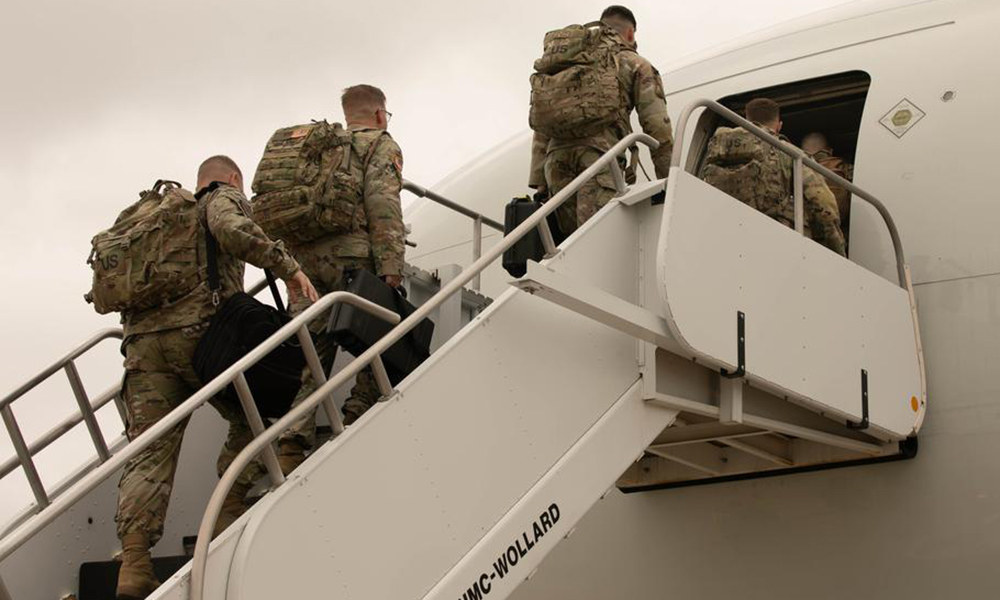
U.S. President Donald Trump said on Wednesday U.S. personnel were being moved out of the Middle East because “it could be a dangerous place,” adding that the United States would not allow Iran to have a nuclear weapon.
Reuters reported earlier on Wednesday that the U.S. is preparing a partial evacuation of its Iraqi embassy and will allow military dependents to leave locations around the Middle East due to heightened security risks in the region, according to U.S. and Iraqi sources.
The four U.S. and two Iraqi sources did not say what security risks had prompted the decision and reports of the potential evacuation pushed up oil prices by more than 4%.
A U.S. official said the State Department had authorized voluntary departures from Bahrain and Kuwait.
The State Department updated its worldwide travel advisory on Wednesday evening to reflect the latest U.S. posture. “On June 11, the Department of State ordered the departure of non-emergency U.S. government personnel due to heightened regional tensions,” the advisory said.
The decision by the U.S. to evacuate some personnel comes at a volatile moment in the region. Trump’s efforts to reach a nuclear deal with Iran appear to be deadlocked and U.S. intelligence indicates that Israel has been making preparations for a strike against Iran’s nuclear facilities, read the report.
“They are being moved out because it could be a dangerous place, and we’ll see what happens,” Trump told reporters. “We’ve given notice to move out.”
Asked whether anything can be done to lower the temperature in the region, Trump said: “They can’t have a nuclear weapon. Very simple, they can’t have a nuclear weapon.”
Trump has repeatedly threatened to strike Iran if stuttering talks over its nuclear programme fail and in an interview released earlier on Wednesday said he was growing less confident that Tehran would agree to stop enriching uranium, a key American demand.
Iranian Defence Minister Aziz Nasirzadeh also said on Wednesday that if Iran was subjected to strikes it would retaliate by hitting U.S. bases in the region.
The U.S. embassy in Kuwait said in a statement on Wednesday that it had “not changed its staffing posture and remains fully operational.”
The United States has a military presence across the major oil-producing region, with bases in Iraq, Kuwait, Qatar, Bahrain and the United Arab Emirates.
U.S. Defense Secretary Pete Hegseth has authorized the voluntary departure of military dependents from locations across the Middle East, a U.S. official said. Another U.S. official said that was mostly relevant to family members located in Bahrain – where the bulk of them are based, Reuters reported.
“The State Department is set to have an ordered departure for (the) U.S. embassy in Baghdad. The intent is to do it through commercial means, but the U.S. military is standing by if help is requested,” a third U.S. official said.
Iraq’s state news agency cited a government source as saying Baghdad had not recorded any security indication that called for an evacuation.
Another U.S. official said that there was no change in operations at Al Udeid Air Base in Qatar, the largest U.S. military base in the Middle East and that no evacuation order had been issued for employees or families linked to the U.S. embassy in Qatar, which was operating as usual.
Oil futures climbed $3 on reports of the Baghdad evacuation with Brent crude futures at $69.18 a barrel.
Earlier on Wednesday Britain’s maritime agency warned that increased tensions in the Middle East may lead to an escalation in military activity that could impact shipping in critical waterways. It advised vessels to use caution while travelling through the Gulf, the Gulf of Oman and the Straits of Hormuz, which all border Iran.
Britain’s Foreign Office said it was monitoring the situation and would keep its embassy in Iraq under constant review following the U.S. moves.
Iraq, a rare regional partner of both the United States and its arch regional foe Iran, hosts 2,500 U.S. troops although Tehran-backed armed factions are linked to its security forces, Reuters reported.
Tensions inside Iraq have heightened since the start of the war in Gaza in October 2023, with Iran-aligned armed groups in the country repeatedly attacking U.S. troops, though attacks have subsided since last year.
Israel and Iran also twice exchanged fire last year – the first ever such direct attacks between the region’s most entrenched enemies – with missiles and war drones hurtling across Iraqi airspace.
Top U.S. regional ally Israel has also struck Iran-linked targets across the region, including Iraqi armed groups operating both inside Iraq and in neighbouring Syria.
In recent months the United States has deployed more military assets in the Middle East, including B-2 bombers, which have since been replaced, and extending the deployment of a second aircraft carrier, which has since departed.
The next round of nuclear talks between Iran and the United States is due in the coming days with Iran expected to hand over a counter proposal after rejecting an offer by Washington.
A senior Iranian official told Reuters that a military threat had always been part of the United States’ negotiation tactics with Iran.
“Any military action against Iran, whether by the U.S. or Israel, will have serious consequences,” the official warned.
Iran’s U.N. mission on Wednesday posted on X: “Threats of ‘overwhelming force’ won’t change facts: Iran is not seeking a nuclear weapon and U.S. militarism only fuels instability.”
The statement appeared to be a response to an earlier comment by U.S. Army General Michael “Erik” Kurilla, the head of U.S. Central Command, that he had provided the president with “a wide range of options” to prevent a nuclear-armed Iran.
Kurilla postponed testimony he was due to deliver before U.S. lawmakers on Thursday because of tensions in the Middle East, two other U.S. officials said.





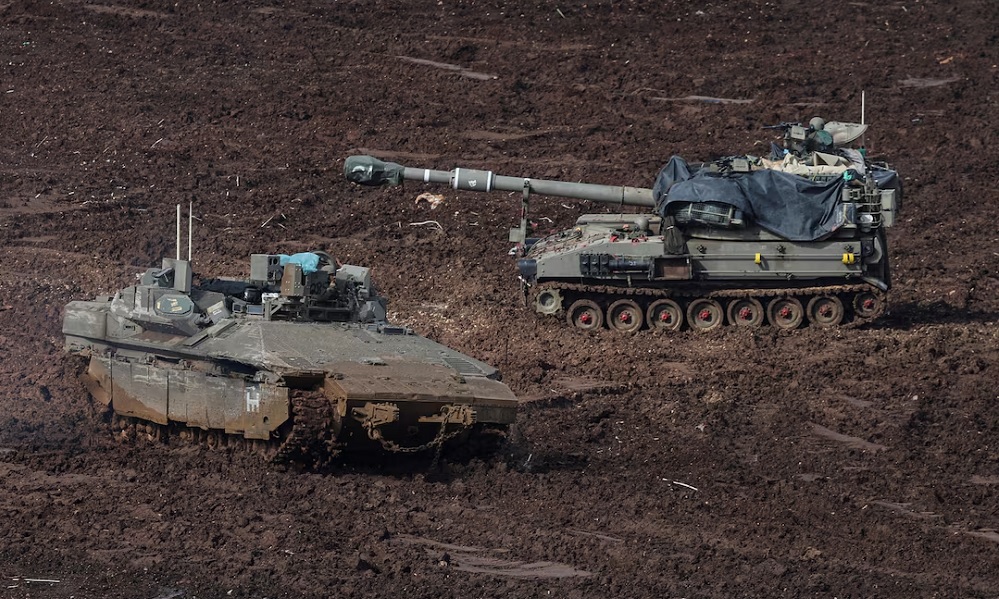
President Donald Trump said the U.S. was considering “winding down” its military operation against Iran, as Iran and Israel traded attacks on Saturday and Iranian media said the nuclear enrichment facility in Natanz had been attacked.
In a social media post, Trump said the U.S. was close to meeting its goals but insisted that other countries should take the lead in policing the vital shipping lane of the Strait of Hormuz, whose near-closure threatens a global energy shock, Reuters reported.
Trump and his administration have sent mixed messages about U.S. goals throughout the war, now entering its fourth week, leaving traditional U.S. allies struggling to respond.
In less than 24 hours, Trump suggested the war could wind down as the Iranian threat was being eliminated, while at the same time U.S. Marines and heavy landing craft were headed to the region on a mission whose goals were not immediately clear.
“We are getting very close to meeting our objectives as we consider winding down our great Military efforts in the Middle East with respect to the Terrorist Regime of Iran,” Trump said on Truth Social.
“The Hormuz Strait will have to be guarded and policed, as necessary, by other Nations who use it — The United States does not!” he added. “If asked, we will help these Countries in their Hormuz efforts, but it shouldn’t be necessary once Iran’s threat is eradicated.”
IRAN REPORTS ATTACK ON NATANZ NUCLEAR ENRICHMENT PLANT More than 2,000 people have been killed in Iran since the U.S. and Israel attacked on February 28, while Americans appear increasingly concerned at signs the war could expand further.
Vital energy infrastructure in Iran and neighbouring Gulf states has been attacked, sending oil prices up 50% and threatening a global economic shock.
Trump had also accused NATO allies, which have not been consulted about the war, of cowardice over their reluctance to help open the Strait of Hormuz.
As the fighting continued, the Iranian media said U.S.-Israeli forces had attacked the Shahid Ahmadi-Roshan Natanz enrichment complex on Saturday morning. Technical experts found that no radioactive leaks had occurred and nearby residents were not at risk. Israel said it was unaware of such a strike.
Israel also attacked Beirut, saying it was targeting Hezbollah as it steps up airstrikes targeting the Iran-backed Lebanese militia in the deadliest spillover from the war on Iran since Hezbollah fired on Israel in support of Tehran on March 2.
Israel said Saturday’s attacks on Iran included Tehran, Karaj, west of the capital, and the central city of Isfahan. Three members of a family were killed in a strike on a residential building in the city of Ramsar, Iranian media quoted a local governor as saying.
Before its strikes on Lebanon, the Israeli military said it had issued evacuation warnings for seven neighbourhoods in the southern suburbs of Beirut. Four Hezbollah militants were killed in southern Lebanon, one in a “ground engagement” and three using tank fire, it said.
More than 1,000 people have been killed in Lebanon and over 1 million displaced in the Israeli attacks.
Air raid sirens in Israel warned of incoming missiles from early morning, sending millions to shelters as the blasts of interceptions rang out from above. There were no immediate reports of casualties.
Israel’s military said search and rescue teams were headed to impact sites in central Israel.
Iran fired two ballistic missilesat the U.S.-British military base Diego Garcia in the Indian Ocean but did not hit the base, the Wall Street Journal reported.
EUROPEAN GAS PRICES SURGE
Natural gas prices in Europe surged as much as 35% this week as Iran and Israel hit some of the region’s most important gas infrastructure. The European Union urged members to lower gas-storage targets and start refilling reserves gradually to curb demand, the Financial Times reported on Saturday.
The Strait of Hormuz, conduit for around a fifth of global oil and liquefied natural gas supplies, has been effectively closed to most shipping.
Leading allies of the U.S. from Europe as well as Japan and Canada have pledged to join “appropriate efforts” to ensure safe passage through the strait, but Germany and France have spelled out that fighting must stop first.
Foreign Minister Abbas Araqchi told Kyodo news agency that Iran was ready to let Japan-related vessels pass through the narrow waterway. Japan gets around 90% of its oil shipments via the strait.
The White House, in an effort to increase supply and lower prices, said it would waive sanctions on Iranian oil for 30 days to allow the sale of 140 million barrels on tankers. The administration had previously eased sanctions on a similar amount of Russian oil.
As Muslims celebrated Eid al-Fitr on Friday to end the fasting month of Ramadan and Iranians marked Nowruz, the Persian New Year, Iran’s new supreme leader, Ayatollah Mojtaba Khamenei, issued a message of defiance.
Khamenei – who did not appear at Eid prayers and has not been seen in public since the initial Israeli attack that killed his father and predecessor, Ayatollah Ali Khamenei – said in his statement that Iranians had responded with unity and resistance and “dealt a disorienting blow to the enemy”.
Russian President Vladimir Putin also sent Nowruz greetings to Iran’s leaders, using the occasion to say Moscow remained a loyal friend and reliable partner.
The extent of Moscow’s support for Iran is in dispute though. Some Iranian sources say they have had little real help from Moscow in the biggest crisis for Iran since the U.S.-backed shah was toppled in the 1979 Islamic Revolution.
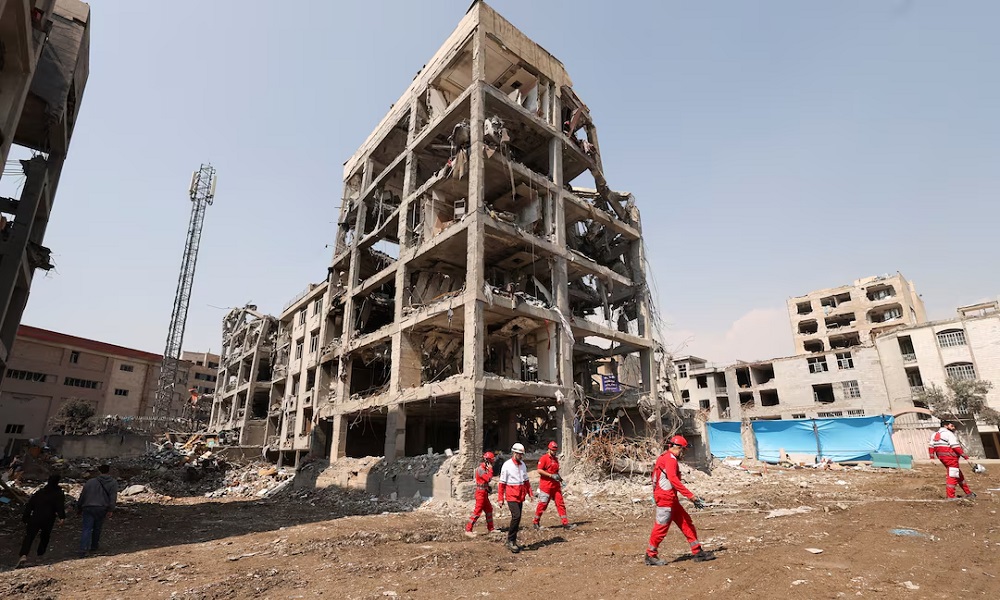
Israel launched a fresh wave of strikes on Iran on Friday, intensifying a rapidly escalating regional conflict that has already spread beyond its initial front lines and shaken global energy markets.
The latest attacks came a day after U.S. President Donald Trump urged Israel not to repeat strikes on Iranian natural gas infrastructure—an escalation that had significantly raised tensions in what is increasingly seen as a joint U.S.-Israeli confrontation with Tehran.
According to a spokesperson for the Israel Defense Forces, the military had “begun a wave of strikes against the infrastructure of the Iranian terror regime in the heart of Tehran,” though no further details were provided.
The conflict, which began on February 28 after diplomatic efforts over Iran’s nuclear program collapsed, has killed thousands, drawn in neighboring countries, and disrupted the global economy.
In the early hours of Friday, Bahrain, Kuwait, and the United Arab Emirates reported missile attacks following days of Iranian strikes targeting regional energy infrastructure.
Energy markets have been particularly volatile. Prices surged Thursday after Iran retaliated against an Israeli strike on a major gas field by hitting Ras Laffan Industrial City in Qatar, a key processing center for roughly one-fifth of the world’s liquefied natural gas. The damage is expected to take years to repair.
Meanwhile, Saudi Arabia’s primary Red Sea export hub also came under attack, even as the kingdom sought to reroute shipments to bypass disruptions caused by Iran’s threat to the Strait of Hormuz—a critical passageway for about 20% of global oil supplies.
Despite the attacks, oil prices edged lower on Friday after European nations and Japan offered to help secure maritime routes through the strait, and the United States signaled plans to increase oil production.
The strikes on energy infrastructure highlight Iran’s capacity to impose significant economic costs in response to military pressure, as well as the limitations of existing air defense systems in protecting key assets across the Gulf.
Facing political pressure at home over rising fuel prices ahead of midterm elections, Trump criticized allies for what he described as a cautious response to U.S. calls for coordinated action to secure the Strait of Hormuz.
“I told him, ‘Don’t do that,’ and he won’t do that,” Trump said Thursday, referring to Israeli Prime Minister Benjamin Netanyahu and further strikes on energy infrastructure.
Netanyahu later confirmed that Israel had acted alone in the attack on Iran’s South Pars gas field and acknowledged Trump’s request to avoid further escalation in that sector.
He added that Iran had been “decimated” and no longer possessed the capability to enrich uranium or produce ballistic missiles, though he suggested that any fundamental political change in Tehran would require a “ground component,” without elaborating further.
Regional
Pakistan among top nuclear threats to America, US intelligence chief tells senate
Speaking before a Senate panel, Gabbard said the U.S. intelligence community is increasingly concerned about the growing missile capabilities of several countries, including Pakistan and Iran.
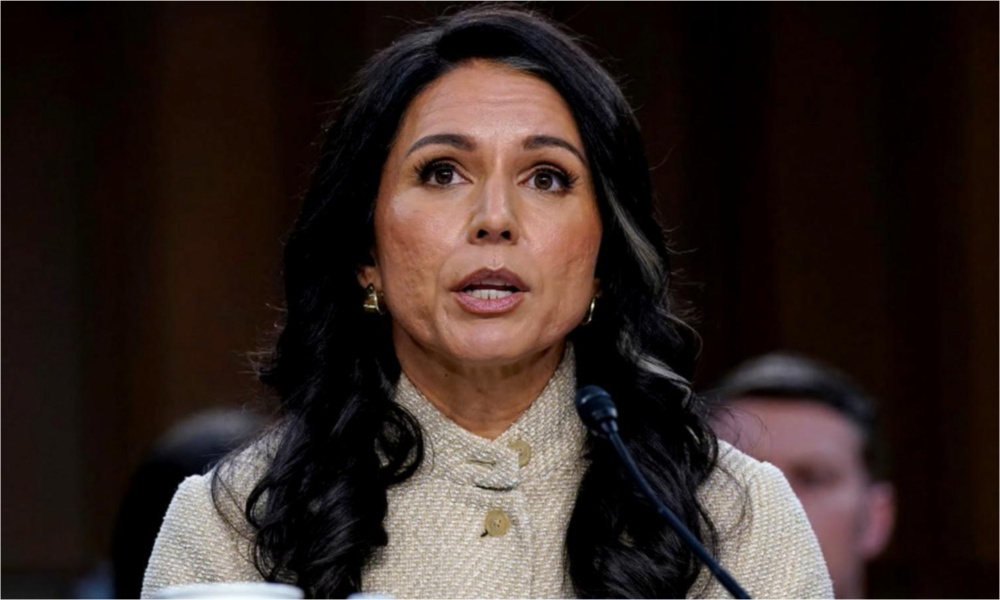
U.S. Director of National Intelligence Tulsi Gabbard told lawmakers that Pakistan ranks among the most significant nuclear threats to the United States, placing it alongside Russia, China and North Korea.
Speaking before a Senate panel, Gabbard said the U.S. intelligence community is increasingly concerned about the growing missile capabilities of several countries, including Pakistan and Iran.
“The intelligence community assesses that Russia, China, North Korea, Iran and Pakistan have been developing a range of advanced and traditional missile systems capable of carrying nuclear or conventional payloads that could reach the U.S. homeland,” she said.
Gabbard warned that the number of missiles capable of striking the United States is expected to rise sharply in the coming years, projecting an increase from roughly 3,000 today to more than 16,000 by 2035.
In her testimony, she also highlighted deepening ties between North Korea, Russia and China, suggesting growing strategic coordination among U.S. adversaries that could further complicate global security dynamics.
Addressing the ongoing conflict with Iran, Gabbard said U.S. military operations have significantly weakened Tehran’s capabilities. While the Iranian government remains in place, she described its military infrastructure as “largely degraded,” noting that it could take years for Iran to rebuild its missile and drone programs if the current leadership endures.
She added that Iran’s nuclear enrichment program had been “obliterated” by U.S. strikes in 2025, though she cautioned that Tehran may gradually attempt to restore its military strength over time.
Beyond state actors, Gabbard identified extremist groups such as Al-Qaeda and ISIS as the most significant threats to U.S. interests overseas, particularly in parts of Africa, the Middle East and South Asia.
The assessment comes amid heightened geopolitical tensions and follows the recent resignation of a senior U.S. security official linked to the ongoing Iran conflict. The White House reaffirmed its support for Gabbard, with press secretary Karoline Leavitt stating that President Donald Trump retains “full confidence” in the intelligence chief.


Pakistan PM’s adviser: No intention to impose war on Afghanistan

Trump says US considering ‘winding down’ Iran war

Afghanistan again ranked last in global happiness index

Ireland to host Afghanistan for ODI series in August

Malaysian PM welcomes temporary Afghanistan–Pakistan truce, urges lasting peace

Pakistani military jet downed in Afghanistan’s Jalalabad, pilot captured alive

Afghan Air Force conducts airstrikes in Islamabad, other cities

Prominent Muslim scholar issues fatwa calling for Afghanistan-Pakistan ceasefire

Afghan air force strikes key Pakistani military installations in retaliatory operation

IEA: Special circle in Pakistan has launched mission to destabilize region

Tawsia: Assessment of Afghanistan’s economic activities in 1404

Tahawol: Temporary ceasefire draws broad support

Saar: Emphasis on resolving conflicts through diplomacy

Tahawol: Global reactions to Pakistan’s recent attacks discussed

Saar: Consequences of Pakistani airstrikes on Afghans discussed
-
 Latest News3 days ago
Pakistan opposes normal Afghanistan–India relations: Shaheen
-
 Latest News3 days ago
IEA announces temporary pause in defensive operations against Pakistan for Eid
-

 Sport4 days ago
Afghanistan national buzkashi team defeats Hungary 14–0
-
 Latest News5 days ago
IEA condemns alleged airstrike by Pakistan on drug treatment hospital in Kabul
-
 Latest News4 days ago
Afghanistan warns Pakistan of ‘teeth-breaking’ response after deadly Kabul bombing
-
 Latest News3 days ago
Karzai accuses Pakistan of seeking to destabilise Afghanistan after Kabul strike
-
 Latest News2 days ago
Pakistani shelling hits Kunar districts despite ‘pause in hostility’ over Eid
-
 Latest News4 days ago
WHO Chief urges Kabul and Islamabad to prioritize peace