
Latest News
Uzbekistan to continue supplying electricity to Afghanistan in 2026
Discussions focused on the development of high-voltage transmission lines and substations in Afghanistan, with emphasis on accelerating their completion.


Uzbekistan has confirmed it will continue supplying electricity to Afghanistan in 2026, according to the Ministry of Energy of Uzbekistan.
According to local media, the agreement was signed between Uzbekistan’s Minister of Energy, Jurabek Mirzamahmudov, and a delegation from Afghanistan led by Abdul Bari Umar, CEO of the country’s national energy supplier, Da Afghanistan Breshna Sherkat (DABS). Senior officials from Uzbekistan’s energy sector also participated in the talks.
Both sides noted that several major joint energy projects are already underway. Discussions focused on the development of high-voltage transmission lines and substations in Afghanistan, with emphasis on accelerating their completion.
In August, Uzbekistan and DABS signed a financing agreement to support these projects. Once completed, expected within 18 months, Afghanistan will be able to import between 800 and 1,000 megawatts of electricity from Uzbekistan.
The cooperation covers four key projects:
Construction of the 500 kV Surkhan–Dasht-e-Alwan transmission line, with a capacity of 1,000 MW.
Expansion of the Argandi substation to 800 MVA.
Construction of the 220 kV Kabul–Sheik Mesri transmission line, with a capacity of 800 MW.
Establishment of the Sheik Mesri substation in Nangarhar, with a capacity of 126 MVA.
These initiatives are expected to strengthen Afghanistan’s energy infrastructure and further deepen bilateral cooperation between the two countries.
Afghanistan’s energy sector faces persistent challenges due to decades of conflict, underinvestment, and outdated infrastructure. Domestic electricity generation is limited, with hydropower, thermal plants, and a small amount of renewable energy providing only a fraction of the country’s needs. Many areas, particularly rural provinces, continue to experience frequent power outages, leaving households and businesses dependent on unreliable or expensive sources of energy.
To meet growing demand and support economic development, Afghanistan relies heavily on importing electricity from neighboring countries, including Uzbekistan, Turkmenistan, and Iran.
Importing power helps stabilize the national grid, ensures supply during peak periods, and supports essential services such as hospitals, schools, and industry. However, dependence on imports also highlights the country’s vulnerability to regional geopolitical dynamics and underscores the need for investment in domestic energy capacity.
Recent initiatives, including high-voltage transmission projects and substation expansions in partnership with countries like Uzbekistan, aim to improve electricity access and reduce supply bottlenecks. Strengthening cross-border cooperation and modernizing infrastructure are seen as critical steps toward creating a more reliable, resilient, and sustainable energy sector in Afghanistan.






Latest News
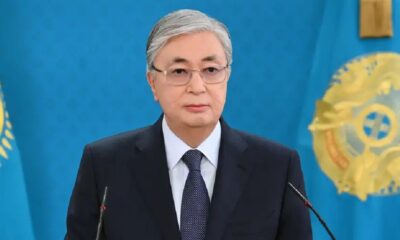
Kazakh president signs law establishing UN Regional Center for Central Asia and Afghanistan
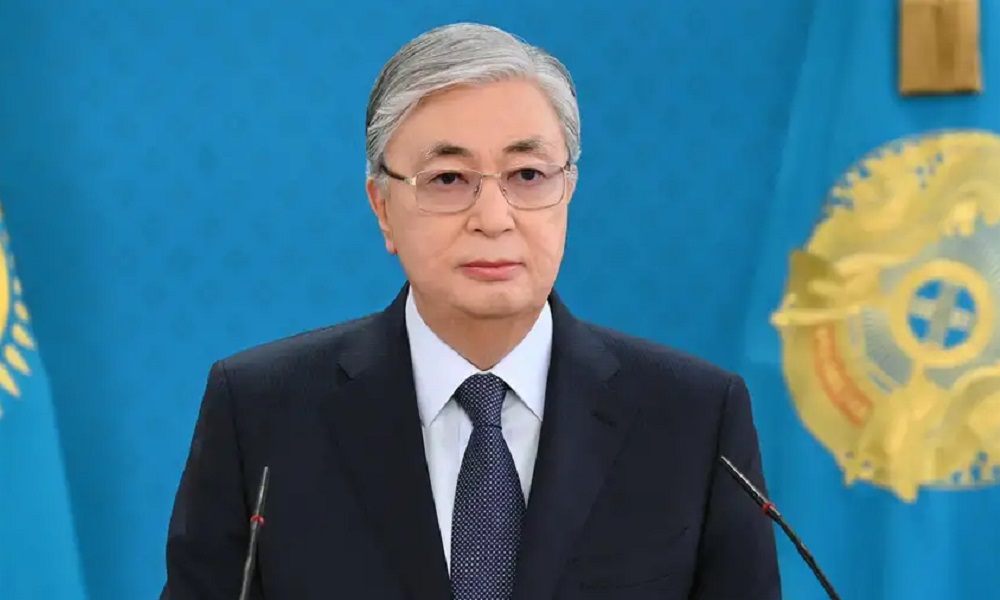
Kazakhstan has formally approved the establishment of a United Nations Regional Center for the Sustainable Development Goals (SDGs) for Central Asia and Afghanistan in Almaty, after President Kassym-Jomart Tokayev signed a ratification law on June 17.
The legislation ratifies a memorandum of understanding between the Kazakh government and the United Nations on the creation of the center, paving the way for the launch of the first UN regional SDG center of its kind.
According to Kazakhstan’s presidential press service, the center will serve as a platform for promoting sustainable development, regional cooperation, and the implementation of the UN’s development agenda across Central Asia and Afghanistan.
The initiative builds on a host country agreement signed by Tokayev and UN Secretary-General António Guterres in August 2025, underscoring Kazakhstan’s growing role in regional and international diplomacy.
Presenting the bill to the Senate on June 11, Senator Bibigul Zheksenbai described the center as strategically important for Kazakhstan, saying its location in Almaty would strengthen the city’s status as an international diplomatic and business hub.
She noted that the project would also expand opportunities for promoting Kazakhstan’s priorities within UN institutions, increase the participation of Kazakh professionals in international organizations, and contribute to the development of their expertise.
Under the memorandum, Kazakhstan has committed to providing a voluntary contribution of $3 million annually from 2025 through 2029. The funding will be used to equip the center with modern technology, communications systems, and IT infrastructure, as well as to cover operational expenses.
The establishment of the center is expected to enhance regional cooperation on sustainable development issues while supporting international efforts aimed at fostering economic growth, stability, and development in Central Asia and Afghanistan.
Latest News
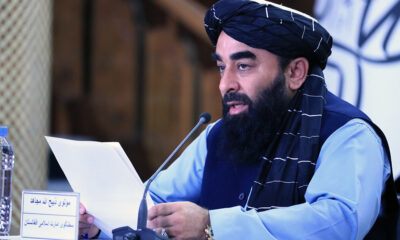
Mujahid: Afghanistan has achieved peace, focus now on economic growth
His remarks came after the European Union, speaking at the United Nations Human Rights Council in Geneva, once again emphasized the need for an inclusive political process in Afghanistan.
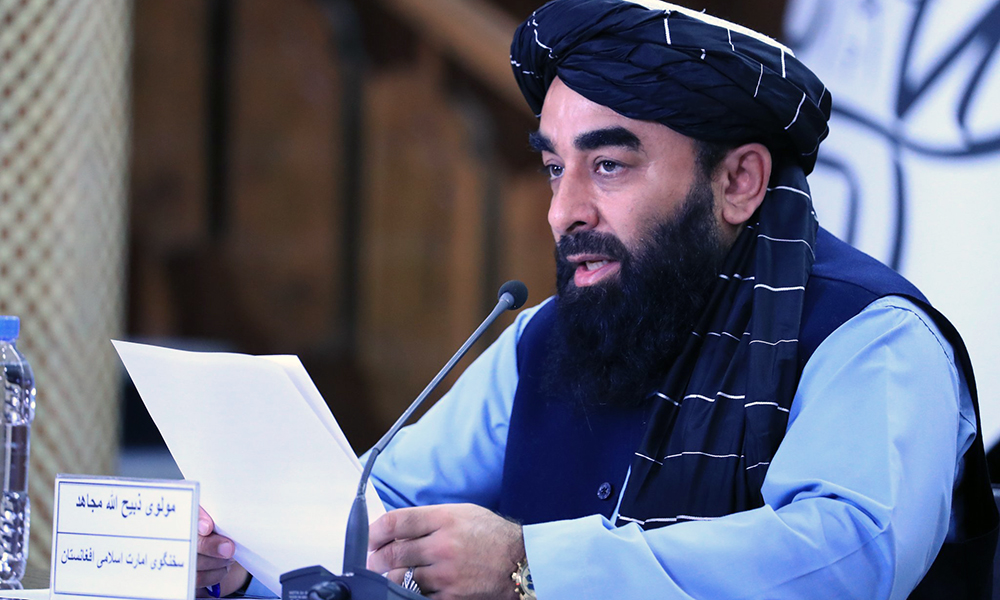
Zabihullah Mujahid, spokesman for the Islamic Emirate of Afghanistan (IEA), has responded to the European Union’s renewed call for an inclusive political process, saying Afghanistan has achieved peace and stability and is now focused on economic development.
Speaking on the issue, Mujahid said the Afghan people have emerged from decades of war and instability, adding that the country’s security forces are capable of maintaining order and safeguarding national stability.
“Peace and stability exist in Afghanistan. The people have been rescued from war, misery, disputes and conflict. We have strong security forces capable of maintaining stability, and now the priority is to ensure Afghanistan’s economy stands on its own and achieves significant growth,” he said.
Mujahid also called on the international community to expand engagement with Afghanistan rather than express concerns about the country’s situation.
“We want other countries not to be worried about Afghanistan, but to discuss and strengthen their relations and overall engagement with the country,” he added.
His remarks came after the European Union, speaking at the United Nations Human Rights Council in Geneva, once again emphasized the need for an inclusive political process in Afghanistan, arguing that such a framework could contribute to long-term peace and stability.
The EU also called for unhindered humanitarian access throughout Afghanistan and stressed the importance of ensuring women’s participation in the delivery of humanitarian assistance.
The Islamic Emirate has consistently maintained that the issue of forming an inclusive government is an internal Afghan matter and has described foreign comments on the subject as interference in the country’s domestic affairs.
The debate over political inclusion remains one of the key issues raised by the international community in its engagement with Afghanistan since the Islamic Emirate returned to power in August 2021.
International Sports
FIFA, TikTok and Atlanta unite to tackle hate speech ahead of World Cup clash
Since its launch during the FIFA World Cup Qatar 2022, the service has reviewed more than 250 million posts and comments, identifying and removing over 30 million harmful messages.

FIFA marked the International Day for Countering Hate Speech by bringing together football legends, policymakers, technology experts and community leaders in Atlanta to discuss practical solutions for combating discrimination and abuse in football and society.
The event, titled “Stop Hate, Protect Football – What Actually Works Against Hate Speech?”, was held at the National Center for Civil and Human Rights on the eve of the FIFA World Cup 2026 match between Czechia and South Africa at Atlanta Stadium.
Organised in partnership with TikTok and the City of Atlanta, the gathering focused on moving beyond awareness campaigns to identify concrete actions that can help eliminate racism, discrimination and hate speech both online and offline.
Former Liberia president and FIFA Players’ Voice Panel honorary captain George Weah joined former Nigeria international Mercy Akide, Atlanta Chief Impact Officer Candace Stanciel, TikTok Global Senior Director of Public Policy Eric Ebenstein, and U.S. Soccer referee mentor David Gerson on the discussion panel.
Weah reflected on his own experiences of racial abuse during his playing career and stressed the importance of protecting football’s values. “Football is not just a game of chance, it’s a game of unity,” Weah said.
“There are a lot of elements that want to destroy the game. Football is a game of peace and a game of unity. If we allow these things to continue, the beautiful game will be destroyed.”
He added that education remains a vital tool in the fight against discrimination. “We are trying to educate young people so they grow into loving people, not just people who love the game. Discrimination has no place in our society.”
Moderated by Atlanta-based sports journalist Simone Scott, the discussion examined the changing nature of hate speech in both digital and physical spaces. Panelists explored ways to identify effective interventions and transform institutional commitments into measurable results.
Candace Stanciel praised FIFA’s efforts to engage host cities and promote human rights through sport. “The panel gave us an opportunity to think about where the challenges are, what we’re doing that really works, and what commitments we can make,” she said.
“With an international experience like FIFA, we get to really talk about human rights on a global scale.”
Akide said the event highlighted the importance of collective action. “It made me feel empowered,” she said.
“We must bring everybody together and include everyone in this effort. Listening to the panel makes me want to do even more.”
A key focus of the event was FIFA’s Social Media Protection Service (SMPS), which monitors and removes abusive content targeting players, teams and officials across social media platforms.
Since its launch during the FIFA World Cup Qatar 2022, the service has reviewed more than 250 million posts and comments, identifying and removing over 30 million harmful messages.
The system remains active throughout the ongoing FIFA World Cup 2026. Since the tournament began on June 11, more than 3.8 million posts and comments have been reviewed, with approximately 388,000 removed after being classified as abusive or harmful.
By comparison, 287,000 posts and comments were removed during the entirety of the 2022 World Cup.
The Atlanta forum forms part of FIFA’s broader Global Stand Against Racism initiative, which seeks to drive long-term change through education programmes, fan engagement and support resources for football associations around the world.
The event concluded with a commitment ceremony in which each panellist pledged specific actions to help combat hate speech in their respective communities, reinforcing the message that eliminating discrimination requires a united effort from every level of the game.
The discussion also echoed concerns raised by United Nations Secretary-General António Guterres on the International Day for Countering Hate Speech.
In his message marking the occasion, Guterres described hate speech as “the first step down the path of dehumanisation” and warned that it is increasingly being amplified by artificial intelligence and unregulated digital platforms.
He said algorithms often reward outrage and division, helping harmful content spread more rapidly online.
The UN has also highlighted the growing threat posed by AI-generated deepfakes, synthetic images and other forms of online abuse, particularly targeting women and vulnerable groups.
Guterres stressed that freedom of expression should never be used as a justification for harmful messages, while calling for greater accountability, stronger information integrity and increased public control over online experiences.


Tahawol: Afghanistan–UN ongoing engagement discussed

Saar: Trump’s remarks on US military equipment in Afghanistan discussed

Kazakh president signs law establishing UN Regional Center for Central Asia and Afghanistan

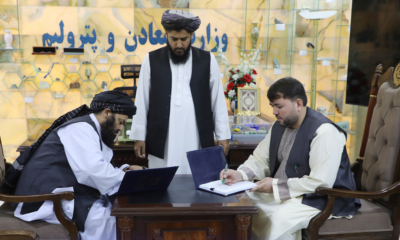
Afghanistan signs $67 million contract for cement production in Samangan

Mujahid: Afghanistan has achieved peace, focus now on economic growth

Norway’s Viking-inspired World Cup team photo goes viral

Afghanistan announce squad for India series

Afghanistan, Russia sign military cooperation agreement

Major pharma firms eye investment in Afghanistan

Afghanistan expands oil production as investment in Amu Darya fields grows
Tahawol: Afghanistan–UN ongoing engagement discussed
Saar: Trump’s remarks on US military equipment in Afghanistan discussed

Tahawol: Passage of 3 Iranian tankers through US naval blockade discussed

Saar: Discussion on outcome of G7 summit in France

Tahawol: New chapter in regional cooperation discussed
-
 Latest News4 days ago
TAPI project advances in Afghanistan as 84kms of pipeline laid
-
 Regional5 days ago
Iran banks hit by major cyber attack
-
 Latest News4 days ago
Afghan officials press Chinese delegation on Mes Aynak mining project
-

 International Sports4 days ago
World Cup 2026: Havertz, Ayari and Balogun lead Golden Boot standings
-
 Latest News5 days ago
WFP navigates complex route to deliver emergency food aid to Afghan schoolchildren
-
 Latest News5 days ago
Shehbaz Sharif defends Durand Line fencing as essential for Pakistan’s security
-
 Regional5 days ago
US, Iran inch closer to deal, timing remains unclear
-
 Regional4 days ago
Global leaders react to announcement of US-Iran peace agreement