
Latest News
Vaccine trial success signals breakthrough in COVID battle


Pharmaceutical giant Pfizer and its German partner German partner BioNTech SE 22UAy.F have announced their experimental COVID-19 vaccine is more than 90 percent effective based on initial trial results.
Scientists, public health officials and investors welcomed the first successful interim data from a large-scale clinical test that could help turn the tide of the pandemic if the full trial results pan out, Reuters reported.
However, mass roll-outs, which need regulatory approval, will not happen this year and several vaccines are seen as necessary to meet massive global needs.
But if the vaccine gets the go-ahead, the companies estimate it can roll out up to 50 million doses this year, enough to protect 25 million people, and then produce up to 1.3 billion doses in 2021.
“Today is a great day for science and humanity,” said Pfizer Chief Executive Albert Bourla, noting the data milestone comes with “infection rates setting new records, hospitals nearing over-capacity and economies struggling to reopen.”
Experts said they wanted to see the full trial data, but the preliminary results looked encouraging.
“This news made me smile from ear to ear. It is a relief to see such positive results on this vaccine and bodes well for COVID-19 vaccines in general,” said Peter Horby, professor of emerging infectious diseases at the University of Oxford.
There are still many questions, such as how effective the vaccine is by ethnicity or age and how long immunity may last.
“But the bottom line is, as a vaccine it’s more than 90% effective, which is extraordinary,” top U.S. infectious diseases expert Dr Anthony Fauci told CNN.






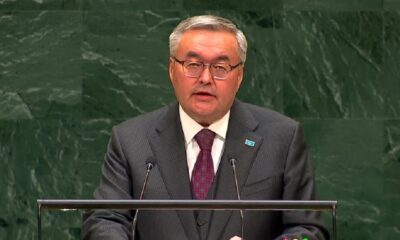

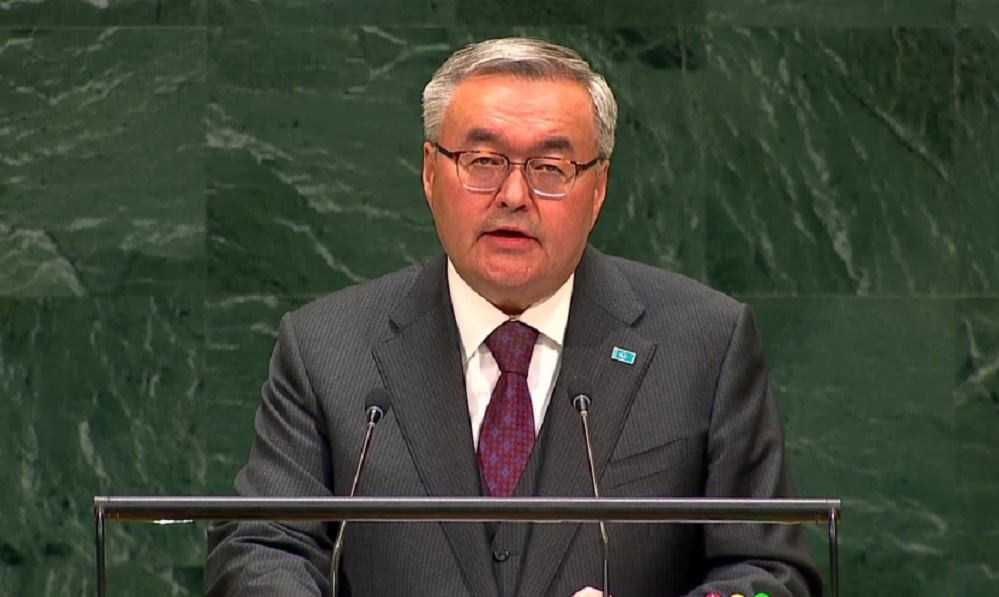
Kazakhstan’s Foreign Minister Mukhtar Tileuberdi has called for pragmatic and coordinated international engagement with Afghanistan, saying the country’s long-term stability is closely linked to the security and sustainable development of Central Asia.
Speaking during the general debate of the 81st session of the United Nations General Assembly in New York on Friday, Tileuberdi said humanitarian assistance to Afghanistan remains essential but alone cannot break the cycle of poverty, displacement and dependency.
He said Kazakhstan supports a “pragmatic, coordinated and step-by-step” approach to international engagement with Afghanistan, with the United Nations playing a central role.
Tileuberdi also said Kazakhstan is working with the UN to operationalize the United Nations Regional Centre for the Sustainable Development Goals for Central Asia and Afghanistan in Almaty.
He said the success of the centre should be measured by the results and assistance it delivers to the region.


Saar: Concerns over Pakistan’s political crisis discussed

Afghanistan Champions League: Omar Zawak Herat beat Toofan Herat 1-0

Blast in Pakistan’s Dera Ismail Khan kills 11, injures 30

Ariana Afghan Airlines increases Kabul-Delhi cargo flights

Khalilzad questions Pakistan’s commitment to Afghan welfare

Saudi energy group signs major Afghanistan deals covering gas exploration and pipeline plans

Trump floats idea of renaming Atlantic or Pacific Ocean

US hits Egyptian bank branches with Iran sanctions as war marks six months

Nepal flood rescue mission enters critical phase as thousands remain missing

Iranian clubs to face Gulf opponents at neutral venues in Asian Champions League Elite
Saar: Concerns over Pakistan’s political crisis discussed

Exclusive interview with Abdul Latif Mansoor, Minister of MRRD

Tawsia: Overview of Afghanistan’s iron mines

Tahawol: Discussion on fresh Pakistani airstrikes on Afghanistan

Saar: Calls for international support for Afghanistan discussed
-

 World5 days ago
CNN, MS NOW and Politico sue Trump, challenging White House ban
-

 Latest News3 days ago
Ariana Afghan Airlines ranks seventh among 45 Central Asian airlines
-

 Latest News4 days ago
UN reiterates call for respect for international law after Kunar airstrikes
-

 Regional3 days ago
US and Iran hold first talks since June after Trump’s ‘annihilation’ threat
-

 Latest News3 days ago
Silk Road highway in Wakhan corridor now reaches the China border
-

 Latest News4 days ago
Afghan Official: Pakistan’s airstrikes will not go unanswered
-

 Sport4 days ago
Afghan boxing referee heads to China for international festival
-
 Regional4 days ago
G7 foreign ministers call on Iran to stop arming Houthis