
Latest News
World Bank reports Afghanistan’s economic recovery remains ‘fragile’
The World Bank report revealed that Afghanistan’s trade deficit surged by 54 percent in 2024, reaching $9 billion, which represents 45 percent of the country’s gross domestic product (GDP).

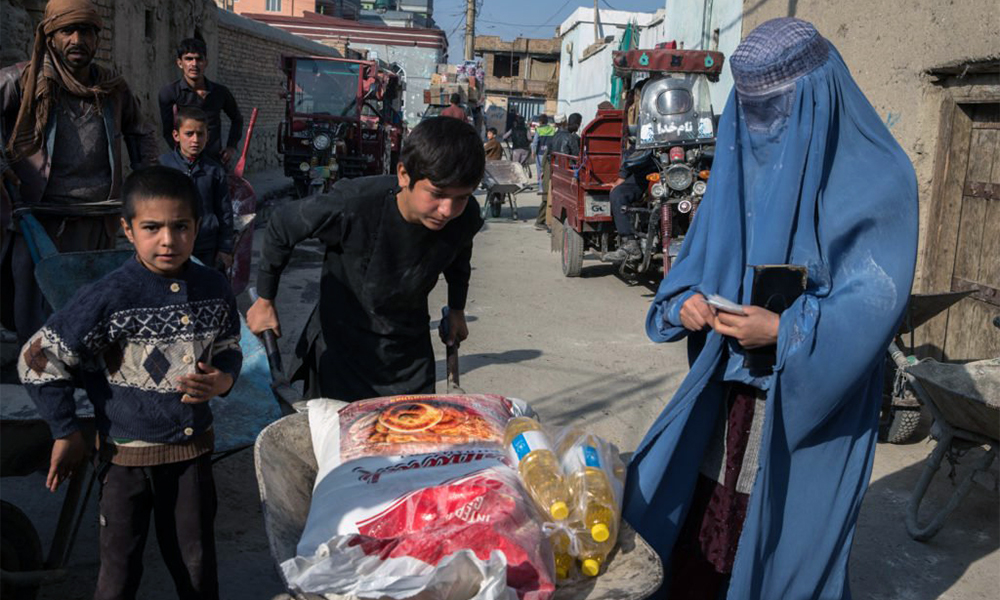
In their January Economic Monitor report, the World Bank noted Monday that while Afghanistan’s economic growth in 2023-24 was a positive development, growth remained insufficient to significantly improve social indicators.
“High poverty, unemployment, limited resources, and weak purchasing power continue to leave millions vulnerable,” the report stated adding that the outlook remains fragile due to policy uncertainty, financial isolation, and inadequate human and
physical capital.
“A rapid decline in foreign aid could further weaken aggregate demand, exacerbating economic pressures,” the World Bank stated.
The World Bank report revealed that Afghanistan’s trade deficit surged by 54 percent in 2024, reaching $9 billion, which represents 45 percent of the country’s gross domestic product (GDP).
The report attributes this decline to a five percent drop in exports, totaling $1.8 billion, primarily due to a reduction in coal and textile exports.
“Coal exports saw the steepest decline, plunging 64 percent to $92 million as Pakistan shifted to its traditional suppliers,” stated the World Bank.
The report highlighted an 11.5 percent increase in Afghanistan’s revenue collection, primarily driven by non-tax revenue and taxes levied at the country’s borders.
“Revenue collection remained strong in the first ten months of FY2024-25 (March 22, 2024 – January 21, 2025), totaling AFN 190.5 billion ($2.5 billion), or 12 percent of annual GDP,” stated the report.
The report also noted the country’s central bank, Da Afghanistan Bank, suspended US dollar auctions from September 4 to December 9 last year, which contributed to the depreciation of the afghani (AFN). The auctions resumed in January 2025, with the bank injecting more than $100 million.
The World Bank noted that fragile trade relations with Pakistan pushed Afghanistan to diversify its export markets, with Iran, Kazakhstan, and Uzbekistan each contributing around three percent of total exports.
However, Pakistan remains the largest export destination, accounting for 45 percent, followed by India at 34 percent.
“Afghanistan’s export base remains heavily dependent on food and coal, which made up 60 percent of total exports in 2024, down from 80 percent in 2023,” the report read adding that “this
highlights the urgent need for Afghanistan to expand its export portfolio and reduce reliance on a few commodities and markets”.
The World Bank stated that domestic tax revenue meanwhile grew 11 percent to AFN 72.1 billion, contributing 2.8 percentage points to overall revenue growth.
Non-tax revenue increased by 22 percent to AFN 66 billion. This growth was driven by higher income from mining, tolls, vehicle registrations, passport issuance, transport services, railways, and telecommunications, the report read.
“Ministries responsible for non-tax revenue exceeded targets by eight percent, contributing 45 percent to inland revenue collection,” the World Bank stated.
Customs duties and fees grew 20 percent year-on-year to AFN 51.5 billion, contributing 4.5 percentage points to total revenue growth. This increase was fueled by higher imports, stronger trade ties with Iran and Central Asia, improved border management, and recent tariff adjustments.












Kazakhstan’s Foreign Minister Mukhtar Tileuberdi has called for pragmatic and coordinated international engagement with Afghanistan, saying the country’s long-term stability is closely linked to the security and sustainable development of Central Asia.
Speaking during the general debate of the 81st session of the United Nations General Assembly in New York on Friday, Tileuberdi said humanitarian assistance to Afghanistan remains essential but alone cannot break the cycle of poverty, displacement and dependency.
He said Kazakhstan supports a “pragmatic, coordinated and step-by-step” approach to international engagement with Afghanistan, with the United Nations playing a central role.
Tileuberdi also said Kazakhstan is working with the UN to operationalize the United Nations Regional Centre for the Sustainable Development Goals for Central Asia and Afghanistan in Almaty.
He said the success of the centre should be measured by the results and assistance it delivers to the region.


Abu Muslim Farah defeat Khurasan Faryab 2-0 in ACL season six

Saar: Concerns over Pakistan’s political crisis discussed

Afghanistan Champions League: Omar Zawak Herat beat Toofan Herat 1-0

Blast in Pakistan’s Dera Ismail Khan kills 11, injures 30

Ariana Afghan Airlines increases Kabul-Delhi cargo flights

Saudi energy group signs major Afghanistan deals covering gas exploration and pipeline plans

Trump floats idea of renaming Atlantic or Pacific Ocean

US hits Egyptian bank branches with Iran sanctions as war marks six months

Nepal flood rescue mission enters critical phase as thousands remain missing

Iranian clubs to face Gulf opponents at neutral venues in Asian Champions League Elite
Saar: Concerns over Pakistan’s political crisis discussed

Exclusive interview with Abdul Latif Mansoor, Minister of MRRD

Tawsia: Overview of Afghanistan’s iron mines

Tahawol: Discussion on fresh Pakistani airstrikes on Afghanistan

Saar: Calls for international support for Afghanistan discussed
-

 World5 days ago
CNN, MS NOW and Politico sue Trump, challenging White House ban
-

 Latest News3 days ago
Ariana Afghan Airlines ranks seventh among 45 Central Asian airlines
-

 Latest News5 days ago
UN reiterates call for respect for international law after Kunar airstrikes
-

 Regional4 days ago
US and Iran hold first talks since June after Trump’s ‘annihilation’ threat
-

 Latest News4 days ago
Silk Road highway in Wakhan corridor now reaches the China border
-

 Regional3 days ago
Iran airlines cancel flights as US sanctions hit
-

 Latest News5 days ago
Afghan Official: Pakistan’s airstrikes will not go unanswered
-
 Regional5 days ago
G7 foreign ministers call on Iran to stop arming Houthis