
Latest News
World racing against time to help Afghan people: UN chief

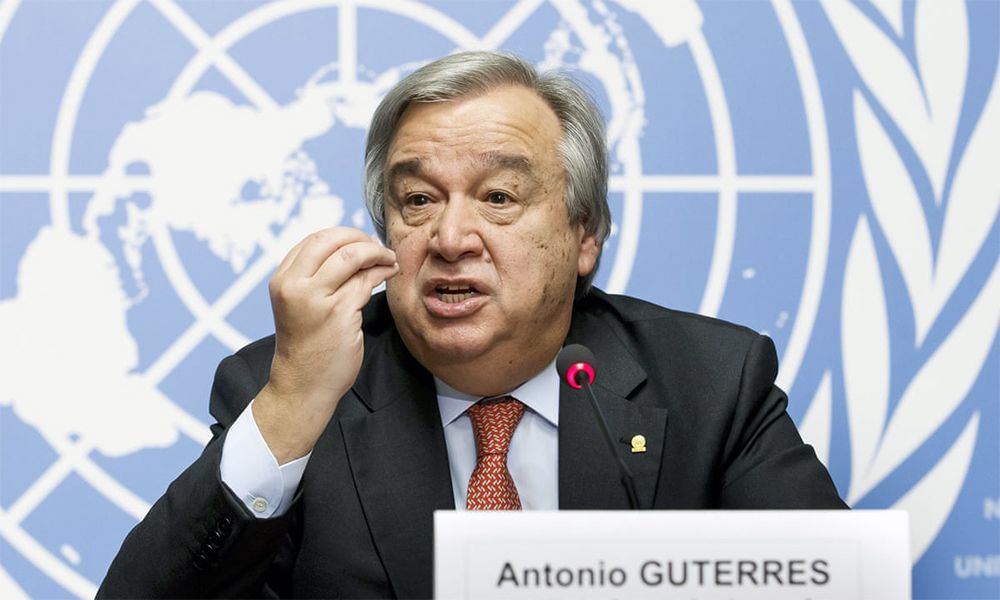
Describing a “nightmare unfolding in Afghanistan”, United Nations Secretary-General Antonio Guterres warned on Thursday that the world is “in a race against time to help the Afghan people” and stressed that “freezing temperatures and frozen assets are a lethal combination” for the Afghan people, Reuters reported.
Speaking to reporters in New York City, Guterres said, two days after launching the largest humanitarian appeal ever for a single country, more than half of the Afghans now depend on life-saving assistance, adding that without a more concerted effort from the international community, virtually every man, woman and child in the country could face acute poverty amid the COVID-19 pandemic.
According to the report the UN chief said a properly funded aid operation in Afghanistan has the capacity to achieve amazing results, with humanitarians reaching some 18 million people across the country last year.
But, he said, humanitarian operations desperately need more money and more flexibility. “Rules and conditions that prevent money from being used to save lives and the economy must be suspended in this emergency situation. International funding should be allowed to pay the salaries of public-sector workers, and to help Afghan institutions deliver healthcare, education and other vital services,” said Guterres.
The Secretary-General said support for essential state functions will give Afghans hope for the future and reason to stay in their country and welcomed the Security Council’s adoption of a humanitarian exception to the United Nations sanctions regime for Afghanistan, read the report.
He said the UN is taking steps to inject cash into the economy through creative authorized arrangements, but this was just a drop in the bucket. Guterres highlighted the need to jump-start the Afghan banking system to avoid economic collapse and to enable humanitarian operations.
He said, “The United Nations in Afghanistan stands ready to work with member states and others to put in place accountable systems that will enable funds to reach the Afghan people most in need, and to ensure that these funds are not diverted.”
While appealing for international support for the Afghan people, the UN chief made an equally urgent plea to the Islamic Emirate of Afghanistan’s leadership to recognize and protect the fundamental human rights, and in particular the rights of women and girls. “Across Afghanistan, women and girls are missing from offices and classrooms. A generation of girls is seeing its hopes and dreams shattered. Women scientists, lawyers and teachers are locked out – wasting skills and talents that will benefit the entire country and, indeed, the world. No country can thrive while denying the rights of half of its population,” he said.
Guterres noted that, moving forward, it is also essential that every effort is made to build inclusive government institutions in which all Afghans feel represented – and that promote security and fight terrorism, Reuters reported.
The Secretary-General said, “Without creative, flexible and constructive engagement by the international community, Afghanistan’s economic situation will only worsen; despair and extremism will grow. We need to act now to prevent economic and social collapse and find ways to prevent further suffering for millions of Afghans.”












Kazakhstan’s Foreign Minister Mukhtar Tileuberdi has called for pragmatic and coordinated international engagement with Afghanistan, saying the country’s long-term stability is closely linked to the security and sustainable development of Central Asia.
Speaking during the general debate of the 81st session of the United Nations General Assembly in New York on Friday, Tileuberdi said humanitarian assistance to Afghanistan remains essential but alone cannot break the cycle of poverty, displacement and dependency.
He said Kazakhstan supports a “pragmatic, coordinated and step-by-step” approach to international engagement with Afghanistan, with the United Nations playing a central role.
Tileuberdi also said Kazakhstan is working with the UN to operationalize the United Nations Regional Centre for the Sustainable Development Goals for Central Asia and Afghanistan in Almaty.
He said the success of the centre should be measured by the results and assistance it delivers to the region.


Abu Muslim Farah defeat Khurasan Faryab 2-0 in ACL season six

Saar: Concerns over Pakistan’s political crisis discussed

Afghanistan Champions League: Omar Zawak Herat beat Toofan Herat 1-0

Blast in Pakistan’s Dera Ismail Khan kills 11, injures 30

Ariana Afghan Airlines increases Kabul-Delhi cargo flights

Saudi energy group signs major Afghanistan deals covering gas exploration and pipeline plans

Trump floats idea of renaming Atlantic or Pacific Ocean

US hits Egyptian bank branches with Iran sanctions as war marks six months

Nepal flood rescue mission enters critical phase as thousands remain missing

Iranian clubs to face Gulf opponents at neutral venues in Asian Champions League Elite
Saar: Concerns over Pakistan’s political crisis discussed

Exclusive interview with Abdul Latif Mansoor, Minister of MRRD

Tawsia: Overview of Afghanistan’s iron mines

Tahawol: Discussion on fresh Pakistani airstrikes on Afghanistan

Saar: Calls for international support for Afghanistan discussed
-

 World5 days ago
CNN, MS NOW and Politico sue Trump, challenging White House ban
-

 Latest News3 days ago
Ariana Afghan Airlines ranks seventh among 45 Central Asian airlines
-

 Latest News5 days ago
UN reiterates call for respect for international law after Kunar airstrikes
-

 Regional4 days ago
US and Iran hold first talks since June after Trump’s ‘annihilation’ threat
-

 Latest News4 days ago
Silk Road highway in Wakhan corridor now reaches the China border
-

 Regional3 days ago
Iran airlines cancel flights as US sanctions hit
-

 Latest News5 days ago
Afghan Official: Pakistan’s airstrikes will not go unanswered
-

 Sport5 days ago
Afghan boxing referee heads to China for international festival