
Climate Change
2024 could be world’s hottest year as June breaks records
Greenhouse gas emissions from burning fossil fuels are the main cause of climate change.


Last month was the hottest June on record, the EU’s climate change monitoring service said on Monday, continuing a streak of exceptional temperatures that some scientists said puts 2024 on track to be the world’s hottest recorded year.
Every month since June 2023 – 13 months in a row – has ranked as the planet’s hottest since records began, compared with the corresponding month in previous years, the European Union’s Copernicus Climate Change Service (C3S) said in a monthly bulletin.
The latest data suggest 2024 could outrank 2023 as the hottest year since records began after human-caused climate change and the El Nino natural weather phenomenon both pushed temperatures to record highs in the year so far, some scientists said.
“I now estimate that there is an approximately 95% chance that 2024 beats 2023 to be the warmest year since global surface temperature records began in the mid-1800s,” said Zeke Hausfather, a research scientist at U.S. non-profit Berkeley Earth.
The changed climate has already unleashed disastrous consequences around the world in 2024.
More than 1,000 people died in fierce heat during the haj pilgrimage last month. Heat deaths were recorded in New Dehli, which endured an unprecedentedly long heatwave, and amongst tourists in Greece.
Friederike Otto, a climate scientist at Imperial College London’s Grantham Institute, said there was a “high chance” 2024 would rank as the hottest year on record.
“El Nino is a naturally occurring phenomenon that will always come and go. We can’t stop El Nino, but we can stop burning oil, gas, and coal,” she said.
The natural El Nino phenomenon, which warms the surface waters in the eastern Pacific Ocean, tends to raise global average temperatures.
That effect subsided in recent months, with the world now in neutral conditions before cooler La Nina conditions are expected to form later this year.
C3S’ dataset goes back to 1940, which the scientists cross-checked with other data to confirm that last month was the hottest June since the 1850-1900 pre-industrial period.
Greenhouse gas emissions from burning fossil fuels are the main cause of climate change.
Despite promises to curb global warming, countries have so far failed collectively to reduce these emissions, pushing temperatures steadily higher for decades.
In the 12 months ending in June, the world’s average temperature was the highest on record for any such period, at 1.64 degrees Celsius above the pre-industrial average, C3S said. – Reuters







Japan and the UN Office for Project Services (UNOPS) have signed a $9.4 million grant agreement aimed at strengthening climate adaptation and disaster preparedness in Afghanistan.
The agreement, valued at 1.474 billion Japanese yen ($9.4 million) was signed by UNOPS Afghanistan Country Director Katy Ann Webley and Japan International Cooperation Agency (JICA) Afghanistan Chief Representative Sota Tosaka.
The project will be implemented in Kabul province and focuses on improving the capacity of local communities to cope with climate-related disasters.
Using a community-led approach, the programme will support the construction of infrastructure designed to reduce the impact of floods, droughts and other climate risks, alongside training to improve emergency preparedness and response.
Over the next 24 months, UNOPS will carry out activities aimed at enhancing climate risk awareness, strengthening local resilience and protecting livelihoods vulnerable to the effects of climate change.
Climate Change
Winter storm disrupts US travel, triggers thousands of flight cancellations
The disruptions followed a chaotic Sunday, when about 11,000 flights were scrapped—the highest daily total since the COVID-19 pandemic
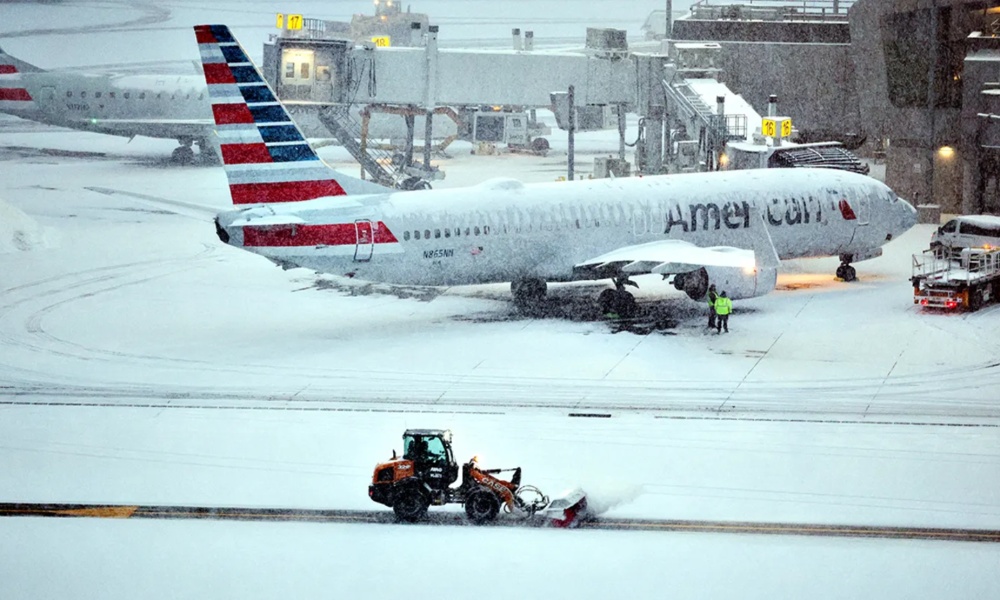
A powerful winter storm sweeping across the United States brought air travel to a near standstill on Monday, forcing airlines to cancel and delay thousands of flights as freezing rain and heavy snowfall battered large parts of the country.
By late afternoon, nearly 19% of scheduled flights had been canceled, according to aviation analytics firm Cirium. Separate data from FlightAware showed around 5,220 U.S. flights were canceled and more than 6,500 delayed by early evening.
The disruptions followed a chaotic Sunday, when about 11,000 flights were scrapped—the highest daily total since the COVID-19 pandemic, Cirium said.
The massive storm dumped up to a foot of snow from New Mexico to New England, paralyzing much of the eastern United States and contributing to at least 18 deaths. Extreme cold is expected to linger in some areas through the week.
American Airlines accounted for the largest share of disruptions on Monday, canceling nearly 1,180 flights and delaying about 1,130, followed by Republic Airways, JetBlue Airways, and Delta Air Lines.
In an advisory, the Federal Aviation Administration (FAA) warned that snow, freezing rain, and low visibility were affecting major hubs, including Boston and the New York metropolitan area. Boston Logan International Airport recorded the highest cancellation rate at 71%, according to Cirium.
American Airlines said the storm disrupted operations at five of its nine hub airports, including its largest base at Dallas–Fort Worth, where freezing temperatures and ice grounded flights.
The carrier requested FAA-approved ground stops for all its flights at Dallas–Fort Worth and Ronald Reagan Washington National Airport to manage gate capacity constraints.
The airline said teams were working around the clock to restore operations, as frustrated passengers flooded social media with requests for updates and assistance.
United Airlines said it had begun restoring flights, with cancellations dropping sharply from 1,019 on Sunday to 320 by Monday evening, FlightAware data showed.
The storm is on track to become the costliest severe weather event since the Los Angeles-area wildfires in early 2025, with preliminary damage and economic losses estimated between $105 billion and $115 billion, according to AccuWeather.
Airline operations remain vulnerable due to the interconnected nature of flight schedules, where cancellations can leave aircraft and crews out of position, slowing recovery efforts. Already, about 285 flights scheduled for Tuesday have been canceled, FlightAware data showed.
Climate Change
FAO warns of dry winter, low snowfall and rising food insecurity risks in Afghanistan
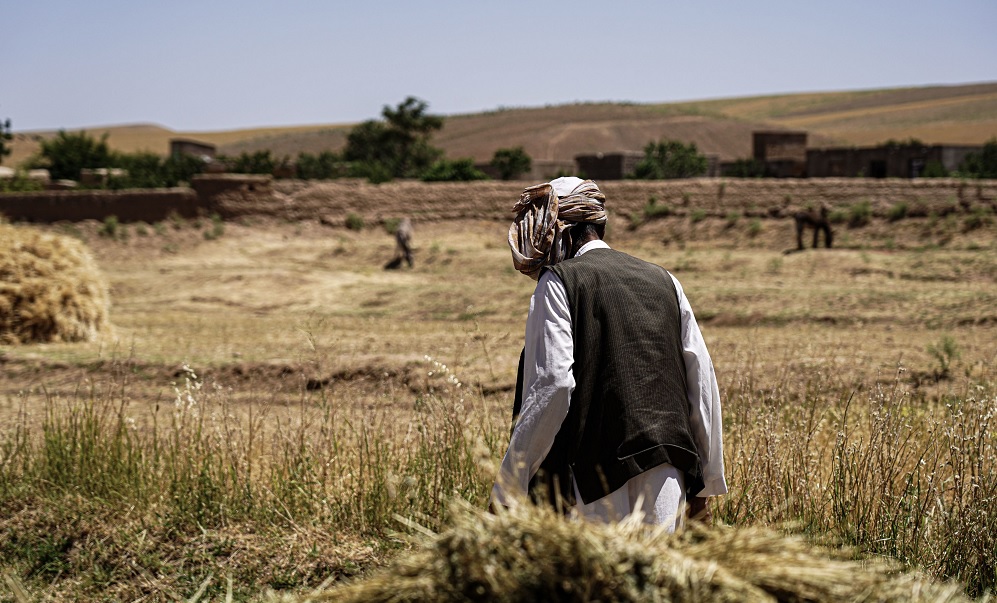
The Food and Agriculture Organization of the United Nations (FAO) has warned that Afghanistan is likely to face a drier and warmer-than-average winter, raising serious concerns about water availability, agricultural production and food security.
In its Seasonal Climate Outlook for December 2025 to February 2026, FAO said a weak La Niña pattern is driving below-average precipitation and above-average temperatures across most parts of the country. The report notes that the 2025/26 wet season has already begun drier and warmer than normal, with widespread soil moisture deficits persisting for another consecutive year
According to FAO, snow accumulation remains exceptionally low, with snow-water-equivalent levels at their lowest point in the past 25 years. This poses a critical hydrological risk, particularly for irrigated wheat-growing areas that depend on snowmelt-fed river systems. Even if precipitation improves later in winter, early deficits are unlikely to be fully offset, the report said
The outlook projects that December, January and February will all carry an elevated risk of below-normal rainfall, especially in northern, northeastern, western and central highland regions. Warmer daytime temperatures combined with cold nights are also expected to increase stress on crops, livestock and vulnerable communities
FAO warned that continued dryness could delay planting and weaken crop establishment for rain-fed winter wheat and barley, potentially reducing yields for the 2026 harvest. In irrigated areas, low snowpack threatens spring water supplies, increasing competition for water and reliance on already stressed groundwater resources.
Rangeland and pasture conditions are also expected to deteriorate, with delayed green-up likely to force herders to depend longer on stored fodder. This could lead to declining livestock health, reduced milk production and increased risk of animal losses toward late winter and early spring, the report said.
FAO and partner assessments caution that consecutive seasons of insufficient rainfall and high temperatures have already weakened agricultural systems and could leave millions of people facing acute food insecurity between late 2025 and early 2026
The UN agency emphasized the need for close monitoring of precipitation, snowpack and crop conditions, calling for timely agricultural support, improved water management and early anticipatory action to mitigate the impacts of the unfolding climate risks.


Airstrike on Kabul drug rehabilitation centre sparks legal concerns

Trump backs down on strikes on Iran’s power network, says US and Tehran holding talks

Iran says coastal attack will lead to full Gulf closure and mine-laying

Afghanistan expresses condolences after deadly helicopter crash in Qatar

IPL 2026: Ishan Kishan named Sunrisers’ interim captain ahead of opening clash

Pakistani military jet downed in Afghanistan’s Jalalabad, pilot captured alive

Afghan Air Force conducts airstrikes in Islamabad, other cities

Prominent Muslim scholar issues fatwa calling for Afghanistan-Pakistan ceasefire

Afghan air force strikes key Pakistani military installations in retaliatory operation

IEA: Special circle in Pakistan has launched mission to destabilize region

Tahawol: Possibility of US ground forces entering Iran war discussed

Saar: Using US prisoners as political pressure

Tahawol: Pakistan’s efforts to destabilise Afghanistan

Saar: Decline in international assistance to Afghanistan

Tawsia: Assessment of Afghanistan’s economic activities in 1404
-

 Latest News5 days ago
IEA announces temporary pause in defensive operations against Pakistan for Eid
-
 Latest News4 days ago
Pakistani shelling hits Kunar districts despite ‘pause in hostility’ over Eid
-

 Sport3 days ago
Afghanistan national buzkashi falls short in Kokpar World Championship semifinals
-

 Regional4 days ago
Pakistan among top nuclear threats to America, US intelligence chief tells senate
-

 Sport2 days ago
Ireland to host Afghanistan for ODI series in August
-

 Latest News4 days ago
Peshawar High Court grants bail to 68 detained Afghan nationals, including minors
-

 World4 days ago
US weighs troop deployment as Iran war enters new phase
-

 Latest News4 days ago
Security Sources: Pakistani military shelling in Kunar and Nuristan leaves female doctor dead