
Latest News
Pakistan rejects Taliban’s pre-condition for peace talks

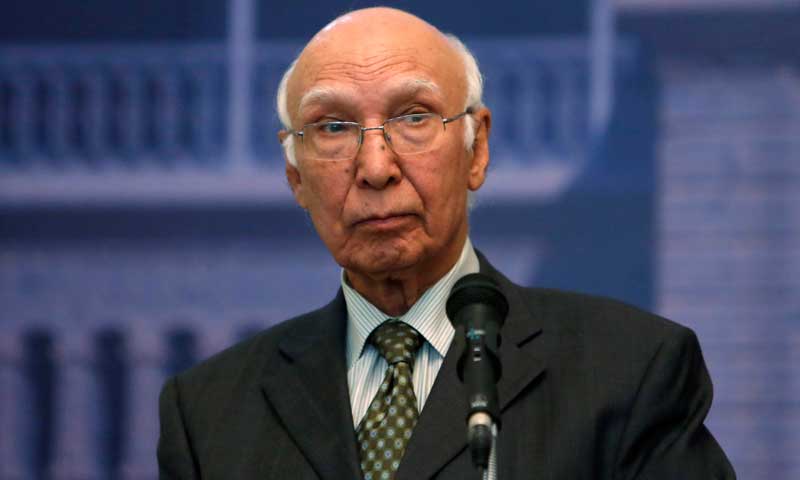
Pakistani officials told to Afghan Taliban that no pre-condition would be acceptable for Peace Talks process.
Pakistan’s Prime minister’s, Sartaj Aziz emphasizes that no precondition should be attached for peace talks with Taliban.
“It is important that no preconditions are attached to the reconciliation process, as it will create difficulties in bringing Taliban to the negotiating table,” Aziz said, as he penned down four elements essential in the reconciliation process with Afghanistan.
The Afghan Taliban continues to insist that all foreign troops in the U.S.-led coalition must leave Afghanistan before it will join direct peace talks with the government in Kabul.
“The primary objective of the reconciliation process is to create conditions to bring the Taliban groups to the negotiation table and offer them incentives that can persuade them to move away from using violence,” said Aziz.
“It is therefore important that no preconditions are attached to the reconciliation process,” Aziz added.
“Proper sequencing is required in the negotiating process,” he said while adding that “threat of use of military action against the group will cause hindrances and cannot proceed the offer of talks to all groups.”
In the meantime, a number of analysts say that Pakistan still continues its dual games.
“Previously, Sartaj Aziz wanted to impose Pakistani Taliban’s demand on Afghanistan but now he says that no pre-condition is acceptable before peace talks,” said Aziz Rafiee, political analyst.
Some others are said to believe that Pakistan is in a historic test to bring Afghan Taliban to the negotiation table and it should do something for this issue.
The Taliban also says Kabul must bring to an end as “anti-Taliban propaganda.”
The Afghan government earlier said that it could not accept the Taliban’s preconditions for the resumption of the stalled peace talks.
Kabul said negotiations should move forward only in line with the decisions of the Quadrilateral Coordination Group.
Afghanistan’s High Peace Council has urged the Taliban to avoid setting preconditions, saying the group should raise their issues at the negotiating table.
The High Peace Council also warned that there will not be a breakthrough in the peace process unless there are face-to-face talks between government negotiators and Afghan Taliban representatives.
The Afghan Taliban have bases inside Pakistan, while Islamabad accuses Afghanistan of allowing the Pakistani Taliban to operate freely as they plan terror attacks on Pakistani soil.
The Afghan government will find itself inevitable of granting political and financial concessions to the Taliban once the negotiations start. At current stage, the conditions set by Taliban my seem difficult for the Afghan government to accept, but it may come to the point to consider even more greater concessions than what are demanded for resumption of the negotiations.

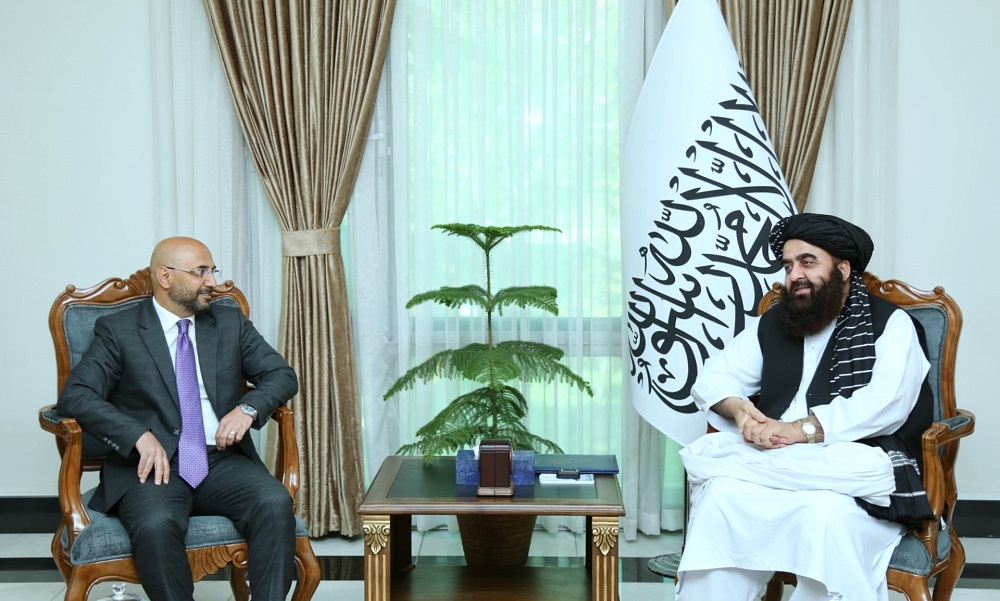
Amir Khan Muttaqi, the Foreign Minister of the Islamic Emirate, met with Turkish Chargé d’Affaires to Kabul, Sadin Ay Yildiz, to discuss regional developments and the recent Kabul–Islamabad talks held in the city of Urumqi in China.
According to a statement issued by the Afghan foreign ministry, Muttaqi described the negotiations with Pakistan as positive and expressed hope that “minor technical issues will not hinder the progress of the talks.”
Muttaqi also assessed relations between Afghanistan and Turkey as positive and described Ankara’s previous role in mediation as valuable.
Yildiz likewise stated that positive relations between Afghanistan and Pakistan are of special importance to Ankara and that his country will continue its efforts in this regard.
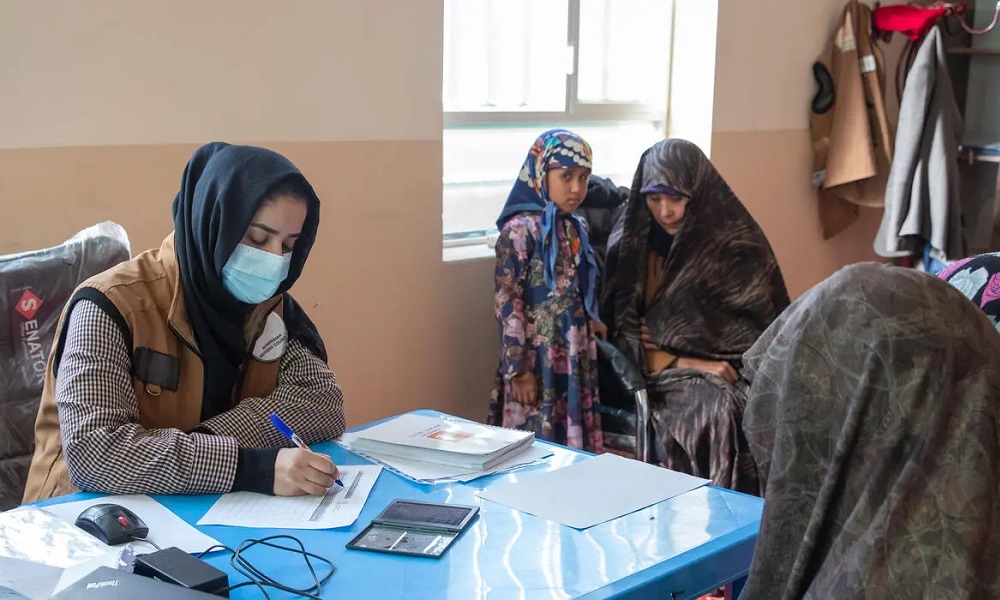
The United Nations has raised alarm over a significant funding gap threatening the continuation of humanitarian assistance in Afghanistan, as millions remain in urgent need of support.
According to the United Nations Office for the Coordination of Humanitarian Affairs (OCHA), only $211 million—equivalent to 12.3 percent—of the required $1.7 billion for Afghanistan’s 2026 humanitarian response plan has been secured so far, leaving 87.7 percent of the funding unmet.
OCHA stressed that the scale of humanitarian needs across the country remains critically high and called on donor nations to take immediate and concrete steps to bridge the funding gap.
The agency noted that the European Commission is currently the largest donor, contributing $62.6 million, followed by the United Kingdom, the Asian Development Bank, Switzerland, and Japan. Other key contributors include Germany, Canada, Denmark, Australia, and Italy.
The report highlights that the food security and agriculture sector faces the largest funding requirement, with only $49.2 million—about 7.6 percent—of the needed $651.1 million secured. In the health sector, $29.6 million has been funded out of a required $190.8 million, while education has received 30.2 percent of its needed budget.
OCHA further warned that several critical sectors remain severely underfunded, including nutrition (2.7 percent), emergency shelter and non-food items (3.4 percent), water and sanitation (4.5 percent), and coordination and support services (7.3 percent). Meanwhile, multipurpose cash assistance has received the highest level of funding at 65.6 percent.
The UN emphasized that despite ongoing international assistance, a substantial gap persists between humanitarian needs and available resources, underscoring the urgency for increased global support to prevent a worsening crisis in Afghanistan.
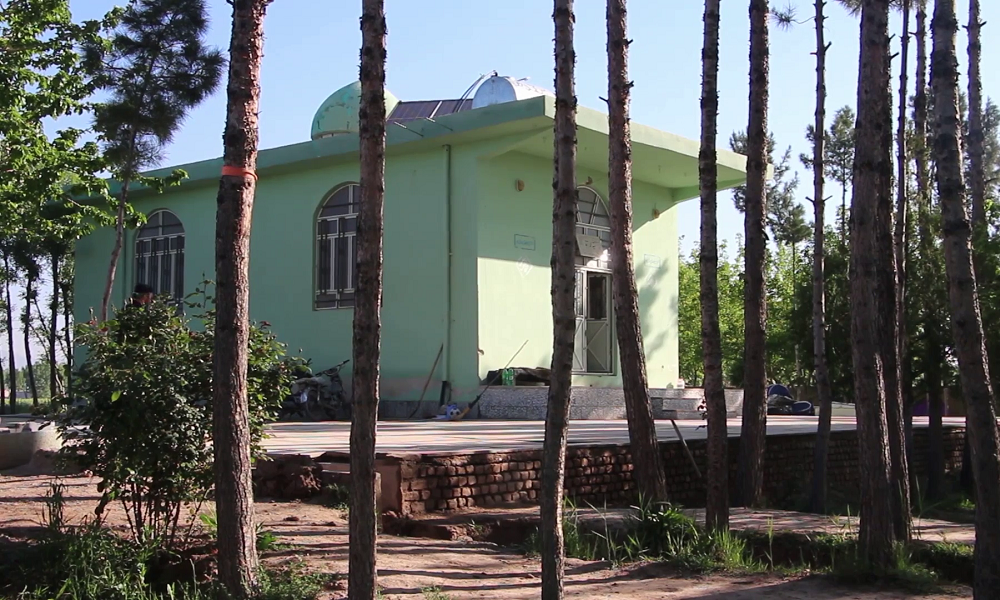
A deadly attack on civilians in western Afghanistan has sparked widespread international condemnation and has seen an outpouring of condolences from individuals and organizations across the country.
This comes after unidentified gunmen opened fire on families gathered for a picnic near a Shia shrine in Deh Mehri village, in Injil district of Herat province on Friday. According to confirmed reports, at least 11 people were killed and 11 others wounded, including women and children.
The United Nations Assistance Mission in Afghanistan (UNAMA) expressed condolences to the victims and their families, describing the incident as a “terrible crime.”
“We express our condolences to the victims and to the families affected, and wish those injured a speedy recovery,” said the UN’s Officer-in-charge of Afghanistan Georgette Gagnon, who also called on authorities to conduct a thorough investigation and ensure the protection of all communities across Afghanistan.
The UN’s Special Rapporteur on Afghanistan Richard Bennett meanwhile strongly condemned the attack, describing it as “brutal” and urged that those responsible be brought to justice. He noted that the victims were members of the Shia community and stressed that such targeted violence must not go unpunished.
The European Union also denounced the killings, stating that violence against civilians is unacceptable under any circumstances. The bloc extended its condolences to the victims’ families and expressed solidarity with those affected.
No group has claimed responsibility for the attack so far.


Tahawol: Failure of US–Iran talks in Islamabad discussed

Saar: Iran–US talks in Islamabad end inconclusive

IEA FM calls Kabul-Pakistan talks ‘positive’ in meeting with Turkish envoy

UN warns of critical funding shortfall for humanitarian aid in Afghanistan

Global outrage triggered after deadly attack on civilians in Herat

IEA Supreme Leader issues Eid-ul-Fitr message urging unity and support for Islamic system

IEA supreme leader orders replacement of foreign terminology in official documents

14 Pakistani soldiers killed after military post falls along Durand line: MoD

Turkmenistan, Afghanistan discuss steps to speed up land acquisition for TAPI pipeline

IPL 2026 kicks off in under two weeks; Afghan players set to shine
Tahawol: Failure of US–Iran talks in Islamabad discussed
Saar: Iran–US talks in Islamabad end inconclusive

Tahawol: Historic US-Iran talks in Pakistan discussed

Saar: Talks between Iran and US in Pakistan discussed

Tawsia: New transit route with Tatarstan, MoU with Uzbekistan discussed
-
 Business2 days ago
Etihad Airways to expand Kabul–Abu Dhabi flights to daily service amid surging demand
-
 Regional5 days ago
Iran agrees to temporary ceasefire as US pauses attacks
-

 International Sports4 days ago
IPL 2026: Gujarat Titans edge Delhi Capitals in last-ball thriller
-
 Latest News4 days ago
Hundreds displaced as Afghanistan–Pakistan clashes deepen crisis
-
 Regional4 days ago
Pakistan PM holds 45-minute call with Iranian President
-
 Latest News4 days ago
US explores third-country resettlement for stranded Afghan allies in Qatar
-

 International Sports3 days ago
FIFA appoints record number of match officials for 2026 World Cup
-
 Latest News4 days ago
Former Australian soldier to remain in custody over Afghan war crimes charges