
Latest News
EU-Afghan working group tackles human rights issues

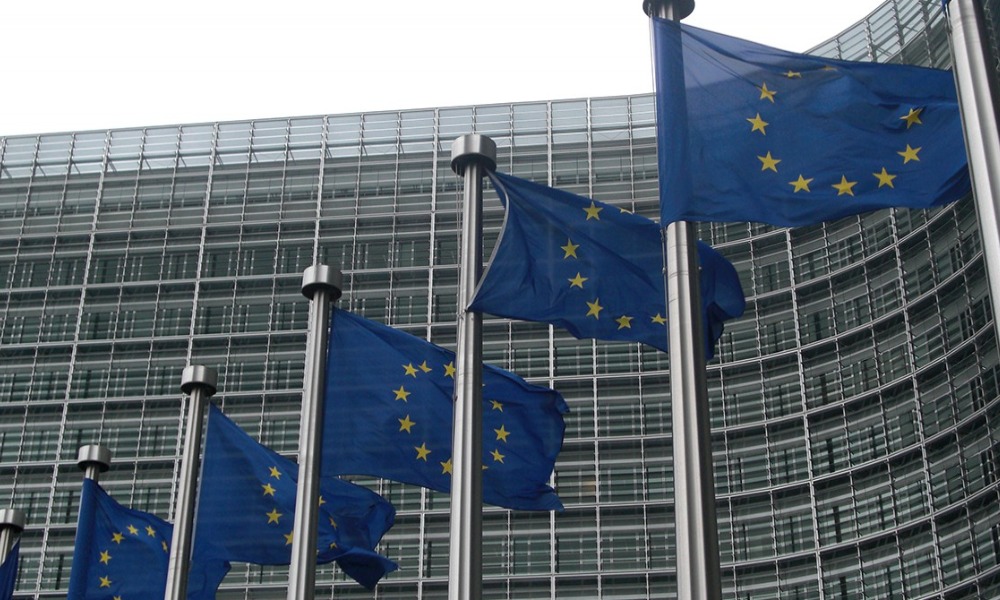
The third meeting of the EU-Afghanistan Special Working Group on Human Rights, Good Governance and Migration was held on Wednesday virtually in which parties involved expressed grave concern about the continuing high level of violence, and condemned the increasing number of targeted killings of media workers, civil society activists and law enforcement officials.
In a statement issued late Wednesday night, the European Union stated the parties discussed human rights and fundamental freedoms in the context of the ongoing Afghan peace process.
The parties “expressed grave concern about the continuing high level of violence, and condemned the increasing number of targeted killings of media workers, civil society activists and law enforcement officials, who are essential bastions of a democratic and open society.”
The EU called on the Afghan government to “provide for the security of these important actors in society, as well as conduct thorough investigations, bring the culprits to justice and keep the Afghan public fully informed about the measures taken.”
The EU also emphasized the importance of respecting and promoting International Humanitarian Law to protect civilians in conflict by all parties to the conflict.
“The protection of civilians, medical and education facilities as well as humanitarian workers, cannot wait for peace. The parties stressed that only an immediate cessation of violence would restore confidence in the sincerity of the Taliban for a political settlement to end the war,” the statement read.
The EU and Afghanistan meanwhile agreed on the importance of an enhanced promotion of inclusivity in the peace talks, notably the involvement of women, youth, minorities, internally displaced persons, refugees and victims of war, to ensure an ownership of the process by all Afghans.
They also underlined that the preservation and further strengthening of the democratic and human rights gains of the last 20 years is indispensable during and after the peace process, and referred to the broad-based consensus on this, as expressed at the Geneva Conference for Afghanistan in November 2020.
“In the areas of women and children’s rights, the necessity to enforce legislation against widespread violence and harmful practices was highlighted, as well as the need to address discrimination against religious minorities.
“In the field of governance, the EU and Afghanistan emphasised the importance of free, fair, credible, transparent and inclusive electoral processes that would facilitate legitimate transfer of power, and discussed the experiences of their electoral cooperation and the prospects of continuing electoral reform.
“Anti-money laundering and countering the financing of terrorism (AML/CFT) issues were also addressed, in view of the EU’s ongoing assessment of Afghanistan’s AML/CFT regime,” read the statement.
Afghanistan’s anti-corruption efforts were also discussed along with the regional dimension of migration.
The parties discussed the measures taken by the Afghan Government and commended their joint coordination in the area of anti-corruption policy and institutional reforms, and committed to keep the matter high on their bilateral agenda.











Kazakhstan’s Foreign Minister Mukhtar Tileuberdi has called for pragmatic and coordinated international engagement with Afghanistan, saying the country’s long-term stability is closely linked to the security and sustainable development of Central Asia.
Speaking during the general debate of the 81st session of the United Nations General Assembly in New York on Friday, Tileuberdi said humanitarian assistance to Afghanistan remains essential but alone cannot break the cycle of poverty, displacement and dependency.
He said Kazakhstan supports a “pragmatic, coordinated and step-by-step” approach to international engagement with Afghanistan, with the United Nations playing a central role.
Tileuberdi also said Kazakhstan is working with the UN to operationalize the United Nations Regional Centre for the Sustainable Development Goals for Central Asia and Afghanistan in Almaty.
He said the success of the centre should be measured by the results and assistance it delivers to the region.


Abu Muslim Farah defeat Khurasan Faryab 2-0 in ACL season six

Saar: Concerns over Pakistan’s political crisis discussed

Afghanistan Champions League: Omar Zawak Herat beat Toofan Herat 1-0

Blast in Pakistan’s Dera Ismail Khan kills 11, injures 30

Ariana Afghan Airlines increases Kabul-Delhi cargo flights

Saudi energy group signs major Afghanistan deals covering gas exploration and pipeline plans

Trump floats idea of renaming Atlantic or Pacific Ocean

US hits Egyptian bank branches with Iran sanctions as war marks six months

Nepal flood rescue mission enters critical phase as thousands remain missing

Iranian clubs to face Gulf opponents at neutral venues in Asian Champions League Elite
Saar: Concerns over Pakistan’s political crisis discussed

Exclusive interview with Abdul Latif Mansoor, Minister of MRRD

Tawsia: Overview of Afghanistan’s iron mines

Tahawol: Discussion on fresh Pakistani airstrikes on Afghanistan

Saar: Calls for international support for Afghanistan discussed
-

 World5 days ago
CNN, MS NOW and Politico sue Trump, challenging White House ban
-

 Latest News3 days ago
Ariana Afghan Airlines ranks seventh among 45 Central Asian airlines
-

 Latest News5 days ago
UN reiterates call for respect for international law after Kunar airstrikes
-

 Regional4 days ago
US and Iran hold first talks since June after Trump’s ‘annihilation’ threat
-

 Latest News3 days ago
Silk Road highway in Wakhan corridor now reaches the China border
-

 Regional3 days ago
Iran airlines cancel flights as US sanctions hit
-

 Latest News5 days ago
Afghan Official: Pakistan’s airstrikes will not go unanswered
-

 Sport5 days ago
Afghan boxing referee heads to China for international festival