
Latest News
MPs slam govt’s move to include ethnicities in new ID card system

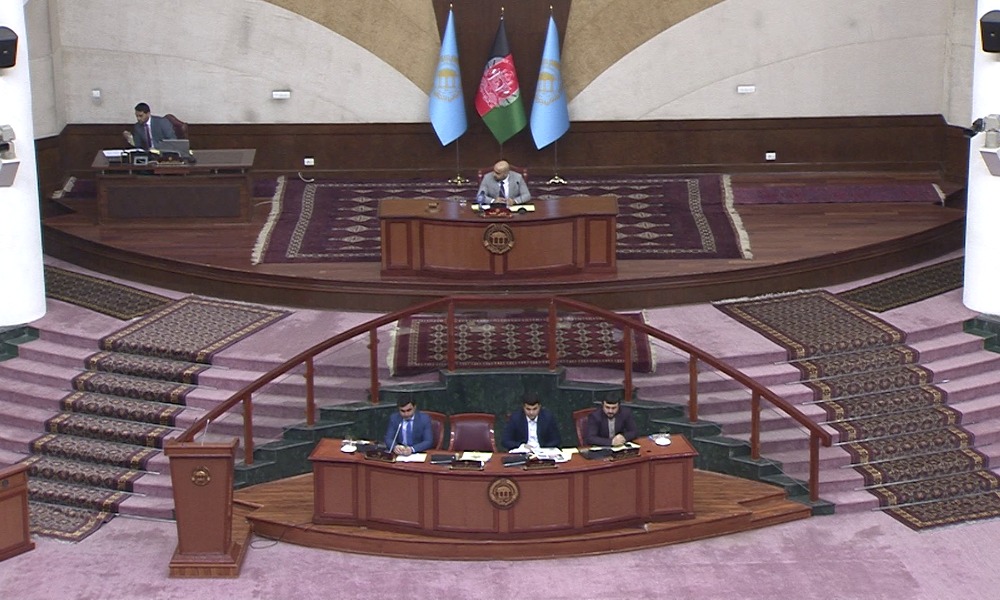
Members of the Wolesi Jirga (Lower House of Parliament) on Wednesday voiced their displeasure over the recent decision by the National Statistics and Information Authority (NSIA) to categorize ethnic groups in the registration process of the new electronic ID card system.
Some MPs said this decision will create a new crisis in the country.
“The move by the NSIA is a risk to nation building; it will destroy unity among the people… the act is dividing tribes,” said one MP Khan Agha Rezayee.
“The government makes problems for people and divides tribes into categories. This is against the Constitution; it will fuel tribal discrimination. If government does not control this, the response will be very tough and uncontrollable, ” said Zalmay Noori, another MP.
“The NSIA’s decision is against the Constitution; 15 tribes are mentioned in the Constitution; the decision is against the law that we passed,” said Makhdom Abdullah Mohammadi, an MP.
However some MPs came out in support of the move.
“Some tribes want to see their tribe name on their ID cards,” said MP Niamat Karyab.
First deputy speaker of the house, Javid Jaihoon, meanwhile called on government to resolve the issue as soon as possible.
“We call on government to solve the problem based on the articles of the Constitution and to end concerns around this issue,” said Jaihoon.
According to MPs, government needs to encourage unity among tribes and avoid creating division.
This comes after the NSIA announced earlier this month that it had classified a number of ethnic groups and tribes into categories in the online registration form for new electronic ID cards.
Based on the list, all Pashtuns in Afghanistan are classified into one ethnic group but the rest of the groups such as Tajiks, Hazaras, and Uzbeks are each divided into several tribes.
Politicians are among those who believe the NSIA’s list “deliberately” fuels disunity among the people of Afghanistan especially as the organization has categorized ethnic groups based on their “villages, districts and tribes.”
Second Vice President Sarwar Danish said the list lacks “scientific and practical” elements and this in itself could lead to disputes in the country.
“Hasty decisions would question the government and create divisions and mistrust among our people,” Mohammad Hedayat, the head of Danish’s media office said.
Meanwhile, former Foreign Minister Salahuddin Rabbani stated that the NSIA has intentionally planned to divide ethnicities based on districts and villages.
Atta Mohammad Noor, Chief Executive of Jamiat-e-Islami Party, claimed that the NSIA is not “aware of the difference between an ethnicity and place of residency.”
“This government organization is not yet aware of this important fact that there is a huge difference between an ethnicity and the residence of a group, and you can never count the name of the location as the ethnicity of a specific people,” said Ahmad Afzal Hadid, Head of Balkh Provincial Council.
Abdullah Abdullah, Chairman of the High Council for National Reconciliation, also spoke out against the NSIA’s decision and called the list a “mistake.”
Abdullah called on the organization to rectify the issue.
The NSIA, however, claimed that its decision was made at the request of the people.
“This decision was made as per the request of a number of tribal elders and the interpretation of the third part of Article 4 of the Constitution,” said Roeina Shahabi, the spokesperson for the NSIA.










Kazakhstan’s Foreign Minister Mukhtar Tileuberdi has called for pragmatic and coordinated international engagement with Afghanistan, saying the country’s long-term stability is closely linked to the security and sustainable development of Central Asia.
Speaking during the general debate of the 81st session of the United Nations General Assembly in New York on Friday, Tileuberdi said humanitarian assistance to Afghanistan remains essential but alone cannot break the cycle of poverty, displacement and dependency.
He said Kazakhstan supports a “pragmatic, coordinated and step-by-step” approach to international engagement with Afghanistan, with the United Nations playing a central role.
Tileuberdi also said Kazakhstan is working with the UN to operationalize the United Nations Regional Centre for the Sustainable Development Goals for Central Asia and Afghanistan in Almaty.
He said the success of the centre should be measured by the results and assistance it delivers to the region.


Saar: Concerns over Pakistan’s political crisis discussed

Afghanistan Champions League: Omar Zawak Herat beat Toofan Herat 1-0

Blast in Pakistan’s Dera Ismail Khan kills 11, injures 30

Ariana Afghan Airlines increases Kabul-Delhi cargo flights

Khalilzad questions Pakistan’s commitment to Afghan welfare

Saudi energy group signs major Afghanistan deals covering gas exploration and pipeline plans

Trump floats idea of renaming Atlantic or Pacific Ocean

US hits Egyptian bank branches with Iran sanctions as war marks six months

Nepal flood rescue mission enters critical phase as thousands remain missing

Iranian clubs to face Gulf opponents at neutral venues in Asian Champions League Elite
Saar: Concerns over Pakistan’s political crisis discussed

Exclusive interview with Abdul Latif Mansoor, Minister of MRRD

Tawsia: Overview of Afghanistan’s iron mines

Tahawol: Discussion on fresh Pakistani airstrikes on Afghanistan

Saar: Calls for international support for Afghanistan discussed
-

 World5 days ago
CNN, MS NOW and Politico sue Trump, challenging White House ban
-

 Latest News3 days ago
Ariana Afghan Airlines ranks seventh among 45 Central Asian airlines
-

 Latest News4 days ago
UN reiterates call for respect for international law after Kunar airstrikes
-
 Latest News5 days ago
Khalilzad condemns Pakistan airstrikes, says current strategy is not working
-

 Regional3 days ago
US and Iran hold first talks since June after Trump’s ‘annihilation’ threat
-

 Latest News3 days ago
Silk Road highway in Wakhan corridor now reaches the China border
-

 Latest News4 days ago
Afghan Official: Pakistan’s airstrikes will not go unanswered
-

 Sport4 days ago
Afghan boxing referee heads to China for international festival