
Latest News
India’s COVID-19 cases dip from peak, but calls for shutdown mount

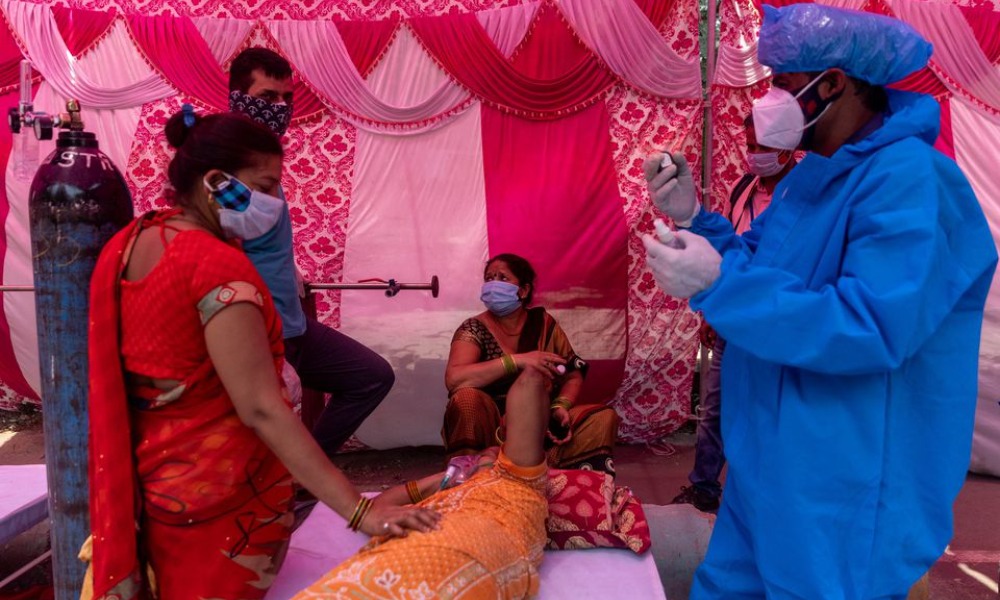
Calls grew for India to impose a nationwide lockdown as new coronavirus cases and deaths held close to record highs on Monday, increasing pressure on the government of Prime Minister Narendra Modi, Reuters reported.
The 366,161 new infections and 3,754 deaths reported by the health ministry were slightly down from recent peaks, taking India’s tally to 22.66 million with 246,116 deaths.
But as many hospitals grapple with an acute shortage of oxygen and beds while morgues and crematoriums overflow, experts have said India’s actual figures could be far higher than reported, Reuters reported.
Sunday’s 1.47 million tests for COVID-19 were this month’s lowest yet, data from the state-run Indian Council of Medical Research showed. The figure compared with a daily average of 1.7 million for the first eight days of May.
The number of positive results from the tests was not immediately clear, however.
Many states have imposed strict lockdowns over the last month while others have placed curbs on movement and shut cinemas, restaurants, pubs and shopping malls.
But pressure is mounting on Modi to announce a nationwide lockdown as he did during the first wave of infections last year, Reuters reported.
He is battling criticism for allowing huge gatherings at a religious festival and holding large election rallies during the past two months even as cases surged.
“A failure of governance of epic and historic proportions,” Vipin Narang, a political science professor at the Massachusetts Institute of Technology (MIT) in the United States, said on Twitter.
On Sunday, top White House coronavirus adviser Dr. Anthony Fauci said he had advised Indian authorities they needed to shut down.
“You’ve got to shut down,” Fauci said on ABC’s “This Week” television show. “I believe several of the Indian states have already done that, but you need to break the chain of transmission. And one of the ways to do that is to shut down.”
The Indian Medical Association (IMA) has also called for a “complete, well-planned, pre-announced” lockdown.
New Delhi, the capital, entered a fourth week of lockdown, with tougher curbs such as the shutdown of the suburban rail network, while residents scrambled for scarce hospital beds and oxygen supplies, Reuters reported.
“This is not the time to be lenient,” Delhi chief minister Arvind Kejriwal said on Sunday.
“This phase is so tough, this wave is so dangerous, so many people are dying…the priority at this hour is to save lives,” he said in a televised address.
Global support, in the form of oxygen cylinders and concentrators, ventilators and other medical gear, has poured in.
By Sunday, the world’s largest vaccine-producing nation had fully vaccinated just over 34.3 million, or only 2.5%, of its population of about 1.35 billion, government data shows.












Kazakhstan’s Foreign Minister Mukhtar Tileuberdi has called for pragmatic and coordinated international engagement with Afghanistan, saying the country’s long-term stability is closely linked to the security and sustainable development of Central Asia.
Speaking during the general debate of the 81st session of the United Nations General Assembly in New York on Friday, Tileuberdi said humanitarian assistance to Afghanistan remains essential but alone cannot break the cycle of poverty, displacement and dependency.
He said Kazakhstan supports a “pragmatic, coordinated and step-by-step” approach to international engagement with Afghanistan, with the United Nations playing a central role.
Tileuberdi also said Kazakhstan is working with the UN to operationalize the United Nations Regional Centre for the Sustainable Development Goals for Central Asia and Afghanistan in Almaty.
He said the success of the centre should be measured by the results and assistance it delivers to the region.


Abu Muslim Farah defeat Khurasan Faryab 2-0 in ACL season six

Saar: Concerns over Pakistan’s political crisis discussed

Afghanistan Champions League: Omar Zawak Herat beat Toofan Herat 1-0

Blast in Pakistan’s Dera Ismail Khan kills 11, injures 30

Ariana Afghan Airlines increases Kabul-Delhi cargo flights

Saudi energy group signs major Afghanistan deals covering gas exploration and pipeline plans

Trump floats idea of renaming Atlantic or Pacific Ocean

US hits Egyptian bank branches with Iran sanctions as war marks six months

Nepal flood rescue mission enters critical phase as thousands remain missing

Iranian clubs to face Gulf opponents at neutral venues in Asian Champions League Elite
Saar: Concerns over Pakistan’s political crisis discussed

Exclusive interview with Abdul Latif Mansoor, Minister of MRRD

Tawsia: Overview of Afghanistan’s iron mines

Tahawol: Discussion on fresh Pakistani airstrikes on Afghanistan

Saar: Calls for international support for Afghanistan discussed
-

 World5 days ago
CNN, MS NOW and Politico sue Trump, challenging White House ban
-

 Latest News3 days ago
Ariana Afghan Airlines ranks seventh among 45 Central Asian airlines
-

 Latest News4 days ago
UN reiterates call for respect for international law after Kunar airstrikes
-

 Regional3 days ago
US and Iran hold first talks since June after Trump’s ‘annihilation’ threat
-

 Latest News3 days ago
Silk Road highway in Wakhan corridor now reaches the China border
-

 Latest News5 days ago
Afghan Official: Pakistan’s airstrikes will not go unanswered
-

 Sport4 days ago
Afghan boxing referee heads to China for international festival
-

 Regional5 days ago
G7 foreign ministers call on Iran to stop arming Houthis