
Latest News
Thank you, we have enough manpower, Mujahid tells Pakistan

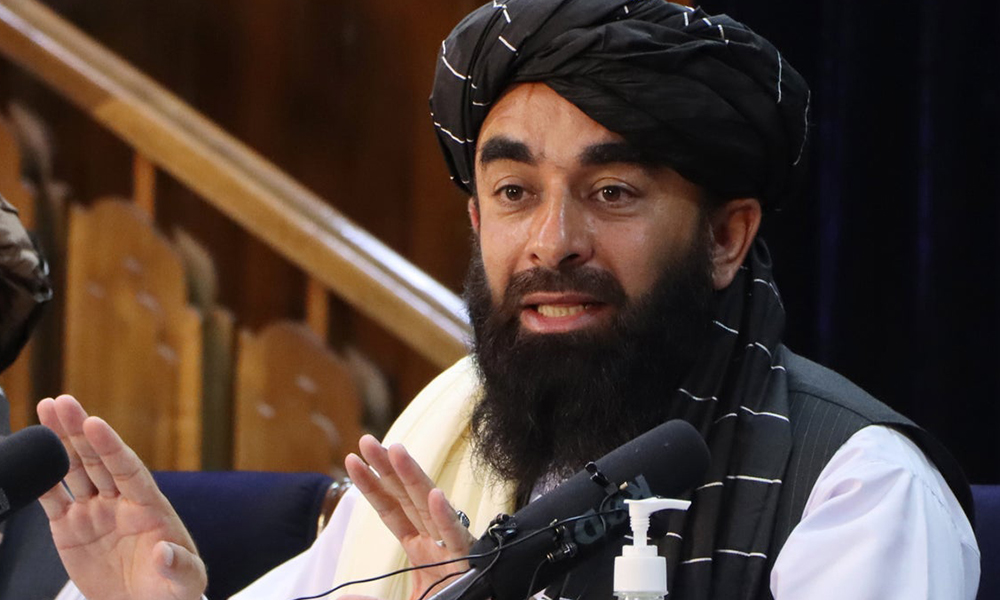
Zabihullah Mujahid, a spokesman for the Islamic Emirate of Afghanistan (IEA) has politely turned down Pakistan’s offer to send manpower to Afghanistan, stating there are enough educated young people in the country.
In an audiotaped interview with the BBC on Saturday, Mujahid thanked Pakistan but said the IEA did not need outside labor.
“There are enough educated young people to work in the ministries and there is no need for outside manpower,” said Mujahid in the audiotape, which was released by Mohammad Naeem, the spokesman for the IEA’s political office in Qatar.
“You know that countries can ask for manpower from abroad if they need to, but Afghanistan is rich in educated people,” he said.
However, Mujahid pointed out that they would accept cooperation in the economic, trade and financial sectors. He also said that there are some banking problems in Afghanistan and that these areas need help.
This comes after Pakistan Prime Minister Imran Khan on Friday told senior officials at the 3rd Apex Committee meeting on Afghanistan to stave off a crisis in their neighboring country by exporting qualified and trained manpower to Afghanistan, especially in medical, IT, finance and accounting.
Mujahid meanwhile said in the audiotape that Imran Khan has not been the only leader to offer this and that a number of other countries have also offered to send in manpower.
Khan’s remarks sparked widespread reaction. Former Afghan president Hamid Karzai also commented, on his Facebook page, and while praising Pakistan for the offer said there was no need for foreign manpower to be sent into the country.




Latest News
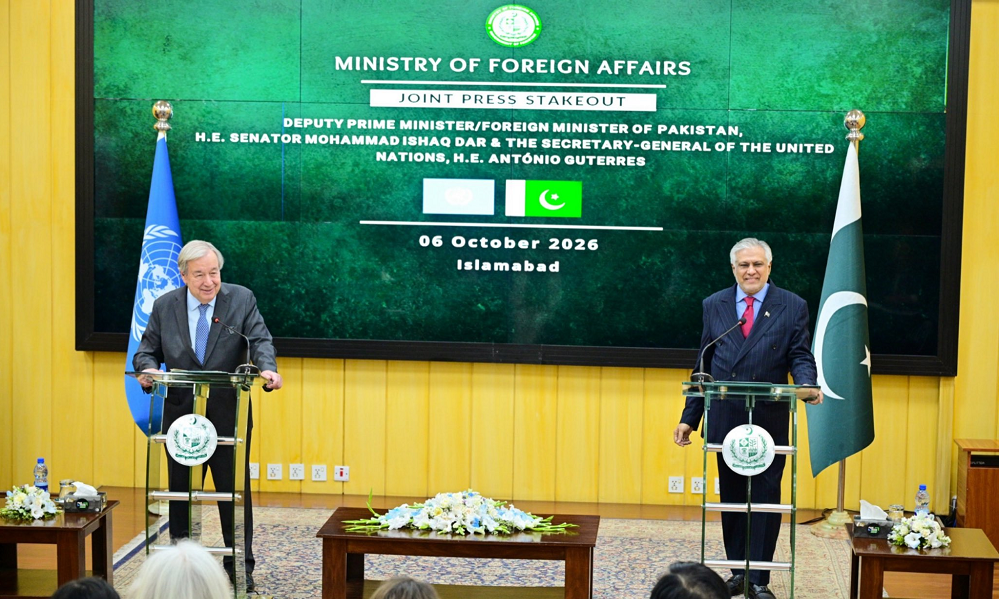
Afghan returns from Pakistan must be voluntary, safe and dignified: Guterres
Guterres added that the United Nations remains committed to working with Pakistan to uphold protection principles and ensure that the return of Afghans takes place voluntarily and in a safe and dignified manner.
Latest News
Afghanistan, Pakistan interested in normalizing relations: Lavrov
Lavrov described the failure to adopt a final document as “unpleasant” but said this issue should not be exaggerated.
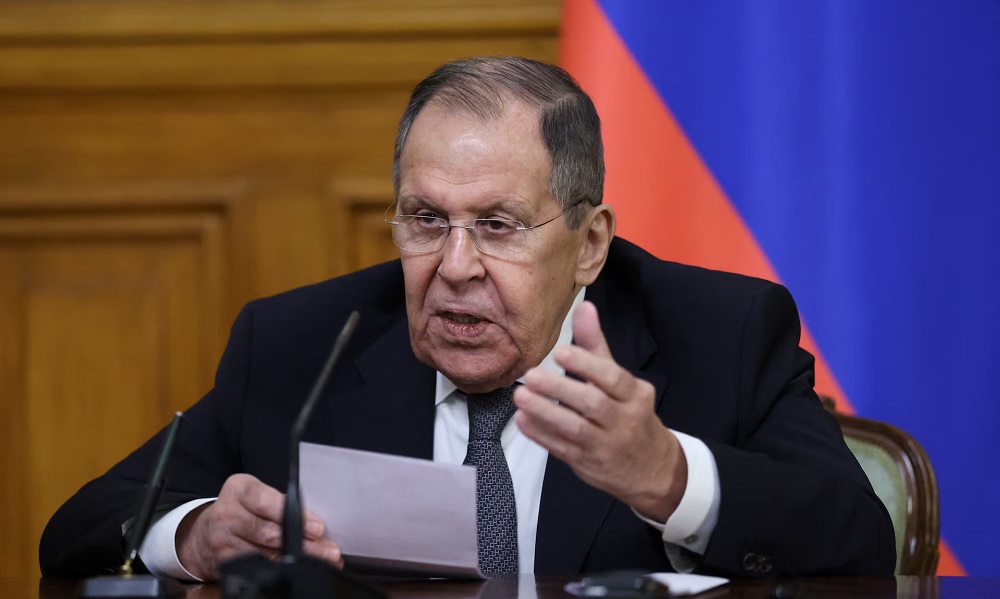
Russian Foreign Minister Sergey Lavrov says Afghanistan and Pakistan are both interested in normalizing relations despite recent tensions between the two countries.
Speaking at a press conference in Moscow on Tuesday, Lavrov said the differences between Kabul and Islamabad had affected the recent Moscow Format meeting on Afghanistan, preventing the participants from reaching agreement on a final statement.
Lavrov described the failure to adopt a final document as “unpleasant” but said the situation should not be exaggerated.
He said Daesh poses a challenge to both Afghanistan and Pakistan, carrying out attacks in the two countries and creating problems for their governments.
“I have no doubt that both Afghanistan and Pakistan are interested in normalizing relations,” Lavrov said.
He added that Russia would continue efforts to help resolve the existing and emerging issues between Kabul and Islamabad.
Lavrov also called on countries outside the region to refrain from interfering in regional affairs.
He said Afghanistan and other countries in the region continue to face the consequences of what he described as “gross interference by Western countries,” which he said has contributed to the current challenges in the region.
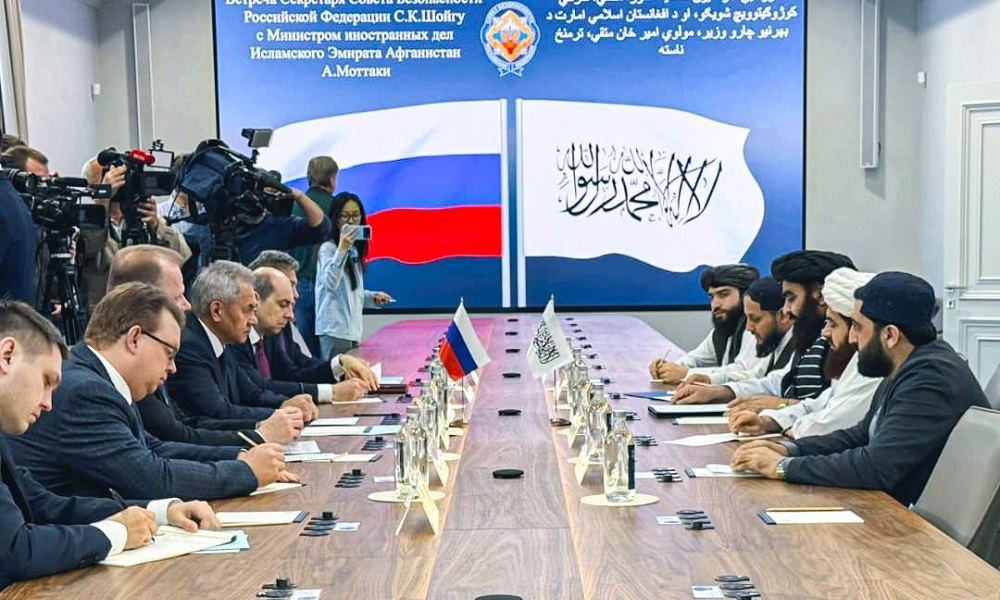
Amir Khan Muttaqi, Minister of Foreign Affairs, met on Tuesday with Sergei Shoigu, Secretary of Russia’s Security Council, to discuss bilateral relations, regional security, and security cooperation.
In a statement issued on Tuesday, the Ministry of Foreign Affairs of the Islamic Emirate said the two sides also discussed counter-narcotics efforts and expanding security cooperation between Afghanistan and Russia.
Muttaqi, referring to the positive progress in political relations between the two countries, thanked Russia for recognizing the Islamic Emirate of Afghanistan and stressed the importance of strengthening security cooperation, regular consultations, and expanding economic and trade relations.
The Foreign Minister also said Afghanistan would continue its efforts to ensure regional security and combat narcotics, and supports expanding cooperation with regional countries through direct contacts and practical cooperation.
Meanwhile, Sergei Shoigu described Afghanistan-Russia relations as expanding in various areas and expressed satisfaction with Afghanistan’s efforts to maintain security and combat narcotics.
The Secretary of Russia’s Security Council emphasized that Moscow would continue political consultations and practical cooperation with Afghanistan.


Afghan returns from Pakistan must be voluntary, safe and dignified: Guterres

Afghanistan, Pakistan interested in normalizing relations: Lavrov

Vance says Iran must cut enrichment to end war

Tahawol: Discussion on outcome of Moscow Format meeting

ACL: Sarbaz Yashlar and Khurasan Faryab play out goalless draw

Saudi energy group signs major Afghanistan deals covering gas exploration and pipeline plans

Khalilzad: Afghanistan ready to attract major investment

UAE firm eyes investment in Salang’s second tunnel and pharmaceutical factories

US Treasury ratchets up pressure on Iran with sweeping new aviation sanctions

AI could pose ‘existential’ risk to humanity, UN rights chief warns
Tahawol: Discussion on outcome of Moscow Format meeting

Saar: Expansion of relations between Kabul and Moscow discussed

Tahawol: Afghanistan-Iran: shared opportunities and challenges discussed

Saar: Pakistan’s hostile policy toward Afghanistan discussed

Tahawol: Doha process seeks new cooperation opportunities
-

 Sport2 days ago
Cricket Bonanza: Afghanistan set for packed international schedule
-
 Sport5 days ago
ACB announces Afghanistan squads for Bangladesh, Zimbabwe series
-
 Latest News5 days ago
Russia expects to ease Afghanistan-Pakistan tensions at Moscow Format meeting
-

 International Sports5 days ago
Afghanistan to face Pakistan, India and Australia at 2027 Cricket World Cup
-
 Regional5 days ago
Saudi-led coalition says Houthis attacked power station for Prophet’s Mosque in Medina
-
 Regional5 days ago
Cargo stacks up as Pakistan seizes containers to block capital routes
-
 Latest News4 days ago
Kazakhstan, Uzbekistan and UAE sign MoU on CASA railway project via Afghanistan
-
 Regional4 days ago
Pakistan says Mecca pact members to hold emergency talks on engaging Houthis