
Latest News
EU, US condemn IEA’s decision barring females from working in NGOs

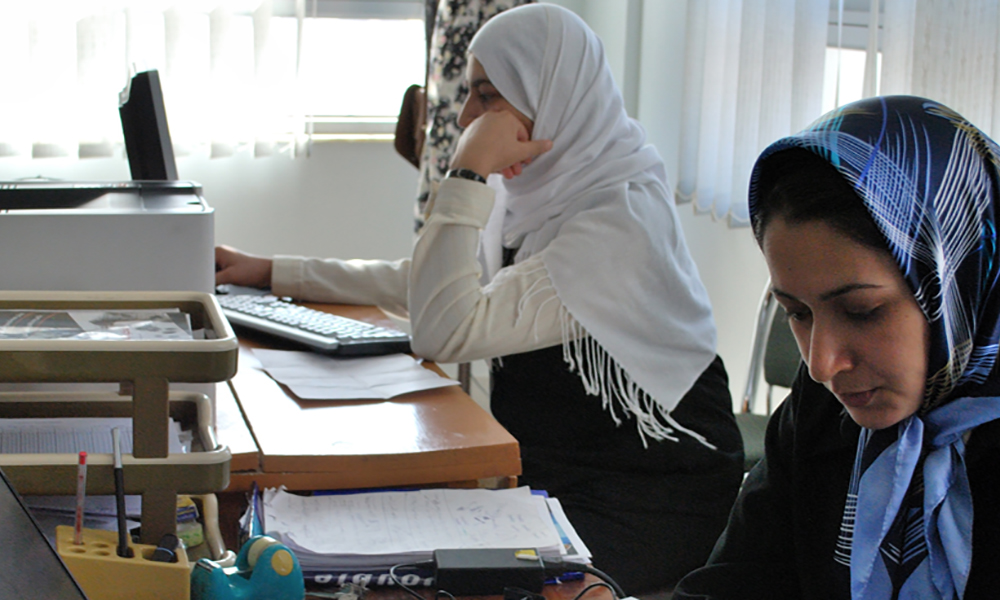
The Islamic Emirate of Afghanistan (IEA) has ordered all national and international NGOs to stop their female employees from working, citing “serious complaints” about their dress code.
The order, issued by the Ministry of Economy, threatened to suspend the operating licences of NGOs that failed to implement the directive.
“There have been serious complaints regarding the non-observance of the Islamic hijab and other rules and regulations pertaining to the work of females in national and international organisations,” said a statement sent to all NGOs.
“The ministry of economy… instructs all organisations to stop females from working until further notice,” the statement said.
“In case of ignoring the directive, the license of the organisation which has been issued by this ministry, will be cancelled,” it added.
The latest restriction comes less than a week after the IEA authorities suspended university education for women, prompting global outrage and protests.
The EU strongly condemned the IEA’s ban on women working for NGOs in Afghanistan and said it was assessing the impact on its aid to the country.
“We are assessing the situation and the impact it will have on our aid on the ground,” an EU spokesperson told AFP in a statement.
The EU is a major supporter of aid organisations that work in Afghanistan. However it does not recognize IEA as the country’s official government.
EU foreign policy chief’s spokeswoman Nabila Massrali said: “Our foremost concern will continue to be the welfare, rights, and freedoms of the people of Afghanistan.”
She said the ban on women working for NGOs “is another harsh restriction on the ability of women in Afghanistan to exercise their human rights and fundamental freedoms and a clear breach of humanitarian principles”.
US Secretary of State Antony Blinken also warned that an IEA order for women to be barred from working for NGOs would disrupt aid delivery and could be “devastating” for Afghanistan.
“Deeply concerned that the Taliban’s (IEA) ban on women delivering humanitarian aid in Afghanistan will disrupt vital and life-saving assistance to millions,” Blinken tweeted.
“This decision could be devastating for the Afghan people.”
Dozens of national and international NGOs continue to work in several sectors across remote areas of Afghanistan, and many of their employees are women.
It was not immediately clear whether the order applied to United Nations agencies, which have a large presence in Afghanistan and often deal with NGOs registered there to carry out their humanitarian work.
Economy Ministry’s spokesperson, Abdulrahman Habib, said the letter, banning women’s work, applied to organisations under Afghanistan’s coordinating body for humanitarian organisations, known as ACBAR. That body does not include the UN, but includes over 180 local and international NGOs.
Top officials from the United Nations and dozens of NGOs operating in Afghanistan are meeting in Kabul Sunday to discuss the way ahead after the IEA authorities ordered all NGOs to stop women employees from working, aid officials said.
“A meeting of Humanitarian Country Team (HCT) is scheduled later today to consult and discuss how to tackle this issue,” Tapiwa Gomo, public information officer for the UN Office for the Coordination of Humanitarian Affairs, told AFP.
The HCT comprises top UN officials and representatives of dozens of Afghan and international NGOs who coordinate distribution of aid across the country.
The meeting will discuss whether to suspend all aid work following the latest IEA directive, some NGO officials said.
The United Nations, which said it would seek an explanation from the IEA about the order, condemned the ministry’s directive.
The ban comes at a time when millions across the country depend on humanitarian aid provided by international donors through a vast network of NGOs.
Meanwhile, the Deputy Prime Minister for Economic Affairs, Mullah Abdul Ghani Baradar Akhund, at an event in Kabul under the title of “Waiver of Tax Penalties, Supporting Industry and Trade”, said that IEA considers itself responsible towards the people of the country.
“The Islamic Emirate of Afghanistan is responsible towards the people including businessmen and industrialists, so it is necessary to provide them with facilities in every area and protect their property and dignity,” Baradar said.
Speaking in the event, Foreign Minister Amir Khan Muttaqi said that the government is responsible for the health, economy, education and other legal rights of the citizens.
“When we call ourselves rulers, then we are also responsible for the health, economy, education and other rights of the people. We made a lot of efforts to establish the Islamic system. Many problems have been solved and many more problems remain for which we must soon find solutions,” Muttaqi said.












Kazakhstan’s Foreign Minister Mukhtar Tileuberdi has called for pragmatic and coordinated international engagement with Afghanistan, saying the country’s long-term stability is closely linked to the security and sustainable development of Central Asia.
Speaking during the general debate of the 81st session of the United Nations General Assembly in New York on Friday, Tileuberdi said humanitarian assistance to Afghanistan remains essential but alone cannot break the cycle of poverty, displacement and dependency.
He said Kazakhstan supports a “pragmatic, coordinated and step-by-step” approach to international engagement with Afghanistan, with the United Nations playing a central role.
Tileuberdi also said Kazakhstan is working with the UN to operationalize the United Nations Regional Centre for the Sustainable Development Goals for Central Asia and Afghanistan in Almaty.
He said the success of the centre should be measured by the results and assistance it delivers to the region.


Abu Muslim Farah defeat Khurasan Faryab 2-0 in ACL season six

Saar: Concerns over Pakistan’s political crisis discussed

Afghanistan Champions League: Omar Zawak Herat beat Toofan Herat 1-0

Blast in Pakistan’s Dera Ismail Khan kills 11, injures 30

Ariana Afghan Airlines increases Kabul-Delhi cargo flights

Saudi energy group signs major Afghanistan deals covering gas exploration and pipeline plans

Trump floats idea of renaming Atlantic or Pacific Ocean

US hits Egyptian bank branches with Iran sanctions as war marks six months

Nepal flood rescue mission enters critical phase as thousands remain missing

Iranian clubs to face Gulf opponents at neutral venues in Asian Champions League Elite
Saar: Concerns over Pakistan’s political crisis discussed

Exclusive interview with Abdul Latif Mansoor, Minister of MRRD

Tawsia: Overview of Afghanistan’s iron mines

Tahawol: Discussion on fresh Pakistani airstrikes on Afghanistan

Saar: Calls for international support for Afghanistan discussed
-

 World5 days ago
CNN, MS NOW and Politico sue Trump, challenging White House ban
-

 Latest News3 days ago
Ariana Afghan Airlines ranks seventh among 45 Central Asian airlines
-

 Latest News4 days ago
UN reiterates call for respect for international law after Kunar airstrikes
-

 Regional3 days ago
US and Iran hold first talks since June after Trump’s ‘annihilation’ threat
-

 Latest News3 days ago
Silk Road highway in Wakhan corridor now reaches the China border
-

 Latest News4 days ago
Afghan Official: Pakistan’s airstrikes will not go unanswered
-

 Sport4 days ago
Afghan boxing referee heads to China for international festival
-

 Regional5 days ago
G7 foreign ministers call on Iran to stop arming Houthis