
Regional
Iran ‘prepares’ missiles to target US forces in Middle East
US military analysts say Tehran’s preparations are intended to serve both as a deterrent and a retaliatory option if the US intervenes militarily in support of Israel,

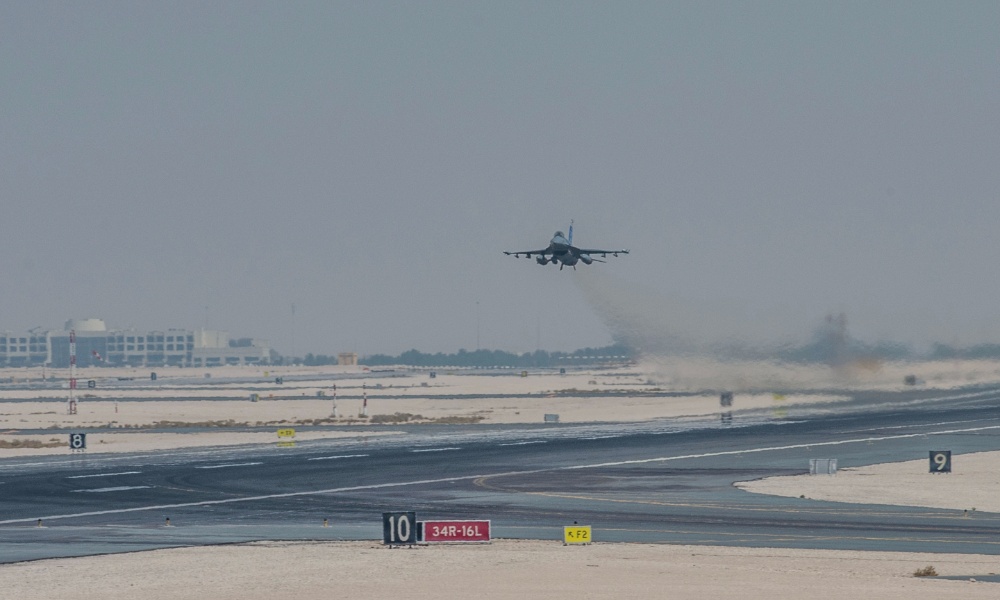
Iran is reportedly preparing its missile forces to launch strikes against American military targets across the Middle East, should the United States enter the growing conflict between Israel and Iran.
Citing US intelligence officials, The New York Times reported that based on classified assessments, corroborated by multiple defense officials, Iran has moved key missile assets into operational positions and activated allied militia networks across the region.
This is seen as part of a broader strategy to deter direct US involvement.
According to the New York Times, Iran has positioned medium- and long-range ballistic missiles, as well as cruise missile platforms, near launch-ready sites inside its territory and in parts of Iraq and Syria under the control of Iranian-aligned militias.
Some of these systems have ranges exceeding 1,000 kilometers and are capable of reaching major US installations in the region within minutes.
Iran is also reportedly coordinating with Hezbollah in Lebanon, Houthi forces in Yemen, and Popular Mobilization Forces (PMF) in Iraq — groups with a proven track record of launching drone and rocket attacks against US interests.
US military analysts say Tehran’s preparations are intended to serve both as a deterrent and a retaliatory option if the US intervenes militarily in support of Israel, particularly in the event of Israeli strikes on Iranian nuclear facilities.
U.S. Bases Potentially at Risk
ArianaNews.com meanwhile looked at what US bases and installations are within range of Iranian missiles or proxy forces. The results are as follows:
Al Udeid Air Base – Qatar
Significance: Regional command hub for U.S. Central Command (CENTCOM) operations.
Assets: Hosts U.S. Air Force bombers, surveillance aircraft, and refueling tankers.
Risk: High, due to its strategic role and location just 200 miles from Iran.
Al Dhafra Air Base – United Arab Emirates
Significance: Important forward operating location for U.S. fighter jets and surveillance aircraft.
Assets: F-35s, Global Hawk drones.
Risk: High, as it’s within reach of both Iranian missiles and Houthi drones from Yemen.
Camp Arifjan & Ali Al Salem Air Base – Kuwait
Significance: Major logistical hub and troop staging ground.
Assets: Ground forces, Patriot missile defense systems.
Risk: Moderate to high; within range of medium-range missiles and vulnerable to militia activity in Iraq.
Ain al-Asad Air Base – Iraq
Significance: Largest U.S. base in Iraq; has previously been targeted by Iranian ballistic missiles (2020).
Risk: Very high, due to its proximity and exposed position in western Iraq.
Erbil Air Base – Iraqi Kurdistan
Significance: Special operations and intelligence base.
Risk: High; has faced repeated drone attacks by Iran-backed groups in recent years.
Al-Tanf Garrison – Syria
Significance: U.S. special forces base near Syria’s border with Iraq and Jordan.
Risk: High, due to encirclement by Iran-backed militias and limited support infrastructure.
Naval Assets in the Red Sea, Gulf of Oman, and Arabian Gulf
Significance: Includes U.S. 5th Fleet in Bahrain and carrier groups in regional waters.
Risk: Subject to missile or naval mine attacks; the Strait of Hormuz remains a flashpoint.
Strategic Context
Tehran’s missile deployments are viewed as part of its “deterrence by escalation” doctrine, signaling that it is prepared to expand the war beyond Israeli territory if attacked. The Pentagon has responded by increasing force protection at regional bases and deploying additional Patriot and THAAD missile defense batteries.
A senior US official, speaking anonymously, said: “We are closely monitoring Iran’s military posture. Any move against our personnel will be met with an immediate and proportional response.”
Meanwhile, diplomatic backchannels remain active, with efforts underway through European and Gulf intermediaries to de-escalate tensions before open war breaks out across the region.





Iran executed a man convicted of passing missile site intelligence to Israel during the 12-day war, according to the judiciary.
Iran’s judiciary-run Mizan news agency said Hossein Pedaran was hanged after the Supreme Court upheld his death sentence on charges of espionage and intelligence cooperation with Israel, Reuters reported.
It said Pedaran had provided Israel’s Mossad intelligence service with information on sensitive military sites in the central province of Isfahan, and had carried out the espionage for financial gain.
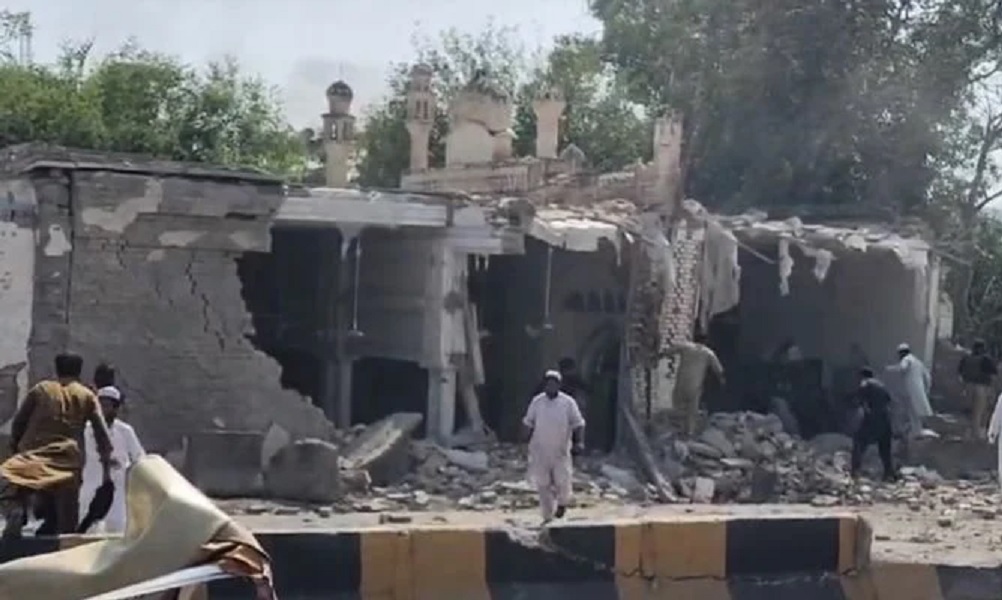
At least 15 people were killed and more than 50 others injured in a blast near a mosque in Kohat district of Khyber Pakhtunkhwa province on Friday, Pakistan’s Geo News reported.
Police said the blast occurred during Friday prayers and damaged the outer section of the mosque. Several police personnel were among those injured.
Khyber Pakhtunkhwa’s Inspector General of Police, Zulfiqar Hameed, said an explosives-laden vehicle struck the gate of the old Police Lines before exploding. He said the incident was followed by gunfire and another explosion at a Special Branch building.
Security forces and rescue teams were deployed at the scene, while emergency measures were declared at the district hospital to treat the injured.
There was no immediate claim of responsibility for the bombing.
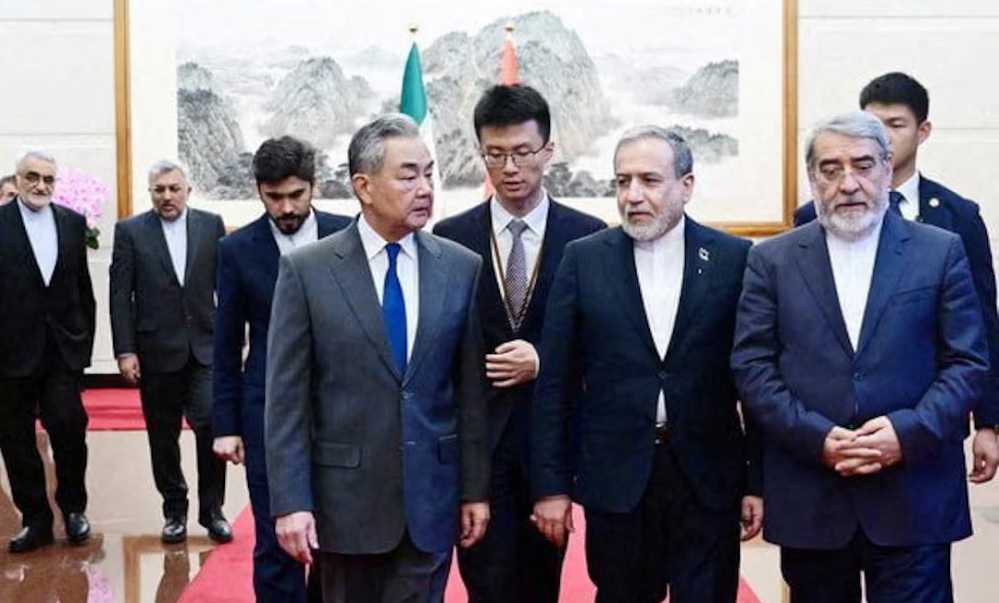
China has privately asked Tehran to help rein in Yemen’s Houthis after an appeal to Beijing by Saudi Arabia following the Iran-backed group’s military blitz in the past week, according to three Iranian sources familiar with the matter, Reuters reported.
Riyadh turned to China for help after the Houthis made rapid advances along the Red Sea coast and around the Bab el-Mandeb Strait, moves that have left Saudi oil exports and shipping more exposed, the sources said.
China has publicly called for restraint, dialogue and the restoration of safe navigation, but its private message went further than the public statements, they said.
Beijing wants Iran to use its influence with the Houthis to help prevent the conflict spreading further across energy routes on which China, the world’s second-largest economy, depends.
The sources, who were briefed on the discussions and spoke on condition of anonymity, did not provide details of how the message was delivered or whether it was conveyed during a visit to China on Wednesday by Iranian Foreign Minister Abbas Araqchi.
The sources said Tehran’s response was that stability and peace in the region depend on ending the US-Israeli war on Iran.
Chinese officials did not issue any explicit threats or indicate that Beijing would seek to pressure Tehran economically if it failed to use its influence over the Houthis, the three Iranian sources said.
In response to a Reuters request for comment on this story, the Chinese foreign ministry said: “China does not wish to see regional tensions further spill over into Yemen and the Red Sea. Escalating regional instability is not in the interests of any party”.
“The sovereignty and security of all countries should be respected, and facilities vital to people’s livelihoods must not be targeted. China calls for an end to actions that further complicate the situation and urges resolving issues through dialogue and negotiation,” it said.
Iran’s foreign ministry and the Saudi government’s media office did not immediately respond to Reuters requests for comment for this article.
DANGERS OF A WIDER REGIONAL WAR
China has been Iran’s largest trading partner for more than a decade and remains the main buyer of its oil. Chinese purchases accounted for more than 80% of Iran’s seaborne oil exports in 2025, averaging about 1.4 million barrels per day, according to commodities data and analytics firm Kpler.
“Beijing is one of the few capitals that can still press Iran to rein in the Houthis,” said a senior Western diplomat in the region.
The Houthis, who emerged in the 1990s in opposition to Saudi Arabia’s Sunni religious influence in Yemen, are armed, trained and funded by Iran, according to Iranian sources and Western countries, and form part of Tehran’s anti-Western, anti-Israel “Axis of Resistance”.
Any threat by the Houthis to shipping in the Red Sea and through the Bab el-Mandeb Strait risks sharply worsening the global energy crisis since Iran started blocking the Strait of Hormuz and increasing the danger of a wider regional conflict.
With Hormuz already effectively shut, sustained Houthi attacks on vessels or ports in the Red Sea would disrupt the Middle East’s two main oil-export routes simultaneously, opening a new front in both the energy crisis and Iran’s broader confrontation with the United States.
Iran and its allies now exert pressure over both ends of the region’s key maritime network, one of the sources said, adding that “China depends on both”.
Alex Vatanka, director of the Iran Program at the Middle East Institute in Washington, said Beijing may oppose US pressure on Tehran, but its interests in the Middle East extend well beyond Iran. Roughly half of China’s oil imports come from the region, while trade between China and the Gulf Cooperation Council states totals around $300 billion a year.
“Iran can disrupt Hormuz. But at some point that leverage begins hurting the very power Tehran increasingly depends on,” Vatanka said.
CHINA’S DILEMMA
It is unclear whether Tehran will act on the concerns raised by Beijing, according to the three Iranian sources.
The relationship nevertheless carries significant economic and strategic weight for Iran as it continues to face hostilities with the US, they said.
China is among the few countries with the financial capacity to provide the investment Tehran needs to sustain its oil industry and ease pressure on its economy, battered by war and sanctions.
Beijing has also demonstrated its diplomatic influence. In 2023, China brokered the agreement that restored ties between Iran and Saudi Arabia after years of hostility.
That influence has limits, however. Critics inside Iran have complained about the relatively modest level of Chinese non-oil trade and investment since the two countries signed a 25-year cooperation pact in 2021, particularly compared with China’s growing investment commitments in Gulf Arab states.
China remains a factor Tehran cannot afford to ignore, but two of the Iranian sources said Beijing’s interests were only one consideration among many. Iran’s decisions are shaped by competing strategic, economic and political priorities, they said.
“Tehran and Beijing need each other. China is a factor Tehran cannot ignore, and Beijing wants Hormuz reopened and Red Sea shipping secured,” the Western diplomat said.
Analysts say the key test will be whether China is prepared to attach consequences to its demands. Ultimately, they say, the clearest sign of Beijing’s resolve would be evidence that it is willing to use its leverage over Tehran.


Tahawol: Kabul’s warning over any threat from Pakistan discussed

Abu Muslim Farah and Ariana Khost play out goalless draw in ACL

ACL season six: Aino Mina and Omar Zawak play out 1–1 draw

Iran executes man convicted of spying for Israel’s Mossad, judiciary says

Afghan official meets Iranian oil minister to discuss energy cooperation

Four mediators struggle to secure lasting Pakistan-Afghanistan ceasefire

Syria and Saudi Arabia condemn Kabul bombing, express solidarity with Afghanistan

Afghanistan’s trade diversification challenges Pakistan

Saudi energy group signs major Afghanistan deals covering gas exploration and pipeline plans

ATN secures exclusive rights to broadcast T20I series in India across Afghanistan
Tahawol: Kabul’s warning over any threat from Pakistan discussed

Debate on Afghanistan and New Investment Opportunities

Tahawol: Reasons behind Qatari, Turkish security officials’ Kabul visit discussed

Saar: Outcome of UN Security Council meeting on Afghanistan discussed

Tahawol: Afghanistan’s readiness for US relations discussed
-
 Latest News4 days ago
UN warns of mounting humanitarian and human rights pressures in Afghanistan
-

 Regional3 days ago
Saudi Arabia calls alleged Mecca attack a ‘red line’ as Houthis deny involvement
-
 Latest News5 days ago
UNICEF expands aid to millions of Afghan children after flash floods
-

 World5 days ago
North Korea’s Kim vows to expand ties with Russia, backs victory in ‘sacred war’
-
 Latest News5 days ago
Kyrgyz, Afghan foreign ministers discuss expanding trade and investment ties
-
 Latest News4 days ago
Petition filed in Islamabad High Court against PMDC directive affecting Afghan students
-
 Latest News4 days ago
Five Years On: IEA touts economic growth despite international isolation
-

 Sport4 days ago
India take 2-0 lead in 3-match series against Afghanistan