
Latest News
Afghan Talks With Taliban Reflect a Changed Nation

 By Mujib Mashal
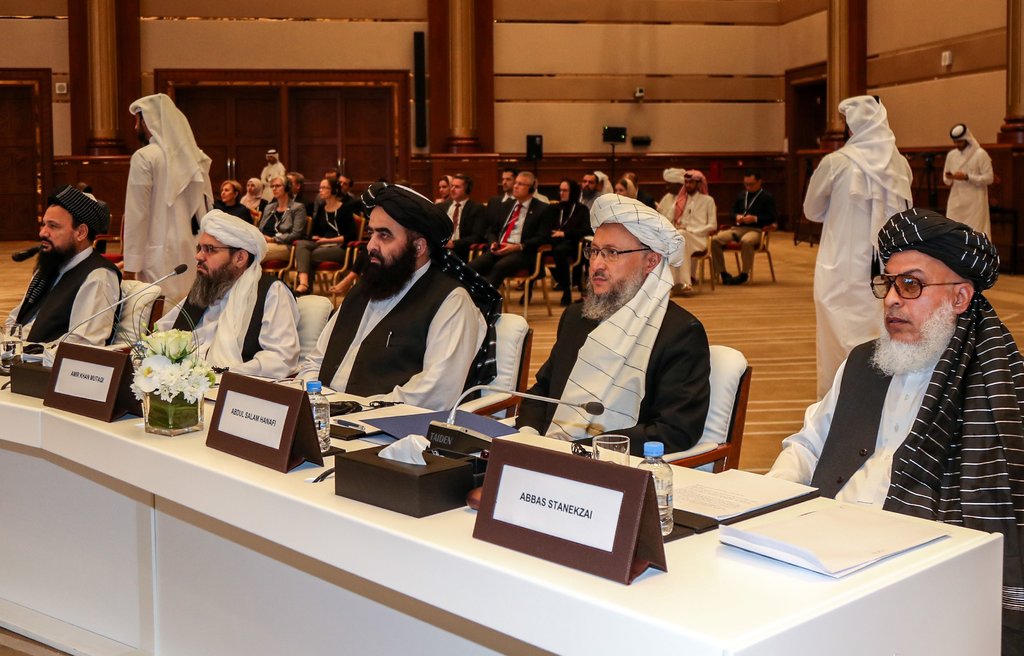
DOHA, Qatar — When the Taliban met Sunday for the first time with Afghan officials, the delegates they faced formed a moving tableau of a new Afghanistan that has taken shape since the movement was toppled 18 years ago.
Bloodshed and progress in those years have gone hand in hand, and many of the representatives at the table — from each side — came with stories of personal loss and grievance. The dialogue in Qatar, which continues on Monday, is the first in which Afghan government officials have participated and aims to break the ice for direct negotiations on Afghanistan’s political future after an expected United States military withdrawal.
“It is important to give all sides the opportunity to see how things have changed over the past 18 years,” said Sultan Barakat, the director of the Doha institute that organized the event with a German foundation. “Eighteen years is not a short time, but war tends to trap people into imperceptions.”
Among the Afghan participants are current and former senior officials who lost family members to suicide bombings, and a media executive who saw a bus full of his employees go up in flames.
When in power, the Taliban did not allow women to work or go to school. But in the main session on Sunday, at meals and during tea breaks, senior Taliban officials mingled respectfully with female delegates, like the first female governor, leading a province that had endured a gruesome Taliban massacre in 2001, and a doctor who represents the Sikh minority as a senator.
And if they happened to hear a baby crying, it was the deputy national security adviser’s 2-month-old boy. As she took her seat across from the Taliban, her husband, also a young senior official, came along to lull the child to sleep on the margins of the sessions.
When social media mistakenly included the baby’s name on a list of conference participants, maybe it was only fitting: Of all the attendees, his future stakes might be the highest.
News of another round of Afghan carnage — and children caught in an attack — came as the delegates filed into the ballroom in the sprawling Sheraton resort in Doha. The Taliban claimed responsibility for a huge truck bombing in Ghazni city on Sunday that killed eight security officers and four civilians. About 170 others were wounded, including 50 schoolchildren, the United Nations said.
On the Taliban side of talks in Qatar, several of the delegates spent more than a decade detained at the American prison in Guantánamo Bay, Cuba. Their deputy leader in charge of the peace efforts, Mullah Abdul Ghani Baradar, who did not attend Sunday, endured nearly 10 years of Pakistani imprisonment that damaged his health.
The militants have stories of relatives and friends lost to raids and bombings by American and Afghan forces. And they believe so staunchly in their fight against what they see as a foreign occupation that even the son of their latest supreme leader, Mawlawi Haibatullah Akhundzada, is believed to have carried out a suicide bombing.
While the Afghan side largely sees the Taliban as a proxy force under the influence of neighboring Pakistan, the Taliban see the Afghan government as a puppet of the United States.
To bridge the two visions of reality is a fundamental but immense task. And while long overdue, the peace process — considered key to the withdrawal of the remaining 14,000 American troops — suddenly seems to be moving quickly.
Most of Sunday’s sessions took place behind closed doors. But at the end of the day participants described the atmosphere as respectful, even if the exchanges at times grew tense.
Members of the Afghan delegation said they had seen more assurances from the Taliban that they would respect women’s right to work and to get educated. Taliban officials engaged in discussions on issues, rather than reading from prepared statements as they did at previous conferences.
Nader Nadery, the chairman of the Afghan civil service commission, brought up the morning’s deadly attack in Ghazni. While he mentioned his own torture under the Taliban, he also acknowledged the suffering of the Taliban officials across from him during their years of detention.
“I have the courage to forgive, as I know your members have suffered, too,” Mr. Nadery said he told the gathering.
Mullah Abdul Salam Hanafi, a member of the Taliban delegation, accused the Afghan side of being selective when speaking of civilian casualties. He said Afghan officials and media played down the civilian toll caused in rural areas by Afghan and American operations.
“The pain from all sides, whether it is the night raids or the bombings, that is why we are here,” Suhail Shaheen, a member of the Taliban delegation, said in an interview. “All sides have pain. The end of that pain is in ending the occupation.”
Abdul Matin Bek, an Afghan cabinet member attending the talks, knows that pain firsthand. His father, a member of Parliament, was killed in the suicide bombing of a funeral in 2011.
Mr. Bek said his travels around the country had shown that Afghans demand an end to the war. He hoped the current dialogue would lead to direct negotiations to achieve that.
“It is not easy for me to sit across from people who have killed my father,” he said. “But we have to end this.”

Latest News
Afghan citizens reported among casualties in US, Israeli attacks, Iran says
As of now, authorities of the Islamic Emirate of Afghanistan have not issued an official response to the claims.
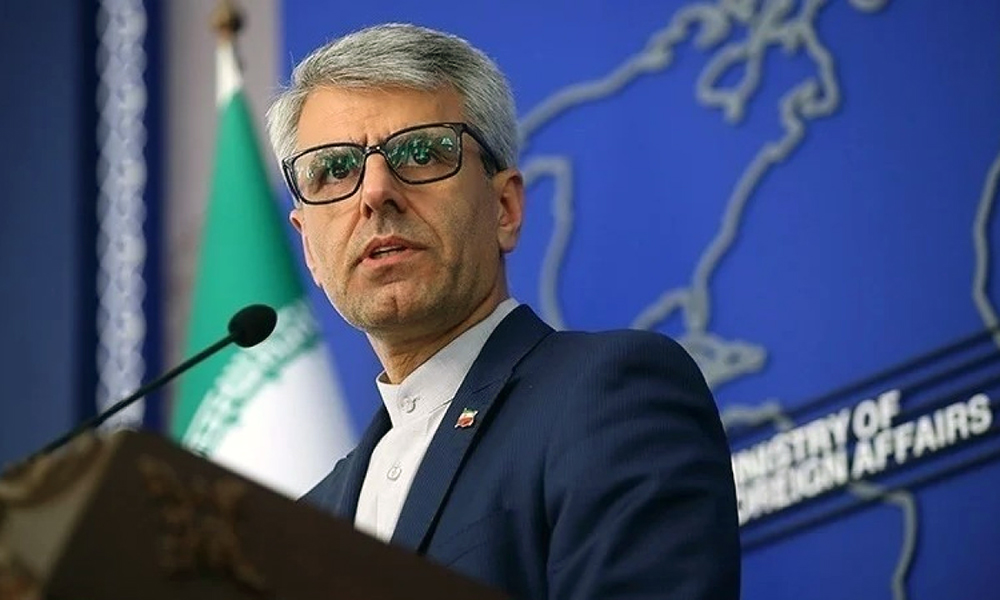
Iran’s Embassy in Kabul, citing Foreign Ministry spokesperson Esmaeil Baghaei, has stated that a number of Afghan citizens were killed or injured during what Tehran described as a 35-day military campaign carried out by the United States and Israel.
According to the statement, the Afghan nationals were living in Iran at the time of the attacks. Baghaei referred to them as “honored guests” of the country, adding that some lost their lives while others sustained injuries during the reported strikes.
He did not provide specific figures regarding the number of Afghan casualties or further details about the incidents.
As of now, authorities of the Islamic Emirate of Afghanistan have not issued an official response to the claims.
Latest News
Save the Children: Nearly one Afghan child killed or injured daily by explosive remnants
Despite the efforts of aid organizations and demining groups, the scale of the contamination remains overwhelming.
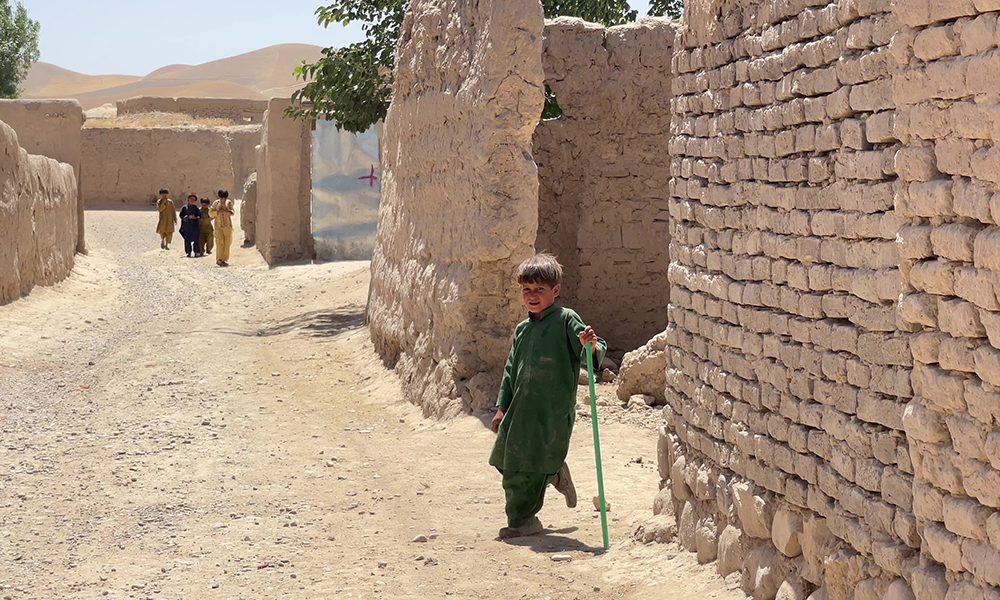
Save the Children has issued a stark warning, revealing that nearly one Afghan child is killed or injured every day by explosive remnants of war (ERW). In its latest report, the global humanitarian organization emphasized the ongoing and deadly impact of landmines and unexploded ordnance scattered across the country, a legacy of decades of conflict.
From January 2025 to January 2026, 338 Afghan children were killed, injured, or permanently disabled by explosive remnants. Shockingly, children represented nearly 70 percent of all casualties from such explosions during this period. Save the Children’s report underscores that Afghanistan continues to have the highest number of child casualties due to explosive remnants worldwide.
The report highlights that vast swathes of Afghanistan remain contaminated with hazardous materials, with more than 2.7 million people – including many children – living within one kilometer of these dangerous zones. These hazardous areas, often located in fields, pastures, and farmlands, remain uncleared despite ongoing demining efforts. Afghanistan is now considered one of the most contaminated countries globally, with nearly 5,000 hazardous sites still awaiting clearance.
The danger is particularly acute for rural and nomadic communities, including the Kuchi, who traverse long distances in search of water and grazing lands. These communities face severe challenges in accessing healthcare, education, and protection services, further compounding the risks posed by unexploded devices.
To address the growing threat, Save the Children has launched mobile awareness programs aimed at teaching children, particularly in remote and underserved regions, how to identify and avoid explosive hazards. These programs are crucial in helping to reduce the number of child casualties, as children are often unaware of the dangers in their environment.
Despite the efforts of aid organizations and demining groups, the scale of the contamination remains overwhelming. Funding shortages continue to hamper the progress of clearance operations, leaving families and children exposed to the deadly remnants of past conflicts.
“Explosive remnants of war are not just a legacy of Afghanistan’s past; they are an ongoing humanitarian emergency that continues to claim innocent lives,” said Save the Children. “The international community must step up its support to ensure the safety of Afghan children and accelerate efforts to clear these life-threatening hazards.”
As the country struggles to recover from years of conflict, the need for comprehensive and sustained demining operations, alongside better access to education and healthcare for at-risk communities, has never been more urgent.
Latest News
Eight dead after 5.8-magnitude earthquake hits Afghanistan
The family members who perished included a father, mother, four daughters, and two sons. In addition to the deaths, a child was reported injured in the incident.
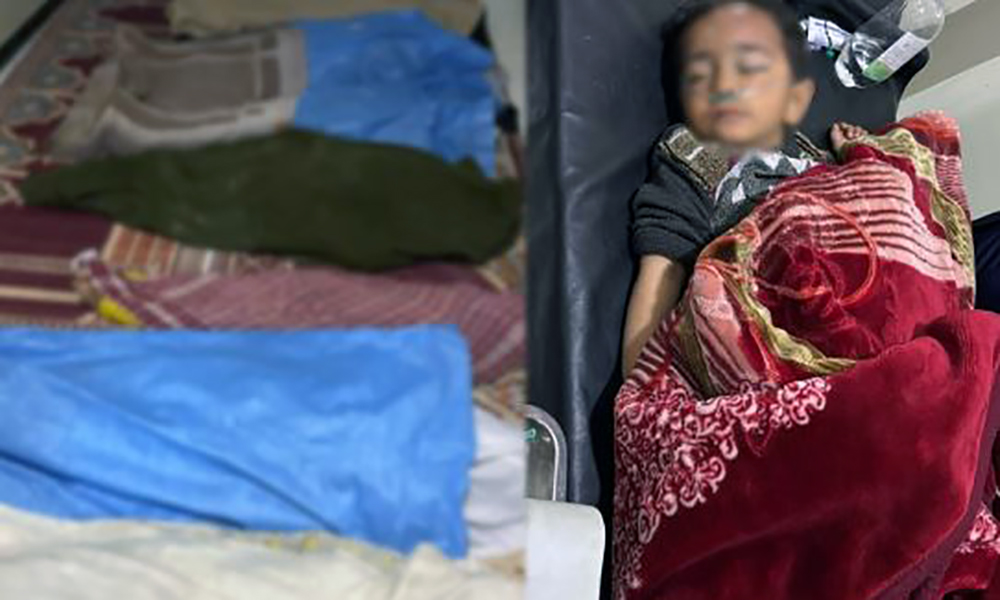
A powerful 5.8-magnitude earthquake struck Afghanistan on Friday, killing at least eight people and injuring a child when a house collapsed in Kabul. According to local officials, the victims were all members of the same family.
Hafiz Basharat, spokesperson for the Kabul Governor, confirmed that the fatalities occurred in the Bagrami district of Kabul. The family members who perished included a father, mother, four daughters, and two sons. In addition to the deaths, a child was reported injured in the incident.
The earthquake, which originated in the Hindu Kush region of Afghanistan, struck at a depth of approximately 177 kilometers, according to the German Research Centre for Geosciences. Tremors were felt across a wide area, including Kabul, Pakistan’s capital Islamabad, and India’s capital New Delhi.
Local authorities have yet to release additional details regarding the extent of the damage or any further casualties caused by the earthquake.
As rescue operations continue, Afghan authorities are assessing the full impact of the earthquake, which has left many concerned about the potential for more aftershocks in the region.


Kazakhstan eyes rare metals mining projects in Afghanistan and Rwanda

Afghan citizens reported among casualties in US, Israeli attacks, Iran says

Save the Children: Nearly one Afghan child killed or injured daily by explosive remnants

Eight dead after 5.8-magnitude earthquake hits Afghanistan

Punjab Kings clinch thrilling 5-wicket victory over Chennai Super Kings in IPL 2026

Prominent Muslim scholar issues fatwa calling for Afghanistan-Pakistan ceasefire

IEA Supreme Leader issues Eid-ul-Fitr message urging unity and support for Islamic system

14 Pakistani soldiers killed after military post falls along Durand line: MoD

Afghanistan steps in to replace Iran in supplying fruits and vegetables to Russia

Afghan airstrikes target Pakistani military sites in retaliation for air attacks

Tawsia: This week’s key economic developments in Afghanistan discussed

Tahawol: Start of talks between Kabul-Islamabad in China discussed

Saar: Ongoing US and Israeli attacks on Iran discussed

Tahawol: Ongoing US–Israeli war with Iran discussed

Saar: Afghanistan-Pakistan talks in China discussed
-
 Latest News5 days ago
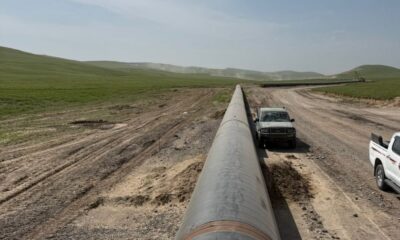
TAPI gas pipeline advances 25 km in Afghanistan
-
 Business5 days ago
Afghanistan opens doors to agribusiness investments amid rising opportunities
-
 Latest News3 days ago
Baradar approves 17 projects worth over one billion AFN
-
 Business4 days ago
Russia backs Uzbekistan–Afghanistan trade hub, praises regional economic cooperation
-
 Sport4 days ago
ATN secures broadcast rights for inaugural Afghanistan Wrestling Premier League
-

 Sport3 days ago
ATN to broadcast second season of Ariana Snooker Championship
-

 Sport4 days ago
Rajasthan Royals outclass Chennai Super Kings as IPL action continues
-
 Regional4 days ago
Gas pipeline blown up in southern Pakistan, says official