
Latest News
Afghanistan economic recovery buckles as nine in 10 families go hungry or into debt, UNDP says

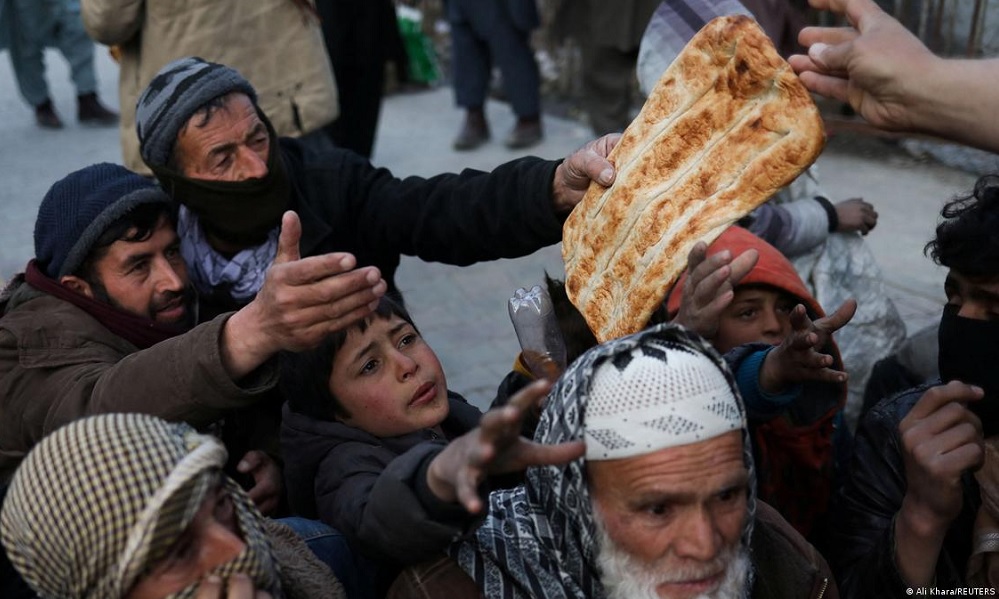
Afghanistan’s economic recovery is buckling as nine in 10 households are forced to skip meals, sell belongings or take on debt to survive, the United Nations said on Wednesday, warning that mass returns are exacerbating the country’s worst crisis since the Islamic Emirate returned to power.
A United Nations Development Programme report said nearly one in 10 overseas Afghans has been forced back home, with more than 4.5 million returnees since 2023, mainly from Iran and Pakistan, swelling the population by 10%. On top of that, earthquakes, floods and drought have destroyed 8,000 homes and strained public services “beyond their limits,” Reuters reported.
QUAKES, FLOODS AND HUNGER
A survey of more than 48,000 households found that more than half of Afghanistan’s returnees have skipped medical care to buy food and 45% rely on open springs or unprotected wells for water.
Nearly 90% of returning Afghan families are in debt, owing $373 to $900, up to five times the average monthly income of $100 and nearly half of annual per-capita gross domestic product, the UNDP said.
In areas with high numbers of returnees, one teacher serves 70 to 100 students, 30% of children work and joblessness among returnees reaches 95%. The average monthly income is 6,623 Afghanis ($99.76), while rents have tripled.
The UNDP warned that without urgent support to strengthen livelihoods and services in high-return areas, overlapping crises of poverty, exclusion and migration will deepen.
It said sustaining aid is critical as donor pledges have plunged since 2021, covering only a fraction of the $3.1 billion that the UN sought for Afghanistan this year.
The Taliban government appealed for international humanitarian assistance after a deadly quake struck eastern Afghanistan in September and it has formally protested Pakistan’s mass expulsion of Afghan nationals, saying it is “deeply concerned” about their treatment.
WOMEN BEAR THE BRUNT
Participation by women in Afghanistan’s labour force has fallen to 6%, one of the lowest globally, and restrictions on movement have made it nearly impossible for women who head households to access jobs, education or healthcare.
Kanni Wignaraja, UN assistant secretary-general and UNDP regional director for Asia and the Pacific, said, “In some provinces one in four households depend on women as the main breadwinner, so when women are prevented from working, families, communities, the country lose out.”
Households headed by women, accounting for as many as 26% of returnee families in some districts, face the highest risk of food insecurity and secondary displacement.
The UNDP urged donors to allocate more resources and called on the Islamic Emirate authorities to lift restrictions on female aid staff.
“Cutting women out of frontline aid work means cutting off vital services for those who need them most,” Wignaraja said.





Senior officials from the foreign ministries of Afghanistan and Russia held consultations in Kabul, focusing on expanding bilateral cooperation and strengthening regional engagement involving Afghanistan.
According to the Russian Foreign Ministry, the meeting was held between A.V. Pavlovsky, Director of the Second Asia Department of Russia’s Ministry of Foreign Affairs, and Abdul Hai Qanit, Director of the Third Political Department at Afghanistan’s Ministry of Foreign Affairs.
The two sides discussed cooperation in the political, economic, cultural, and humanitarian fields, as well as ways to strengthen regional interaction with Afghanistan’s participation.
The consultations underscore ongoing diplomatic engagement between Moscow and Kabul as the two countries continue to explore closer cooperation on regional and bilateral issues.
Latest News
Landmines and unexploded ordnance kill, injure 175 in Afghanistan in first five months of 2026
UNOCHA spokesperson Olga Cherevko said Afghanistan ranks as the world’s third most affected country in terms of casualties caused by unexploded ordnance.
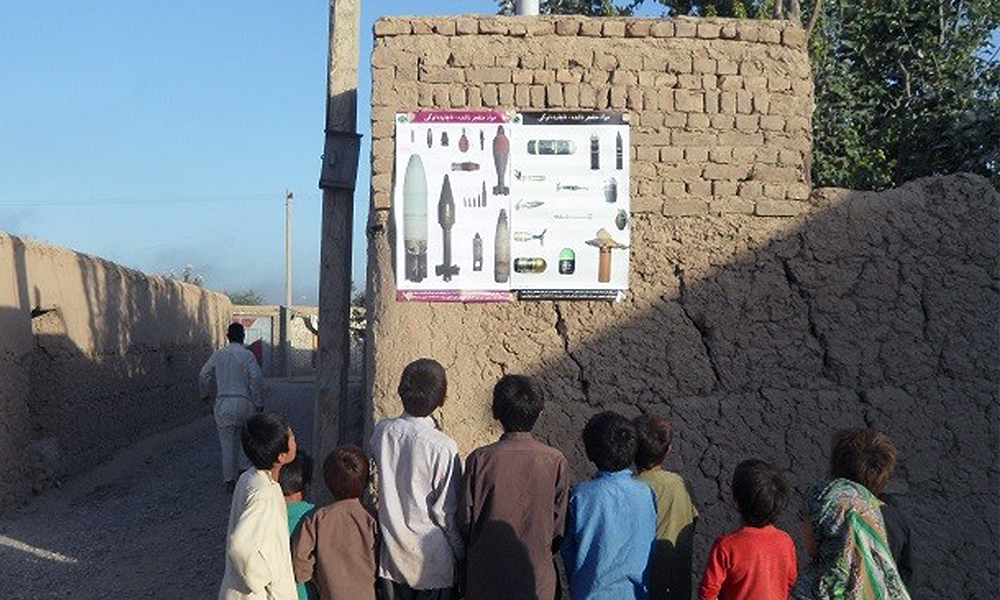
At least 175 people were killed or injured by landmines and unexploded ordnance (UXO) in Afghanistan between January and May 2026, with children accounting for 75 percent of the casualties, the United Nations Office for the Coordination of Humanitarian Affairs (UNOCHA) said on Thursday.
In a post on X, UNOCHA warned that mine action programs in Afghanistan are facing a severe funding shortfall. The agency said $14.5 million is required to sustain demining operations this year, but only $3.6 million had been secured by June.
“Urgent support can prevent further casualties,” UNOCHA said, warning that funding shortages are threatening life-saving mine clearance activities across the country.
During a visit to eastern Afghanistan, UNOCHA spokesperson Olga Cherevko said Afghanistan ranks as the world’s third most affected country in terms of casualties caused by unexploded ordnance.
She said children account for around 80 percent of those casualties, while an average of 50 people are killed or injured every month by landmines and explosive remnants of war.
Cherevko said mine clearance and explosive ordnance risk education are essential to protecting communities by removing explosive hazards and raising public awareness.
However, she warned that many programs are being scaled back or suspended because of critical funding shortages despite the continuing threat.
“Every unexploded munition left in the ground puts another life at risk,” Cherevko said.
Afghanistan remains one of the world’s most heavily contaminated countries with landmines and explosive remnants of decades of conflict. Many hazardous areas are located near villages, farmland, schools and roads, placing civilians—particularly children—at constant risk. Humanitarian organizations say children are especially vulnerable because they often mistake unexploded ordnance for toys or scrap metal.
Figures released by Afghanistan’s National Disaster Preparedness Authority also highlight the scale of the problem. The authority recorded 225 landmine- and UXO-related incidents between April 1, 2025, and March 31, 2026, resulting in 474 casualties, including 96 deaths and 378 injuries.
According to the authority, 321 of the victims were children and 153 were adults, while 380 were male and 94 were female. The eastern province of Kunar recorded the highest number of incidents, followed by Farah, with Nangarhar, Herat and Kandahar also among the hardest-hit provinces.
Humanitarian agencies have repeatedly warned that without additional donor funding, mine clearance operations and community risk education programs could be significantly reduced, increasing the danger to civilians and slowing efforts to make contaminated land safe for agriculture, housing and public use.
Latest News
Afghan motorcyclist completes six-month journey across all 34 provinces
He said the country’s improved security was the key factor that enabled him to undertake the nationwide tour.
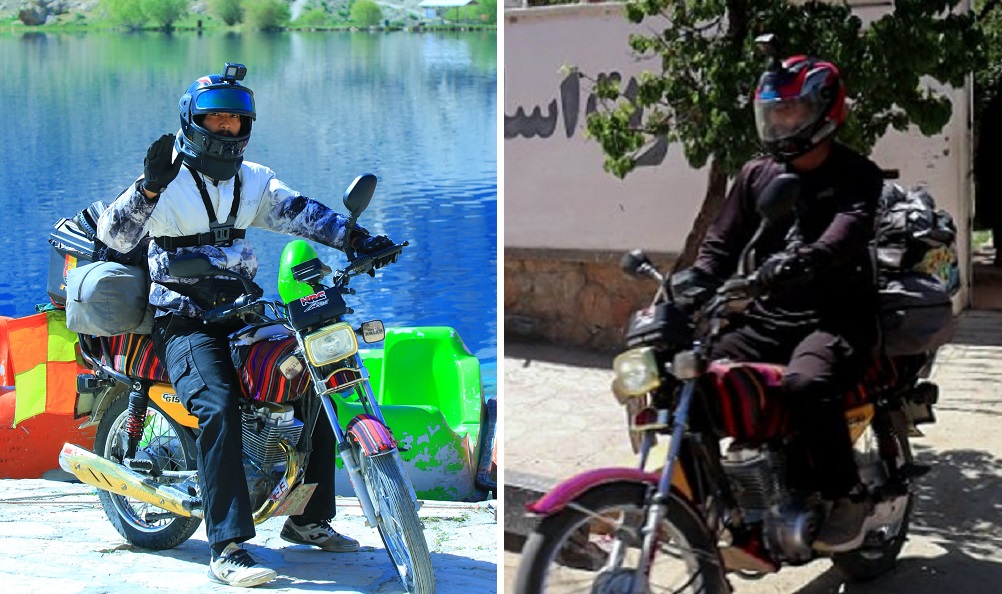
An Afghan traveler has completed a six-month motorcycle journey across all 34 provinces of the country, a trip he said was inspired by his passion for exploring Afghanistan’s diverse cultures and traditions.
According to the Ministry of Information and Culture, Sayed Sajjad Sadat, a resident of Herat originally from Ghazni province, traveled through all 34 provinces and visited more than 80 districts before concluding his journey in Logar province.
Sadat said the purpose of his trip was to meet people from different ethnic communities, learn about their customs, traditions, and cultural heritage, and help promote a better understanding of Afghanistan’s diversity.
He said the country’s improved security was the key factor that enabled him to undertake the nationwide tour.
Sawab Jan Islamyar, Director of Information and Culture in Logar, praised Sadat’s initiative, saying the journey demonstrates that visitors can travel across Afghanistan to experience its natural landscapes, historical landmarks, and rich cultural heritage.
He added that the prevailing security situation has created opportunities for both domestic and international tourists to visit different parts of the country with confidence.


Afghan, Russian officials discuss expanding bilateral cooperation in Kabul

Landmines and unexploded ordnance kill, injure 175 in Afghanistan in first five months of 2026

Afghan motorcyclist completes six-month journey across all 34 provinces

Iran-Afghanistan joint chamber of commerce delegation arrives in Kabul to boost trade ties

UNOCHA warns of deepening humanitarian crisis in Afghanistan as funding gap widens

Norway’s Viking-inspired World Cup team photo goes viral

TAPI project advances in Afghanistan as 84kms of pipeline laid

Afghanistan’s trade with Central Asia records sharp growth

Gaikwad set to replace injured Kohli for Afghanistan ODI Series

Iran banks hit by major cyber attack

Tahawol: Afghanistan’s retaliatory attacks against Pakistan discussed

Saar: Uzbekistan-Qatar support for Afghanistan’s development disucssed

Tahawol: Reactions to Pakistan’s attacks on Afghanistan discussed

Saar: Reaction to Pakistan’s airstrikes on Afghan soil discussed

Tahawol: Pakistan’s attacks on civilians in Afghanistan
-
 Business4 days ago
Afghanistan eyes direct Basmati rice imports from India amid tensions with Pakistan
-
 Latest News4 days ago
Afghan minister says ‘outsiders’ should not claim to support Afghanistan’s independence
-

 Sport4 days ago
Afghanistan, Uzbekistan set for friendly cricket clash in Khost
-

 Sport2 days ago
Afghanistan U-15 team qualifies for FIFA U-15 World Cup
-

 International Sports4 days ago
FIFA World Cup group stage wraps up; moves into high-stakes knock out round
-

 International Sports3 days ago
Canada makes World Cup history with late goal to eliminate South Africa
-
 Latest News3 days ago
Khalilzad condemns Pakistani airstrikes, questions Islamabad’s intentions
-
 Regional4 days ago
Iran, US continue escalating attacks, recriminations over peace deal