
Latest News
Afghanistan receives $53 million fund in 2023 for affected communities: OCHA

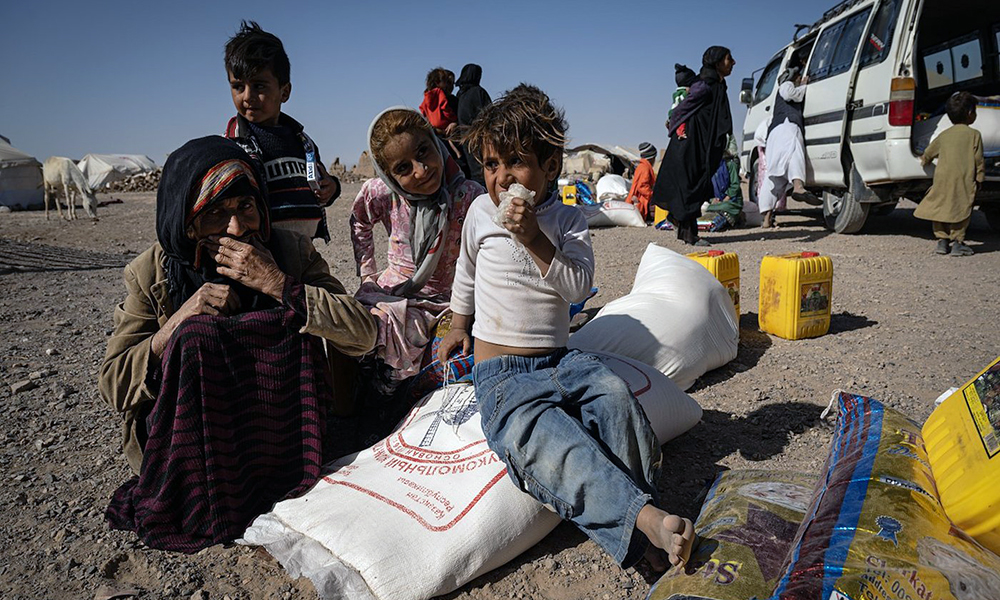
In 2023, Afghanistan received $53 million from the UN’s Central Emergency Response Fund (CERF), making it the second-highest recipient of CERF funding globally, OCHA said in a report.
According to the report, OCHA-managed Pooled Funds, CERF and the Afghanistan Humanitarian Fund (AHF) work in complementarity to maximize effectiveness and strengthen ways to deliver results for affected communities.
In March, amid some of the world’s highest levels of hunger, Afghanistan received $18 million from CERF’s Rapid Response window. At the time, a staggering 17.2 million people in Afghanistan did not know where their next meal would come from. They included 3.8 million people experiencing emergency levels of food insecurity, read the report.
With this funding, almost 390,000 people across Badghis, Daikundi, Ghor and Uruzgan provinces received in-kind and cash assistance to meet their immediate food needs and emergency resilience and livelihoods support. This helped families meet the required intake of 2,100 kilocalories per person per day, preventing a worsening of food security and malnutrition, the report added.
Since the CERF funding was disbursed, the food security outlook in Afghanistan has slightly improved; the number of people projected to experience acute hunger between November 2023 and March 2024 is down from an estimated 18.3 million to 15.8 million. The number of people enduring emergency levels of food insecurity also decreased, from 5.1 million to 3.5 million, according to the report.
In parallel with the CERF allocation, the AHF released $12.9 million to empower and build national NGOs’ capacity to deliver assistance. This makes the AHF the first Country-Based Pooled Fund to initiate an allocation dedicated to localization.
The report stated that in September 2023, with winter rapidly approaching and many programs facing disruption due to severe funding shortages, Afghanistan received a crucial $20 million allocation from CERF’s Underfunded Emergencies window.
It proved life-saving, as it helped Afghan families living in substandard and inadequate shelters, and it mitigated the heightened risks of exposure-related illnesses, including hypothermia and acute respiratory infections.
It also complemented the AHF’s largest allocation in 2023 of $109 million, released in August for multisector activities to prepare for harsh winter weather. The allocation reinforced ongoing efforts to avert the risk of famine during winter and improve people’s food security, thereby preserving the improvements made in hunger and nutrition since August 2021 due to the humanitarian system’s scale-up.
In October, a series of 6.3-magnitude earthquakes struck Herat Province in Afghanistan’s western region, killing several thousand people and injuring scores more.
The earthquakes affected some 275,000 people, with more than 40,000 homes either destroyed and significantly or moderately damaged.
To kick-start initial relief efforts, CERF allocated $5 million through its Rapid Response window. This served as a top-up to a $5 million emergency reserve allocation from the AHF that was released to partners within 24 hours of the first earthquake. This expedited allocation was pivotal in quickly delivering essential humanitarian aid to families who had lost their homes and livelihoods.
These funds enabled humanitarian partners to provide vital assistance. To date, they have reached more than 242,000 people, including 146,700 people with emergency shelter (tents), non-food items (blankets, tarpaulins, kitchen sets), cash assistance, food and nutrition items, drinkable water, protection services and winterization items, such as plastic sheets and warm winter clothes.
Following the Government of Pakistan’s “Illegal Foreigners Deportation Plan” decree, which came into effect on 1 November 2023, the UN in Afghanistan has observed a marked increase in the arrival of Afghans from Pakistan. At one point in early November, the daily influx exceeded 17,000 people, a stark contrast to the previous daily average of 260 people.
More than 80 percent of those returning are women and children.
In response, CERF provided $10 million to improve the response to people arriving at the border, providing registration services, health services, aid distribution, family unification support, child protection, psychosocial support and legal aid. These services are vital, as families endure harrowing and traumatic journeys back to Afghanistan. Many returnees have not lived there for several decades, and they have limited or no familial ties in the areas they’re returning to.
CERF’s Rapid Response and Underfunded Emergencies windows are crucial in providing essential funding to critical operations and life-saving programs across Afghanistan. They contribute to famine prevention, easing additional burdens on women and girls—from mental health risks to gender-based violence—and they support activities such as mine surveillance and clearance, emergency shelter, education and access to clean water. For thousands of families, this support is their only protection from a freezing winter.
So far this year, the Pooled Funds have allocated $188 million (CERF: $53 million; AHF: $135 million) to support and enable time-critical humanitarian action in Afghanistan, including to people affected by natural disasters and sudden-onset crises.












Kazakhstan’s Foreign Minister Mukhtar Tileuberdi has called for pragmatic and coordinated international engagement with Afghanistan, saying the country’s long-term stability is closely linked to the security and sustainable development of Central Asia.
Speaking during the general debate of the 81st session of the United Nations General Assembly in New York on Friday, Tileuberdi said humanitarian assistance to Afghanistan remains essential but alone cannot break the cycle of poverty, displacement and dependency.
He said Kazakhstan supports a “pragmatic, coordinated and step-by-step” approach to international engagement with Afghanistan, with the United Nations playing a central role.
Tileuberdi also said Kazakhstan is working with the UN to operationalize the United Nations Regional Centre for the Sustainable Development Goals for Central Asia and Afghanistan in Almaty.
He said the success of the centre should be measured by the results and assistance it delivers to the region.


Abu Muslim Farah defeat Khurasan Faryab 2-0 in ACL season six

Saar: Concerns over Pakistan’s political crisis discussed

Afghanistan Champions League: Omar Zawak Herat beat Toofan Herat 1-0

Blast in Pakistan’s Dera Ismail Khan kills 11, injures 30

Ariana Afghan Airlines increases Kabul-Delhi cargo flights

Saudi energy group signs major Afghanistan deals covering gas exploration and pipeline plans

Trump floats idea of renaming Atlantic or Pacific Ocean

US hits Egyptian bank branches with Iran sanctions as war marks six months

Nepal flood rescue mission enters critical phase as thousands remain missing

Iranian clubs to face Gulf opponents at neutral venues in Asian Champions League Elite
Saar: Concerns over Pakistan’s political crisis discussed

Exclusive interview with Abdul Latif Mansoor, Minister of MRRD

Tawsia: Overview of Afghanistan’s iron mines

Tahawol: Discussion on fresh Pakistani airstrikes on Afghanistan

Saar: Calls for international support for Afghanistan discussed
-

 World5 days ago
CNN, MS NOW and Politico sue Trump, challenging White House ban
-

 Latest News3 days ago
Ariana Afghan Airlines ranks seventh among 45 Central Asian airlines
-

 Latest News5 days ago
UN reiterates call for respect for international law after Kunar airstrikes
-

 Regional4 days ago
US and Iran hold first talks since June after Trump’s ‘annihilation’ threat
-

 Latest News3 days ago
Silk Road highway in Wakhan corridor now reaches the China border
-

 Latest News5 days ago
Afghan Official: Pakistan’s airstrikes will not go unanswered
-

 Regional5 days ago
G7 foreign ministers call on Iran to stop arming Houthis
-

 Regional3 days ago
Iran airlines cancel flights as US sanctions hit