
Latest News
Biden ‘ignored advice’ on US troops withdrawal from Afghanistan: Khalilzad

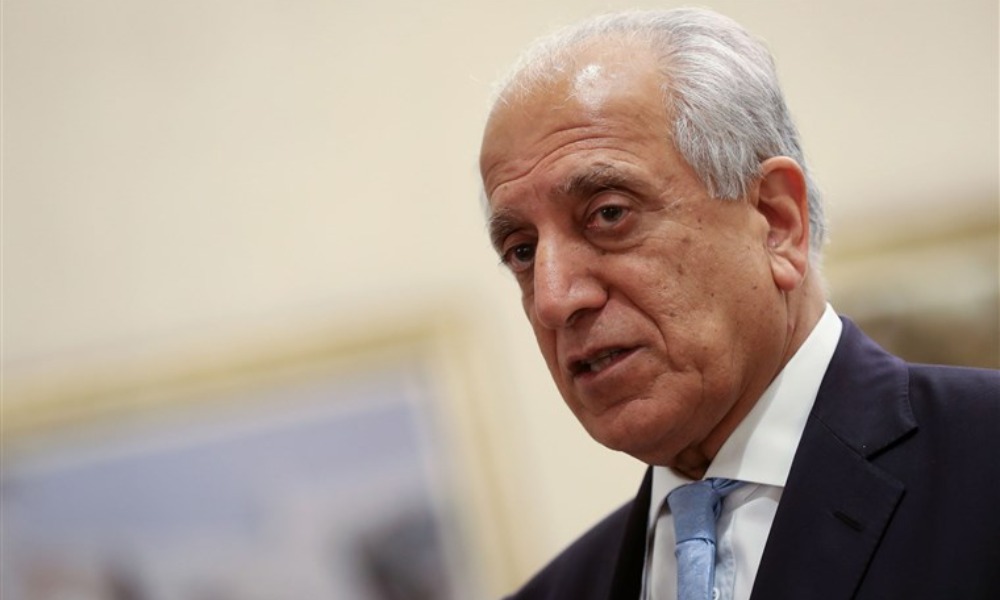
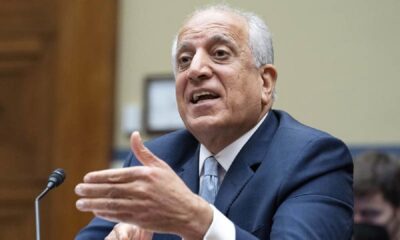
US President Joe Biden ignored the counsel of senior US diplomats, including Secretary of State Antony Blinken, who urged him not to pull US troops out of Afghanistan without certain conditions in place, former Special Representative for Afghanistan Reconciliation Zalmay Khalilzad told the House Committee on Foreign Affairs in a transcribed interview released Wednesday.
Khalilzad — who helped negotiate the Doha agreement that led to the complete withdrawal of troops – testified that Biden could have stopped or altered the plan to remove all US forces from Afghanistan by September 2021.
“The State Department — or the secretary and myself, we wanted a conditional withdrawal approach,” he said. “But the ultimate decision was, as we all know, that it was to withdraw based on a timetable.”
Khalilzad said he recommended that the Islamic Emirate and the Afghanistan government at the time reach a separate peace agreement before US troops left the country.
“Secretary Blinken and I, I believe, did recommend that conditionality. That’s my judgment, that conditionality would be the prudent thing to do,” Kalilzad told the committee in his Nov. 8 interview. “But then the response was, ‘Can you get the other side – the Talibs (Islamic Emirate) – not to go back to fighting?”
In his testimony, Khalilzad said such an agreement could have been based on an early 2021 peace negotiation that Khalilzad said visualized a “peace government,” which would have given the Islamic Emirate an equal share of power over Kabul with the then Western-backed Afghan government.
“It was essentially kind of a power-sharing formula that our experts had put together in consultation with outside experts in which the government consists of individuals with ties to both – from the Afghan Government and the Taliban – and be led by somebody acceptable to both sides,” he told the committee.
He said that when reaching such a conditional agreement appeared unlikely, Biden instead decided to move forward with the pullout to avoid IEA attacks on US forces.
Khalilzad said the sudden lack of US support helped enable the Islamic Emirate to retake power, 15 days before the last American service member left the capital.
Khalilzad also told lawmakers that State Department officials had predicted the power-sharing initiative would not have lasted longer than three years without a continued US presence in the country.
He also said at points throughout negotiations with the Islamic Emirate, there were times he believed that the IEA “negotiated merely as a stall tactic to wait out the U.S. until its military forces withdrew to zero.”
Khalilzad believed Biden’s announcement in April 2021 to withdraw all U.S troops negatively affected the morale of the Afghan government forces. He explained that: “The U.S. withdrawal had a psychological impact and negatively affected the relative balance of power for the government. That’s obvious.”




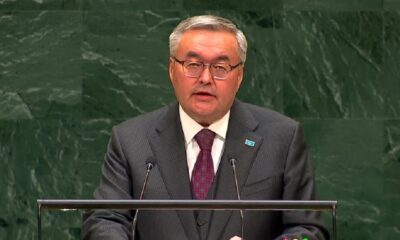




Kazakhstan’s Foreign Minister Mukhtar Tileuberdi has called for pragmatic and coordinated international engagement with Afghanistan, saying the country’s long-term stability is closely linked to the security and sustainable development of Central Asia.
Speaking during the general debate of the 81st session of the United Nations General Assembly in New York on Friday, Tileuberdi said humanitarian assistance to Afghanistan remains essential but alone cannot break the cycle of poverty, displacement and dependency.
He said Kazakhstan supports a “pragmatic, coordinated and step-by-step” approach to international engagement with Afghanistan, with the United Nations playing a central role.
Tileuberdi also said Kazakhstan is working with the UN to operationalize the United Nations Regional Centre for the Sustainable Development Goals for Central Asia and Afghanistan in Almaty.
He said the success of the centre should be measured by the results and assistance it delivers to the region.


Ariana Afghan Airlines increases Kabul-Delhi cargo flights

Khalilzad questions Pakistan’s commitment to Afghan welfare

India, UN envoy discuss Afghanistan’s humanitarian needs

Kazakhstan calls for coordinated international engagement with Afghanistan

Pakistan PM, UN chief discuss Afghanistan amid rising Kabul-Islamabad tensions

Saudi energy group signs major Afghanistan deals covering gas exploration and pipeline plans

Trump floats idea of renaming Atlantic or Pacific Ocean

US hits Egyptian bank branches with Iran sanctions as war marks six months

Nepal flood rescue mission enters critical phase as thousands remain missing

Iranian clubs to face Gulf opponents at neutral venues in Asian Champions League Elite

Exclusive interview with Abdul Latif Mansoor, Minister of MRRD

Tawsia: Overview of Afghanistan’s iron mines

Tahawol: Discussion on fresh Pakistani airstrikes on Afghanistan

Saar: Calls for international support for Afghanistan discussed

Tahawol: Opening of the 81st UN General Assembly Session
-

 Sport5 days ago
Afghanistan to face Japan and Nepal in Asian Games cricket group stage
-

 World4 days ago
CNN, MS NOW and Politico sue Trump, challenging White House ban
-
 Health5 days ago
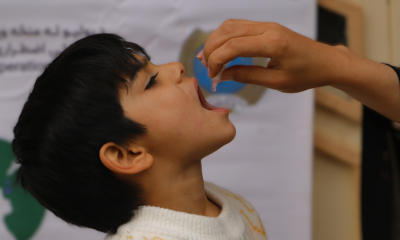
Four-day polio vaccination campaign begins across Afghanistan
-

 Latest News3 days ago
Ariana Afghan Airlines ranks seventh among 45 Central Asian airlines
-

 Latest News4 days ago
UN reiterates call for respect for international law after Kunar airstrikes
-
 Latest News5 days ago
Khalilzad condemns Pakistan airstrikes, says current strategy is not working
-

 Regional3 days ago
US and Iran hold first talks since June after Trump’s ‘annihilation’ threat
-

 Latest News3 days ago
Silk Road highway in Wakhan corridor now reaches the China border