
Latest News
Camps being set up in Nangarhar, Kandahar for returning refugees

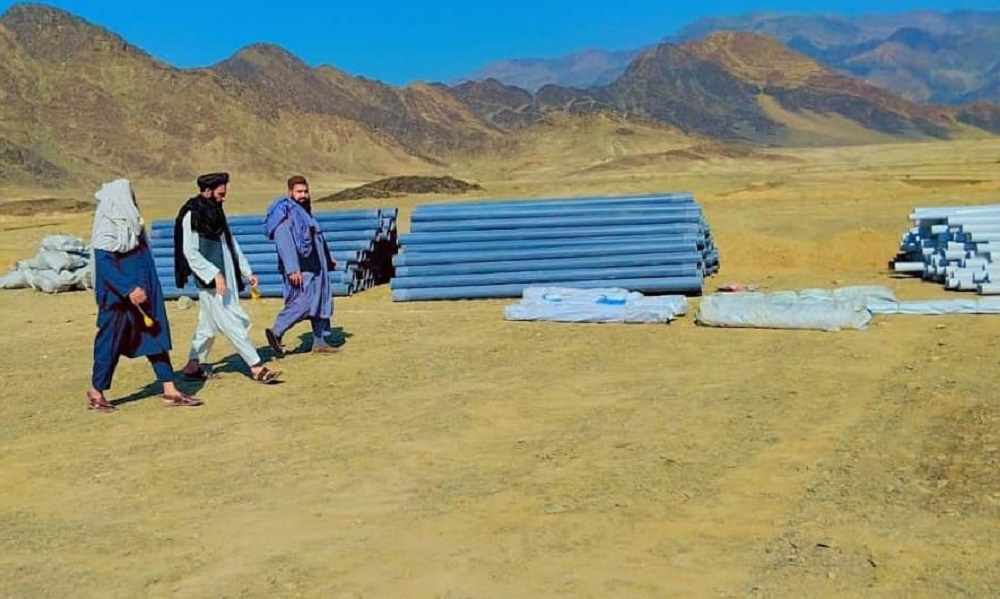
Authorities are setting up temporary camps in Nangarhar and Kandahar provinces as return of refugees has increased sharply due to Pakistan’s crackdown.
Local officials in Nangarhar said that they are providing facilities for refugees returning from Pakistan.
According to the officials, a camp is being built in Lalpur district of Nangarhar province, and returnees will be taken care of in the camp.
The majority of Afghans who voluntarily return or get deported from Pakistan use the Torkham crossing.
“Construction of the camp is going on, and returnees from remote provinces or those who have no home here can live in this camp for some days until they return to their provinces, and in this camp, all the facilities for returnees will be provided,” said Saeedullah Banuri, the deputy governor of Nangarhar.
Meanwhile, Nangarhar Department of Public Health said their health teams provide health services to the returnees round the clock.
“During the day, all health teams, including women’s health workers, are present in Torkham, and during the night, four health teams provide services to the people,” said Abdulla Azizi, deputy director of Nangarhar public health.
Officials in the provincial Department of Refugees and Repatriation said that up to 4,000 refugees return from Pakistan every day.
“They forced us out, and on the way the Pakistani police took money from us up to 5,000 from each vehicle leaving, and there is a lot of oppression going on against Afghans,” said Gul Ahmad, a returnee from Pakistan.
“One of my sons is still in prison in Pakistan. I was also arrested and 86,000 Pakistani rupees were taken from me. Our request from the government is that it should support Afghans who return from Pakistan because they are very poor,” said Silabzai, a returnee from Pakistan.
Nangarhar Department of Refugees and Repatriation said that since the return of migrants is increasing, they have facilitated the processing and registration process.
“We have increased the number of employees and returnees will be registered even if the number increases, that is why we will build this camp so that they can stay here until their registration process is completed and later they would go to their provinces and districts,” said Baz Mohammad Abdurrahman, head of Nangarhar Department of Refugees and Repatriation.
According to the officials, the returnees who do not have home in Afghanistan will also have the support of some international organizations.
In the meantime, the Ministry of Refugees and Repatriation said that a temporary camp will be built in the Spin Boldak district of Kandahar province for Afghan refugees who are deported from Pakistan.
The acting minister of refugees said that a delegation from Kabul visited Kandahar to start the construction of the camp.
A number of those who have returned from Pakistan say that the government should address their problems as soon as possible.
Pakistan has set November 1 as deadline for illegal migrants to leave the country.
“We want to build temporary camps with all the facilities for the returnees until they are cleared and then they are transferred to their permanent places,” said Khalil ul-Rahman Haqqani, acting minister of refugees.
A number of those returning from Pakistan want the government to speed up the registration of returnees.
“We haven’t received any help since we came, and we want to be helped,” said Raz Mohammad, a returnee from Pakistan.
Acting minister of refugees, however, said that they have increased the facilities in Kandahar several times to address the problem of returnees.
Pakistan is deporting refugees despite calls by the international organizations to suspend the process.












Kazakhstan’s Foreign Minister Mukhtar Tileuberdi has called for pragmatic and coordinated international engagement with Afghanistan, saying the country’s long-term stability is closely linked to the security and sustainable development of Central Asia.
Speaking during the general debate of the 81st session of the United Nations General Assembly in New York on Friday, Tileuberdi said humanitarian assistance to Afghanistan remains essential but alone cannot break the cycle of poverty, displacement and dependency.
He said Kazakhstan supports a “pragmatic, coordinated and step-by-step” approach to international engagement with Afghanistan, with the United Nations playing a central role.
Tileuberdi also said Kazakhstan is working with the UN to operationalize the United Nations Regional Centre for the Sustainable Development Goals for Central Asia and Afghanistan in Almaty.
He said the success of the centre should be measured by the results and assistance it delivers to the region.


Abu Muslim Farah defeat Khurasan Faryab 2-0 in ACL season six

Saar: Concerns over Pakistan’s political crisis discussed

Afghanistan Champions League: Omar Zawak Herat beat Toofan Herat 1-0

Blast in Pakistan’s Dera Ismail Khan kills 11, injures 30

Ariana Afghan Airlines increases Kabul-Delhi cargo flights

Saudi energy group signs major Afghanistan deals covering gas exploration and pipeline plans

Trump floats idea of renaming Atlantic or Pacific Ocean

US hits Egyptian bank branches with Iran sanctions as war marks six months

Nepal flood rescue mission enters critical phase as thousands remain missing

Iranian clubs to face Gulf opponents at neutral venues in Asian Champions League Elite
Saar: Concerns over Pakistan’s political crisis discussed

Exclusive interview with Abdul Latif Mansoor, Minister of MRRD

Tawsia: Overview of Afghanistan’s iron mines

Tahawol: Discussion on fresh Pakistani airstrikes on Afghanistan

Saar: Calls for international support for Afghanistan discussed
-

 World5 days ago
CNN, MS NOW and Politico sue Trump, challenging White House ban
-

 Latest News4 days ago
Ariana Afghan Airlines ranks seventh among 45 Central Asian airlines
-

 Latest News5 days ago
UN reiterates call for respect for international law after Kunar airstrikes
-

 Regional4 days ago
US and Iran hold first talks since June after Trump’s ‘annihilation’ threat
-

 Latest News4 days ago
Silk Road highway in Wakhan corridor now reaches the China border
-

 Regional3 days ago
Iran airlines cancel flights as US sanctions hit
-

 Latest News5 days ago
Afghan Official: Pakistan’s airstrikes will not go unanswered
-
 Regional5 days ago
G7 foreign ministers call on Iran to stop arming Houthis