
Latest News
CIA ran secret program to undermine Afghanistan’s opium industry, report reveals
The Afghan Ministry of Interior recently announced that narcotics-related cultivation, trade, and trafficking have been “effectively reduced to zero” inside the country.

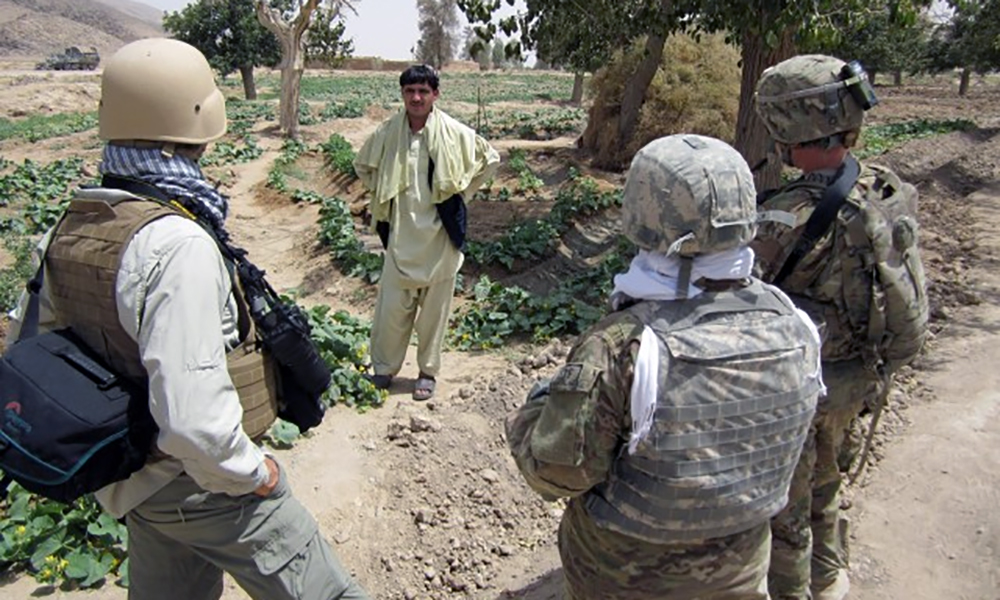
The Central Intelligence Agency (CIA) secretly carried out a covert operation between 2004 and 2015 aimed at weakening Afghanistan’s opium industry by dispersing genetically modified poppy seeds, according to an investigative report by The Washington Post.
The decade-long program allegedly sought to reduce the narcotic potency of Afghan poppies, thereby disrupting the billion-dollar opium trade.
Aerial Distribution and Presidential Authorization
Citing 14 sources familiar with the classified operation, The Washington Post reported that the CIA airdropped specially engineered poppy seeds across Afghanistan’s key opium-producing provinces, including Helmand and Nangarhar. The seeds were designed to yield plants with minimal levels of alkaloids — the chemical compounds used in heroin production.
The operation was reportedly authorized by President George W. Bush and later continued under the Obama administration, managed through the CIA’s Crime and Narcotics Center. British C-130 aircraft were used in the early phases to disperse the modified seeds over vast tracts of farmland.
Former U.S. officials described the initiative as “tremendously expensive,” acknowledging that despite years of effort, the program produced mixed results and failed to significantly reduce Afghanistan’s role as the world’s top opium supplier.
Limited Success and Lingering Impact
While the CIA has not publicly commented on the report, sources said the program’s overall impact was limited, as Afghan farmers continued cultivating traditional, high-yield poppy varieties. By the time the operation was phased out in 2015, Afghanistan’s opium production remained central to both the national economy and insurgent funding networks.
The revelation underscores the breadth of U.S. intelligence operations aimed at disrupting narcotics financing in conflict zones during the two-decade war in Afghanistan.
Post-2022 Context: Opium cultivation declines under IEA ban
Since the Islamic Emirate of Afghanistan (IEA) imposed a nationwide ban on opium cultivation in 2022, production within Afghanistan has fallen sharply. However, analysts warn the narcotics trade is now shifting to neighboring countries, including Pakistan and Iran.
According to Nikkei Asia, Afghanistan’s opium cultivation dropped to about 10,200 hectares in 2025 — a 20% decline from the previous year. The UK-based geospatial firm Alcis offered a slightly higher estimate of 12,800 hectares, but confirmed that cultivation levels remain dramatically below the 200,000 hectares recorded before the IEA ban.
The Afghan Ministry of Interior recently announced that narcotics-related cultivation, trade, and trafficking have been “effectively reduced to zero” inside the country. Authorities said nearly 200,000 kilograms of natural and synthetic drugs were seized and destroyed over the past year.
The CIA’s now-exposed program, combined with Afghanistan’s recent anti-narcotics drive, highlights the long-standing geopolitical and economic complexity surrounding opium production in the region.
While the IEA’s ban has sharply reduced cultivation inside Afghanistan, experts caution that the regional narcotics economy is merely evolving — not disappearing.












Kazakhstan’s Foreign Minister Mukhtar Tileuberdi has called for pragmatic and coordinated international engagement with Afghanistan, saying the country’s long-term stability is closely linked to the security and sustainable development of Central Asia.
Speaking during the general debate of the 81st session of the United Nations General Assembly in New York on Friday, Tileuberdi said humanitarian assistance to Afghanistan remains essential but alone cannot break the cycle of poverty, displacement and dependency.
He said Kazakhstan supports a “pragmatic, coordinated and step-by-step” approach to international engagement with Afghanistan, with the United Nations playing a central role.
Tileuberdi also said Kazakhstan is working with the UN to operationalize the United Nations Regional Centre for the Sustainable Development Goals for Central Asia and Afghanistan in Almaty.
He said the success of the centre should be measured by the results and assistance it delivers to the region.


Abu Muslim Farah defeat Khurasan Faryab 2-0 in ACL season six

Saar: Concerns over Pakistan’s political crisis discussed

Afghanistan Champions League: Omar Zawak Herat beat Toofan Herat 1-0

Blast in Pakistan’s Dera Ismail Khan kills 11, injures 30

Ariana Afghan Airlines increases Kabul-Delhi cargo flights

Saudi energy group signs major Afghanistan deals covering gas exploration and pipeline plans

Trump floats idea of renaming Atlantic or Pacific Ocean

US hits Egyptian bank branches with Iran sanctions as war marks six months

Nepal flood rescue mission enters critical phase as thousands remain missing

Iranian clubs to face Gulf opponents at neutral venues in Asian Champions League Elite
Saar: Concerns over Pakistan’s political crisis discussed

Exclusive interview with Abdul Latif Mansoor, Minister of MRRD

Tawsia: Overview of Afghanistan’s iron mines

Tahawol: Discussion on fresh Pakistani airstrikes on Afghanistan

Saar: Calls for international support for Afghanistan discussed
-

 World5 days ago
CNN, MS NOW and Politico sue Trump, challenging White House ban
-

 Latest News3 days ago
Ariana Afghan Airlines ranks seventh among 45 Central Asian airlines
-

 Latest News4 days ago
UN reiterates call for respect for international law after Kunar airstrikes
-

 Regional3 days ago
US and Iran hold first talks since June after Trump’s ‘annihilation’ threat
-

 Latest News3 days ago
Silk Road highway in Wakhan corridor now reaches the China border
-

 Latest News4 days ago
Afghan Official: Pakistan’s airstrikes will not go unanswered
-

 Sport4 days ago
Afghan boxing referee heads to China for international festival
-
 Regional5 days ago
G7 foreign ministers call on Iran to stop arming Houthis