
Latest News
Death toll from Ida remnants rises to 65 in US

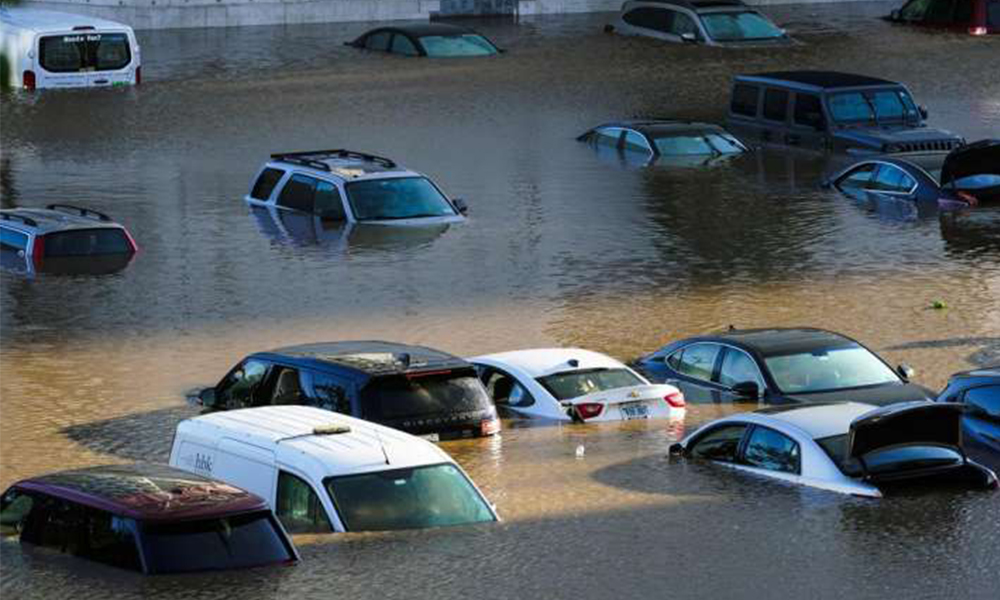
Torrential rains, floods, and tornadoes triggered by Storm Ida remnants claimed at least 65 lives across the United States as of Saturday, U.S. media reported.
Storm Ida also caused damage to residential buildings and infrastructures and led to water and power outages. Under its impact, some hard-hit areas of the United States have yet to return to normal life.
Ida remnants dumped rain at sometimes unprecedented rates on Wednesday night in the region, triggering floods that poured into subway stations and submerged homes and vehicles on highways.
Parts of New Jersey are still recovering from Ida’s impact. Earlier, New Jersey Governor Phil Murphy said the state was still not out of the woods, and his biggest concern lies in the further response to the still-high water levels and damages from Ida.
Infrastructures and residential buildings were destroyed in parts of New Jersey, with some residents saying their neighborhoods were almost completely destroyed by Ida.
New York state was also one of the hardest hit by Ida, with heavy rains submerging many parts of the city and flooding into low-lying areas.
U.S. media reported that at least 11 people, mostly immigrants and low-income groups, were killed when floodwaters submerged basement apartments in New York City.
The situation in Louisiana also remains grim. Local life is still not back to normal days after the storm. Statistics showed that over one million households in the state have suffered power outages, and the daily water supply to 600,000 people has been affected.
In addition, some nursing homes in Louisiana were reported to have failed to evacuate residents in time, and staff members even disappeared before the storm, leaving some elderly residents waiting for help without water or power.
At least six nursing home residents died after being evacuated, and their deaths are still under investigation, according to local media.
Many Americans expressed strong dissatisfaction and anger over the government’s poor response to the storm. Some accused the government of slow response and lack of an effective emergency plan. Others believed some lives could have been saved if the government had declared a state of emergency earlier.
Analysts believed that the massive loss of property and lives caused by Ida showed the dangerously old public infrastructures in New York and elsewhere are in urgent need of improvement.
Jonathan Bowles, executive director of the Center for an Urban Future, a public policy think tank, said in an interview that New York City’s infrastructures had not been able to keep up with population growth over the past few decades, let alone with increasingly violent storms and sea level rise from climate change.
Nicole Gelinas, an urban economics expert at the Manhattan Institute, said that New York City’s infrastructures can’t handle tens of centimeters of rainfall dumped in just a few hours. She added that short periods of heavy rainfall could clog sewer drains, and there is not enough green space to help absorb it.
“So some of these avenues, they become canals when there’s a big storm,” the expert said.
Officials in New York and New Jersey acknowledged Friday that state governments need to improve infrastructures and better prepare for extreme weather events.
New York Governor Kathy Hochul said the loss of lives from Ida highlighted weaknesses in the state’s disaster notification system, including a lack of notification in different languages.
New York City Mayor Bill de Blasio announced a series of initiatives to tackle extreme weather events, including more aggressive travel bans, and measures to guide residents off the streets ahead of a storm and evacuate people living in vulnerable spaces like basement apartments.
New Jersey Governor Phil Murphy also admitted the state had a lot of work to do to adapt to climate change.
Storm Ida landed on Aug 29, the 16th anniversary of Hurricane Katrina’s destructive strike, tying with 2020’s Hurricane Laura and the Last Island Hurricane of 1856 as the strongest ever to hit Louisiana. It was downgraded to a tropical depression on Monday afternoon and moved inland with torrential rain.








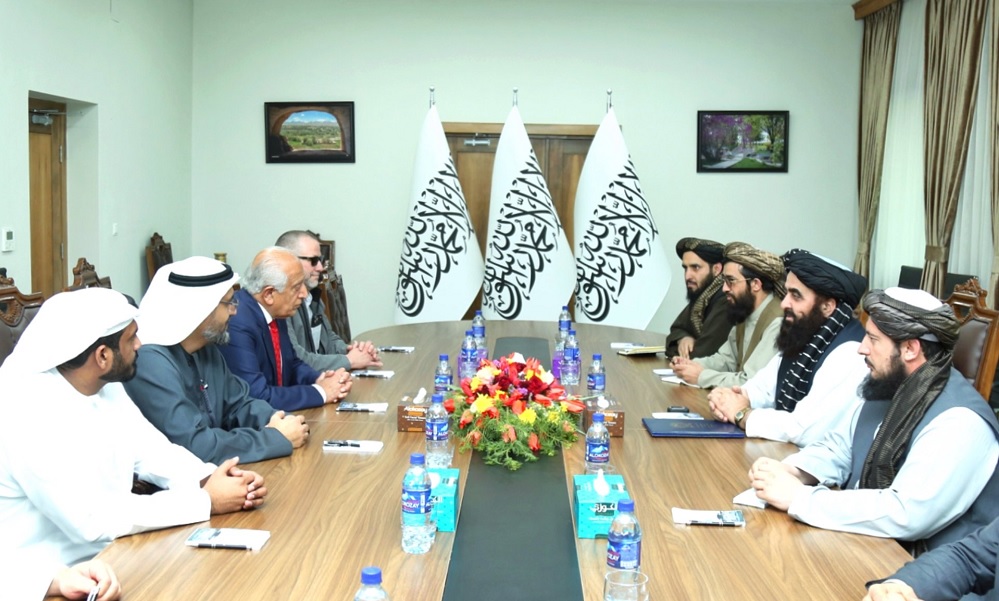
The Ministry of Foreign Affairs of the Islamic Emirate of Afghanistan announced on Tuesday the release of American citizen Dennis Coyle from prison.
According to the ministry, Coyle’s mother had written to the leader of the Islamic Emirate demanding amnesty and the release of her son on the occasion of Eid. The Supreme Court considered time served sufficient and decided to release him.
The Ministry of Foreign Affairs stated that this action was carried out on the basis of humanitarianism and good faith, and it believes that such measures can strengthen trust between countries. The ministry also expressed hope that both countries, in the future, can find solutions to remaining issues through mutual understanding and constructive dialogue.
The Islamic Emirate also expressed appreciation for the cooperation of the United Arab Emirates in this matter.
Separately, for Coyle’s release, an American delegation, including Zalmay Khalilzad, former U.S. Special Representative for Afghanistan, met on Tuesday with Amir Khan Muttaqi, the Foreign Minister of the Islamic Emirate.
The meeting was also attended by Saif Mohammed Al-Ketbi, Ambassador of the UAE in Kabul, and a member of the prisoner’s family.
According to the Ministry of Foreign Affairs, Muttaqi stated that the Islamic Emirate has not detained any citizen of any country to achieve political objectives; rather, detentions were the result of legal violations, and individuals were released after completing judicial procedures.
At the meeting, Khalilzad praised the action of the Islamic Emirate and emphasized the importance of continuing discussions on all issues between the two countries, expressing hope for further progress in the future.
Muttaqi also stressed that Kabul and the UAE should provide standard consular services to their citizens, and that the Afghan government is fully prepared in this regard.
He thanked Sheikh Mohamed bin Zayed Al Nahyan, President of the UAE, for their constructive role in facilitating the release of the prisoner and referred to the UAE as a close friend of Afghanistan.
Earlier, Muttaqi had also praised the role of the State of Qatar in facilitating information exchange between the Islamic Emirate and the prisoner’s family.
Additionally, the UAE ambassador expressed his country’s readiness to play a role in humanitarian institutions and called such developments beneficial for everyone.

The United Kingdom has announced an additional £3 million (AFN 257 million) in humanitarian assistance to Afghanistan, aimed at supporting people affected by natural disasters and other shocks.
Richard Lindsay, in a post on X, said the funding will be used to provide essential nutrition supplies and related support to vulnerable populations.
The new allocation brings the UK’s total bilateral assistance to Afghanistan for the current financial year to £154 million (AFN 13.18 billion).


Tahawol: Escalating threats between Iran-US discussed

Saar: Discussion on criticism of Pakistan’s policies

Islamic Emirate releases American prisoner Dennis Coyle

UK announces additional £3 million in aid for vulnerable people in Afghanistan

Around 2.3 million tourists visited Afghanistan’s recreational areas during Eid: Ghufran

Pakistani military jet downed in Afghanistan’s Jalalabad, pilot captured alive

Afghan Air Force conducts airstrikes in Islamabad, other cities

Prominent Muslim scholar issues fatwa calling for Afghanistan-Pakistan ceasefire

Afghan air force strikes key Pakistani military installations in retaliatory operation

IEA: Special circle in Pakistan has launched mission to destabilize region
Tahawol: Escalating threats between Iran-US discussed

Tahawol: Possibility of US ground forces entering Iran war discussed

Saar: Using US prisoners as political pressure

Tahawol: Pakistan’s efforts to destabilise Afghanistan

Saar: Decline in international assistance to Afghanistan
-

 Sport4 days ago
Afghanistan national buzkashi falls short in Kokpar World Championship semifinals
-

 Sport3 days ago
Ireland to host Afghanistan for ODI series in August
-

 Latest News2 days ago
Deadly violence likely without dialogue between Afghanistan and Pakistan: ICG
-

 Latest News4 days ago
Mojtaba Khamenei calls for improved Afghanistan–Pakistan relations, offers help
-

 Sport5 days ago
FIFA sanctions Israeli Football Association over discrimination violations
-

 Latest News4 days ago
Malaysian PM welcomes temporary Afghanistan–Pakistan truce, urges lasting peace
-
 Latest News5 days ago
IEA defense ministry accuses Pakistan of ceasefire violations
-

 Latest News1 day ago
Pakistan seeks Russian mediation to resolve Afghanistan tensions