
Regional
Gaza hit by telecoms blackout as Israeli tanks and infantry advance


Israeli tanks advanced along two gateways to the centre of Gaza City on Thursday while internet and phone lines were cut off for several hours, signaling a potential escalation in ground operations in the Palestinian enclave.
Israeli forces control Gaza City’s eastern suburbs and in recent days have been pounding the Sheikh Radwan and Tel Al-Hawa areas, from where they would be positioned to advance on central and western areas where most of the population is sheltering, Reuters reported.
“We are scared, but what can we do?” said Bassam Al-Qanou, a displaced man sheltering with around 30 family members in one of countless ragged improvised tent camps along the city’s beach.
He said the family had no way to get out, and nowhere to go.
At least 85 Palestinians have been killed by Israeli strikes or gunfire across the Gaza Strip in the past 24 hours, most in Gaza City, according to the territory’s health ministry.
The Israeli military said four of its personnel had been killed during combat in southern Gaza.
A total of 48 hostages remain in Gaza since their capture in a Hamas attack on southern Israel on October 7, 2023. Israeli officials say around 20 are still alive.
In separate developments, Israel attacked Hezbollah military targets in southern Lebanon, while two Israelis were killed at Allenby Crossing between the Israeli-occupied West Bank and Jordan, in what the Israeli military called a terror attack.
INFANTRY, TANKS, ARTILLERY ADVANCING TOWARDS INNER CITY
Israeli army spokesperson Nadav Shoshani said Israeli forces had been operating in the periphery of Gaza City for several weeks but since the night of Monday to Tuesday large numbers of troops had begun moving towards the inner city.
He told Reuters on the Israeli side of the border with Gaza that a combination of infantry, tanks and artillery was advancing, backed up by the air force, and that it was a gradual process that would increase as time went on.
Families of the Israeli hostages have been imploring Netanyahu to stop the offensive on Gaza and instead negotiate a ceasefire with Hamas to free their loved ones.
The armed wing of Hamas said on Thursday the hostages were distributed throughout the neighbourhoods of Gaza City.
“The start of this criminal operation and its expansion means you will not receive any captive, alive or dead,” it said in a written statement.
But Israel Katz, Israel’s defence minister, said on X: “If Hamas does not release the hostages and disarm, Gaza will be destroyed and turned into a monument to the rapists and murderers of Hamas.”
MANY FLEEING AMID TELECOMS BLACKOUT, MANY MORE STAYING PUT
The Palestinian Telecommunications Company said in a statement that its services had been cut off “due to the ongoing aggression and the targeting of the main network routes”.
By nightfall, it said it had reactivated fixed internet and landline services. Several Palestinians said Internet and phone services began to come back in Gaza City.
“The disconnection of internet and phone services is a bad omen. It has always been a bad signal something very brutal is going to happen,” said Ismail, who only gave one name. He was using an e-SIM to connect his phone, a dangerous method as it requires seeking higher ground to receive a signal.
Hundreds of thousands of Palestinians have fled Gaza City since Israel announced on August 10 it intended to take control, but a greater number are staying put, either in battered homes among the ruins or in makeshift tent encampments.
Effie Defrin, another Israeli military spokesman, said an estimated 450,000 people from Gaza City had moved southward.
The military has been dropping leaflets urging residents to flee towards a designated “humanitarian zone” in the south of the territory, but aid agencies say conditions there are dire, with insufficient food, medicine, shelter and basic hygiene.
The World Health Organization warned on Thursday that critical shortages of blood in Gaza hospitals could see force services to grind to a halt within days.
Four more Palestinians, including a child, have died of malnutrition and starvation in the past 24 hours, the health ministry said, raising deaths from such causes to at least 435 people, including 147 children, since the war started.
Israel says the extent of hunger in Gaza has been exaggerated and blames Hamas for the continuation of the war, saying it could end it now if it surrendered, freed the hostages, disarmed and disbanded. Hamas says it won’t disarm until a Palestinian state is established.
Along the coastal road, an unbroken column of every type of vehicle from carts and beaten-up cars to vans designed to carry goods was moving south, heavily laden with mattresses, gas cylinders and entire families perching on their belongings.
The total Palestinian death toll from the two-year war surpassed 65,000 on Wednesday, according to the Gaza health authorities.
About 1,200 people were killed in the October 2023 Hamas attack and 251 were taken hostage, according to Israeli tallies.







Regional
Pakistan among top nuclear threats to America, US intelligence chief tells senate
Speaking before a Senate panel, Gabbard said the U.S. intelligence community is increasingly concerned about the growing missile capabilities of several countries, including Pakistan and Iran.
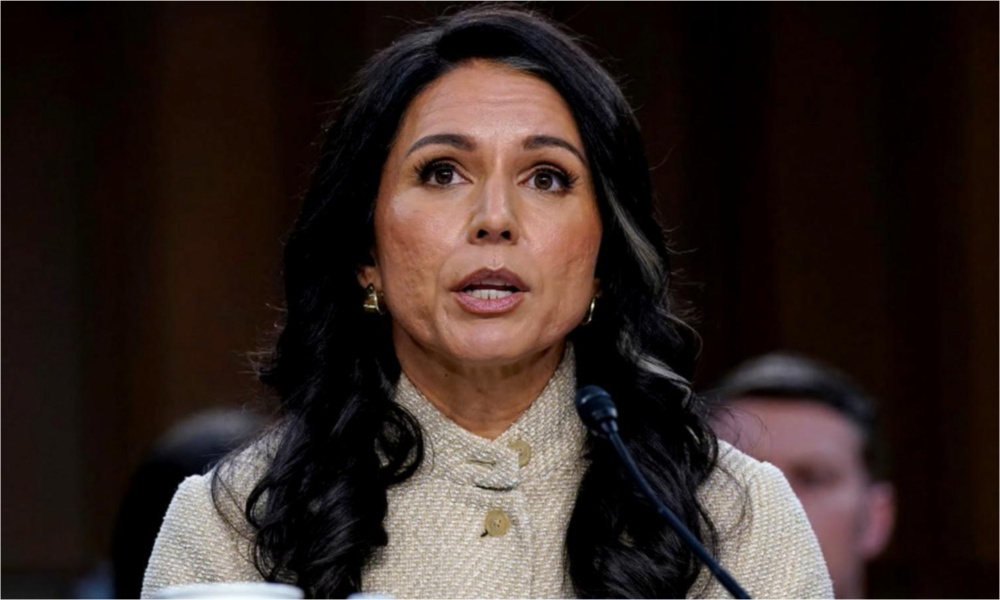
U.S. Director of National Intelligence Tulsi Gabbard told lawmakers that Pakistan ranks among the most significant nuclear threats to the United States, placing it alongside Russia, China and North Korea.
Speaking before a Senate panel, Gabbard said the U.S. intelligence community is increasingly concerned about the growing missile capabilities of several countries, including Pakistan and Iran.
“The intelligence community assesses that Russia, China, North Korea, Iran and Pakistan have been developing a range of advanced and traditional missile systems capable of carrying nuclear or conventional payloads that could reach the U.S. homeland,” she said.
Gabbard warned that the number of missiles capable of striking the United States is expected to rise sharply in the coming years, projecting an increase from roughly 3,000 today to more than 16,000 by 2035.
In her testimony, she also highlighted deepening ties between North Korea, Russia and China, suggesting growing strategic coordination among U.S. adversaries that could further complicate global security dynamics.
Addressing the ongoing conflict with Iran, Gabbard said U.S. military operations have significantly weakened Tehran’s capabilities. While the Iranian government remains in place, she described its military infrastructure as “largely degraded,” noting that it could take years for Iran to rebuild its missile and drone programs if the current leadership endures.
She added that Iran’s nuclear enrichment program had been “obliterated” by U.S. strikes in 2025, though she cautioned that Tehran may gradually attempt to restore its military strength over time.
Beyond state actors, Gabbard identified extremist groups such as Al-Qaeda and ISIS as the most significant threats to U.S. interests overseas, particularly in parts of Africa, the Middle East and South Asia.
The assessment comes amid heightened geopolitical tensions and follows the recent resignation of a senior U.S. security official linked to the ongoing Iran conflict. The White House reaffirmed its support for Gabbard, with press secretary Karoline Leavitt stating that President Donald Trump retains “full confidence” in the intelligence chief.
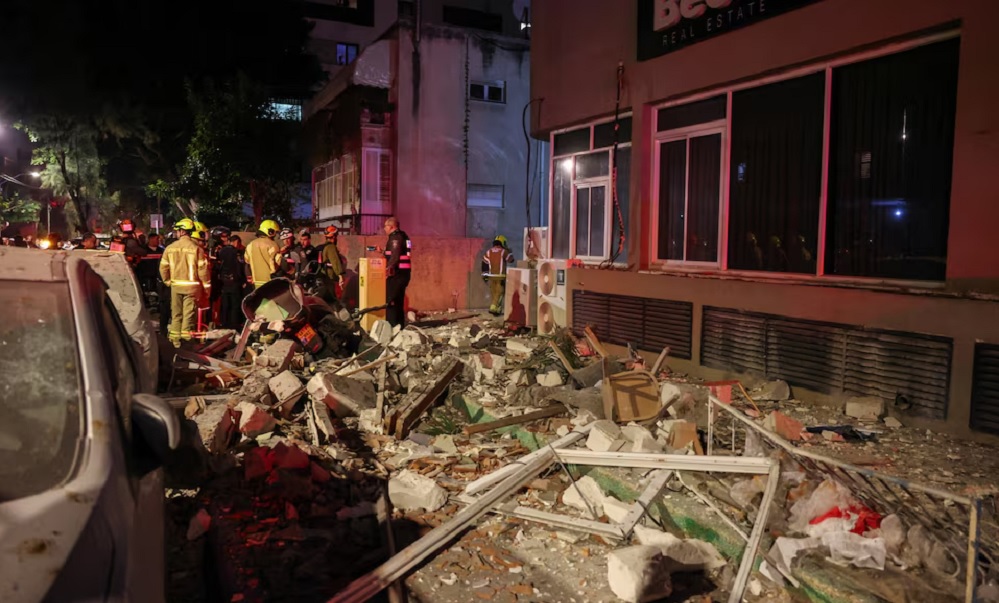
Iran targeted Tel Aviv with missiles carrying cluster warheads in what it said was retaliation for Israel’s assassination of Iran’s security chief Ali Larijani, Iranian state television reported on Wednesday.
Israel has said that Iran has repeatedly used cluster warheads, which disperse into multiple smaller explosives mid-air and spread over a wide area, making them difficult to intercept. The attack on densely populated Tel Aviv overnight on Tuesday killed two people, bringing the death toll in Israel from the war to at least 14, Reuters reported.
In Iran, a projectile hit an area near the Bushehr nuclear power plant on Tuesday evening, however it caused no damage or injuries, Iran told the International Atomic Energy Agency. IAEA chief Rafael Grossi reiterated his call for maximum restraint during the conflict to avoid the risk of a nuclear accident.
Israel and the U.S. have said preventing Iran from developing a nuclear weapons programme was one of the goals of the attacks they launched more than two weeks ago, which killed the country’s supreme leader and many other top officials.
The Iranian government on Tuesday confirmed the killing of Larijani, the most senior figure targeted since the U.S.-Israeli war’s first day, when an Israeli strike killed Iran’s Supreme Leader Ayatollah Ali Khamenei.
Iran’s Supreme National Security Council, which Larijani led as secretary, said Larijani’s son and his deputy, Alireza Bayat, were also killed in an Israeli attack on Monday night.
The targeted killings took place as the U.S.-Israeli war on Iran shows no signs of de-escalation.
Iran’s new supreme leader, Mojtaba Khamenei, has rejected proposals conveyed to Iran’s Foreign Ministry for “reducing tensions or ceasefire with the United States,” according to a senior Iranian official who asked not to be identified.
Khamenei, attending his first foreign-policy meeting since his appointment, said it was not “the right time for peace until the United States and Israel are brought to their knees, accept defeat, and pay compensation,” according to the official.
The official did not clarify whether the younger Khamenei, who has not yet appeared in photos or on TV since being named last week to replace his slain father, had attended the meeting in person or remotely.
TRUMP SAYS HELP FROM ALLIES TO SECURE STRAIT NOT NEEDED
U.S.-based Iran human rights group HRANA said on Monday that an estimated 3,000-plus people have been killed in Iran since the U.S.-Israeli attacks began at the end of February. Iranian attacks have killed people in Iraq and across the Gulf states, as well as Israel. More than 900 people have died since Israel began attacks on Lebanon on March 2, the Lebanese Health Ministry said on Tuesday.
The Strait of Hormuz, a transit point for a fifth of the global oil trade, remains largely closed as Iran threatens to attack tankers linked to the U.S. and Israel. Oil prices have soared.
U.S. President Donald Trump has repeatedly castigated allied countries in recent days for their cool response to his requests for military help to restore the passage of oil tankers through the strait.
Most U.S. allies in the North Atlantic Treaty Organization have told Trump they don’t want to get involved in the conflict, he said on Tuesday, describing their position as “a very foolish mistake.”
“Because of the fact that we have had such Military Success, we no longer ‘need,’ or desire, the NATO Countries’ assistance — WE NEVER DID!” Trump wrote on social media, also singling out Japan, Australia and South Korea.
European Union foreign policy chief Kaja Kallas said in an interview that nobody was ready to risk the lives of their people in protecting the strait.
“We have to find diplomatic ways to keep this open so that we don’t have a food crisis, fertilizers crisis, energy crisis as well,” Kallas said.
The U.S. has given shifting rationales for joining Israel to attack Iran and struggled to explain the legal basis for starting a new war, underscored by the Tuesday resignation of the head of the U.S. National Counterterrorism Center, Joseph Kent. Kent wrote in his resignation letter to Trump that Iran “posed no imminent threat to our nation.”
US TARGETS IRAN COASTLINE
Iran has responded to the Israeli-U.S. attacks with wide-ranging strikes on its Gulf neighbours, some of which host U.S. bases.
Gulf Arab states have faced more than 2,000 missile and drone attacks on U.S. diplomatic missions and military bases as well as oil infrastructure, ports, airports, ships and residential and commercial buildings, and most of them aimed at the United Arab Emirates.
Saudi Arabia will host a consultative meeting of foreign ministers from a number of Arab and Islamic countries in Riyadh on Wednesday evening to discuss ways to support regional security and stability, the kingdom’s foreign ministry said.
The United States military said on Tuesday it had targeted sites along Iran’s coastline near the Strait of Hormuz because Iranian anti-ship missiles posed a risk to international shipping there.
Oil prices rose about 3% on Tuesday as Iran renewed its strikes on oil facilities in the United Arab Emirates, and are up around 45% since the start of the war on February 28, raising concerns of a renewed spike in global inflation. The World Food Programme said tens of millions of people will face acute hunger if the war continues through June.
Global airlines sounded the alarm on Tuesday over soaring jet fuel prices, warning of hundreds of millions of extra costs, higher fares and cuts to some routes. Global aviation has been thrown into turmoil, with flights cancelled, rescheduled or rerouted as most Middle East airspace remains closed amid fears of missile and drone attacks.
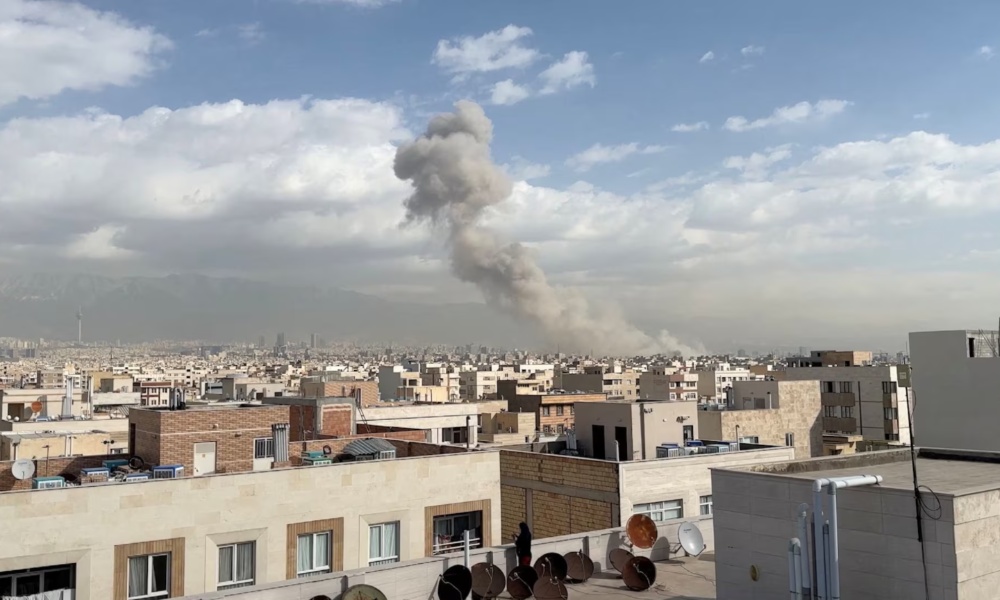
Defence Minister Israel Katz said on Tuesday the Israeli military had killed Iran’s security chief and the head of its Basij militia in airstrikes overnight, and Tehran kept up attacks against Gulf neighbours that have pushed up energy prices.
Katz said in a statement he had been informed by the military that Iran’s security chief Ali Larijani had been killed, Reuters reported.
Iranian state media published a handwritten note by Larijani commemorating Iranian sailors killed in a U.S. attack whose funeral was expected on Tuesday but there was no immediate comment by Tehran on Katz’s remarks.
Larijani would be the most senior figure assassinated since Supreme Leader Ayatollah Khamenei was killed on the first day of Israeli-U.S. airstrikes on February 28.
Katz said Gholamreza Soleimani, the commander of Iran’s Basij forces, had also been killed.
The Basij militia is a part-time paramilitary force under the control of the Islamic Revolutionary Guard Corps that is often used to quell protests inside Iran.
Israeli Prime Minister Benjamin Netanyahu’s office said in a statement that the Israeli leader had ordered “the elimination of senior officials of the Iranian regime”.
The U.S.-Israeli war on Iran is in its third week, with at least 2,000 people killed and no end in sight. The Strait of Hormuz remains largely closed off and U.S. allies have rebuffed U.S. President Donald Trump’s calls for them to help to reopen the vital waterway, through which about 20% of global oil and liquefied natural gas flows.
There was no let-up in attacks by both sides early on Tuesday, with Iran launching missiles on Israel overnight, underscoring that Tehran retains the capacity to carry out long-range strikes despite more than two weeks of pounding by U.S. and Israeli weapons.
The Israeli military said it was targeting “Iranian regime infrastructure” with a new wave of strikes across Tehran, as well as Hezbollah sites in Beirut, a day after saying it had drawn up detailed plans for at least three more weeks of war with Iran.


Tahawol: Temporary ceasefire draws broad support

Security Sources: Pakistani military shelling in Kunar and Nuristan leaves female doctor dead

Saar: Emphasis on resolving conflicts through diplomacy

UN Secretary-General condemns Pakistani airstrike on Kabul rehab center

IEA Supreme Leader: Afghanistan’s victory lies in faith and National unity

Pakistani military jet downed in Afghanistan’s Jalalabad, pilot captured alive

Afghan Air Force conducts airstrikes in Islamabad, other cities

Afghanistan’s Chief of Armed Forces underscores readiness and equipment for national defense

Afghanistan welcomes investment and technology partnerships with India

Prominent Muslim scholar issues fatwa calling for Afghanistan-Pakistan ceasefire
Tahawol: Temporary ceasefire draws broad support
Saar: Emphasis on resolving conflicts through diplomacy

Tahawol: Global reactions to Pakistan’s recent attacks discussed

Saar: Consequences of Pakistani airstrikes on Afghans discussed

Tahawol: Pakistan’s new attacks on Kabul hospital discussed
-
 Latest News3 days ago
IEA Supreme Leader issues Eid-ul-Fitr message urging unity and support for Islamic system
-
 Latest News5 days ago
Regional criticism grows amid Pakistan strikes inside Afghanistan
-
 Latest News4 days ago
Afghan airstrike targets a military camp in South Waziristan
-

 Business4 days ago
Turkmenistan, Afghanistan discuss steps to speed up land acquisition for TAPI pipeline
-

 Sport4 days ago
IPL 2026 kicks off in under two weeks; Afghan players set to shine
-

 Business5 days ago
Afghanistan expands exports through Lapis Lazuli Corridor
-
 Latest News1 day ago
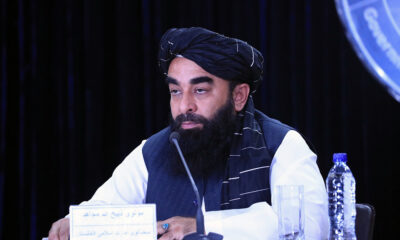
IEA announces temporary pause in defensive operations against Pakistan for Eid
-

 World5 days ago
Trump rejects efforts to launch Iran ceasefire talks, sources say