
Latest News
Haqqani slams Pakistan’s treatment of migrants as ‘unfair’

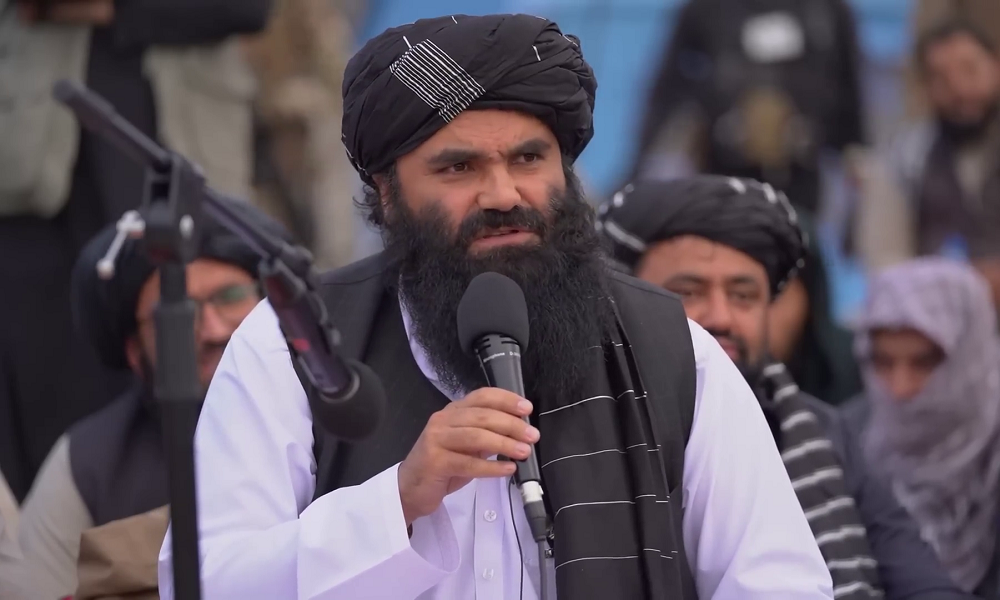
Sirajuddin Haqqani, Acting Minister of Interior Affairs, said during a trip to Nangarhar province on Wednesday, to meet returning refugees from Pakistan, that Islamabad’s treatment of the migrants was unfair, and that he was offended by their actions.
“The whole nation and the whole system are sad for you; in other words, we are also annoyed with our neighbors; we wish they didn’t have such weak morals; it wasn’t suitable for them and these problems come upon all of us; and life with respect and dignity, that I like for myself, I also want for others.
“We fought in Afghanistan for honor. Today, if there is hunger and if there are problems, I am with honor,” Haqqani said.
While appreciating the efforts of the various departments to establish camps and provide services to the returning refugees, he assured the migrants that the Islamic Emirate will provide more facilities for them.
Haqqani said: “Today you are safe from many problems, no one will dishonor you in an illegitimate manner.” He also called on other migrants to return home.
“In appearance you returned to the country with many problems, but you were accepted in your homeland with great respect,” said Haqqani.
According to Mr. Haqqani, providing services for returning migrants is one of the priorities of the Islamic Emirate.
“The leadership of the Islamic Emirate is committed to addressing all your needs within the framework of law, Islam and patriotism,” said Haqqani.
He also thanked businessmen in the country for helping the returning migrants.
Also, during his visit to Nangarhar, local businessmen together with the Haqqani announced that they have given 20 million Afghanis to help the returnees.
At the same time, a number of returnees thanked the IEA for their efforts to ease their return.
Since the beginning of the forced deportation of immigrants from Pakistan, more than 50,000 families have returned to the country through Torkham crossing, local officials said. According to them, the process of transferring migrants to their provinces of origin has also been accelerated.
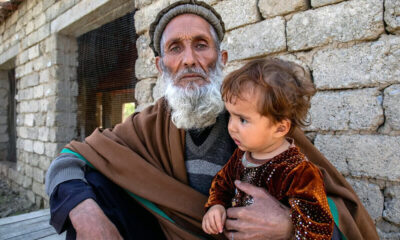
A number of immigrants who have been deported from Pakistan want the government to provide them with permanent shelter.

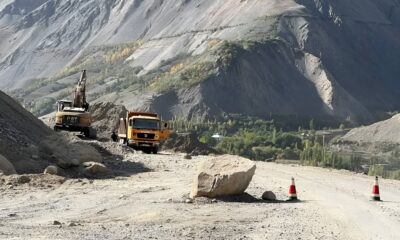


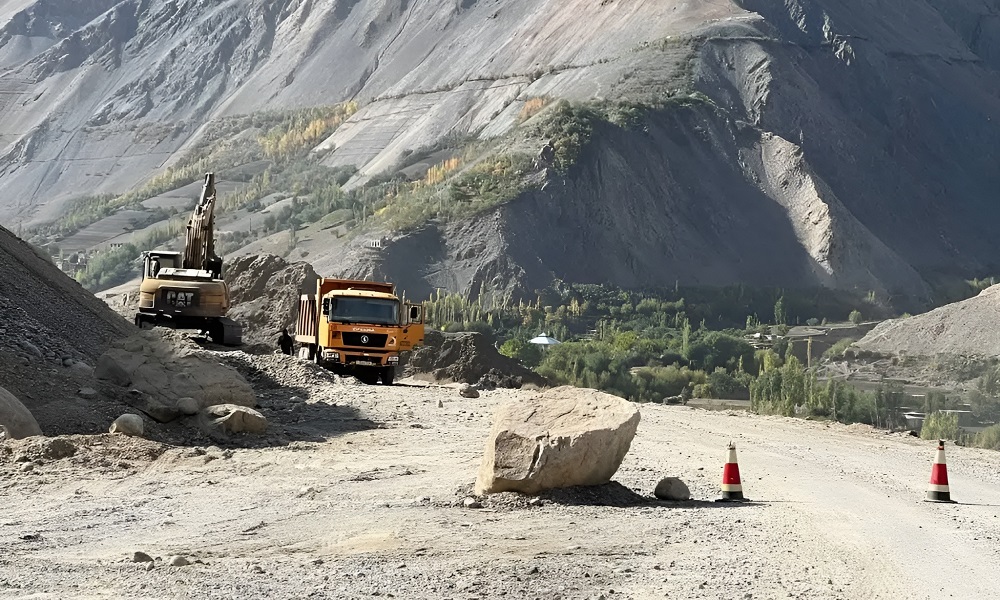
Chinese workers have resumed construction on a key highway project in Tajikistan near the border with Afghanistan after a months-long suspension prompted by security concerns, according to Eurasianet.
Officials from Tajikistan’s Ministry of Transport confirmed that work has restarted on a 109-kilometre section of the Dushanbe–Kulma highway.
Construction reportedly resumed in April after authorities assured Beijing that additional security measures would be put in place to protect Chinese personnel involved in the project.
The project had been paused in late 2025 after China advised its citizens to withdraw from border regions following a series of violent incidents.
The advisory followed an attack in November on a road construction crew that left two people dead and two others injured. In a separate incident later that year, three Chinese nationals were also killed.
Tajik authorities initially attributed both attacks to militant groups, though those claims have not been independently verified.
According to the report, Chinese workers currently on site are being protected by Tajik special forces. Tajikistan’s Defence Ministry has also indicated that joint military exercises between Tajik and Chinese forces are expected to take place in September.
The renewed construction and security cooperation come after the signing of a Treaty of Friendship between Tajikistan and China in May, which paved the way for agreements worth around $8 billion involving Chinese entities.
Latest News
Hanafi says war is not the solution, calls for regional cooperation and investment
Hanafi said the policy of the Islamic Emirate is based on peaceful coexistence with all countries, founded on mutual respect and non-interference in each other’s internal affairs.
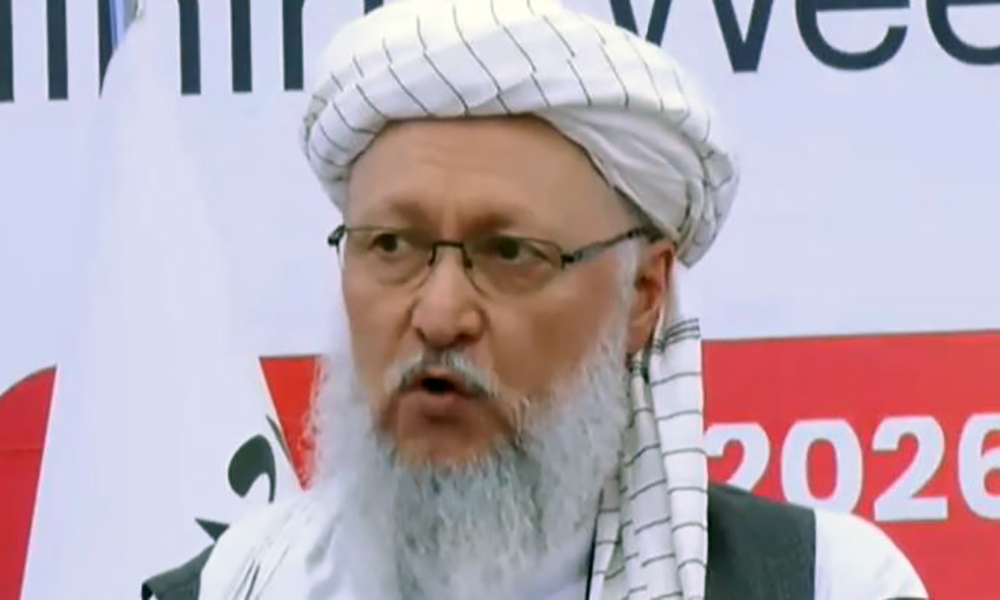
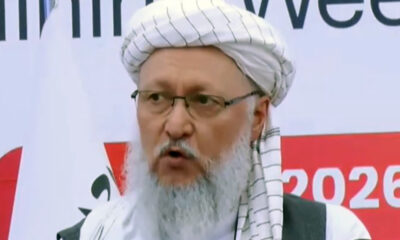
Abdul Salam Hanafi, Deputy Prime Minister for Administrative Affairs, said on Wednesday that no neighboring country can destroy another through conflict, stressing that war only brings losses for all sides and is not a solution to disputes in the 21st century.
Speaking at the opening ceremony of the fifth National and International Industry and Mines Week Exhibition in Kabul, Hanafi urged countries to channel their resources toward development and economic progress rather than conflict.
“If we fight each other, we will spend all our energy destroying one another. Why should we not use our energy in this century for the progress of our nations?” Hanafi said.
Referring to the lessons of the world wars, he said many countries that were once engaged in conflict have since concluded that war is ineffective and have instead embraced cooperation, reconstruction, and development.
Hanafi said the policy of the Islamic Emirate is based on peaceful coexistence with all countries, founded on mutual respect and non-interference in each other’s internal affairs.
He reiterated that, under the Islamic Emirate’s policy, no individual or group is permitted to use Afghan territory to threaten or launch attacks against other countries. Likewise, he said, no country has the right to interfere in Afghanistan’s domestic affairs.
Turning to the economy, Hanafi said the exhibition highlights the continued growth of Afghanistan’s industrial sector despite decades of conflict that have left the country economically vulnerable.
He said the Islamic Emirate is working to reduce the long-term effects of war by expanding trade and strengthening domestic production, with the goal of transforming Afghanistan from an import-dependent economy into an export-oriented one.
According to Hanafi, authorities have introduced around 25 incentives for industrialists across various sectors, including the allocation of industrial land, tax exemptions, and other measures aimed at encouraging investment and boosting production.
He also called on domestic and foreign investors to take advantage of investment opportunities in Afghanistan, particularly in the country’s mining sector and other key industries.
Latest News
Russia urges Pakistan and Afghanistan to resolve disputes through diplomacy
The United Nations reported on Monday that at least 28 people were killed in the incidents, although the Islamic Emirate of Afghanistan (IEA) has given higher casualty figures.
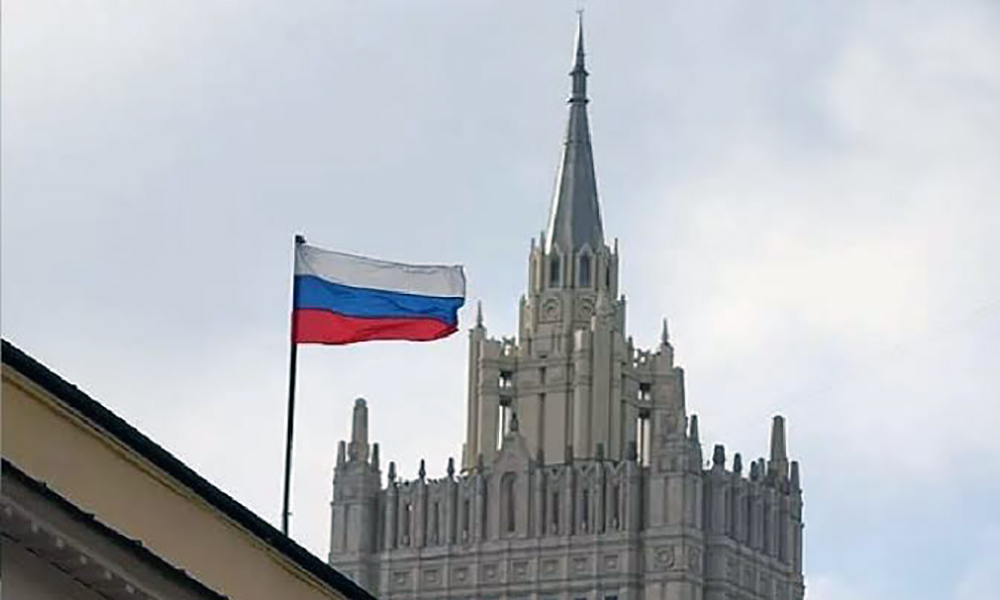
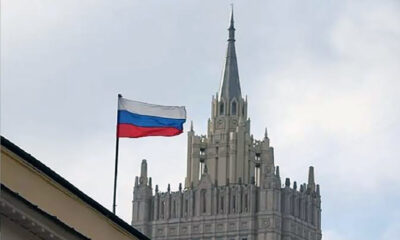
Russia has called on Pakistan and Afghanistan to settle their long-standing differences through dialogue and diplomatic engagement, following recent reports of cross-border violence.
In a statement issued on Tuesday, Russia’s Foreign Ministry referred to what it described as a “tragic episode” involving Pakistani airstrikes in border regions, which have further strained relations between the two neighbours.
The United Nations reported on Monday that at least 28 people were killed in the incidents, although the Islamic Emirate of Afghanistan (IEA) has given higher casualty figures.
“The Russian side urges Islamabad and Kabul to end the armed conflict and resolve disputed issues through political and diplomatic means,” Moscow said.
Tensions between the two countries have escalated amid mutual accusations. Pakistan alleges that Afghanistan is harbouring militants responsible for attacks inside its territory, while the IEA rejects the claim, arguing that militancy is an internal issue for Pakistan.
Moscow’s remarks add to growing international calls for restraint and renewed dialogue as violence along the border continues to raise regional concerns.


China resumes work on highway project in Tajikistan close to Afghan border

Hanafi says war is not the solution, calls for regional cooperation and investment

Iran insists on keeping control over Hormuz, senior Iranian sources say

Russia urges Pakistan and Afghanistan to resolve disputes through diplomacy

Haaland fires Norway into World Cup Round of 16 with late winner

Norway’s Viking-inspired World Cup team photo goes viral

TAPI project advances in Afghanistan as 84kms of pipeline laid

Afghanistan’s trade with Central Asia records sharp growth

Gaikwad set to replace injured Kohli for Afghanistan ODI Series

Iran banks hit by major cyber attack

Tahawol: Reactions to Pakistan’s attacks on Afghanistan discussed

Saar: Reaction to Pakistan’s airstrikes on Afghan soil discussed

Tahawol: Pakistan’s attacks on civilians in Afghanistan

Saar: Pakistani airstrikes on Afghanistan

Tahawol: Calls for diplomacy between Kabul, Islamabad
-
 Business3 days ago
Afghanistan eyes direct Basmati rice imports from India amid tensions with Pakistan
-

 International Sports4 days ago
FIFA World Cup: Iran held by Egypt after controversial late goal Is disallowed
-
 Latest News4 days ago
Delawar says Afghanistan has achieved security and unity after 47 years
-
 Latest News4 days ago
EU announces major funding to support Afghan small businesses
-
 Latest News3 days ago
Afghan minister says ‘outsiders’ should not claim to support Afghanistan’s independence
-
 Sport3 days ago
Afghanistan, Uzbekistan set for friendly cricket clash in Khost
-

 International Sports3 days ago
FIFA World Cup group stage wraps up; moves into high-stakes knock out round
-

 International Sports2 days ago
Canada makes World Cup history with late goal to eliminate South Africa