
Latest News
ICRC director ‘livid’ over dire ‘man-made’ situation in Afghanistan

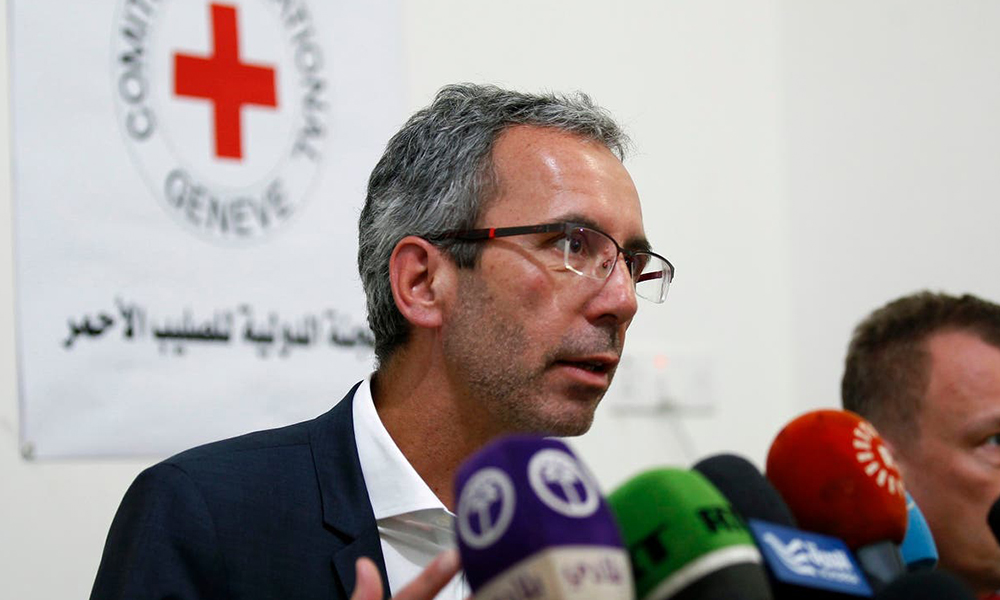
Dominik Stillhart, the director of operations for the International Committee of the Red Cross expressed his anger on Monday at the world for plunging Afghanistan into the grips of starvation on the back of economic sanctions.
In a statement released after a six-day visit to the country, Stillhart said: “I am livid. Pictures viewed from afar of bone-thin children rightly elicit gasps of horror. When you’re standing in the pediatric ward in Kandahar’s largest hospital, looking into the empty eyes of hungry children and the anguished faces of desperate parents, the situation is absolutely infuriating.”
He said “it’s so infuriating because this suffering is man-made.”
Economic sanctions meant to punish those in power in Kabul are instead freezing millions of people across Afghanistan out of the basics they need to survive, he said adding that “the international community is turning its back as the country teeters on the precipice of man-made catastrophe”.
He stated that sanctions on banking services are sending the economy into free-fall and holding up bilateral aid, and that government staff who haven’t been paid in five months walk up to two hours to work instead of taking public transport. He said they have no money to buy food; their children go hungry, get dangerously thin, and then die.
During his trip to Afghanistan, Stillhart visited the paediatric intensive care unit at Mirwais Regional Hospital in Kandahar and painted an extremely bleak picture.
He said the number of children suffering from malnutrition, pneumonia and dehydration has more than doubled from mid-August to September.
Stillhart said that on Monday, the ICRC began supporting 18 regional and provincial hospitals and the 5,100 staff who work in them to help prevent the total collapse of the public health system in Afghanistan.
He said this support, slated to last six months, includes funding for running costs and medical supplies and will ensure the continuity of nearly half a million medical consultations per month.
However, this was not enough, he stated.
“Drought, failed harvests, and the economic collapse are all driving the increase in malnutrition. Rising food costs are pushing proteins and other staples out of reach,” he said adding that as the harsh winter sets in with temperatures well below freezing, the suffering will be immense as people lack the cash to heat their homes.
Stillhart called for countries to engage with Afghanistan.
“This is the only way to prevent a total collapse of essential services like health care and education. Political considerations should not interfere with humanitarian action. A political solution must be found to avoid irreparable humanitarian consequences,” he said.
He also appealed to foreign donors that have stopped helping Afghanistan to work through entities such as the ICRC so as to stop denying Afghans life-saving assistance.
Stillhart said while everyone knows it will be a tragic winter for Afghans, the ICRC will step up its response to help meet the most urgent humanitarian needs.
But, he said, this assistance is only part of the solution. “The existing and projected needs are beyond any humanitarian organization’s capacity to deal with or solve.”
In his appeal for the international community to step up its efforts to find a solution to the crisis, he said the desperation among Afghans can be seen in the huge crowds lining up in front of banks at 5 am in the hope that they can withdraw a little bit of cash – and in
“the empty eyes of hungry children” – which he said is something one will not soon forget.
“It makes my plea to the international community even more urgent: that it rapidly finds creative solutions to save millions of Afghans from deprivation and despair. Ultimately, this is in everybody’s interest as it will help prevent Afghanistan from slipping back into conflict and violence, and help give Afghans more means to remain in their country.”



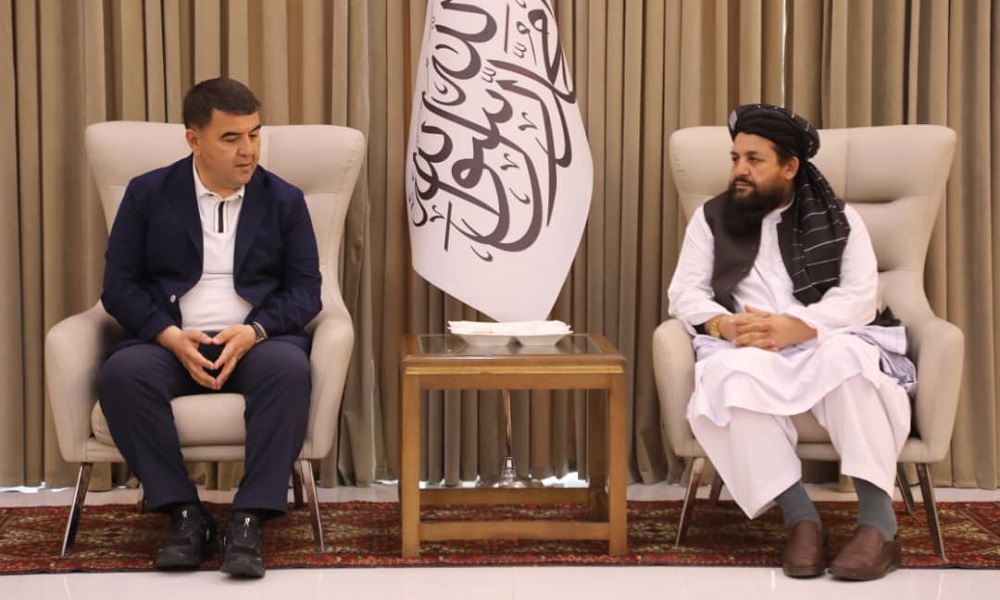
A high-level government–private sector delegation from Uzbekistan, led by Shukhrat Abdullazakov, Governor of Namangan Province, arrived in Kabul to enhance trade between the two countries and promote investment in Afghanistan.
According to a press release from the Ministry of Industry, the delegation, which includes deputy governors and more than 30 of Uzbekistan’s top businesspeople and investors, will meet with officials of the Islamic Emirate of Afghanistan and participate in conferences and trade meetings.
The delegation will also travel to Balkh, meet with local officials, and hold business meetings with members of the private sector.
Additionally, the delegation will inaugurate an exhibition of Uzbek products and goods in Mazar-i-Sharif.
This visit follows the trip of Erkinjon Turdimov, Governor of Uzbekistan’s Syrdarya Province, and his accompanying delegation, and is based on meetings between Nuruddin Azizi, Minister of Industry and Trade of the Islamic Emirate, and senior Uzbek officials.
Other governors from Uzbekistan are also expected to visit Afghanistan to further expand bilateral trade and economic relations.
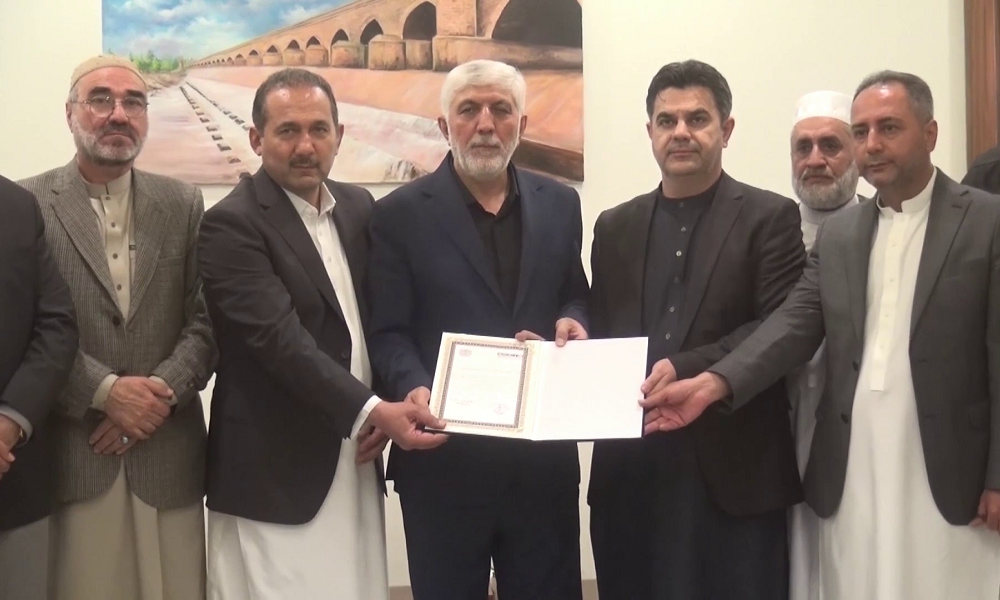
The Herat Chamber of Commerce and Investment announced on Saturday that national traders, jointly through the chamber, have provided approximately 15 million AFN in aid to the people of Iran.
The chamber stated that this aid package was delivered to the Iranian Consulate in Herat. It added that the assistance was intended to express solidarity with families affected by the war.
Mohammad Younes Qazizadeh, head of the Herat Chamber of Commerce and Investment, said: “Today we have presented 15 million AFN to the dear people of Iran through the Herat provincial authorities and the Iranian Consulate, and this aid will continue.”
Meanwhile, officials at the Iranian Consulate in Herat emphasized that Afghanistan and Iran always stand together and fully understand each other’s difficulties.
The Herat Chamber of Commerce and Investment also highlighted that the people of Iran have consistently supported the people of Afghanistan during various crises, and their cooperation in different sectors has reached families affected in the country.
Officials of the Herat Chamber of Commerce and Investment stressed that the process of private-sector humanitarian aid to the affected people of Iran will continue.
Following attacks by the United States and Israel on Iran, many people in the country have been affected and harmed.
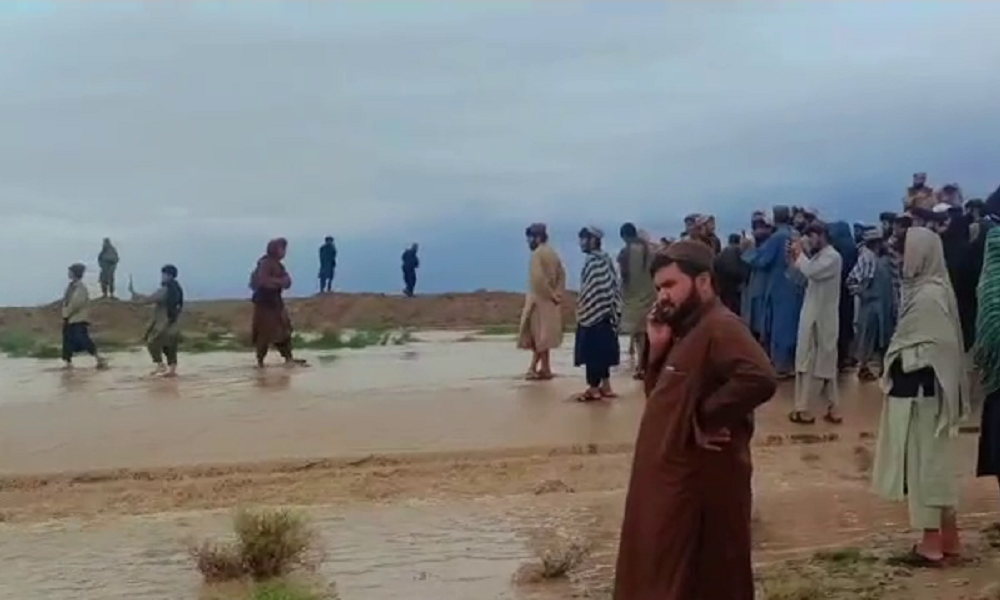
Local officials in Badghis have reported that heavy rainfall from midnight until Saturday morning claimed the lives of five people in the province.
According to officials, three people died in Qadis district, while two others, including a three-year-old child, lost their lives in Dara-e-Bum district.
The Badghis Department for Disaster Management stated that the floods not only caused fatalities but also inflicted significant financial losses on local residents and destroyed agricultural land.
However, complete information on the extent of damage and casualties is not yet available. Staff from various government departments have been dispatched to affected areas to conduct preliminary surveys.
Meanwhile, heavy rains and floods in western Afghanistan temporarily blocked the Herat–Kandahar Highway.
According to Mohammad Israil Sayar, head of the Disaster Management Department in Farah province, recent rainfall has caused the Farah River to swell significantly. He added that the situation has now returned to normal, and traffic along the highway has resumed.


High-level Uzbek delegation arrives in Kabul to boost bilateral trade

Herat Chamber of Commerce donates 15 million AFN to the people of Iran

Severe floods in Badghis leave five dead

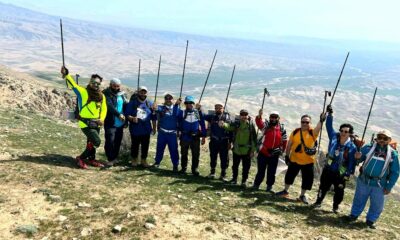
13 mountaineers in Balkh summit Alborz at 1,650 meters

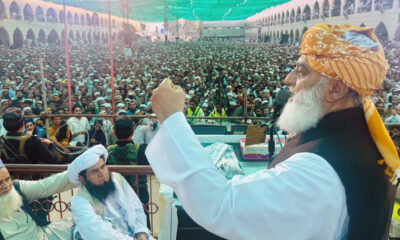
Fazlur Rehman urges policy review on Afghanistan, warns of Pakistan’s regional isolation

Pakistani military jet downed in Afghanistan’s Jalalabad, pilot captured alive

Afghan Air Force conducts airstrikes in Islamabad, other cities

Prominent Muslim scholar issues fatwa calling for Afghanistan-Pakistan ceasefire

Afghan air force strikes key Pakistani military installations in retaliatory operation

IEA: Special circle in Pakistan has launched mission to destabilize region

Exclusive interview with Indrika Ratwatte, Deputy UN Special Representative for Afghanistan

Tawsia: Efforts to boost Afghanistan’s domestic production and economic diplomacy

Tahawol: Discussion on day 27 of Iran–US war

Saar: Islamic Emirate confident of Durand Line control

Tahawol: Efforts to release Mohammad Rahim from Guantanamo Bay Detention Camp
-
 Latest News2 days ago
Tajikistan shifts stance on Afghanistan amid rising border tensions
-
 Latest News4 days ago
Around 2.3 million tourists visited Afghanistan’s recreational areas during Eid: Ghufran
-

 Sport4 days ago
Afghanistan squad hit by withdrawals ahead of AFC Asian Cup Qualifiers
-
 Latest News4 days ago
Islamic Emirate releases American prisoner Dennis Coyle
-
 Latest News3 days ago
Two civilians killed, eight injured in fresh shelling by Pakistan in Kunar
-
 Regional4 days ago
US allies in Middle East ‘edging closer’ to joining conflict
-
 Regional4 days ago
Tehran rejects Trump’s claims of talks, accuses US of spreading ‘fake news’
-

 Sport3 days ago
IPL 2026: RCB sold for $1.78 billion in landmark deal