
Latest News
IEA’s supreme leader calls on officials to adhere to amnesty orders

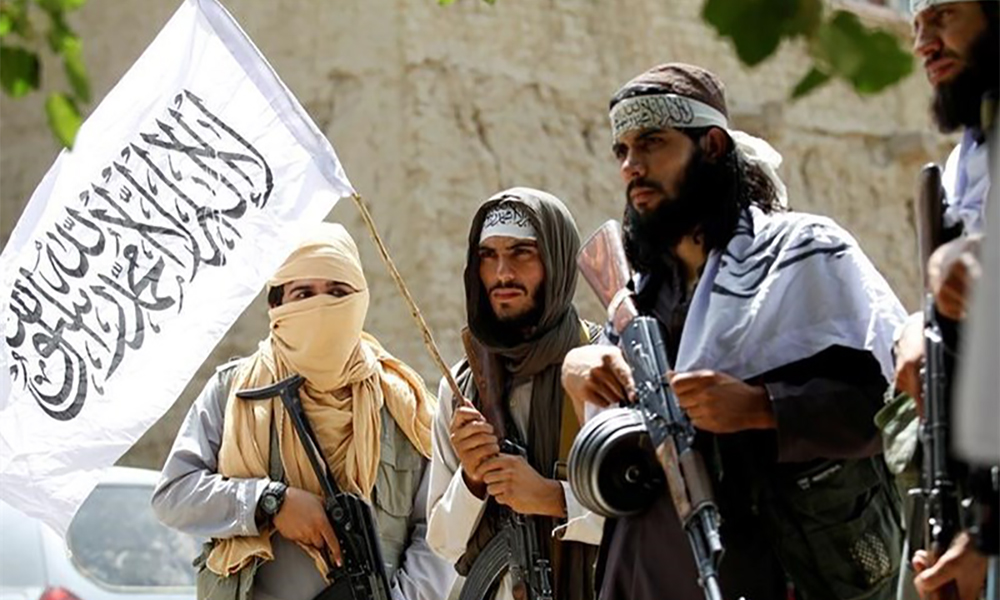
The Islamic Emirate of Afghanistan’s (IEA) spokesmen and sources have published a document containing recommendations made by the IEA’s supreme leader Mullah Hibatullah Akhundzada on certain issues including that of amnesty.
The recommendations were reportedly made by Mullah Akhundzada at a large gathering of IEA officials in Kandahar recently, where he called on officials to respect his call for amnesty.
Some of the recommendations made also relate to the IEA’s internal relations.
According to the IEA, Mullah Akhundzada advised IEA forces to respect his call for amnesty and stressed that former government employees should not be punished for “previous crimes”.
According to a text published by Mohammad Naeem, a spokesman for the IEA’s political office, Mullah Akhundzada said that everyone in the country must be respected and that the dignity of the people in the country should be maintained and that no Afghans should leave the country.
He called on IEA officials, scholars, tribal elders, governors and district governors to convince those who want to leave the country to stay at home.
He also called on IEA officials to become a “safe haven” for the people and to preserve their dignity; because all Afghans expect this of them.
The IEA leader has also made some recommendations regarding their internal relations. He told IEA officials that they may not assume responsibility themselves but that if the elders gave them responsibilities, they would obey their orders.
Mullah Akhundzada has instructed his people to carry out their assigned responsibilities in accordance with the principles and procedures laid out by the IEA and to refrain from acting randomly.
“Do some kind of responsibility that you can see with open eyes tomorrow,” he said. “Always seek the advice of scholars in order to take better responsibility.”
The IEA leader has advised his people to think of all Afghans as their brothers.
He also called on the people under his command to ensure the people aren’t suppressed, and to refrain from beating them.
The IEA officials have been advised by their leader to not use the “tools provided by Allah” for “oppression and exaggeration” purposes and to exercise patience when carrying out their duties.
The IEA leader also stressed: “Fight for justice together and give everyone their dues. Do not coerce in responsibility, do not be individualistic and do not assign duties to anyone based on language and ethnicity, but assign duties based on talent.
“Respect the elders, do not complain about them, be honored and do not do anything without the permission of the elders.”
Mullah Akhundzada also stressed the need for good coordination between IEA officials and for them to refrain from interfering in each other’s affairs.
He also said officials are to observe good morals and to ensure the safety of the people during night patrols and to remain committed to the IEA government.
He concluded by stressing that the IEA was in for a big test, and urged officials “to pass the test”. He said: “Let’s make a good history.”
Soon after their takeover of Kabul, the IEA announced a general amnesty but reports have indicated that some former military personnel have carried out assassinations, targeting IEA forces.
The IEA however denies these allegations. Meanwhile, some IEA members in the provinces have also complained about injustice and the unfair distribution of privileges, facilities and power among their ranks.
Last month, Human Rights Watch issued a report that said the amnesty promised by the IEA had not stopped local commanders from targeting former soldiers and police.
HRW accused the leadership of “condoning” the “deliberate” killings.
According to the HRW report, published on Tuesday, the targeted killings have continued under the IEA administration, with more than 100 people being killed or having disappeared across four provinces – Ghazni, Helmand, Kunduz, and Kandahar – between mid-August and November.
“The Taliban (IEA) leadership’s promised amnesty has not stopped local commanders from summarily executing or disappearing former Afghan security force members,” said Patricia Gossman, associate Asia director for HRW.












Kazakhstan’s Foreign Minister Mukhtar Tileuberdi has called for pragmatic and coordinated international engagement with Afghanistan, saying the country’s long-term stability is closely linked to the security and sustainable development of Central Asia.
Speaking during the general debate of the 81st session of the United Nations General Assembly in New York on Friday, Tileuberdi said humanitarian assistance to Afghanistan remains essential but alone cannot break the cycle of poverty, displacement and dependency.
He said Kazakhstan supports a “pragmatic, coordinated and step-by-step” approach to international engagement with Afghanistan, with the United Nations playing a central role.
Tileuberdi also said Kazakhstan is working with the UN to operationalize the United Nations Regional Centre for the Sustainable Development Goals for Central Asia and Afghanistan in Almaty.
He said the success of the centre should be measured by the results and assistance it delivers to the region.


Abu Muslim Farah defeat Khurasan Faryab 2-0 in ACL season six

Saar: Concerns over Pakistan’s political crisis discussed

Afghanistan Champions League: Omar Zawak Herat beat Toofan Herat 1-0

Blast in Pakistan’s Dera Ismail Khan kills 11, injures 30

Ariana Afghan Airlines increases Kabul-Delhi cargo flights

Saudi energy group signs major Afghanistan deals covering gas exploration and pipeline plans

Trump floats idea of renaming Atlantic or Pacific Ocean

US hits Egyptian bank branches with Iran sanctions as war marks six months

Nepal flood rescue mission enters critical phase as thousands remain missing

Iranian clubs to face Gulf opponents at neutral venues in Asian Champions League Elite
Saar: Concerns over Pakistan’s political crisis discussed

Exclusive interview with Abdul Latif Mansoor, Minister of MRRD

Tawsia: Overview of Afghanistan’s iron mines

Tahawol: Discussion on fresh Pakistani airstrikes on Afghanistan

Saar: Calls for international support for Afghanistan discussed
-

 World5 days ago
CNN, MS NOW and Politico sue Trump, challenging White House ban
-

 Latest News3 days ago
Ariana Afghan Airlines ranks seventh among 45 Central Asian airlines
-

 Latest News5 days ago
UN reiterates call for respect for international law after Kunar airstrikes
-

 Regional4 days ago
US and Iran hold first talks since June after Trump’s ‘annihilation’ threat
-

 Latest News3 days ago
Silk Road highway in Wakhan corridor now reaches the China border
-

 Latest News5 days ago
Afghan Official: Pakistan’s airstrikes will not go unanswered
-

 Sport4 days ago
Afghan boxing referee heads to China for international festival
-
 Regional5 days ago
G7 foreign ministers call on Iran to stop arming Houthis