
Latest News
Iran showcases drones amid growing tension with South Korea

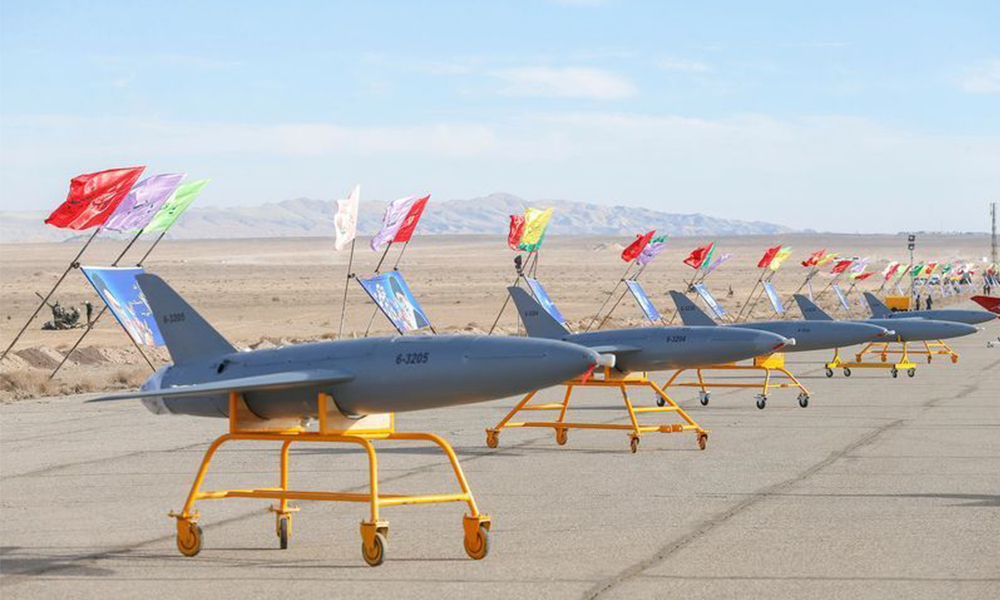
Just days after the anniversary of the US killing of a top Iranian general in a drone strike in Iraq, Iran itself launched exercises featuring a wide array of domestically produced drones, Iranian media reported.
Iran and the regional forces it backs have increasingly relied in recent years on drones in Yemen, Syria, Iraq and the Strait of Hormuz at the mouth of the Gulf, Reuters reported.
Iran’s armed forces are to test combat drones used as bombers, interceptors and in reconnaissance missions in the two-day exercises in central Semnan province, the semi-official Fars news agency said.
Beyond surveillance, Iranian drones can drop munitions and also carry out a “kamikaze” flight when loaded with explosives and flown into a target, according to a US official who spoke to Reuters.
Iran has developed a large domestic arms industry in the face of international sanctions and embargoes that bar it from importing many weapons.
The exercises coincided with increased tensions between Iran and the United States, two days after the first anniversary of the killing of Iranian general Qassem Soleimani in a US drone strike at Baghdad airport, and two weeks before President-elect Joe Biden takes office.
Biden aims to revive the nuclear agreement, though diplomacy is expected to be tricky, Reuters reported.
On Monday Iranian forces meanwhile seized a South Korean tanker in the Gulf, and Tehran also announced plans to increase uranium enrichment.
South Korea says it will dispatch a government delegation to Iran “at the earliest possible date” to try to secure the release of the tanker seized by Iran amid tensions over Iranian funds frozen in Seoul because of US sanctions.
According to South Korean media, a Foreign Ministry spokesman made the announcement on Tuesday, a day after the Islamic Revolutionary Guards Corps (IRGC) seized the tanker and detained its crew of 20 near the Strait of Hormuz over pollution violations — an allegation rejected by the ship’s operator.
The spokesman also said that South Korean Deputy Foreign Minister Choi Jong-kun will go ahead with a previously planned trip to Tehran early next week, as Iranian officials seek the release of billions of dollars frozen in South Korean banks.
South Korean News Net reported that the frozen assets stem from oil sales earned before Washington tightened sanctions on Iran following the US withdrawal from a landmark nuclear deal between Tehran and world powers.
In Tehran, an Iranian government spokesman rejected allegations that Iran’s seizure of the tanker amounted to hostage taking, the news portal reported.
“If anybody is to be called a hostage taker, it is the South Korean government that has taken our more than $7 billion hostage under a futile pretext,” Ali Rabiei told reporters.
Earlier, the US State Department called for the tanker’s immediate release, accusing Iran of threatening “navigational rights and freedoms” in the Persian Gulf in order to “extort the international community into relieving the pressure” of economic sanctions.
Meanwhile, the South Korean Defense Ministry announced that a destroyer carrying members of South Korea’s anti-piracy unit arrived in waters near the Strait of Hormuz — through which 20 percent of all oil traded passes — and was “carrying out a mission to ensure the safety of our nationals.”




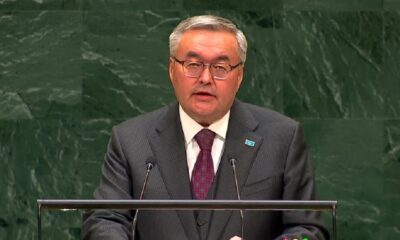




Kazakhstan’s Foreign Minister Mukhtar Tileuberdi has called for pragmatic and coordinated international engagement with Afghanistan, saying the country’s long-term stability is closely linked to the security and sustainable development of Central Asia.
Speaking during the general debate of the 81st session of the United Nations General Assembly in New York on Friday, Tileuberdi said humanitarian assistance to Afghanistan remains essential but alone cannot break the cycle of poverty, displacement and dependency.
He said Kazakhstan supports a “pragmatic, coordinated and step-by-step” approach to international engagement with Afghanistan, with the United Nations playing a central role.
Tileuberdi also said Kazakhstan is working with the UN to operationalize the United Nations Regional Centre for the Sustainable Development Goals for Central Asia and Afghanistan in Almaty.
He said the success of the centre should be measured by the results and assistance it delivers to the region.


Ariana Afghan Airlines increases Kabul-Delhi cargo flights

Khalilzad questions Pakistan’s commitment to Afghan welfare

India, UN envoy discuss Afghanistan’s humanitarian needs

Kazakhstan calls for coordinated international engagement with Afghanistan

Pakistan PM, UN chief discuss Afghanistan amid rising Kabul-Islamabad tensions

Saudi energy group signs major Afghanistan deals covering gas exploration and pipeline plans

Trump floats idea of renaming Atlantic or Pacific Ocean

US hits Egyptian bank branches with Iran sanctions as war marks six months

Nepal flood rescue mission enters critical phase as thousands remain missing

Iranian clubs to face Gulf opponents at neutral venues in Asian Champions League Elite

Exclusive interview with Abdul Latif Mansoor, Minister of MRRD

Tawsia: Overview of Afghanistan’s iron mines

Tahawol: Discussion on fresh Pakistani airstrikes on Afghanistan

Saar: Calls for international support for Afghanistan discussed

Tahawol: Opening of the 81st UN General Assembly Session
-

 Sport5 days ago
Afghanistan to face Japan and Nepal in Asian Games cricket group stage
-

 World4 days ago
CNN, MS NOW and Politico sue Trump, challenging White House ban
-

 Latest News3 days ago
Ariana Afghan Airlines ranks seventh among 45 Central Asian airlines
-

 Latest News4 days ago
UN reiterates call for respect for international law after Kunar airstrikes
-
 Latest News5 days ago
Khalilzad condemns Pakistan airstrikes, says current strategy is not working
-

 Regional3 days ago
US and Iran hold first talks since June after Trump’s ‘annihilation’ threat
-

 Latest News3 days ago
Silk Road highway in Wakhan corridor now reaches the China border
-

 Latest News4 days ago
Afghan Official: Pakistan’s airstrikes will not go unanswered