
Latest News
Khalilzad calls for peace talks; warns against military solution

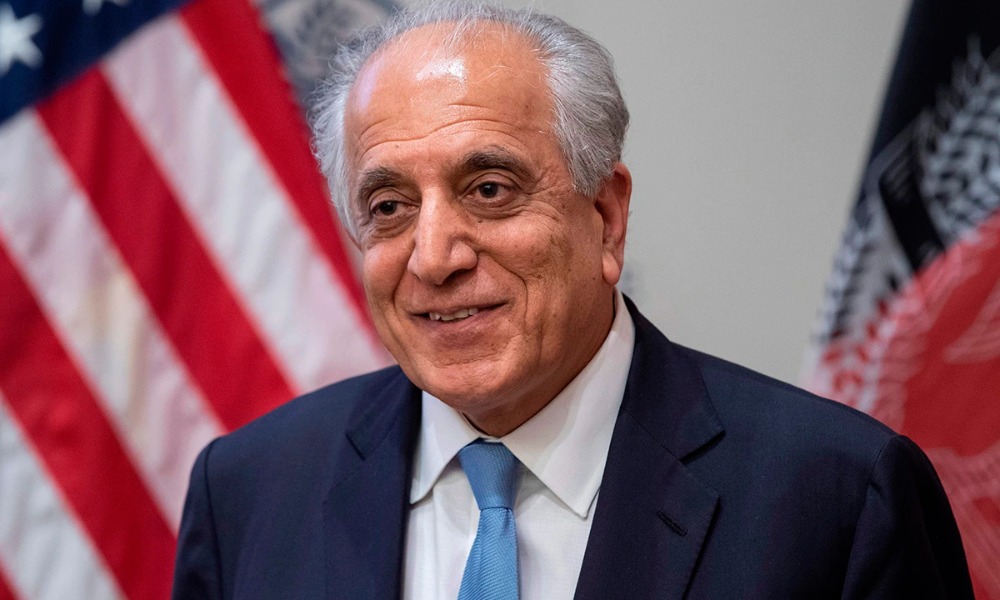
Zalmay Khalilzad, the U.S. special peace envoy for Afghanistan, has said the level of violence in Afghanistan is too high and that peace talks need to resume as soon as possible.
“Both sides have to be realistic about finding common ground. If there is no peace agreement, the alternative is not a Taliban victory. It is a long war,” he said.
Speaking to Germany’s Der Spiegel, Khalilzad said he believes the Taliban leadership is in control of its fighters on the ground but he warned “if groups inside the Afghan Republic start to divide and each go their separate ways – which is a possibility, and a dangerous one – that would encourage the Taliban, perhaps the hardliners, to seek a military solution.”
Asked what a “military solution” would mean for Afghanistan, Khalilzad said: “It would mean a repeat of the tragic period of the 1990s, when Afghanistan became the scene of a proxy war following the Soviet departure.
“Many of the leaders of the Taliban and the other Afghan groups remember that period. They remember that terrible mistakes were made: They didn’t come together, instead they each sought an advantage for themselves and that led to a war that destroyed Afghanistan. Our expectation is that the parties won’t repeat that mistake again,” he said.
Khalilzad went on to say the proposed peace conference in Turkey, which has been delayed due to the Taliban’s refusal to attend such a meeting until all foreign troops have withdrawn from Afghanistan, is one test to see whether the Taliban want to end the conflict through negotiations.
“The Turks have agreed, together with Qatar and the United Nations, to convene a meeting of the Afghan Republic and the Taliban to accelerate political negotiations. The Taliban so far have not agreed to the dates that were proposed. They said they haven’t yet received authorization from their leaders. But they do want prisoners released and they do want to be taken off the blacklist,” Khalilzad said.
Khalilzad pointed out that “war is expensive.”
He said this applied to both sides – to the Afghan security forces and to the Taliban. He also stated that significant numbers “are dying on all sides”.
But he noted that the Taliban have choices – choices that affect their futures.
“One future is international legitimacy, assistance, getting off the sanctions’ blacklist, and prisoners released. But that means negotiations and agreeing to a realistic political settlement.” Khalilzad said.
“The alternative is war. Even if they make continued gains, they’re not looking at an easy victory. And ongoing aggression on their part will mean continued isolation, not being accepted as a legitimate partner, not getting off the blacklist, no prisoners released, and the continued opposition from the international community working to prevent a military takeover.
“So this is a time for the Taliban to decide which path they want to take. And we are preparing ourselves, with our friends and allies, for both options. That’s the message that we have delivered to the Taliban,” he said.
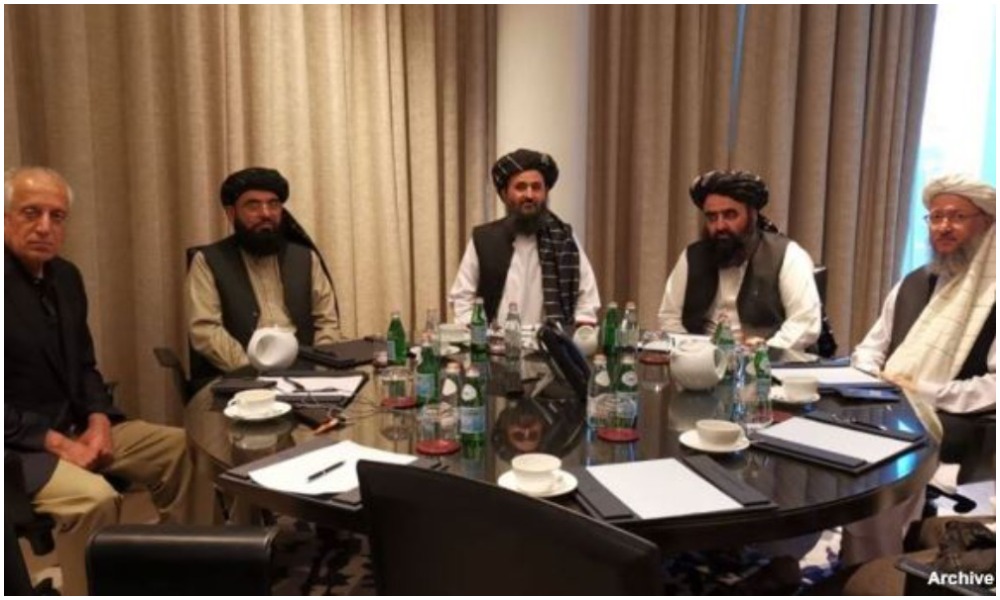
Khalilzad said according to the Taliban, they “are working on their plan for a political settlement.”
On the Afghan Republic’s plan, Khalilzad said there had been 30 to start off with but this was now down to two.
“The negotiations – including the meeting in Turkey with facilitators – can be used to see how these plans might fit together for the future of Afghanistan. We strongly hope the UN, Turkey and Qatar can help through active facilitation.
“The Afghan security forces are a national institution worthy of support and we will keep supporting them,” he said.
But Khalilzad said if the Taliban fail to pursue a political settlement and pursue the line of war, he believes the Afghan security forces will resist and “we will support them”.
He warned however that Afghanistan’s recent history shows that efforts by any group to impose their will on the people by force leads to a “long war.”
Once again he reassured Afghanistan that neither the US nor the rest of the international community would abandon Afghanistan.
“We will have – when the withdrawal is completed – a new chapter in our partnership. Afghanistan is going to be at the very top of the recipients of U.S. assistance, foreign assistance which includes supporting the Afghan security forces, development assistance and humanitarian assistance. And our allies say the same,” he said.
Khalilzad also stated that the US is preparing for all potential outcomes, stating “the violence is bad”. He said their goal is to help end the conflict through a peace agreement.
“In a best-case scenario, there will be national reconciliation and everyone’s energies will focus on rebuilding lives and obtaining the peace dividend. But yes, things could get worse if there is no realistic agreement and the war continues – or, God forbid, that it escalates, and past mistakes are repeated. We, for our part, will do all that we can, short of getting involved again in a war, to prevent things from devolving.
“All Afghans have been affected by this war. Afghans living in Taliban areas have not been spared. They have been deprived of a lot. They deserve a better chance, as well as those who have benefited from the gains of the last 20 years. We’re preparing for all potential alternatives and we are very much committed to humanitarian support as well,” he said.
Khalilzad went on to say the Afghan security forces are a national institution worthy of support, which the US will continue doing. He also said Washington will maintain a robust embassy and will monitor the situation closely.
Asked about “what went wrong” with Afghanistan, Khalilzad stated that while the Republic has delivered on many fronts, there have also been challenges.
He said corruption has been a key problem and that the electoral process has been problematic at times.
“Over the long history of this war, there have also been mistakes made in executing the military strategy. The issue of sanctuaries for the opposition was not dealt with in a timely fashion,” he said.
On Pakistan, Khalilzad said: “We believe that Pakistan has a legitimate interest in Afghanistan and the Afghans should respect those legitimate interests. The legitimate interest is that Afghanistan’s soil should not be used by those hostile to Pakistan against Pakistan.”
He also stated that Pakistan soil should not be used by forces hostile to Afghanistan, against Afghanistan. “And we have been working hard, along with the United Kingdom, for the two countries to work on improving security cooperation and perhaps to reach a security agreement with each other. That’s an important part of our peace efforts,” he said.
Khalilzad said that if this peace effort does not succeed, and if there is no agreement between Pakistan and Afghanistan, Pakistan will suffer.
“Pakistan will be blamed because so much of the Taliban’s leadership lives in Pakistan. A failed peace also means missed opportunities for both countries. Leaders in Pakistan and Afghanistan have a common interest in economic connectivity and trade and development. And we are working hard with both, and with Central Asia, for these things. We believe peace in Afghanistan empowers that and makes that possible.”
Khalilzad went on to say that ultimately, the responsibility of whether peace is possible, lies with the leaders of the Afghan Republic and the Taliban.
“The Afghan leaders say they have learned from the past. But we will see. Will they put their country first, will they put their people first or will they pursue some separate agenda? Will they put the future of the current generation, our future generations first? Time will tell whether they will make the right choice or repeat past mistakes. And the Taliban have an important historic choice to make,” he said.












Kazakhstan’s Foreign Minister Mukhtar Tileuberdi has called for pragmatic and coordinated international engagement with Afghanistan, saying the country’s long-term stability is closely linked to the security and sustainable development of Central Asia.
Speaking during the general debate of the 81st session of the United Nations General Assembly in New York on Friday, Tileuberdi said humanitarian assistance to Afghanistan remains essential but alone cannot break the cycle of poverty, displacement and dependency.
He said Kazakhstan supports a “pragmatic, coordinated and step-by-step” approach to international engagement with Afghanistan, with the United Nations playing a central role.
Tileuberdi also said Kazakhstan is working with the UN to operationalize the United Nations Regional Centre for the Sustainable Development Goals for Central Asia and Afghanistan in Almaty.
He said the success of the centre should be measured by the results and assistance it delivers to the region.


Abu Muslim Farah defeat Khurasan Faryab 2-0 in ACL season six

Saar: Concerns over Pakistan’s political crisis discussed

Afghanistan Champions League: Omar Zawak Herat beat Toofan Herat 1-0

Blast in Pakistan’s Dera Ismail Khan kills 11, injures 30

Ariana Afghan Airlines increases Kabul-Delhi cargo flights

Saudi energy group signs major Afghanistan deals covering gas exploration and pipeline plans

Trump floats idea of renaming Atlantic or Pacific Ocean

US hits Egyptian bank branches with Iran sanctions as war marks six months

Nepal flood rescue mission enters critical phase as thousands remain missing

Iranian clubs to face Gulf opponents at neutral venues in Asian Champions League Elite
Saar: Concerns over Pakistan’s political crisis discussed

Exclusive interview with Abdul Latif Mansoor, Minister of MRRD

Tawsia: Overview of Afghanistan’s iron mines

Tahawol: Discussion on fresh Pakistani airstrikes on Afghanistan

Saar: Calls for international support for Afghanistan discussed
-

 World5 days ago
CNN, MS NOW and Politico sue Trump, challenging White House ban
-

 Latest News3 days ago
Ariana Afghan Airlines ranks seventh among 45 Central Asian airlines
-

 Latest News5 days ago
UN reiterates call for respect for international law after Kunar airstrikes
-

 Regional4 days ago
US and Iran hold first talks since June after Trump’s ‘annihilation’ threat
-

 Latest News3 days ago
Silk Road highway in Wakhan corridor now reaches the China border
-

 Regional3 days ago
Iran airlines cancel flights as US sanctions hit
-

 Latest News5 days ago
Afghan Official: Pakistan’s airstrikes will not go unanswered
-

 Regional5 days ago
G7 foreign ministers call on Iran to stop arming Houthis