
Latest News
More Afghans going hungry, fewer jobs available – World Bank

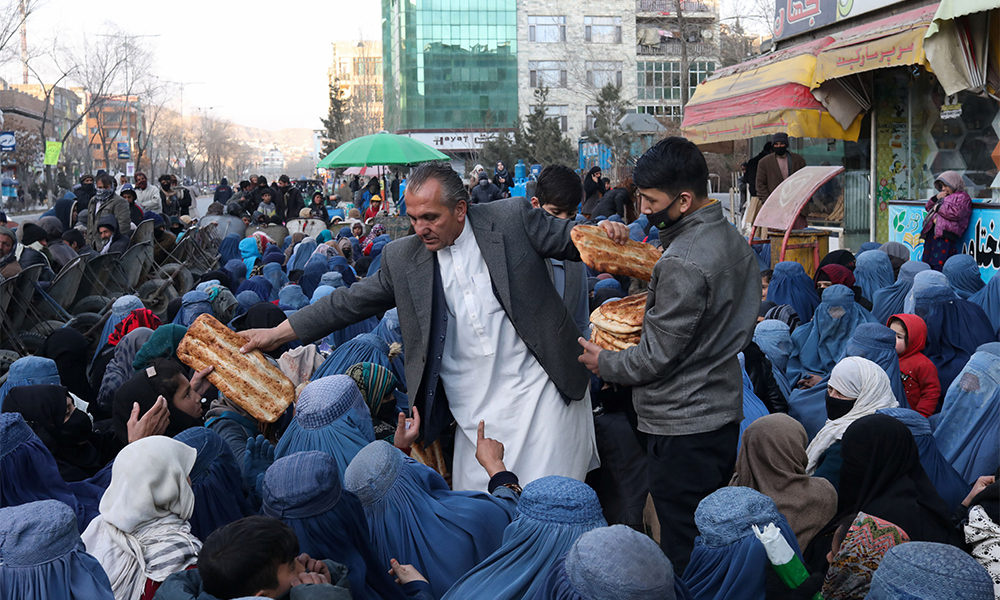
The number of people in Afghanistan who cannot afford food and other essentials has doubled since the Islamic Emirate of Afghanistan (IEA) takeover of the country in August 2021 as unemployment rises and wages fall, a World Bank survey showed on Tuesday.
The Afghanistan Welfare Survey, conducted by phone and covering the October-December 2021 period, found that 70% of respondents said their households were unable to cover basic food and non-food needs, up from 35% in May 2021.
The share of Afghan households switching to lower-quality or less expensive food rose to 85% from 56% in the July-August 2021 period, it found.
Nearly half of households also reported a decline in the number of meals consumed each day, up from around a quarter in July-August 2021.
The World Bank attributed the sharp increase in poverty to overall economic conditions rather than to “specific actions introduced by the interim administration”, citing in particular a decline in public sector jobs.
The IEA authorities still lack international recognition seven months after overrunning Kabul as the last U.S.-led international troops departed, ending 20 years of war.
Donors cut financial aid constituting more than 70% of government expenditures and about $9 billion in Afghan central bank assets were frozen. Many IEA leaders remain under US and UN sanctions.
The United Nations has previously warned that more than half of Afghanistan’s 39 million people face starvation.
The World Bank study found about a fifth of household heads were looking for work in the October-December 2021 period, up from 8% during the same period of 2019, largely due to a decline in jobs in the army, police and other security services.
Despite Western concerns that the IEA would roll back women’s rights, the survey said that nationwide, school attendance among both boys and girls aged 6-18 had risen in October-December 2021 compared to the same period of 2019.
The share of households sending boys to school increased to 73% from 63%, while those sending girls rose to 54% from 44%.
The share of urban households sending girls to school stayed flat at 53%, but households sending girls only to primary school rose to 19% from 5%.
Under their previous rule from 1996 to 2001, the IEA barred women and girls from education. They say they have since changed.












Kazakhstan’s Foreign Minister Mukhtar Tileuberdi has called for pragmatic and coordinated international engagement with Afghanistan, saying the country’s long-term stability is closely linked to the security and sustainable development of Central Asia.
Speaking during the general debate of the 81st session of the United Nations General Assembly in New York on Friday, Tileuberdi said humanitarian assistance to Afghanistan remains essential but alone cannot break the cycle of poverty, displacement and dependency.
He said Kazakhstan supports a “pragmatic, coordinated and step-by-step” approach to international engagement with Afghanistan, with the United Nations playing a central role.
Tileuberdi also said Kazakhstan is working with the UN to operationalize the United Nations Regional Centre for the Sustainable Development Goals for Central Asia and Afghanistan in Almaty.
He said the success of the centre should be measured by the results and assistance it delivers to the region.


Abu Muslim Farah defeat Khurasan Faryab 2-0 in ACL season six

Saar: Concerns over Pakistan’s political crisis discussed

Afghanistan Champions League: Omar Zawak Herat beat Toofan Herat 1-0

Blast in Pakistan’s Dera Ismail Khan kills 11, injures 30

Ariana Afghan Airlines increases Kabul-Delhi cargo flights

Saudi energy group signs major Afghanistan deals covering gas exploration and pipeline plans

Trump floats idea of renaming Atlantic or Pacific Ocean

US hits Egyptian bank branches with Iran sanctions as war marks six months

Nepal flood rescue mission enters critical phase as thousands remain missing

Iranian clubs to face Gulf opponents at neutral venues in Asian Champions League Elite
Saar: Concerns over Pakistan’s political crisis discussed

Exclusive interview with Abdul Latif Mansoor, Minister of MRRD

Tawsia: Overview of Afghanistan’s iron mines

Tahawol: Discussion on fresh Pakistani airstrikes on Afghanistan

Saar: Calls for international support for Afghanistan discussed
-

 World5 days ago
CNN, MS NOW and Politico sue Trump, challenging White House ban
-

 Latest News4 days ago
Ariana Afghan Airlines ranks seventh among 45 Central Asian airlines
-

 Latest News5 days ago
UN reiterates call for respect for international law after Kunar airstrikes
-

 Regional4 days ago
US and Iran hold first talks since June after Trump’s ‘annihilation’ threat
-

 Latest News4 days ago
Silk Road highway in Wakhan corridor now reaches the China border
-

 Regional3 days ago
Iran airlines cancel flights as US sanctions hit
-

 Latest News5 days ago
Afghan Official: Pakistan’s airstrikes will not go unanswered
-

 Sport5 days ago
Afghan boxing referee heads to China for international festival