
Latest News
NDS sets Special Forces to fight Daesh


The Daesh groups is such a serious threat for Afghanistan that the National Directorate Security (NDS) has set Special Forces to fight against them.
Spokesman of NDS, Abdul Hasib Sidiqi emphasized that Daesh’s power is severely weakened in the country.
Beside the Taliban group, now Daesh has made the war more complex in Afghanistan.
NDS has claimed that Daesh’s activities in several parts of the country is dangerous for Afghanistan.
he Islamic State (IS) group, also known by an Arabic acronym, Daesh, has gained a toehold in Afghanistan, although with the loss in a drone strike of its most prominent and recently appointed commander, Rauf Khadem, that toehold is looking precarious.
There has been much reporting about IS in Afghanistan, but not all reporting is equal. Some events cited as evidence of Daesh have nothing to do with the group, while others, cited by media and government officials as indications of IS presence, are part of a different development: the passage of foreign militants from Pakistan’s tribal areas into Afghanistan in the wake of the military operation by the Pakistani army in North Waziristan that started last summer.
However, we have also seen the first known and notable insurgent commanders ‘coming out’ as Daesh. The Islamic State (IS) also officially announced on 26 January its expansion into ‘Khorasan’, an old name for the region that is largely in what is now Afghanistan (the name allows IS to refer to Afghanistan and Pakistan without having to name them – un-Islamically, in its eyes – as nation states.
This is the first time the group has officially spread outside the Arab world. Afghan and regional leaders, as well as common Afghans, had already been concerned about the group’s potential threat. Indeed fear of Daesh has evoked a rare consensus between the Afghan government and the Taleban, both of whom have accused foreign intelligence agencies of being behind the threat.
According to the ministry of interior findings, Daesh fighters are activating in three provinces of Afghanistan and so far 35 members of the group have been killed in Nangahar.
“The presence of Daesh has been confirmed in Helmand, Farah and Nangahar so far and Afghan troops have taken serious measures regarding the issue,” Sidiq Sidiqi, spokesman of interior ministry said.
However, the ministry of defense claims that fighting against the extremist groups such as Daesh is not only the responsibility of Afghanistan but also the responsibility of the region and the world.
The presence of Daesh and new threats coming from countries which “are using terror as a policy tool” were mentioned in the same breath by the head of the Afghan intelligence service, Rahmatullah Nabil. In a speech to the Wolesi Jirga on 22 January 2015, he said: “New threats are emerging in the region, where some countries are using terror as a policy tool to reach their targets.” He said that if Afghanistan’s neighbours continued to destabilise Afghanistan, they would also burn in the fires they were stoking.
It is not only Afghan officials who have spread the fear of IS in Afghanistan based on sightings of foreign fighters. Senior Russian officials have also been warning of IS militants ‘flocking’ to northern Afghanistan with an eye to mounting attacks against the Central Asian republics.
President Vladimir Putin’s special representative for Afghanistan, Zamir Kabulov, said that thousands of fighters, mostly of Central Asian origin, have taken up positions and set up training camps near the borders of Tajikistan and Turkmenistan. According to Kabulov, these militants belong to the Islamic State; moreover, he claims IS has also deployed around a hundred fighters from its main base in Iraq and Syria to Afghanistan to supplement local fighters.
Kabulov’s comments came just after a warningby his boss Putin that: “The current situation arouses concern. Militants from the Islamic State terrorist group make a stab at including some provinces of Afghanistan into the so-called Islamic Caliphate. … Terrorist and extremist groups are trying to extend their activities in Central Asia.”
There has however been no on-the-ground reporting of foreign fighters being re-deployed from Iraq and Syria to northern Afghanistan. Instead, Kabulov’s concern probably stems from the same reports as Afghan officials have received about the movement of foreign fighters towards northern Afghanistan.
The Islamic State’s creeping presence in Afghanistan will not bode well for the Taliban dominance in the jihadi activities in Afghanistan as well.
Perhaps this is a main reason behind Taliban’s recent inclinations towards resuming peace negotiations with the government they fought in last fourteen years.
The Taliban and the Islamic State have openly opposed each other. As the IS is in finding foothold in Afghanistan, the Taliban leadership sees themselves direly vulnerable.
The Taliban would quickly lose ground in some areas to the IS if the IS manages to recruit Taliban members and fighters to its ranks.
All these have come as an alarm for the Taliban leadership which has openly expressed opposition to the Islamic State. Therefore, the group seems to be consolidating its rank and leadership against the threat of the Islamic State in Afghanistan.
Reported by Fawad Naseri

Latest News
Severe rainfall and natural disasters cause heavy casualties across Afghanistan
At least 61 people have been confirmed dead, with 116 others injured. Four individuals remain unaccounted for as search and rescue operations are underway.
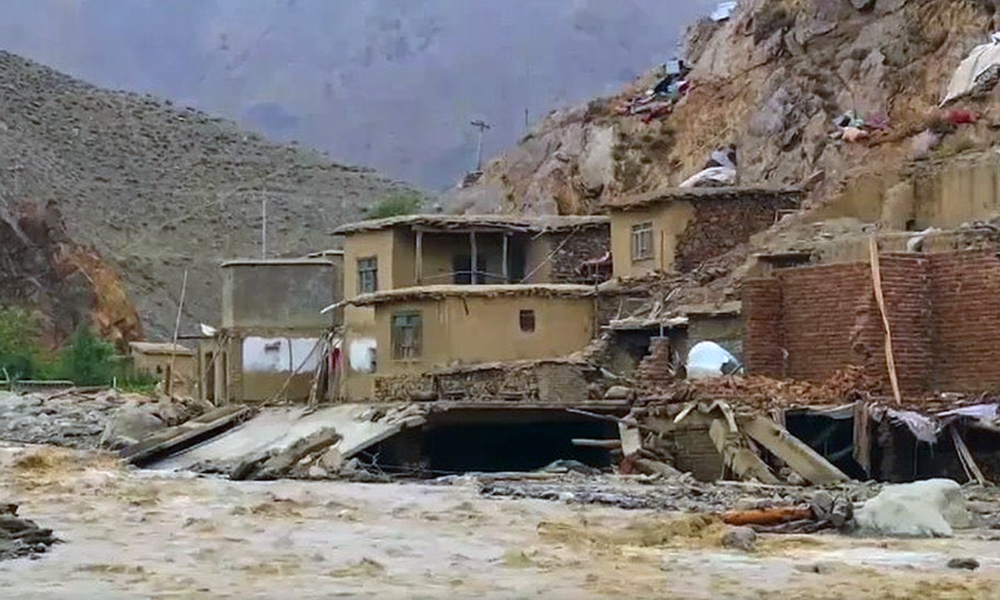
The Spokesperson for the Islamic Emirate of Afghanistan, Zabihullah Mujahid, has confirmed widespread devastation across the country following a series of natural disasters and heavy rainfall. The toll continues to rise as authorities assess the damage.
At least 61 people have been confirmed dead, with 116 others injured. Four individuals remain unaccounted for as search and rescue operations are underway. The disaster has also led to the destruction of 2,448 homes, leaving thousands displaced, while 26,841 acres of agricultural land have been severely damaged. In addition, the storm claimed the lives of 1,045 livestock animals, further exacerbating the already dire situation for rural communities.
In a statement, Mujahid emphasized the ongoing relief efforts. The Islamic Emirate is mobilizing all available resources to assist the hardest-hit regions and ensure the swift recovery of affected communities. The focus remains on providing immediate aid, including shelter, medical supplies, and food, while also beginning the long-term process of reconstruction and recovery.
Authorities have urged citizens in vulnerable areas to remain vigilant as more rain is forecast, adding to the urgency of the ongoing relief operations.
Latest News
Afghan citizens reported among casualties in US, Israeli attacks, Iran says
As of now, authorities of the Islamic Emirate of Afghanistan have not issued an official response to the claims.
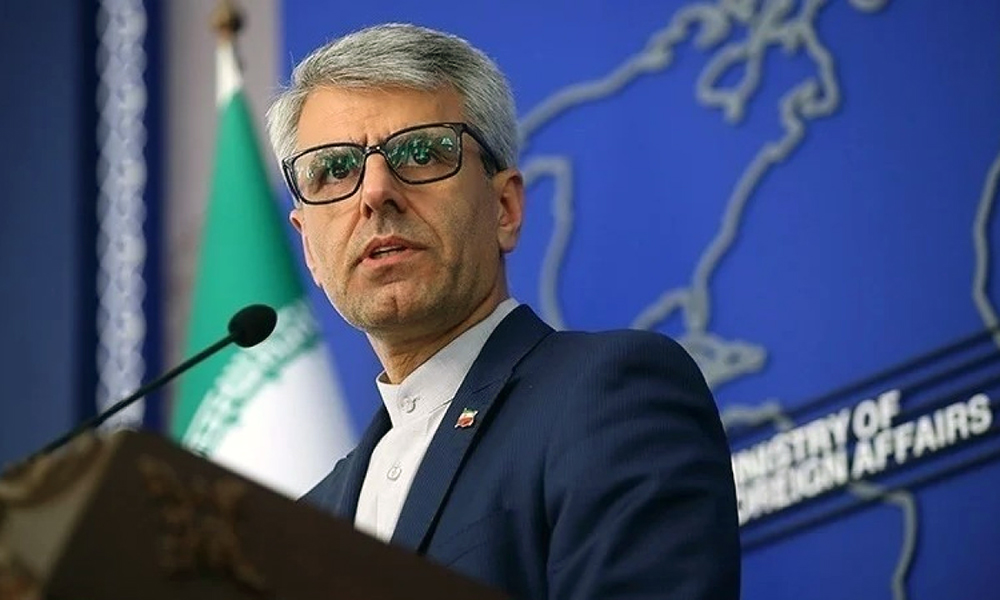
Iran’s Embassy in Kabul, citing Foreign Ministry spokesperson Esmaeil Baghaei, has stated that a number of Afghan citizens were killed or injured during what Tehran described as a 35-day military campaign carried out by the United States and Israel.
According to the statement, the Afghan nationals were living in Iran at the time of the attacks. Baghaei referred to them as “honored guests” of the country, adding that some lost their lives while others sustained injuries during the reported strikes.
He did not provide specific figures regarding the number of Afghan casualties or further details about the incidents.
As of now, authorities of the Islamic Emirate of Afghanistan have not issued an official response to the claims.
Latest News
Save the Children: Nearly one Afghan child killed or injured daily by explosive remnants
Despite the efforts of aid organizations and demining groups, the scale of the contamination remains overwhelming.
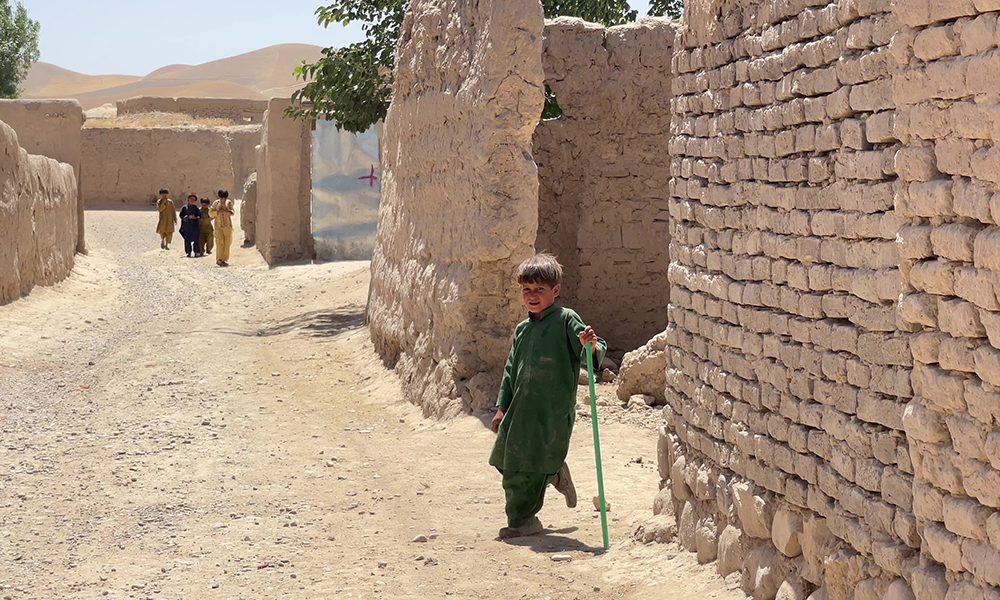
Save the Children has issued a stark warning, revealing that nearly one Afghan child is killed or injured every day by explosive remnants of war (ERW). In its latest report, the global humanitarian organization emphasized the ongoing and deadly impact of landmines and unexploded ordnance scattered across the country, a legacy of decades of conflict.
From January 2025 to January 2026, 338 Afghan children were killed, injured, or permanently disabled by explosive remnants. Shockingly, children represented nearly 70 percent of all casualties from such explosions during this period. Save the Children’s report underscores that Afghanistan continues to have the highest number of child casualties due to explosive remnants worldwide.
The report highlights that vast swathes of Afghanistan remain contaminated with hazardous materials, with more than 2.7 million people – including many children – living within one kilometer of these dangerous zones. These hazardous areas, often located in fields, pastures, and farmlands, remain uncleared despite ongoing demining efforts. Afghanistan is now considered one of the most contaminated countries globally, with nearly 5,000 hazardous sites still awaiting clearance.
The danger is particularly acute for rural and nomadic communities, including the Kuchi, who traverse long distances in search of water and grazing lands. These communities face severe challenges in accessing healthcare, education, and protection services, further compounding the risks posed by unexploded devices.
To address the growing threat, Save the Children has launched mobile awareness programs aimed at teaching children, particularly in remote and underserved regions, how to identify and avoid explosive hazards. These programs are crucial in helping to reduce the number of child casualties, as children are often unaware of the dangers in their environment.
Despite the efforts of aid organizations and demining groups, the scale of the contamination remains overwhelming. Funding shortages continue to hamper the progress of clearance operations, leaving families and children exposed to the deadly remnants of past conflicts.
“Explosive remnants of war are not just a legacy of Afghanistan’s past; they are an ongoing humanitarian emergency that continues to claim innocent lives,” said Save the Children. “The international community must step up its support to ensure the safety of Afghan children and accelerate efforts to clear these life-threatening hazards.”
As the country struggles to recover from years of conflict, the need for comprehensive and sustained demining operations, alongside better access to education and healthcare for at-risk communities, has never been more urgent.


Severe rainfall and natural disasters cause heavy casualties across Afghanistan

Kazakhstan eyes rare metals mining projects in Afghanistan and Rwanda

Afghan citizens reported among casualties in US, Israeli attacks, Iran says

Save the Children: Nearly one Afghan child killed or injured daily by explosive remnants

Eight dead after 5.8-magnitude earthquake hits Afghanistan

Prominent Muslim scholar issues fatwa calling for Afghanistan-Pakistan ceasefire

IEA Supreme Leader issues Eid-ul-Fitr message urging unity and support for Islamic system

14 Pakistani soldiers killed after military post falls along Durand line: MoD

Afghanistan steps in to replace Iran in supplying fruits and vegetables to Russia

Afghan airstrikes target Pakistani military sites in retaliation for air attacks

Tawsia: This week’s key economic developments in Afghanistan discussed

Tahawol: Start of talks between Kabul-Islamabad in China discussed

Saar: Ongoing US and Israeli attacks on Iran discussed

Tahawol: Ongoing US–Israeli war with Iran discussed

Saar: Afghanistan-Pakistan talks in China discussed
-
 Latest News5 days ago
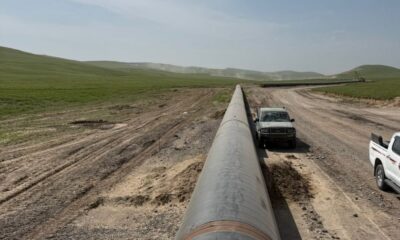
TAPI gas pipeline advances 25 km in Afghanistan
-
 Business5 days ago
Afghanistan opens doors to agribusiness investments amid rising opportunities
-
 Latest News3 days ago
Baradar approves 17 projects worth over one billion AFN
-

 Business4 days ago
Russia backs Uzbekistan–Afghanistan trade hub, praises regional economic cooperation
-

 Sport4 days ago
ATN secures broadcast rights for inaugural Afghanistan Wrestling Premier League
-

 Sport3 days ago
ATN to broadcast second season of Ariana Snooker Championship
-
 Regional4 days ago
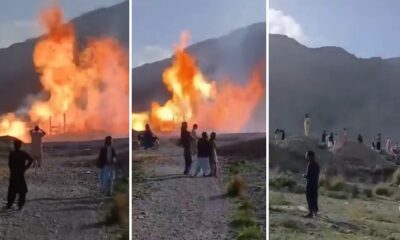
Gas pipeline blown up in southern Pakistan, says official
-

 Sport4 days ago
Rajasthan Royals outclass Chennai Super Kings as IPL action continues