
Business
No Policy on Waters, Benefits Neighboring Countries

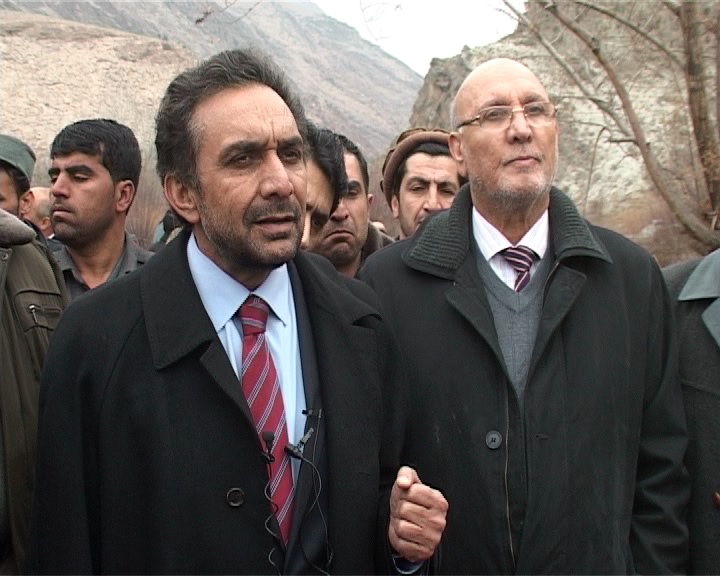

Despite Afghanistan is having the biggest sources of water in the region still about 70 % of its water being wasted and neighboring countries are benefited from it the Afghan Government yet to have drafted any policy on water wastes in the past 13 years, special envoy on Good Governance Ahmadzai Masoud has stated said, “Now the National Unity Government will pick this issue as one its priority activities.”
Afghan Government special envoy on Governance Affairs Ahmad Zai Masoud said,” fortunately Afghanistan is full of waters and we can solve our water problems through it, but unfortunately former Afghan Officials have neglected to draft a policy for maintain this valuable thing in Afghanistan in the past 13 years, now we have decided to work on inhabitation of water as the priority program.”
Meanwhile Deputy Minister of Water and Energy Zaiudding Shujayee said,” the technical designs and plan for the Lalandar Water ban located in Charasiab area has been completed and waiting for upcoming budget to begin its implementation if the National Unity Government to fulfill its commitments and allocate the budget Kabul residents will have water after one year.”
Afghanistan Economic experts have said, “Though Afghanistan is having enough water but having no good management on the aspect has made the Government to import Energy, more lands be out of green plants, and causes poor accessing on drinkable water in the country especially in the capital city of Kabul.”
Reported By: Nimatullah Ahmadi

Business
Afghanistan signs 845MW Power deal with Azizi energy; Baradar meets company Chief to advance investment plans
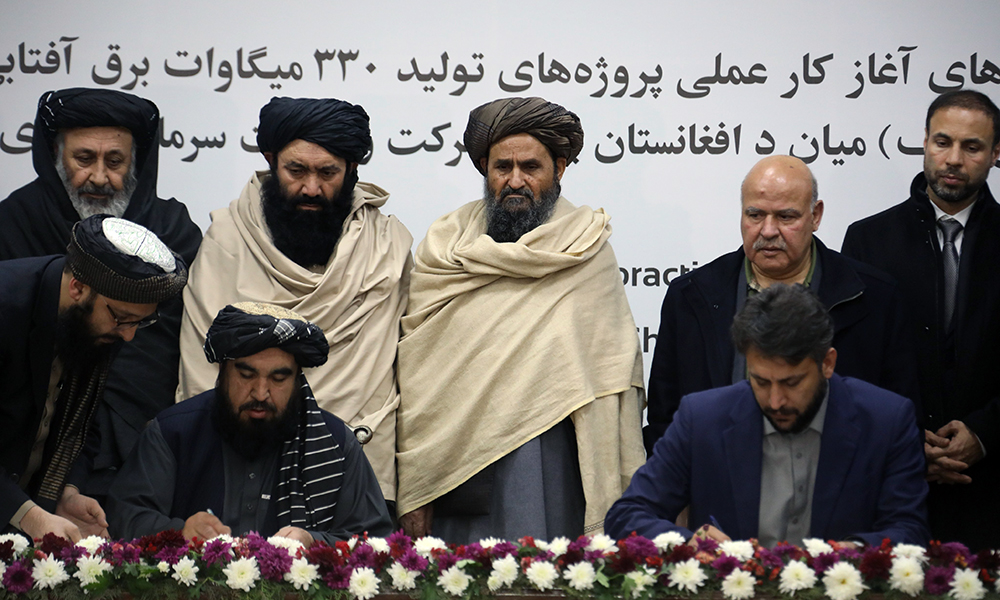
Contracts for the commencement of practical work on five major power generation projects with a total capacity of 845 megawatts were signed on Wednesday between Da Afghanistan Breshna Sherkat (DABS) and Azizi Energy.
The signing ceremony was held at the Government Media and Information Center in the presence of Deputy Prime Minister for Economic Affairs Mullah Abdul Ghani Baradar.
Under the agreements, Azizi Energy will invest approximately $463 million in the projects, which include 100 megawatts of solar power in the Naghlu area of Kabul province, 100 megawatts of solar power in Barik Ab area of Parwan province, and 130 megawatts of solar power in Ghazni province.
In addition, the company will construct 165 megawatts of coal-fired power generation in Takhar province and 350 megawatts in Baghlan province.
Officials said the solar projects are expected to be completed within two years, while the coal-fired plants will be finalized within three years. The projects form part of a broader 10,000-megawatt energy investment plan aimed at strengthening domestic electricity production and reducing reliance on imports.
Following the signing ceremony, Deputy PM Baradar met with Azizi Group’s Chief Executive Officer Mirwais Azizi and his technical team at his office.
Baradar welcomed the launch of practical work on the five projects, describing them as significant steps toward job creation and economic growth in the country.
Azizi expressed appreciation for the cooperation provided by the Deputy Prime Minister’s office and relevant institutions, stating that the company had faced no major obstacles in advancing its plans. He said the Islamic Emirate has demonstrated a strong commitment to national development, which paved the way for the implementation of the projects.
Azizi further announced that an additional 15 to 20 power generation projects, with a combined capacity of up to 5,000 megawatts, are expected to be launched by the end of the current year.
He also noted that work on the TAPI project is progressing steadily on Afghan soil. Once gas reaches Herat province, Azizi Group plans to coordinate with the Ministry of Mines and Petroleum to develop major gas distribution networks and establish a 3,000-megawatt gas-fired power plant.
Azizi called for close cooperation with relevant authorities in the exploration, extraction, and utilization of natural gas and coal resources for electricity production.
Deputy PM Baradar and officials from the concerned institutions assured full cooperation and joint coordination in advancing the energy sector projects.
The agreements mark one of the latest investments in Afghanistan’s power infrastructure, signaling renewed efforts to boost domestic energy production and stimulate economic development.
Business
Uzbekistan approves feasibility study agreement for Trans-Afghan Railway
The agreement builds on a tripartite document signed on July 17, 2025, which outlined cooperation on preparing a feasibility study for the Termez–Kharlachi railway corridor.
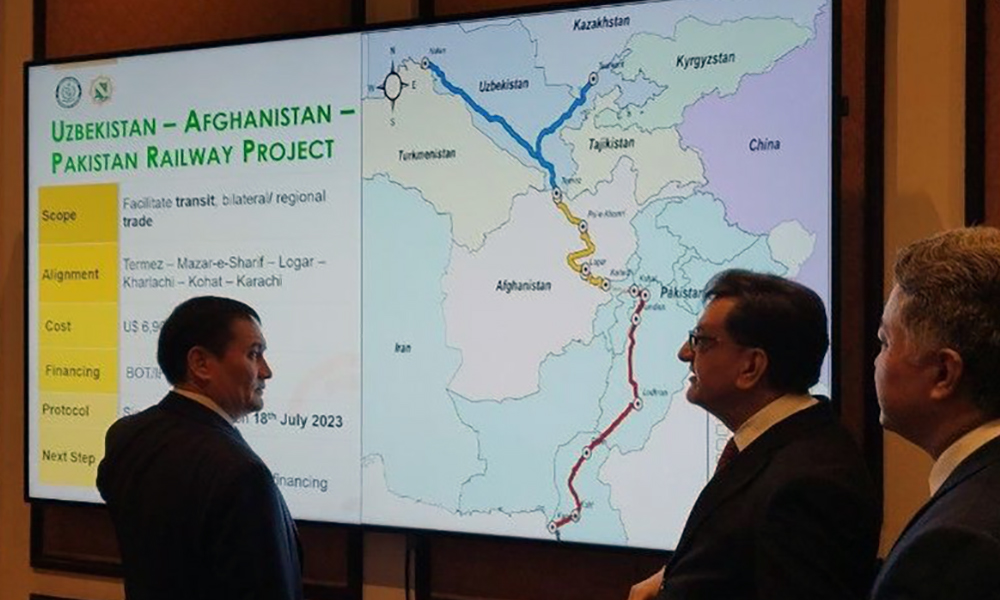
Uzbekistan has ratified an international agreement to prepare a feasibility study for the Naybabad–Kharlachi section of the Trans-Afghan Railway, formalizing its participation in the project.
President Shavkat Mirziyoyev signed a decree on February 4 approving the agreement.
The framework agreement involves the transport ministries of Uzbekistan, Afghanistan and Pakistan and provides for joint work on a feasibility study for the proposed railway line between Naybabad and Kharlachi. The section forms part of the wider Trans-Afghan Railway project aimed at strengthening transport links between Central and South Asia.
Under the decree, Uzbekistan’s Ministry of Transport has been designated as the competent authority responsible for implementing the agreement. The Ministry of Foreign Affairs has been tasked with notifying Kabul and Islamabad that Uzbekistan has completed the internal procedures required for the agreement to enter into force.
The agreement builds on a tripartite document signed on July 17, 2025, which outlined cooperation on preparing a feasibility study for the Termez–Kharlachi railway corridor.
The planned route is expected to run through Termez, Naybabad, Maidanshahr, Logar and Kharlachi, providing a transit corridor through Afghanistan.
The feasibility study will be commissioned by the Tripartite Project Office for the Development Strategy of International Transport Corridors under Uzbekistan Railways.
Established in Tashkent in May 2023, the office also operates branches in Kabul and Islamabad to coordinate the project.
First proposed in 2018, the Trans-Afghan Railway was initially projected to carry up to 20 million tons of cargo annually at a cost of about $5 billion. Cost estimates have since been revised.
In July 2022, Uzbekistan Railways cited an estimate of $4.6 billion with a construction period of up to five years, while Pakistan’s Ministry of Railways put the cost at $8.2 billion in December 2024.
More recent assessments have placed the overall cost at around $7 billion, with a public-private partnership under a Build-Operate-Transfer model among the options under consideration.
Business
Afghanistan seeks expanded ties with Russia in energy, mining and infrastructure
TASS reported that Kabul is also prepared to cooperate with Moscow in the extraction of mineral resources.

Afghanistan has expressed strong interest in broadening trade and economic cooperation with Russia, with a particular focus on energy, mining and infrastructure projects, according to Russia’s TASS news agency.
In an interview with TASS, Afghanistan’s Ambassador to Moscow, Gul Hassan, said Kabul is keen to import oil and gas from Russia as part of efforts to deepen bilateral economic ties.
He noted that trade relations between the two countries are progressing and that, if key obstacles—especially banking restrictions—are addressed, Afghanistan could also import medicines, industrial goods, grain, vegetable oils and other commodities from Russia.
In return, the ambassador said Afghanistan is ready to export fresh and dried fruits, vegetables, medicinal plants, carpets and mineral resources to the Russian market, adding that expanding export-import operations could significantly increase bilateral trade volumes.
He also revealed plans to open an exhibition of Afghan products in Moscow, which he said would help boost trade turnover.
TASS reported that Kabul is also prepared to cooperate with Moscow in the extraction of mineral resources.
Hassan described the economy as a central pillar of Afghanistan’s foreign policy, emphasizing the government’s goal of positioning the country as a key link in regional economic integration and attracting foreign investment.
He noted that Russian companies have long shown interest in Afghanistan’s industrial, mining and infrastructure sectors.
The ambassador further told TASS that Russian firms are already in talks with relevant Afghan authorities on the construction of small hydroelectric power plants.
Representatives of several Russian companies have reportedly visited Afghanistan and held meetings with officials and technical experts.
According to Hassan, practical steps toward cooperation in the energy and power generation sectors are expected in the near future, pointing to a potential new phase in Afghan-Russian economic relations.


Tahawol: IEA’s rejection of global corruption index report discussed

Pakistan appoints two consuls general in Kandahar and Mazar-e-Sharif

Saar: Pakistan’s double game in Afghan war discussed

Karzai: Development of human society requires women’s and girls’ access to education

Four years on, UN and EU renew call for Afghan girls’ right to education

Pakistan approves re-export of stranded Afghan transit trade cargo

Pakistan army orders evacuation of Tirah Valley, fears of mass displacement grow

Afghan traders sign deal to import pharmaceuticals from Bangladesh

Uzbekistan pushes forward with Trans-Afghan railway project

AFC Futsal Asian Cup 2026: Day One Review
Tahawol: IEA’s rejection of global corruption index report discussed
Saar: Pakistan’s double game in Afghan war discussed

Tahawol: Tajikistan’s expanding relations with Afghanistan reviewed

Saar: Criticism of Pakistan’s policies on Afghanistan discussed

Tahawol: Pakistan’s Foreign Policy Failure of Towards Afghanistan discussed
-
 Latest News4 days ago
Afghanistan to grant one- to ten-year residency to foreign investors
-
 Sport4 days ago
Iran clinch AFC Futsal Asian Cup 2026 in penalty shootout thriller
-
 Latest News5 days ago
Afghanistan says Pakistan is shifting blame for its own security failures
-

 International Sports3 days ago
Winter Olympics gain momentum as medal table takes shape
-
 Latest News5 days ago
Traffic police receive new cars
-

 Sport3 days ago
Champions League Elite action continues as qualification race tightens
-
 Latest News3 days ago
Tajik foreign minister urges international community to help Afghanistan address its challenges
-
 Latest News4 days ago
Afghan counter-narcotics delegation travels to Indonesia