
Latest News
Pakistan rejects Taliban’s pre-condition for peace talks

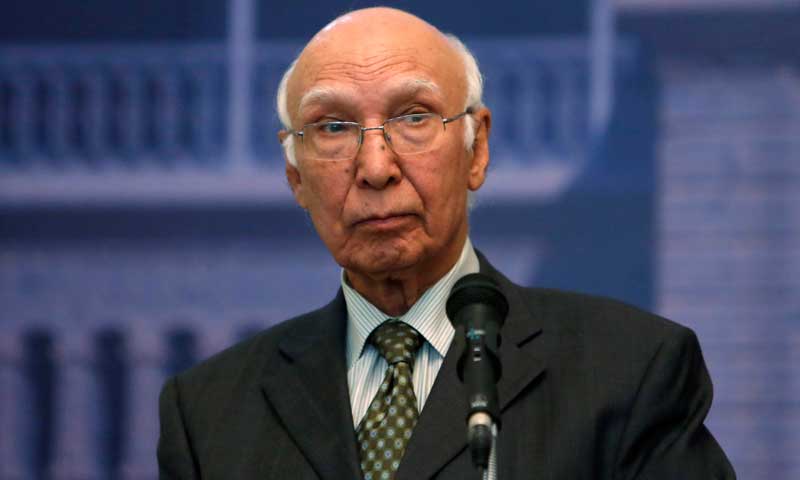
Pakistani officials told to Afghan Taliban that no pre-condition would be acceptable for Peace Talks process.
Pakistan’s Prime minister’s, Sartaj Aziz emphasizes that no precondition should be attached for peace talks with Taliban.
“It is important that no preconditions are attached to the reconciliation process, as it will create difficulties in bringing Taliban to the negotiating table,” Aziz said, as he penned down four elements essential in the reconciliation process with Afghanistan.
The Afghan Taliban continues to insist that all foreign troops in the U.S.-led coalition must leave Afghanistan before it will join direct peace talks with the government in Kabul.
“The primary objective of the reconciliation process is to create conditions to bring the Taliban groups to the negotiation table and offer them incentives that can persuade them to move away from using violence,” said Aziz.
“It is therefore important that no preconditions are attached to the reconciliation process,” Aziz added.
“Proper sequencing is required in the negotiating process,” he said while adding that “threat of use of military action against the group will cause hindrances and cannot proceed the offer of talks to all groups.”
In the meantime, a number of analysts say that Pakistan still continues its dual games.
“Previously, Sartaj Aziz wanted to impose Pakistani Taliban’s demand on Afghanistan but now he says that no pre-condition is acceptable before peace talks,” said Aziz Rafiee, political analyst.
Some others are said to believe that Pakistan is in a historic test to bring Afghan Taliban to the negotiation table and it should do something for this issue.
The Taliban also says Kabul must bring to an end as “anti-Taliban propaganda.”
The Afghan government earlier said that it could not accept the Taliban’s preconditions for the resumption of the stalled peace talks.
Kabul said negotiations should move forward only in line with the decisions of the Quadrilateral Coordination Group.
Afghanistan’s High Peace Council has urged the Taliban to avoid setting preconditions, saying the group should raise their issues at the negotiating table.
The High Peace Council also warned that there will not be a breakthrough in the peace process unless there are face-to-face talks between government negotiators and Afghan Taliban representatives.
The Afghan Taliban have bases inside Pakistan, while Islamabad accuses Afghanistan of allowing the Pakistani Taliban to operate freely as they plan terror attacks on Pakistani soil.
The Afghan government will find itself inevitable of granting political and financial concessions to the Taliban once the negotiations start. At current stage, the conditions set by Taliban my seem difficult for the Afghan government to accept, but it may come to the point to consider even more greater concessions than what are demanded for resumption of the negotiations.

Latest News
Uzbekistan, Norway stress continued dialogue on Afghanistan settlement
The two sides also exchanged views on Afghanistan’s economic recovery and discussed prospects for integrating the country into broader regional connectivity initiatives.
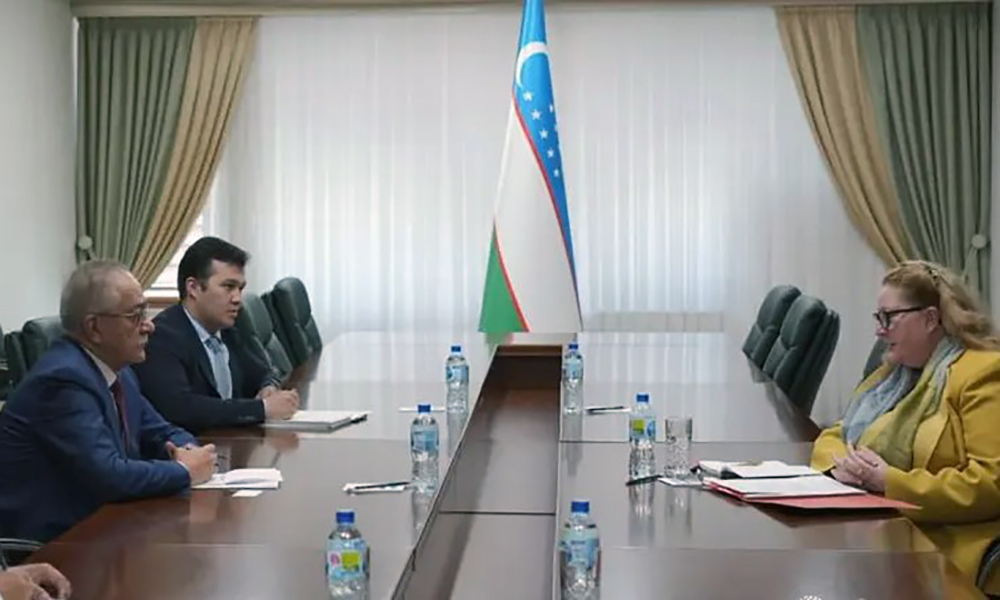
Uzbekistan’s Special Representative for Afghanistan, Ismatulla Irgashev, held talks with Norway’s newly appointed ambassador, Helene Sand Andresen, focusing on efforts to sustain dialogue on Afghanistan’s future, officials said.
According to Uzbekistan’s Foreign Ministry, the meeting centred on the current state of bilateral cooperation related to Afghanistan and underscored a shared commitment to maintaining regular engagement on the Afghan settlement process.
Andresen praised Uzbekistan’s role in promoting a coordinated regional approach to Afghanistan, highlighting Tashkent’s efforts to build consensus among neighbouring countries.
The two sides also exchanged views on Afghanistan’s economic recovery and discussed prospects for integrating the country into broader regional connectivity initiatives.
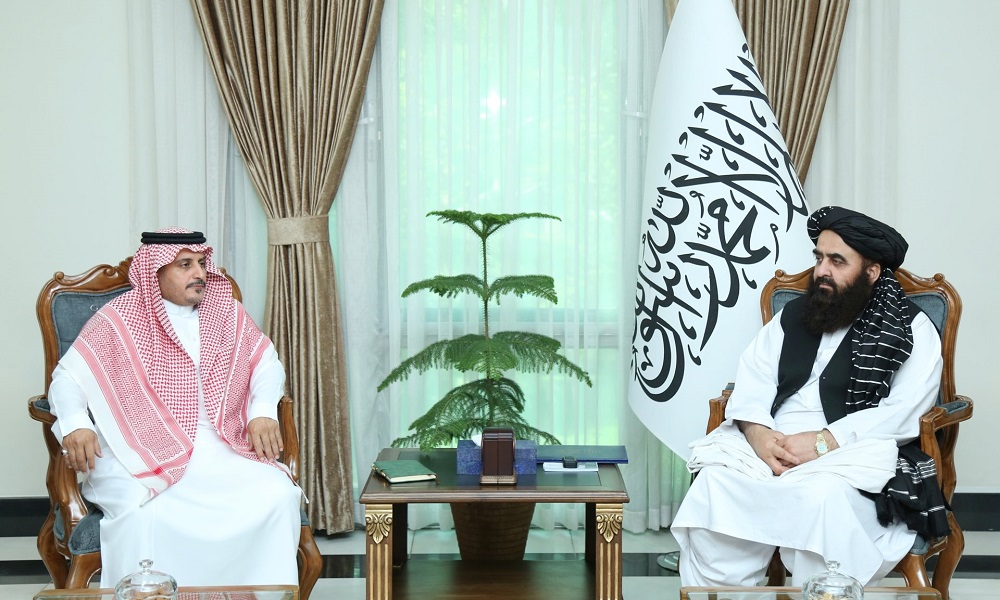
Amir Khan Muttaqi, the Minister of Foreign Affairs of the Islamic Emirate of Afghanistan, and Saudi Arabia’s Ambassador to Kabul, Faisal bin Talq Al-Baqmi, discussed regional developments and recent talks between Afghanistan and Pakistan held in the Chinese city of Urumqi during a meeting on Wednesday.
According to a statement from the Ministry of Foreign Affairs, Muttaqi briefed the Saudi ambassador on the recent negotiations with the Pakistani side in Urumqi and expressed hope that interpretative differences and minor technical issues would not hinder the progress of the negotiation process.
He described relations between Afghanistan and Saudi Arabia as positive and voiced hope that ties between the two brotherly countries would further expand in the political, security, and economic fields.
The Saudi ambassador also said that political and security stability, as well as economic development in Afghanistan, are of great importance to his country, adding that Riyadh supports Afghanistan in these areas.
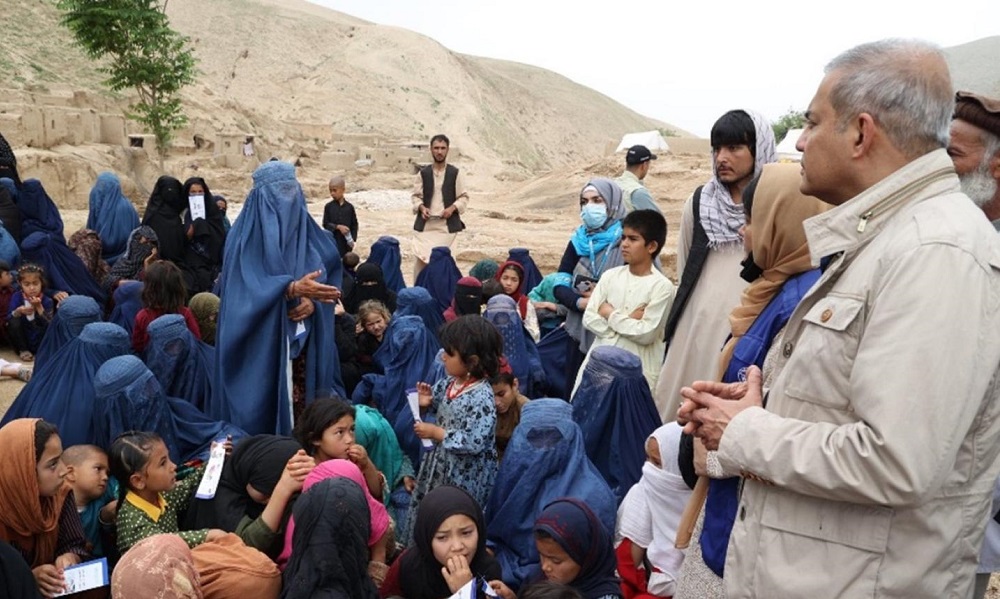
The United Nations said it continued delivering critical support to millions of Afghans in 2025 despite declining global assistance, with funding for basic human needs rising for a third consecutive year.
According to the UN’s Afghanistan results report, funding under the Strategic Framework for Afghanistan 2023–2027 reached $1.7 billion last year, supporting essential services, livelihoods and recovery efforts across the country.
“Millions of Afghans were reached with essential services, economic opportunities, and livelihoods support,” said Indrika Ratwatte, Deputy Special Representative of the Secretary-General and Resident and Humanitarian Coordinator.
The UN said more than 34 million people received healthcare services, while over 4.6 million children were enrolled in public education with UN assistance. Around 45,000 long-term jobs were also created, with women accounting for more than half of those positions.
Despite these gains, Afghanistan continued to face significant challenges in 2025, including reduced humanitarian funding, large-scale population movements, and the impact of climate pressures and natural disasters. These factors placed increasing strain on households, markets and essential services.
The UN noted that Afghan communities demonstrated resilience, working alongside national and international partners to meet urgent needs while laying the groundwork for longer-term stability.
Coordination efforts remained key, with platforms such as the High-Level Coordination Forum enabling dialogue between international stakeholders and the country’s de facto authorities. The Afghanistan Coordination Group also played a central role in aligning donor funding with priority needs.
Looking ahead, the UN said sustained cooperation between national, regional and international partners would be critical to addressing ongoing challenges and supporting a more resilient future for Afghanistan.


Airspace transit fees generate revenue for Afghanistan as flight routes shift

Uzbekistan, Norway stress continued dialogue on Afghanistan settlement

Can Iran legally impose tolls on the Strait of Hormuz?

First endoscopic nasal tumour surgery successfully performed at Balkh regional hospital

Central Asia, Afghanistan crank up Russian fuel imports as MidEast supplies dry up

IEA supreme leader orders replacement of foreign terminology in official documents

Russia deems US military presence in Afghanistan unacceptable

Afghanistan hosts inaugural Afghanistan–Central Asia Consultative Dialogue to strengthen regional cooperation

TAPI gas pipeline advances 25 km in Afghanistan

Afghani strengthens nearly 10% against US dollar amid banking sector reforms

Tahawol: Cooperation between Afghanistan and Central Asia discussed

Saar: Calls for recognition of IEA discussed

Tahawol: Calls to strengthen Afghanistan’s border security

Saar: Discussion on UN sanctions list updates on IEA members

Tahawol: Consequences of US blockade on Strait of Hormuz discussed
-

 Sport5 days ago
Afghanistan’s new cricket head coach Richard Pybus arrives in Kabul
-
 Latest News3 days ago
China establishes new Xinjiang county near sensitive border region
-
 World4 days ago
At least 30 dead in stampede at Haiti’s historic Laferriere Citadel
-

 International Sports4 days ago
IPL double-header delivers thrills as teams battle for momentum
-
 Regional5 days ago
Iran’s new supreme leader has severe and disfiguring wounds
-
 Latest News4 days ago
UN warns of critical funding shortfall for humanitarian aid in Afghanistan
-
 Regional4 days ago
US-Iran talks end without breakthrough as Vance departs Pakistan
-
 Sport5 days ago
Afghanistan U-17 football team ends CAFA campaign with 3–2 loss to Tajikistan