
Latest News
Russia’s death toll in Ukraine already the same as 10 years in Afghanistan

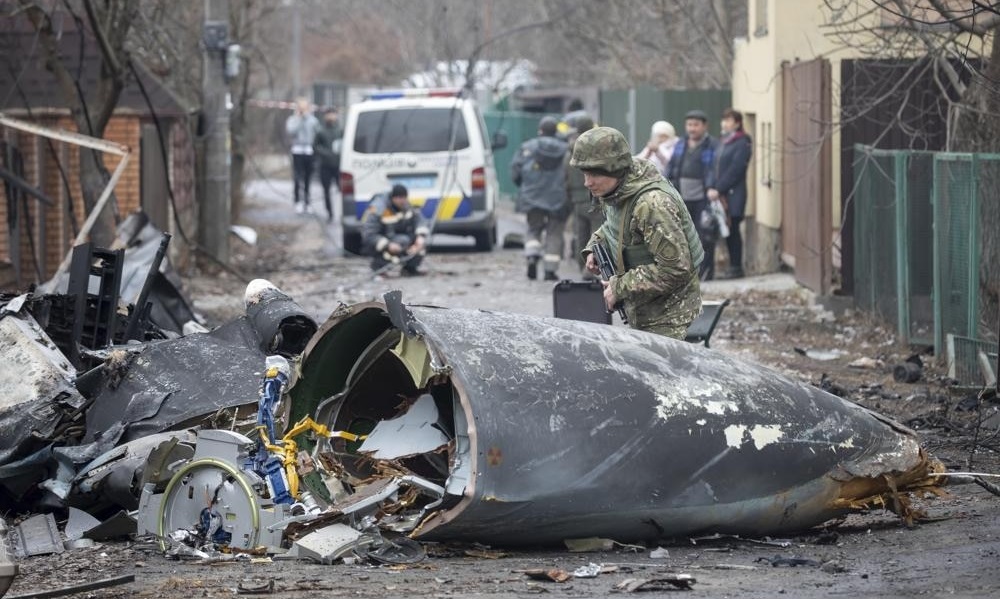
Russian troops in Ukraine have likely suffered as many losses in three months as the Soviet army did during over nine years of fighting in Afghanistan, according to a British government report.
The latest update from Britain’s Defence Intelligence agency claims that “a combination of poor low-level tactics, limited air cover, a lack of flexibility, and a command approach which is prepared to reinforce failure and repeat mistakes” has led to Russia’s high casualty rate among its troops in Ukraine.
According to the latest report from the General Staff of Ukraine’s Armed Forces, the Russian military has sustained 29,200 casualties in Ukraine since the beginning of the war on February 24, Newsweek reported.
This number is probably inflated by Ukrainian authorities, but estimates from Western intelligence report a Russian death toll that’s still much higher than the one the Kremlin is officially recognizing.
In the latest official Russian report, the country’s death toll in Ukraine was just over 1,500 casualties.
Newsweek has reached out to the Russian Ministry of Defense for comment.
On May 15, the British Ministry of Defence estimated that Russia had likely lost a third of its troops sent to conduct the invasion of Ukraine.
In March, the Russian tabloid newspaper Komsomolskaya Pravda briefly published a story claiming Russian troops had suffered 10,000 casualties in Ukraine. The article was later deleted, with the tabloid’s newsroom denying responsibility for it.
It’s likely that Russia has suffered even more casualties than reported by the Soviet army in Afghanistan between December 1979 and February 1989, Newsweek reported.
The Soviet invasion of Afghanistan in 1979 turned into a brutal, long conflict that saw the death of an estimated one million civilians, 90,000 Mujahideen fighters and 18,000 Afghan troops. The Soviet Union lost about 14,500-15,000 men.




International Sports
Haaland fires Norway into World Cup Round of 16 with late winner
With Canada, Paraguay, Morocco, Brazil, Norway, France and Mexico already through, attention now turns to Wednesday’s Round of 32 fixtures.

Erling Haaland scored a dramatic late winner as Norway defeated Ivory Coast 2-1 on Tuesday to book their place in the FIFA World Cup 2026 Round of 16, where they will face Brazil.
Haaland struck in the 86th minute to seal Norway’s victory at Dallas Stadium, taking his tally to five goals at the tournament after Antonio Nusa had given the Scandinavians the lead before Amad Diallo equalised for Ivory Coast.
 Ivory Coast made the brighter start, with Nicolas Pépé and Ghislain Konan both testing the Norwegian defence during an energetic opening spell. Yan Diomande also created an opportunity for Pépé, but the winger was unable to convert.
The victory sets up an intriguing Round of 16 clash with five-time world champions Brazil in New York on Sunday, while Ivory Coast exit the tournament after a spirited knockout performance.
France, and Mexico advance as World Cup Round of 16 takes shape
In two other Round of 32 matches, France and Mexico also secured places in the last 16 after impressive knockout victories.
France produced one of the standout performances of the tournament with a commanding 3-0 victory over Sweden at MetLife Stadium.
Kylian Mbappé starred with two goals, while Bradley Barcola also found the net as Les Bleus dominated from start to finish to book their place in the next round.

France will now face Paraguay, who stunned Germany on penalties a day earlier, in a highly anticipated Round of 16 clash.
Mexico also delighted home supporters with a 2-0 victory over Ecuador at Estadio Banorte in Mexico City to keep their World Cup dream alive.
The hosts controlled much of the contest and sealed their place in the Round of 16, where they will meet the winner of Wednesday’s clash between England and DR Congo.

With Canada, Paraguay, Morocco, Brazil, Norway, France and Mexico already through, attention now turns to Wednesday’s Round of 32 fixtures. England face DR Congo, Belgium take on Senegal, and the United States meet Bosnia and Herzegovina as the race for the remaining places in the last 16 continues.
Fans across Afghanistan can tune in to Ariana Radio and Television Network (ATN) to watch the matches live and exclusively across the country. Viewers are also encouraged to follow Ariana Television and Ariana News’ social media pages for the latest schedules and updates.
Latest News
NRC warns of alarming global shortfall in humanitarian funding in 2026
The organization says that halfway through 2026, only 30 percent of the funding required to support 143 million people out of 252 million in need globally has been received.
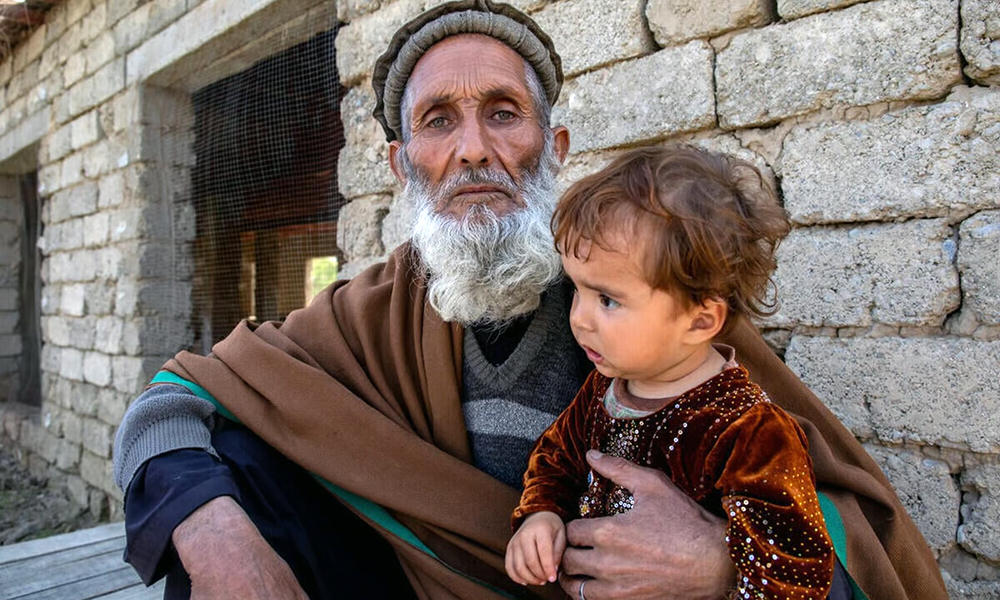
The Norwegian Refugee Council (NRC) has warned that humanitarian funding for some of the world’s most neglected displacement crises has fallen to critically low levels in 2026, leaving millions of vulnerable people increasingly abandoned.
The organization says that halfway through 2026, only 30 percent of the funding required to support 143 million people out of 252 million in need globally has been received.
NRC Secretary General Jan Egeland described 2026 as a “make-or-break year” for millions affected by conflict in countries including Venezuela and Sudan, warning that continued funding cuts could lead to “a massive loss of lives.”
He said global assistance is declining at a time when violence, displacement, and inflation continue to rise, and stressed that humanitarian funding must be allocated based on need rather than geopolitical or national interests.
The report highlights that Afghanistan is among the worst affected and has been included for the first time on NRC’s list of the world’s most neglected crises, with humanitarian response plans currently only 11 percent funded.
NRC said the decline in funding comes as 21.9 million people in Afghanistan require assistance, while millions more are returning from neighboring countries.
Egeland warned that without a dramatic increase in support, millions of families in Afghanistan and other crisis-hit regions risk facing deeper hunger, displacement, and loss of basic services, urging donors to act before it is too late.
Latest News
Information and Culture Minister says Afghans ‘do not fear bombings or pressure’
Haqqani added that the Afghan people remain steadfast despite ongoing challenges.
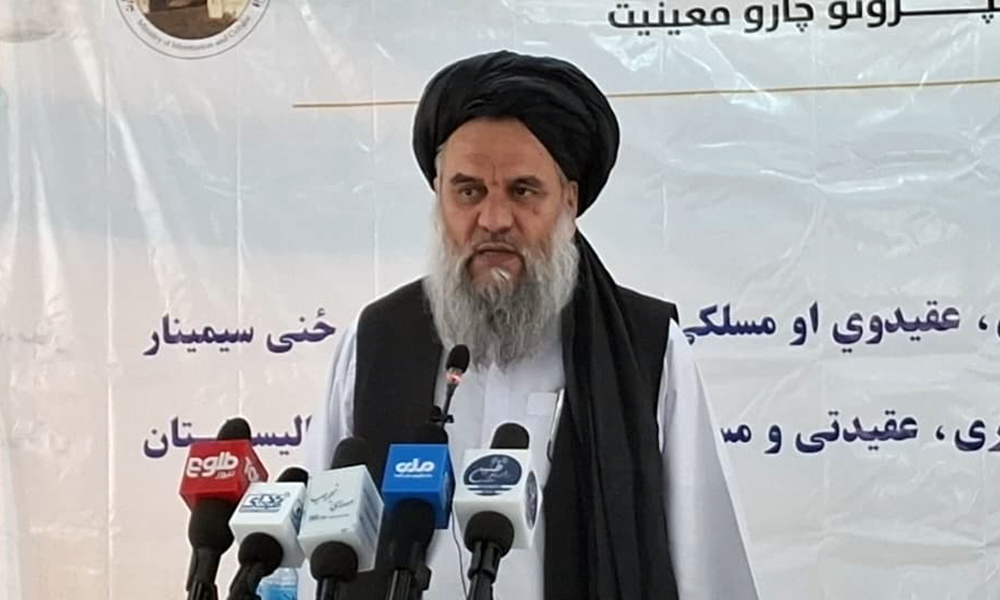
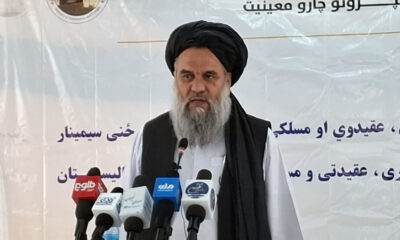
Afghanistan’s Minister of Information and Culture, Shar Ahmad Haqqani, said on Wednesday that Afghans are not intimidated by external pressure or military attacks, arguing that the country has already prevailed against opponents with superior weapons and technology.
Speaking at a seminar on intellectual, ideological and professional capacity building for journalists, Haqqani said Afghanistan had endured years of conflict and would not be deterred by threats.
“To those who killed our children in their sleep through cruel bombings, it must be said that we do not fear bombings and hardships. We defeated those who were more equipped than you in modern technology and weapons,” he said.
Haqqani added that the Afghan people remain steadfast despite ongoing challenges.
“We are neither afraid nor defeated,” he said.
The remarks were delivered during a training seminar for journalists focused on strengthening intellectual, ideological and professional capacity within Afghanistan’s media sector.


Iran insists on keeping control over Hormuz, senior Iranian sources say

Haaland fires Norway into World Cup Round of 16 with late winner

NRC warns of alarming global shortfall in humanitarian funding in 2026

Information and Culture Minister says Afghans ‘do not fear bombings or pressure’

Uzbekistan, Qatar reaffirm support for Afghanistan’s sustainable development

Norway’s Viking-inspired World Cup team photo goes viral

TAPI project advances in Afghanistan as 84kms of pipeline laid

Afghanistan’s trade with Central Asia records sharp growth

Gaikwad set to replace injured Kohli for Afghanistan ODI Series

Iran banks hit by major cyber attack

Tahawol: Reactions to Pakistan’s attacks on Afghanistan discussed

Saar: Reaction to Pakistan’s airstrikes on Afghan soil discussed

Tahawol: Pakistan’s attacks on civilians in Afghanistan

Saar: Pakistani airstrikes on Afghanistan

Tahawol: Calls for diplomacy between Kabul, Islamabad
-
 Latest News5 days ago
TAPI project sees rapid progress in Afghanistan
-
 Business3 days ago
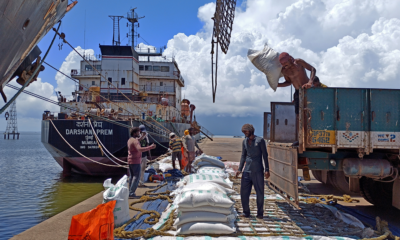
Afghanistan eyes direct Basmati rice imports from India amid tensions with Pakistan
-

 International Sports4 days ago
FIFA World Cup: Iran held by Egypt after controversial late goal Is disallowed
-

 Latest News4 days ago
Delawar says Afghanistan has achieved security and unity after 47 years
-

 Latest News4 days ago
EU announces major funding to support Afghan small businesses
-
 Latest News5 days ago
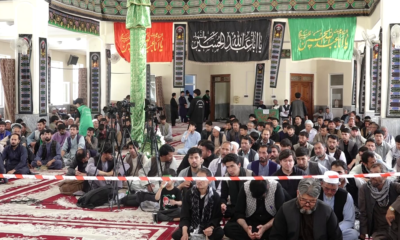
Ashura observed across Afghanistan with calls for unity and justice
-
 Latest News3 days ago
Afghan minister says ‘outsiders’ should not claim to support Afghanistan’s independence
-
 Sport3 days ago
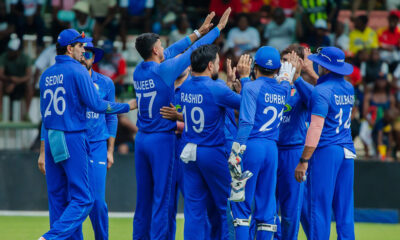
Afghanistan, Uzbekistan set for friendly cricket clash in Khost