
Latest News
Sharp rise in displaced families fleeing conflict: UN report

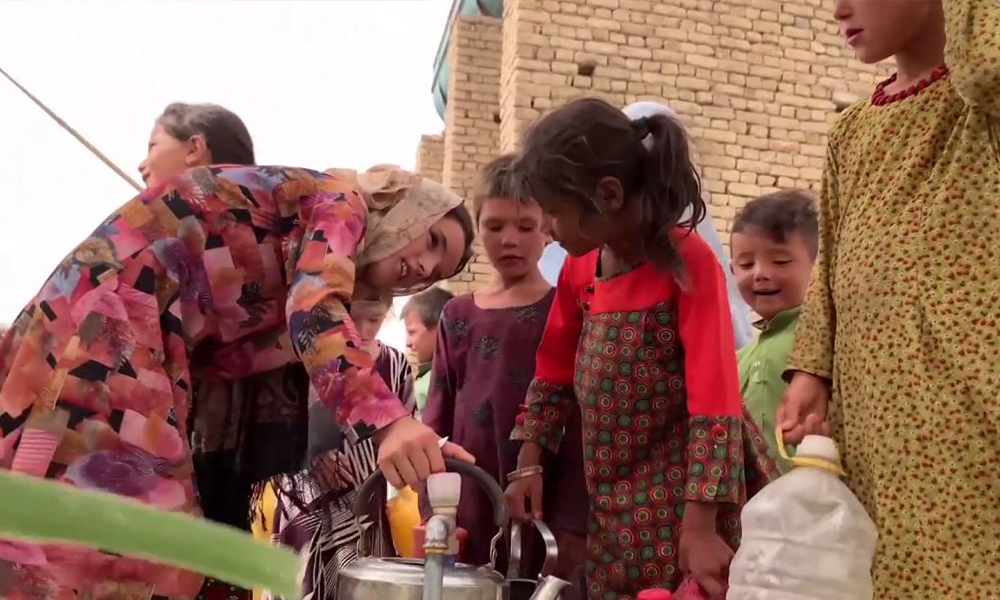
At least 330,000 people have been displaced in the last seven months due to an increase in conflict across Afghanistan, the UN reported Saturday.
“So far in 2021, 330,000 people have been displaced by conflict across Afghanistan. Another five million people remain displaced since 2012,” the United Nations Office for the Coordination of Humanitarian Affairs (UNOCHA) reported.
According to the report, the fighting has also been reported in new areas in the northeast province of Kunar, displacing 20,000 people within the province, and Nangahar Province.
“Nine UN and partner organizations’ teams are assessing needs in Kandahar. Last week, about 1,800 internally displaced people received food, relief items, and water and sanitation hygiene support as well as physiotherapy and cash assistance. In Kunar, UN and partner organizations are assessing needs and responding.
“Urgent needs include food, water, shelter, and health services,” the report said.
Maryam [not her real name] and her family are among an estimated 330,000 Afghans who have been newly displaced inside the country since the start of this year by an upsurge in violence.
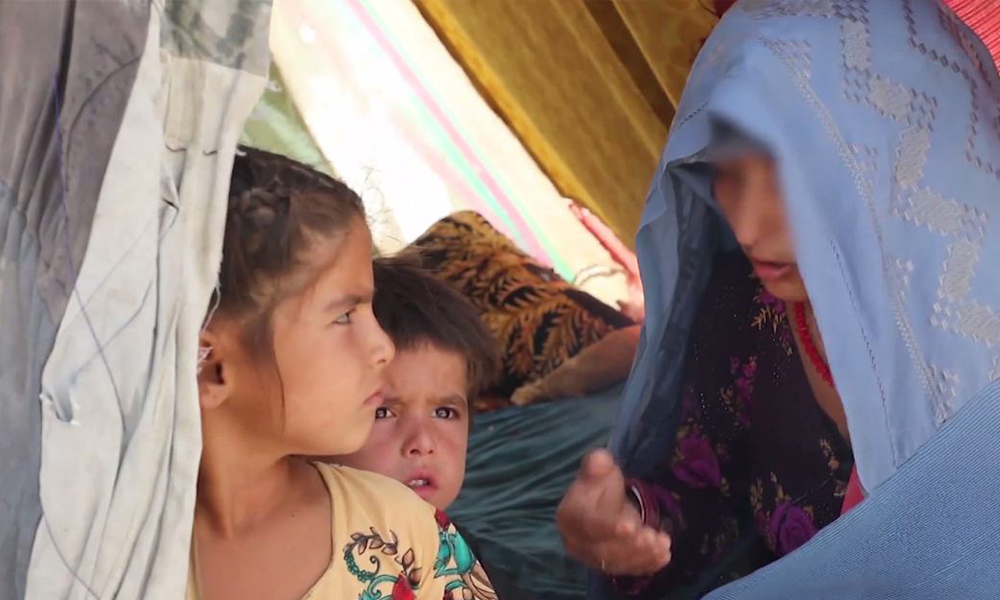
“There was war. Bombs were being dropped. My father was killed there, and a lot of my relatives were killed as well and we had to flee. I was responsible for my children and I didn’t want them to be killed. So, I came here with my elderly mother,” Maryam said.
“Our situation is very difficult. As you can see, we are all displaced. Our children need food. They would ask for anything, they are children, they don’t know whether we have it or not.”
“We want a normal life just like everyone else. I want my children to become something in Afghanistan, to become doctors, engineers, or something. That is my hope,” she stated.
As conflict intensifies in northern Afghanistan and other parts of the country, UNHCR, the UN Refugee Agency, warned of an imminent humanitarian crisis, saying failure to reach a peace agreement will see further displacement.
Fahim Hamdard, Senior Field Assistant, UN Refugee Agency, stated: “Over the last year, families have been dealing with the COVID-19 pandemic, a devastating drought and now increased violence in the north and northeast regions is driving more people from their homes every day.”
Amid an overall increase in civilian casualties, the proportion of women and children affected by violence has risen sharply since January, adding to the toll Afghanistan’s decades-long conflict has taken on people like Maryam and her family.
UNHCR and its partners are assisting newly displaced Afghans with emergency shelter, food, health care, water, and sanitation support, and cash assistance, but a shortage of funding means humanitarian resources are falling dramatically short.












Kazakhstan’s Foreign Minister Mukhtar Tileuberdi has called for pragmatic and coordinated international engagement with Afghanistan, saying the country’s long-term stability is closely linked to the security and sustainable development of Central Asia.
Speaking during the general debate of the 81st session of the United Nations General Assembly in New York on Friday, Tileuberdi said humanitarian assistance to Afghanistan remains essential but alone cannot break the cycle of poverty, displacement and dependency.
He said Kazakhstan supports a “pragmatic, coordinated and step-by-step” approach to international engagement with Afghanistan, with the United Nations playing a central role.
Tileuberdi also said Kazakhstan is working with the UN to operationalize the United Nations Regional Centre for the Sustainable Development Goals for Central Asia and Afghanistan in Almaty.
He said the success of the centre should be measured by the results and assistance it delivers to the region.


Abu Muslim Farah defeat Khurasan Faryab 2-0 in ACL season six

Saar: Concerns over Pakistan’s political crisis discussed

Afghanistan Champions League: Omar Zawak Herat beat Toofan Herat 1-0

Blast in Pakistan’s Dera Ismail Khan kills 11, injures 30

Ariana Afghan Airlines increases Kabul-Delhi cargo flights

Saudi energy group signs major Afghanistan deals covering gas exploration and pipeline plans

Trump floats idea of renaming Atlantic or Pacific Ocean

US hits Egyptian bank branches with Iran sanctions as war marks six months

Nepal flood rescue mission enters critical phase as thousands remain missing

Iranian clubs to face Gulf opponents at neutral venues in Asian Champions League Elite
Saar: Concerns over Pakistan’s political crisis discussed

Exclusive interview with Abdul Latif Mansoor, Minister of MRRD

Tawsia: Overview of Afghanistan’s iron mines

Tahawol: Discussion on fresh Pakistani airstrikes on Afghanistan

Saar: Calls for international support for Afghanistan discussed
-

 World5 days ago
CNN, MS NOW and Politico sue Trump, challenging White House ban
-

 Latest News3 days ago
Ariana Afghan Airlines ranks seventh among 45 Central Asian airlines
-

 Latest News5 days ago
UN reiterates call for respect for international law after Kunar airstrikes
-

 Regional4 days ago
US and Iran hold first talks since June after Trump’s ‘annihilation’ threat
-

 Latest News4 days ago
Silk Road highway in Wakhan corridor now reaches the China border
-

 Regional3 days ago
Iran airlines cancel flights as US sanctions hit
-

 Latest News5 days ago
Afghan Official: Pakistan’s airstrikes will not go unanswered
-

 Sport5 days ago
Afghan boxing referee heads to China for international festival